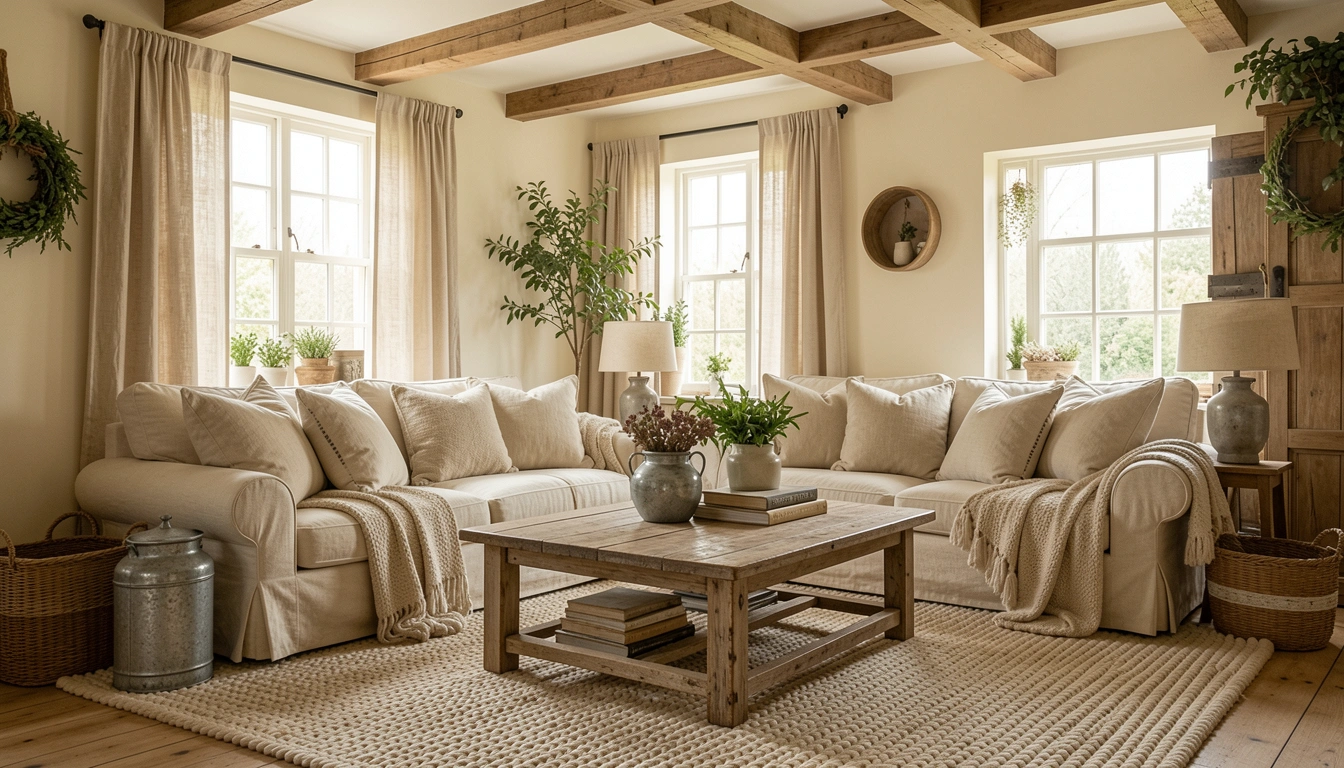
You’re probably scrolling through home decor feeds thinking, “I want that warm, welcoming farmhouse vibe, but I have no idea where to start.” The good news? You don’t need a complete overhaul to get there. Farmhouse style is about mixing vintage finds, natural materials, and cozy textures that make your living room feel like a retreat—not a museum. Whether you’re working with a tight budget or ready to invest in statement pieces, we’ve got 26 practical ideas that’ll bring authentic rustic charm into your space without the Pinterest-perfect pretension. From paint colors and lighting to furniture swaps and styling hacks, each idea is designed to work in real homes, with real families, on real timelines. Let’s create a living room you actually want to spend time in.
1. Paint Walls in Soft, Warm Whites
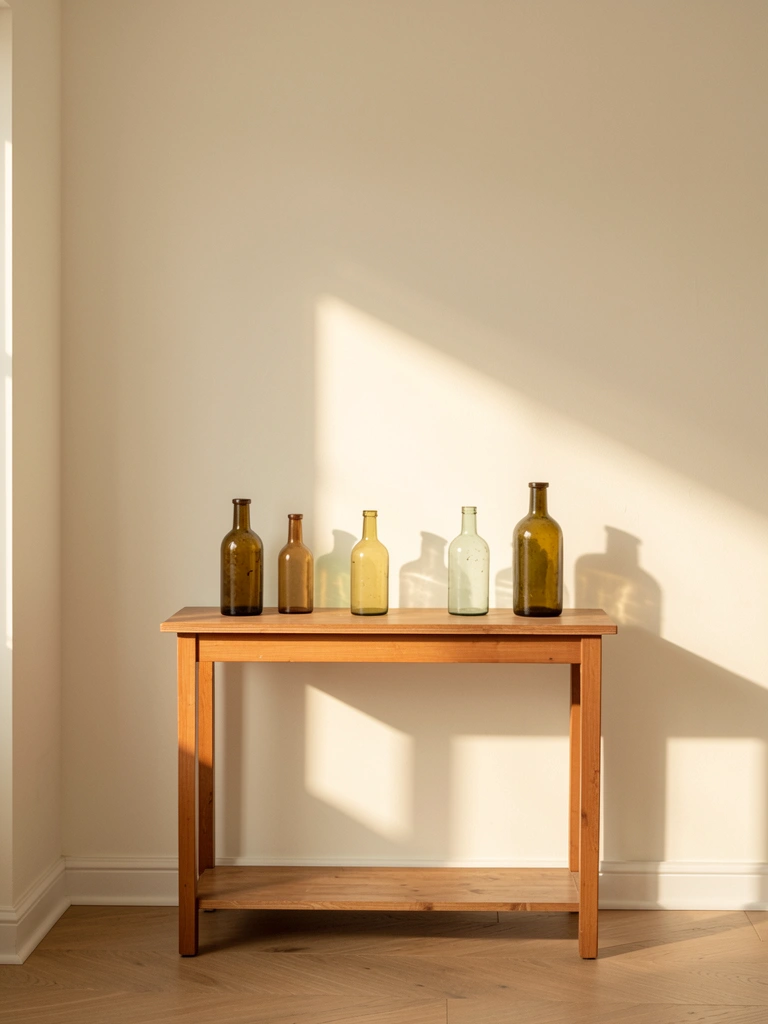
Farmhouse style starts with the right wall color—and it’s not stark white. Soft, warm whites and creams are the foundation of every cozy farmhouse room, creating a backdrop that lets vintage furniture and natural textures shine. These colors reflect light beautifully without feeling cold or clinical like bright white can.
Paint all four walls in a warm white like Sherwin-Williams Alabaster or Benjamin Moore Swiss Coffee ($30–$40 per gallon). Application takes a weekend with basic supplies you probably have. The key is choosing a warm undertone rather than blue-based whites, which can feel sterile. Primer isn’t always necessary if you’re covering a similar color, but it saves paint. Test swatches on your walls and observe them at different times of day—lighting changes everything.
Your walls become a calm canvas for everything else. This neutral backdrop makes it easier to bring in textures, patterns, and vintage finds without visual chaos.
2. Add Exposed Ceiling Beams for Instant Texture
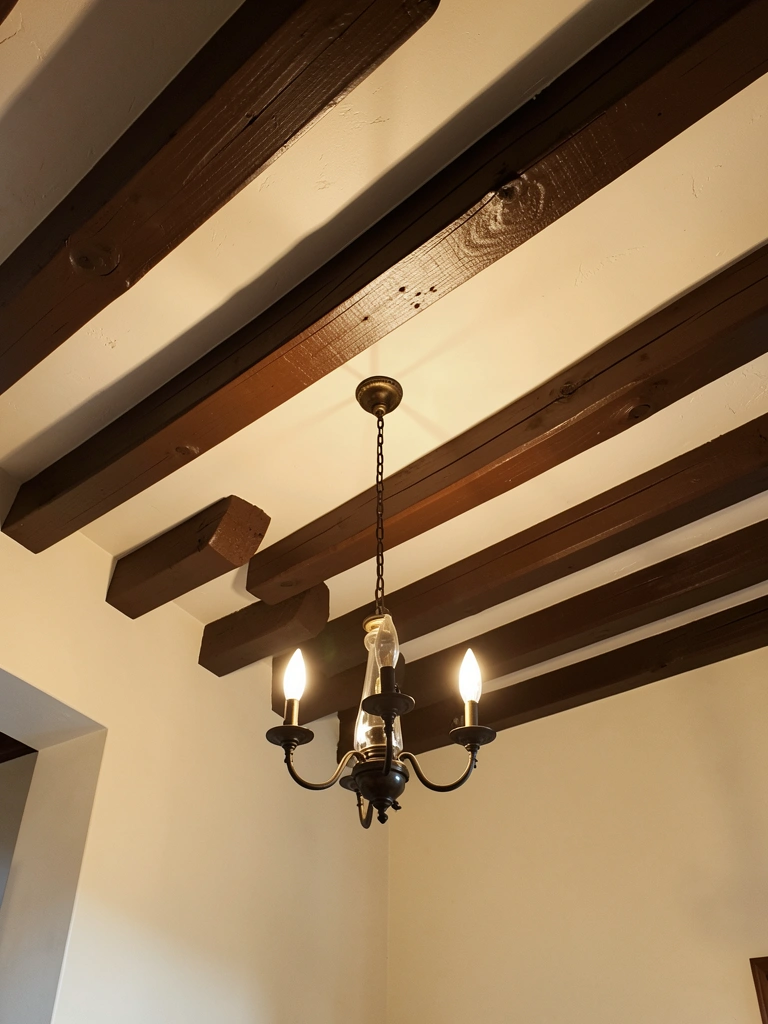
Exposed beams are the signature farmhouse ceiling element—they add structure, visual interest, and that authentic rustic feel without actually needing to renovate. If your home doesn’t have real beams, faux beams are surprisingly easy to install and look equally stunning.
You can buy faux beam kits from Home Depot or Lowe’s ($50–$150 per 10-foot beam) made from lightweight polyurethane or wood veneer. Installation takes a weekend with a level, drill, and basic tools. Apply them in parallel lines across the ceiling, spacing them 3–4 feet apart for proportion. Stain or paint them dark brown or weathered gray for that aged appearance. Real wood beams cost more ($200–$500+ per beam) but last forever and develop natural patina.
Your ceiling suddenly has architectural character. The beams draw the eye upward and make the room feel intentionally designed rather than just default.
3. Layer a Textured Area Rug Under Furniture

Rugs anchor a room and add that crucial texture farmhouse style demands. A quality rug in natural fibers creates warmth and softens hard flooring—essential for that cozy, grounded feeling. Layering rugs also adds depth and makes spaces feel intentional.
Choose a wool or jute blend in cream, gray, or soft taupe ($100–$300 from Wayfair, Ruggable, or Article). Size matters: go at least 8×10 if your living room is medium-sized, so furniture sits partially on the rug. Natural fibers like jute show texture beautifully and wear well over time. If you have pets or kids, washable rugs from Ruggable ($80–$200) are practical without sacrificing style. Layer a smaller vintage runner on top for added visual interest.
Your living room feels grounded and cozier underfoot. The rug defines your seating area and adds the natural fiber warmth that’s central to farmhouse style.
4. Swap Sleek Furniture for Chunky Wood Pieces
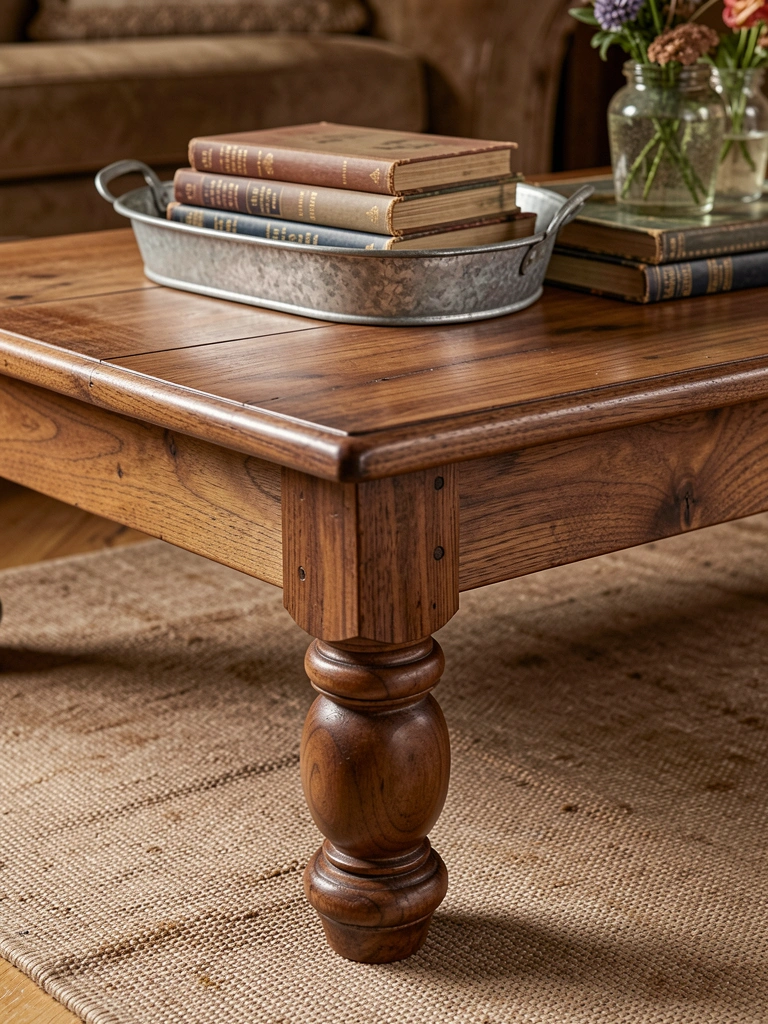
Farmhouse furniture is substantial, sturdy, and often has visible wood grain and natural imperfections—the opposite of mass-produced, particle-board modern pieces. Solid wood furniture ages beautifully and becomes more charming over time.
Scout for chunky wood tables and dressers at Facebook Marketplace, estate sales, or Craigslist ($50–$300 used) rather than buying new particle-board versions. If new pieces fit your budget, Pottery Barn, Arhaus, or Wayfair carry farmhouse-style wood furniture ($300–$800+). Look for visible wood grain, turned legs, and slightly distressed finishes. Mix wood tones—it’s not about matching perfection. If you find a piece you love but it’s the wrong color, refinishing or limewashing takes a weekend and costs under $50 in supplies.
Your room instantly feels more substantial and collected. Real wood develops character and patina that makes your space look genuinely loved, not staged.
5. Install Vintage-Style Lighting Fixtures
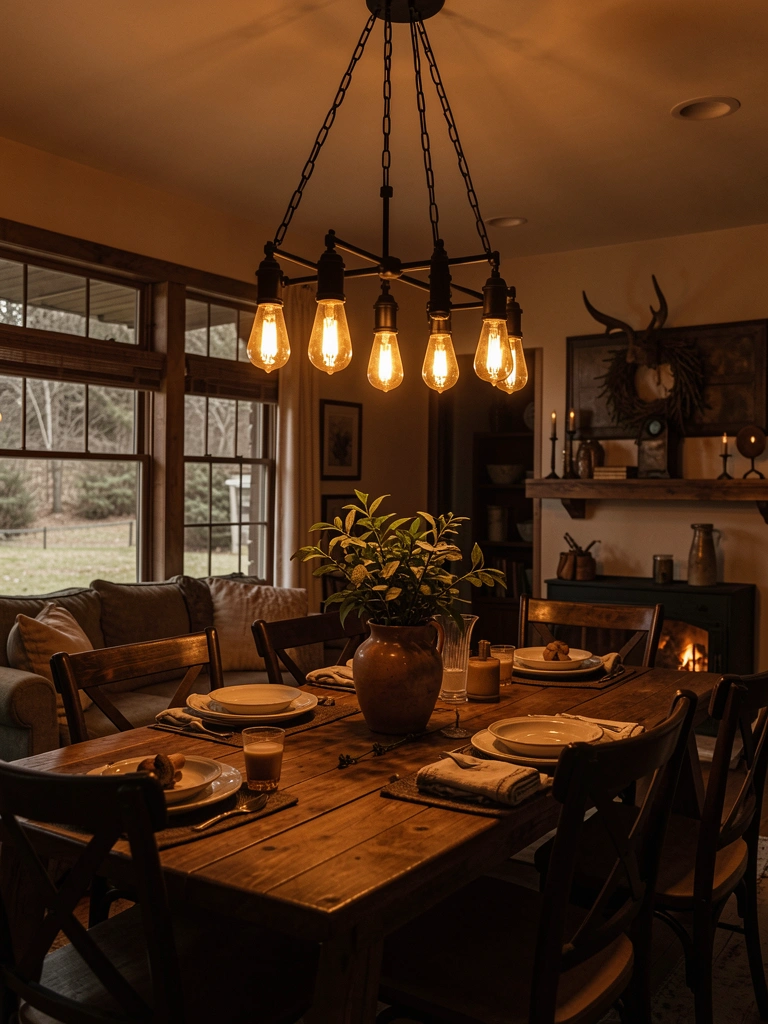
Lighting sets the mood and farmhouse style thrives on warm, vintage-inspired fixtures that become focal points rather than hidden utilities. Chandelier and lantern styles feel more authentic than modern minimalist lights.
Browse Etsy, Wayfair, or Home Depot for vintage-inspired chandeliers or pendant lights ($60–$300). Edison bulb fixtures with amber-tinted glass add instant warmth and that nostalgic glow. If you’re renting, plug-in pendant lights ($50–$150) hang from your existing ceiling fixture with minimal adjustment. Installation typically takes 30 minutes to an hour with basic tools. Choose black metal, bronze, or aged brass finishes over chrome or stainless steel for authentic farmhouse feel.
Your space glows with character. Warm-toned lighting makes everything feel more inviting and highlights textures like wood and stone beautifully.
6. Display Vintage Collections on Open Shelving
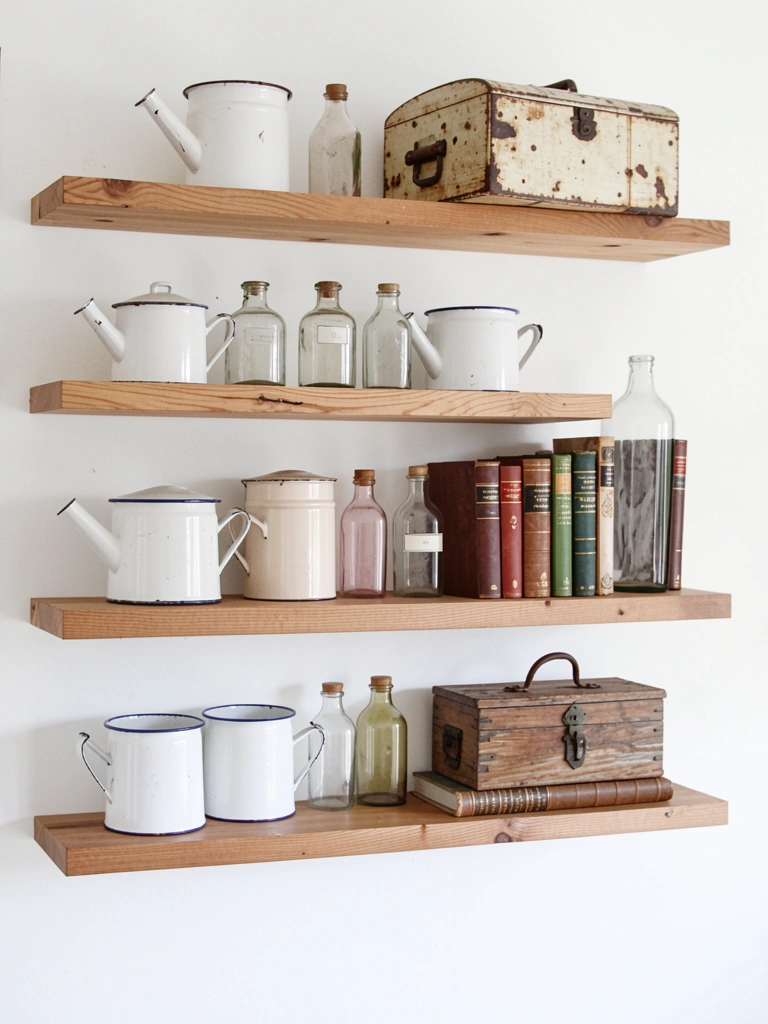
Farmhouse style celebrates vintage finds and collections—they tell your story and add personality that new purchases can’t replicate. Open shelving is the perfect stage for this collected aesthetic.
Install floating shelves ($30–$80 from IKEA or Home Depot) at varying heights on a living room wall or around a fireplace. Arrange collections with intention: group items by color or type, leave breathing room between objects, and layer different heights and depths. Mix old and new—a vintage pitcher next to a modern plant, antique books stacked with a current magazine. Thrift stores, estate sales, and Etsy are goldmines for authentic vintage pieces under $20 each. Dust monthly to keep collections looking intentional rather than cluttered.
Your shelves become a gallery of memories and personality. Visitors see your taste and story rather than generic home decor.
7. Bring in Woven Baskets for Hidden Storage
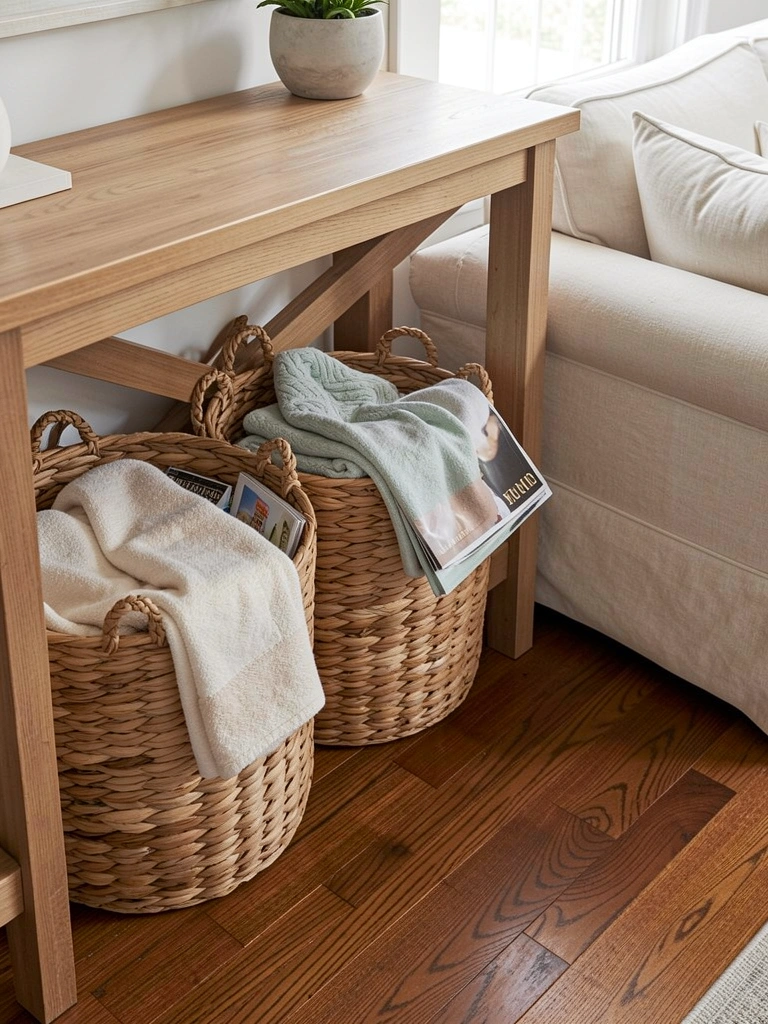
Baskets solve the storage problem every cozy living room faces—where do blankets, throw pillows, and magazines live? Woven baskets add texture while keeping clutter invisible, staying true to farmhouse’s blend of function and style.
Hunt for woven baskets at HomeGoods, Target, or TJ Maxx ($20–$80 each) in seagrass, rattan, or woven wood. Size them proportionally to your space: one large basket beside the sofa, smaller ones under a console or coffee table. Label them with hand-painted wood tags ($5–$15) for a rustic touch if you want clear organization. Mix basket styles—woven, wicker, wire—for collected-over-time authenticity. Baskets also dampen sound and soften hard flooring, making rooms feel warmer acoustically.
Your living room looks magazine-ready even when it’s lived-in. Baskets hide the reality of family life while keeping everything within arm’s reach.
8. Layer Throw Blankets and Pillows Generously
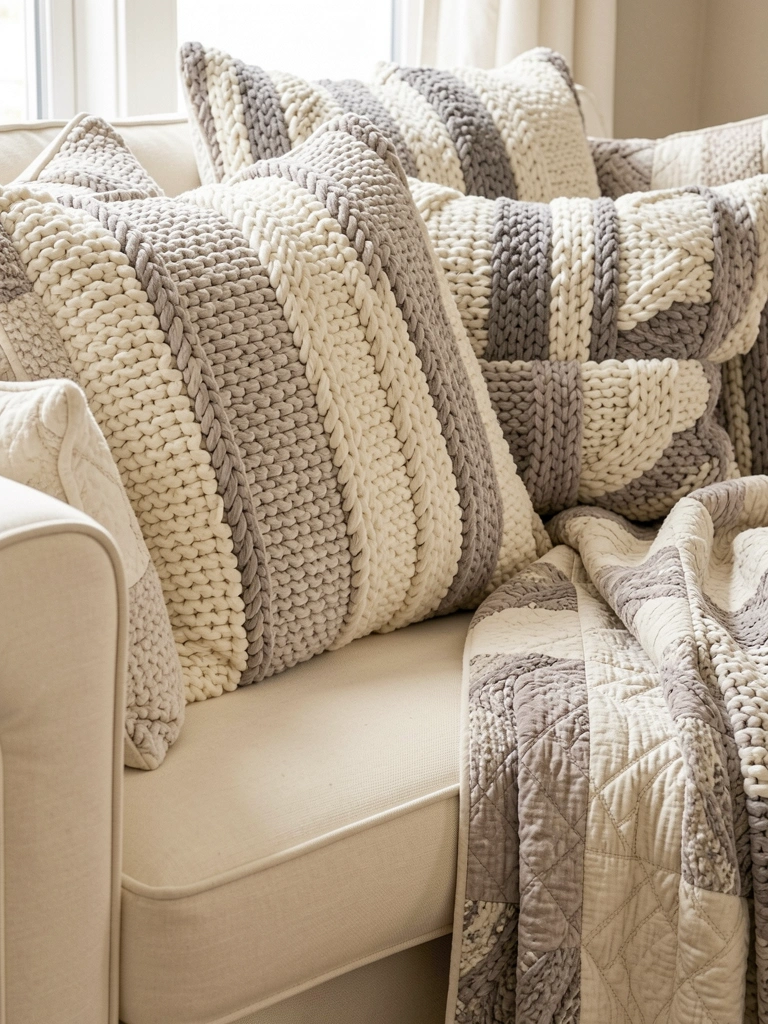
The difference between a basic sofa and a farmhouse haven is layers of soft, touchable textiles. Throws and pillows add color, pattern, and that “curl up here” coziness farmhouse demands.
Combine 5–7 pillows on your sofa in varying textures: chunky knit, linen, wool, cotton, velvet ($15–$40 each from Target, West Elm, or Wayfair). Drape one or two quilted or knit throws ($30–$80 each) casually over sofa arms or the back. Stick to a color palette of creams, grays, taupes, and one accent color like soft green or burgundy to avoid visual chaos. Natural fabrics like linen and cotton feel authentic to farmhouse style; synthetic fabrics can feel cheap. Wash throws monthly and rotate pillows to maintain shape.
Your sofa becomes a refuge. People want to sit and stay, and your living room feels warm enough to live in, not just look at.
9. Create a Focal Point with a Fireplace Mantel
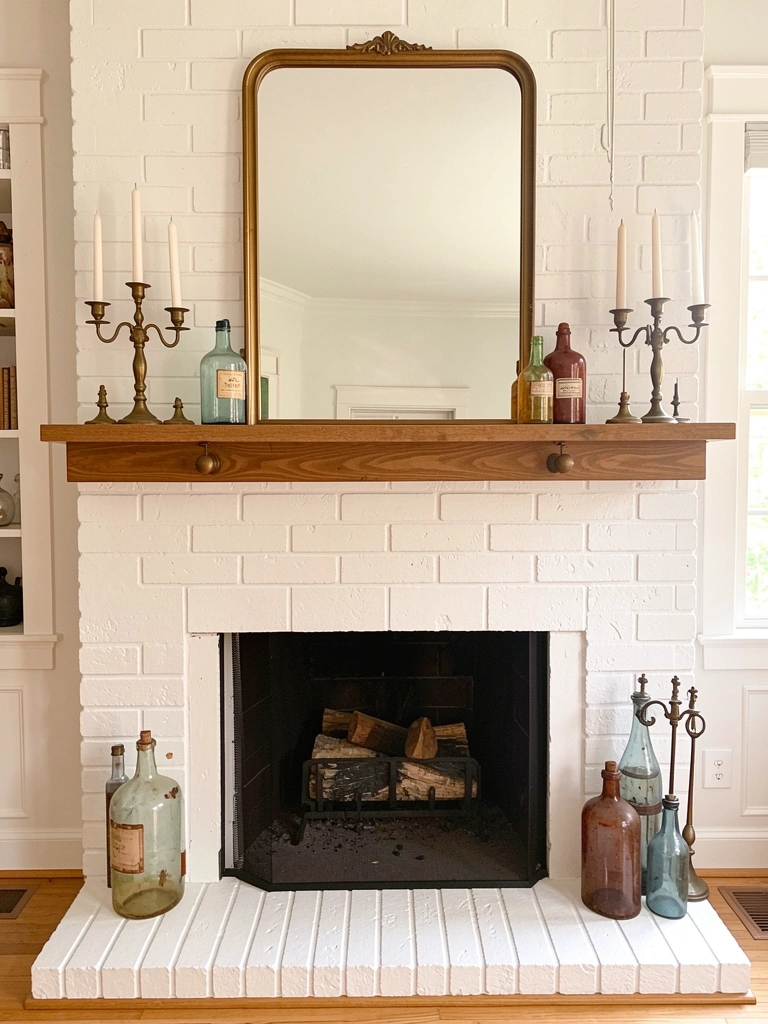
A fireplace mantel is prime real estate for farmhouse styling—it’s naturally a focal point where you can display collections, create seasonal arrangements, and add layers of visual interest. Even if you don’t use the fireplace, the mantel matters.
Start with a large mirror or piece of artwork as your anchor ($50–$200). Flank it with matching brass or wooden candlesticks ($30–$60 per pair). Add height with stacked books, botanical prints, or vintage signage. Layer in smaller items like enamelware, glass bottles, or collected treasures. Keep one side of the mantel slightly more open to avoid a cluttered look. Change seasonal displays quarterly: fall leaves and pumpkins, winter garland, spring branches, summer botanicals.
Your mantel becomes a conversation piece. Visitors stop and notice the thoughtful curation rather than just walking past a blank wall.
10. Paint Cabinet Doors in Soft Jewel Tones
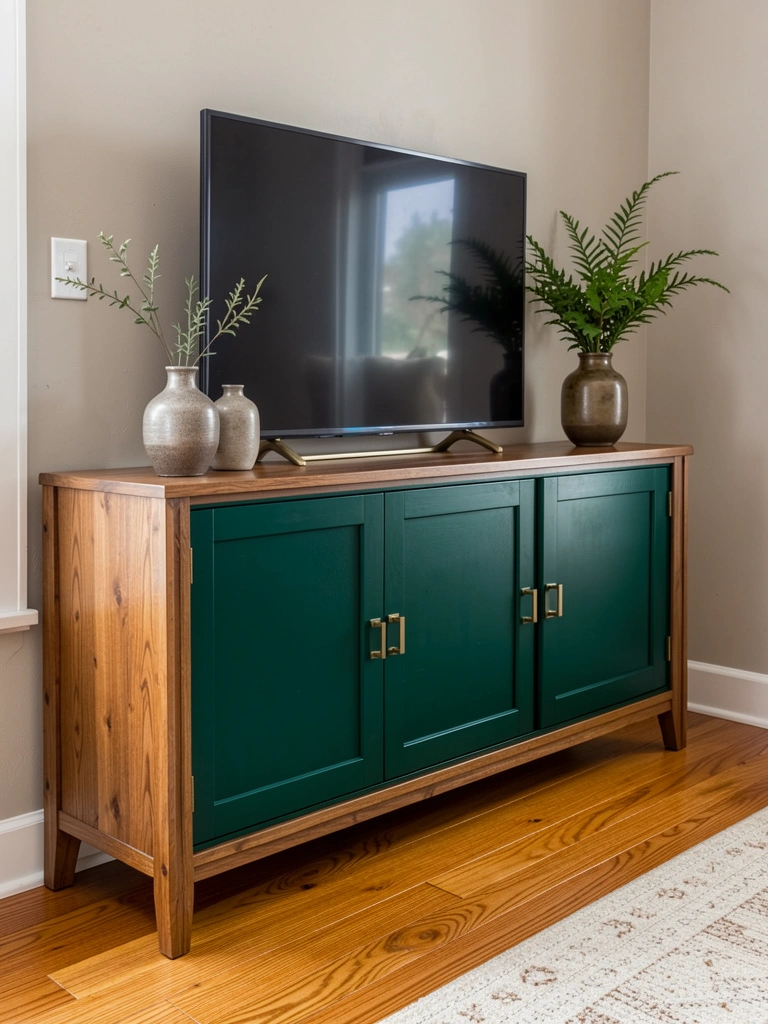
Farmhouse style is evolving beyond all-white interiors, and cabinet doors are the perfect place to introduce rich, moody colors like emerald or burgundy. This adds depth and personality while keeping the overall aesthetic grounded and warm.
Choose a color from the jewel tone family: deep emerald, forest green, burgundy, or even dusty navy. Sherwin-Williams Rookwood Dark Green or Benjamin Moore Hunter Green are popular choices ($30–$40 per gallon). Paint existing cabinet doors with furniture paint or chalk paint ($20–$30 per can), which requires minimal prep. Update hardware to brushed brass or vintage bronze ($5–$20 per pull) for a coordinated upgrade. Polyurethane topcoat protects the finish ($15–$25 per quart). Total project time: one weekend with drying time between coats.
Your living room gains sophistication and visual interest. A statement cabinet becomes the room’s anchor while maintaining farmhouse warmth.
11. Mix Wood Tones Intentionally, Not Perfectly
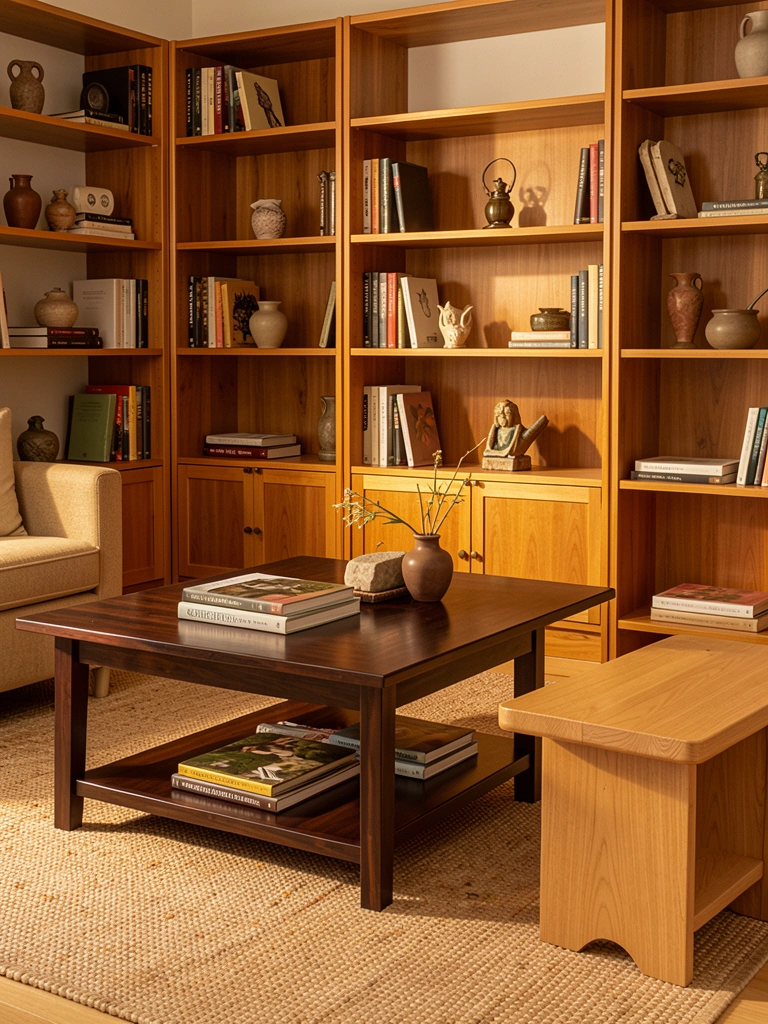
Farmhouse interiors are built over years, not purchased all at once—so mixing wood tones is not just acceptable, it’s essential to the authentic aesthetic. The key is being intentional rather than randomly clashing.
Choose a mix of at least three wood tones: one dark (walnut or dark oak), one medium (cherry or warm honey), and one light (pale oak or pine). Space them around the room so one tone doesn’t dominate one corner. Balance visual weight by placing heavier, darker pieces low and lighter pieces higher. If existing furniture is mismatched, you can unify with a common finish like limewash or stain ($20–$50 per can). Natural wood variation reads as authentic; too-perfect matching feels mass-produced.
Your room looks collected and genuine. Guests see a curated space assembled with care rather than an Instagram aesthetic.
12. Install a Shiplap Accent Wall
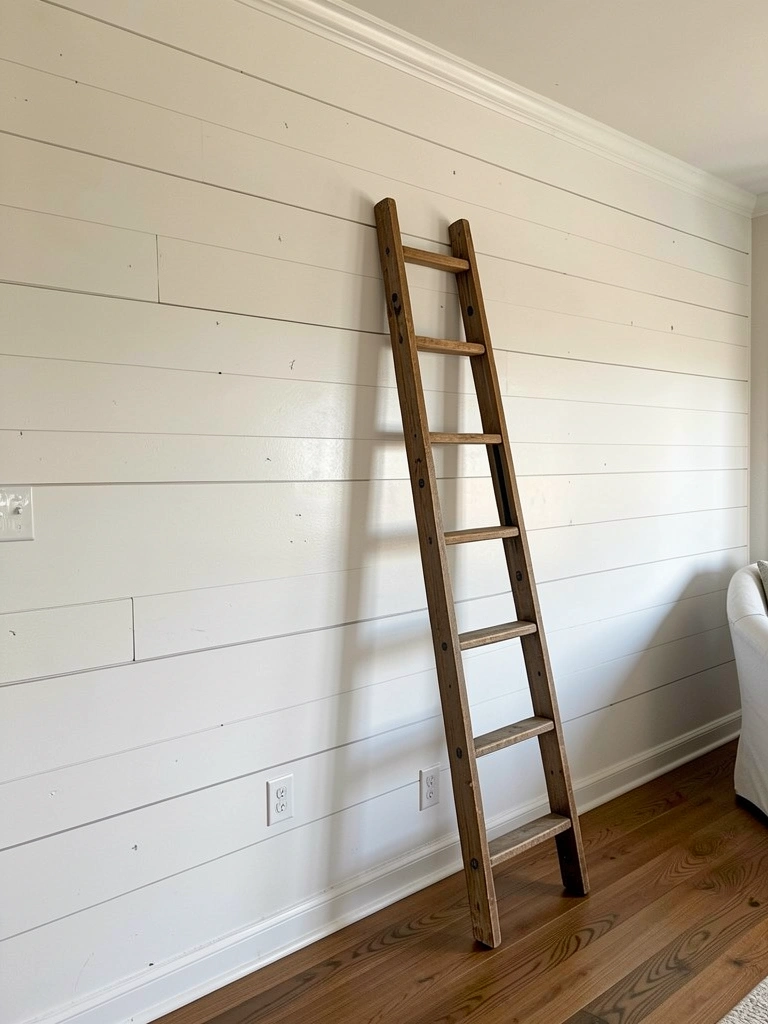
Shiplap is the visual shorthand for farmhouse style—it adds texture, architectural interest, and that “cozy cabin” feeling instantly. You don’t need to shiplap every wall; one accent wall creates maximum impact for minimum effort.
DIY shiplap costs $100–$300 in materials (Home Depot or Lowe’s carry prefinished shiplap boards) and takes a weekend to install with a nail gun and level. Hire a professional for $400–$800 if you’re not handy. Paint it white, cream, or soft gray for traditional farmhouse or darker colors for modern farmhouse. If you’re renting, removable peel-and-stick shiplap panels ($50–$150) exist but look less authentic—worth skipping unless you’re in a temporary space. Real shiplap holds value and stays with your home.
Your room gets instant architectural character. Shiplap catches light and shadow beautifully, adding dimension that flat walls can’t provide.
13. Add Vintage Mirrors for Depth and Light
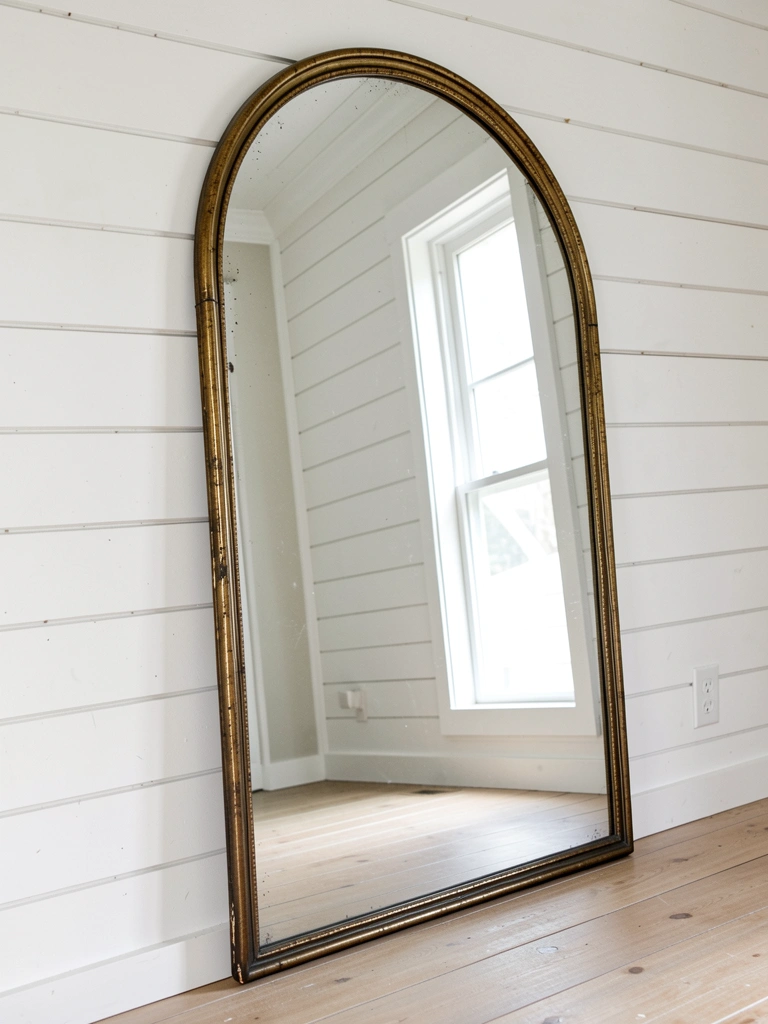
Mirrors serve double duty in farmhouse design: they bounce light around making rooms feel bigger and brighter, and vintage frames add instant character and collected authenticity.
Scout estate sales, antique shops, and Facebook Marketplace for ornate or rustic-framed mirrors ($30–$150 used) rather than new reproductions. Lean larger mirrors casually against walls rather than hanging them—it’s more authentic and renter-friendly. Mix frame styles: wood, metal, painted finishes. Hang smaller mirrors as a gallery wall on one wall ($50–$200 for 3–5 pieces). Position mirrors opposite windows or light sources to amplify natural light. Clean mirrors monthly with vinegar and newspaper for spot-free shine.
Your room feels brighter and more spacious. Vintage mirrors add genuine patina and character that new purchases can’t match.
14. Create a Reading Nook with Wingback Chairs
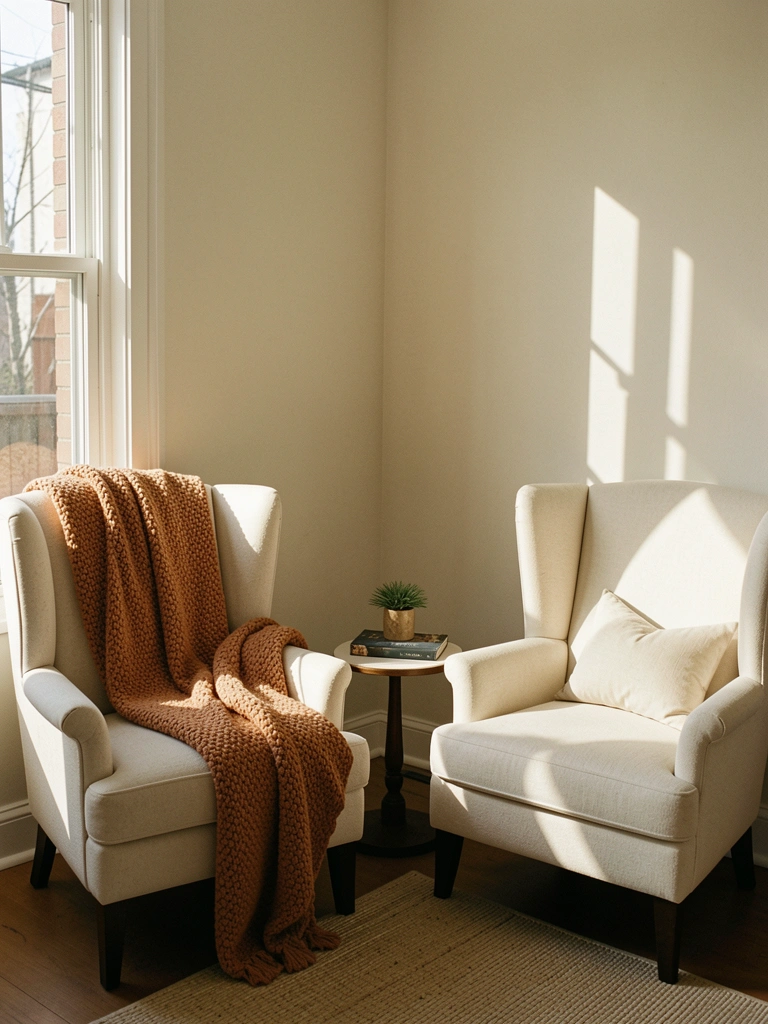
A dedicated reading corner turns your living room into a retreat within a retreat. Wingback chairs are quintessentially farmhouse—structured but cozy, timeless, and perfect for curling up with a book and coffee.
Hunt for wingback chairs at estate sales, Facebook Marketplace, or thrift stores ($50–$300 used) and reupholster if needed ($200–$400 professionally, or DIY with fabric and a staple gun for $50). New wingbacks from Wayfair, Article, or Pottery Barn cost $300–$700. Pair with a small side table ($30–$80), a floor lamp ($40–$100), and a throw blanket. Position in a corner or by a window for natural light and quiet atmosphere. Add a small bookshelf nearby for easy reach.
You create a designated sanctuary within your home. Your living room becomes more than gathering space—it’s a place for solitude and comfort.
15. Style Floating Shelves with the Rule of Threes
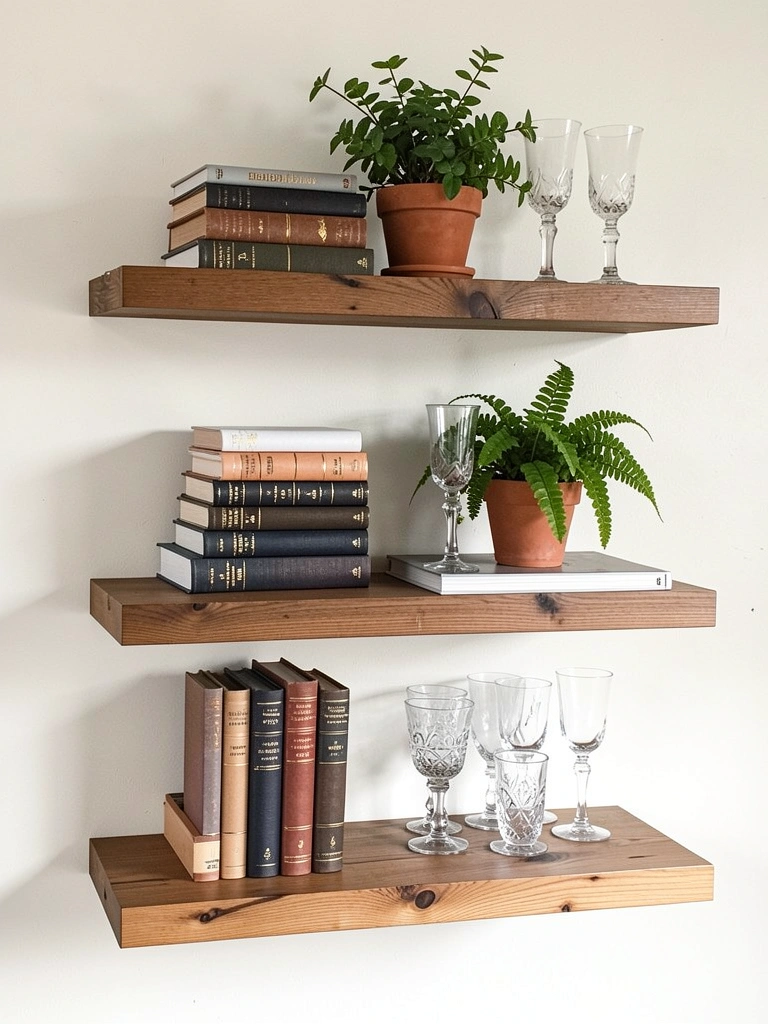
The “rule of threes” is a design principle that makes styling look intentional and prevents the “too much, too cluttered” problem many farmhouse rooms face. Grouping items in odd numbers creates visual rhythm and balance.
Install 2–4 floating shelves at staggered heights. On each shelf, arrange 3–5 items grouped by theme or color—don’t spread items evenly. For example: one shelf gets a stack of three books, a small plant, and a single vintage bottle. Next shelf has three glass jars, a framed photo, and a woven box. Leave 30–40% of each shelf empty—negative space is as important as what you display. Vary heights and depths: tall items next to low ones, deep objects beside thin ones.
Your shelves feel designed and thoughtful rather than randomly populated. Visitors notice intentionality and restraint, which is more sophisticated than maximalism.
16. Incorporate Live-Edge Wood Shelving

Live-edge wood brings organic, raw beauty to farmhouse interiors—those natural edges and wood grain variations are impossible to replicate with manufactured shelves, making them feel genuinely gathered rather than store-bought.
Source live-edge wood slabs from Etsy, local woodworkers, or specialty lumber yards ($100–$300 per slab depending on size and wood type). Pair with industrial metal brackets from Home Depot or Etsy ($20–$50 per pair). Install at eye level where the wood’s natural beauty becomes the focal point. The irregular edges dictate shelf styling—keep items sparse and let the wood itself be the statement. Seal the wood quarterly with natural finish ($15–$25 per can) to prevent cracking.
Your shelves become sculptural art rather than utilitarian storage. The natural wood variations tell a story that perfectly aligned manufactured shelves can’t.
17. Hang Vintage Metal Signs or Farmhouse Art

Vintage signs and farmhouse art anchor walls and add that nostalgic rural character that defines the style. They’re also affordable and easy to swap out seasonally.
Hunt Etsy, estate sales, or antique shops for authentic vintage metal signs ($20–$80) or vintage agricultural prints. New farmhouse-style art from Wayfair, World Market, or HomeGoods costs $30–$100. Hang one statement piece or create a small gallery of 3–5 pieces. Leave significant white space around pieces rather than filling every inch of wall. Frame vintage posters ($20–$50 for basic frames) to elevate them. Rotate seasonal art quarterly to keep your room feeling fresh.
Your walls become storytellers. Genuine vintage pieces carry history and character; new pieces styled well feel collected over time rather than purchased all at once.
18. Layer Lighting with Table Lamps and Candlelight
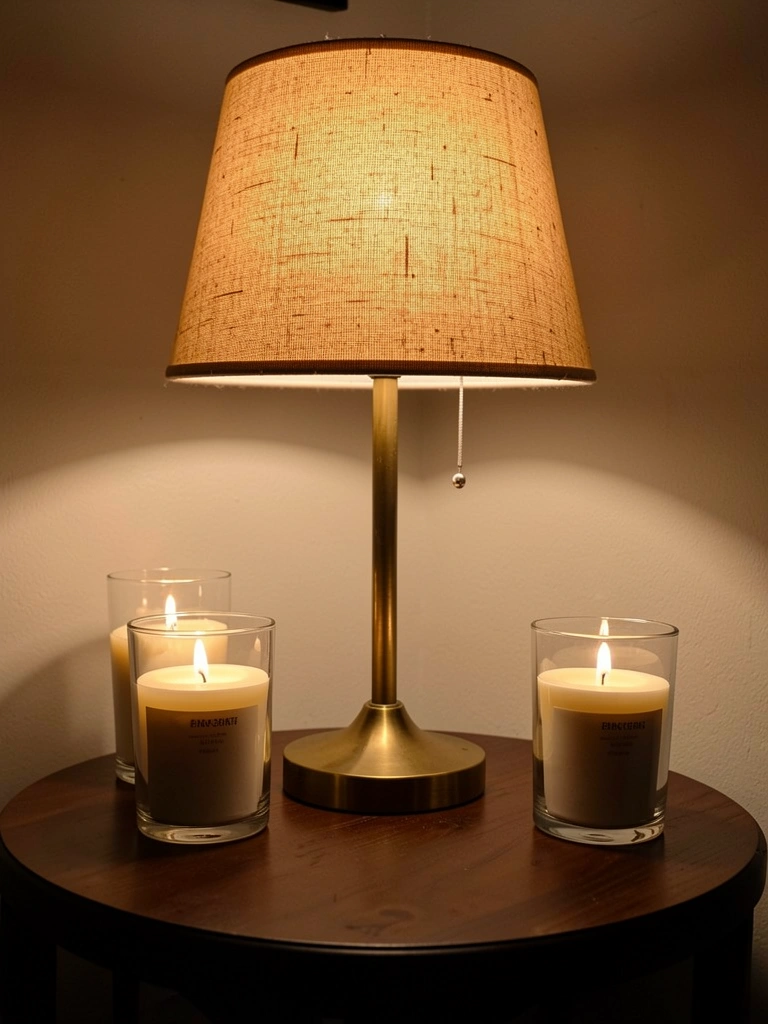
Farmhouse style thrives on warm, ambient lighting rather than harsh overhead lights. Layering multiple light sources creates the cozy, gathered atmosphere that makes farmhouse rooms feel like home.
Add table lamps on side tables and consoles ($40–$80 each) in brass, bronze, or black metal with linen or burlap shades. Distribute at least 3–4 light sources around your living room for even, warm illumination. Scatter pillar candles or candlesticks ($5–$20 each) on tables and shelves—candlelight adds coziness that electric light alone can’t. Use warm-white bulbs (2700K) in all fixtures rather than cool white, which feels institutional. Dimmers on overhead lights ($20–$40) let you adjust ambiance throughout the day.
Your room glows with natural warmth. Evening becomes your favorite time to spend in the space because it feels genuinely inviting rather than brightly lit.
19. Add a Console Table Behind Your Sofa
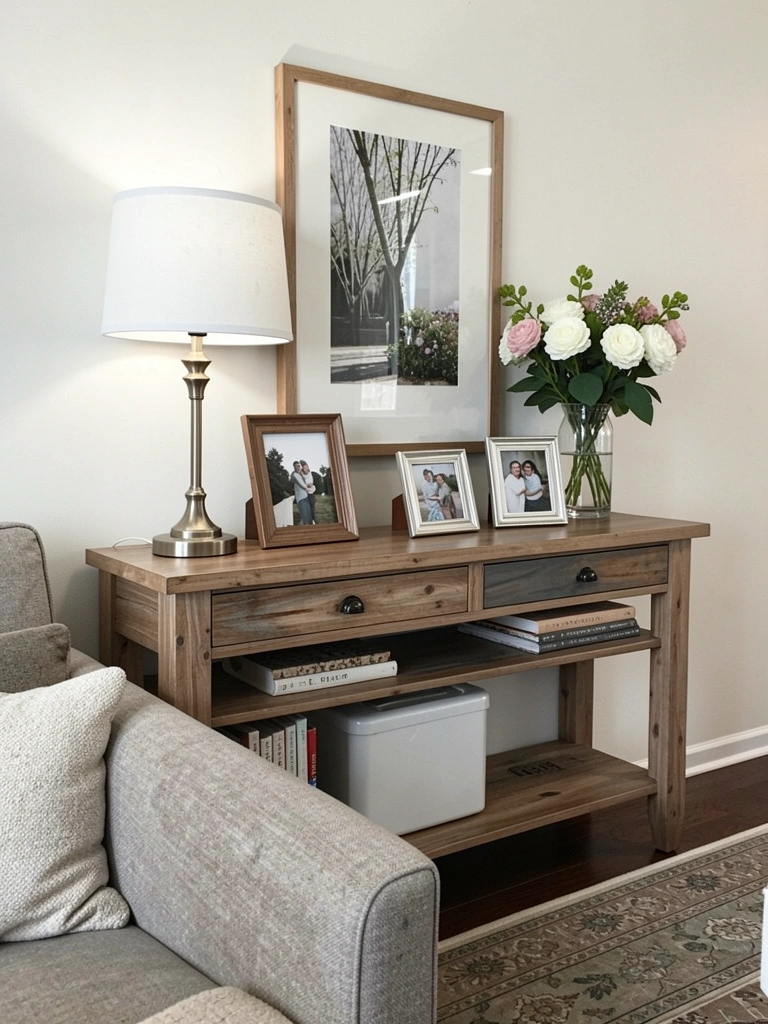
A console table behind the sofa is a farmhouse staple that serves double duty: it defines seating areas, adds display surface, and creates functional flow in open-concept living spaces.
Look for wooden console tables with open shelves or drawers at Wayfair, Article, or thrift stores ($60–$300). Narrow depths (10–14 inches) work best for a floating-behind-sofa look. Style the top with a table lamp, framed photos, and a vase or sculptural piece. The shelf below holds baskets or decorative boxes. If you don’t have a sofa back against the wall, use a console to anchor an accent wall and create the illusion of separation in open-concept spaces. Paint or stain it to coordinate with other furniture.
Your space gains structure and function. The console becomes a natural gathering point and display area without blocking sightlines through the room.
20. Incorporate Stone or Brick Textures
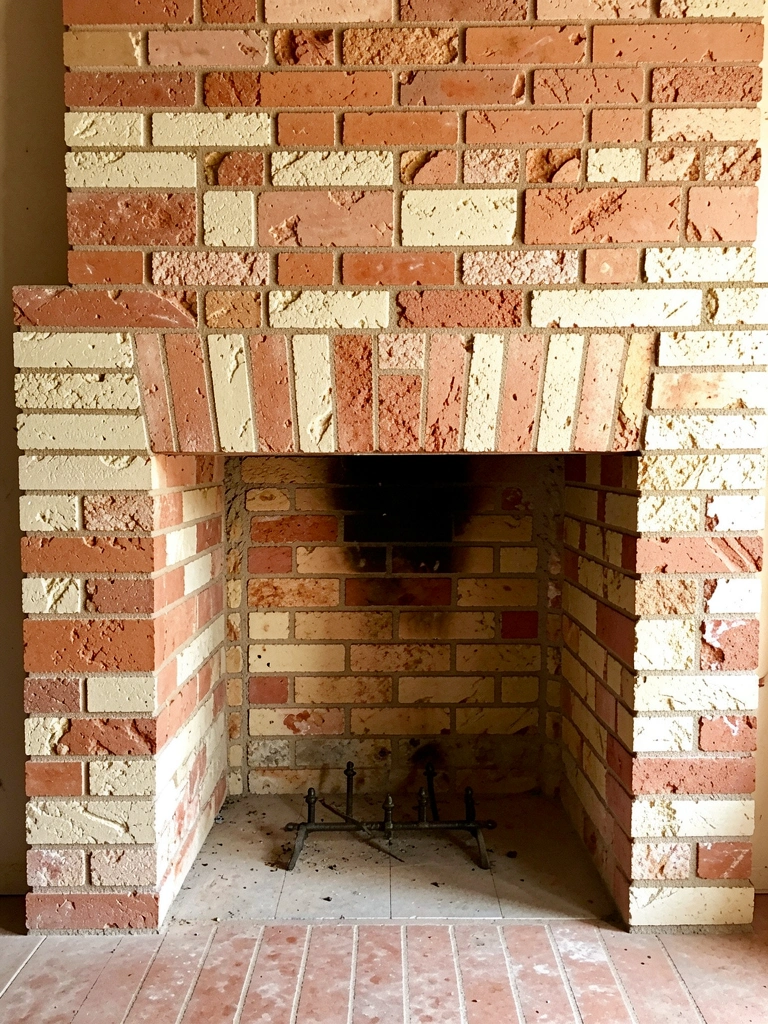
Stone and brick add geological weight and authenticity to farmhouse spaces—they reference farmhouse roots in rural, working landscapes where these materials were structural necessities, not design choices.
If you have existing brick or stone, expose it by removing paint or drywall ($0 if DIY, $200–$500 professionally). Paint exposed brick in white or cream for a softer farmhouse look rather than leaving it raw. Add brick accents with removable peel-and-stick tiles ($50–$150 per section) around a fireplace or accent wall if you’re renting or reluctant to renovate. Real stone veneer costs more ($300–$800 installed) but lasts forever and develops patina. Balance stone with soft textiles and warm wood so the room doesn’t feel cold or industrial.
Your room gains grounding and permanence. Stone and brick anchor a space and reference the authentic farmhouse structures that inspired this style.
21. Create a Gallery Wall with Mismatched Frames
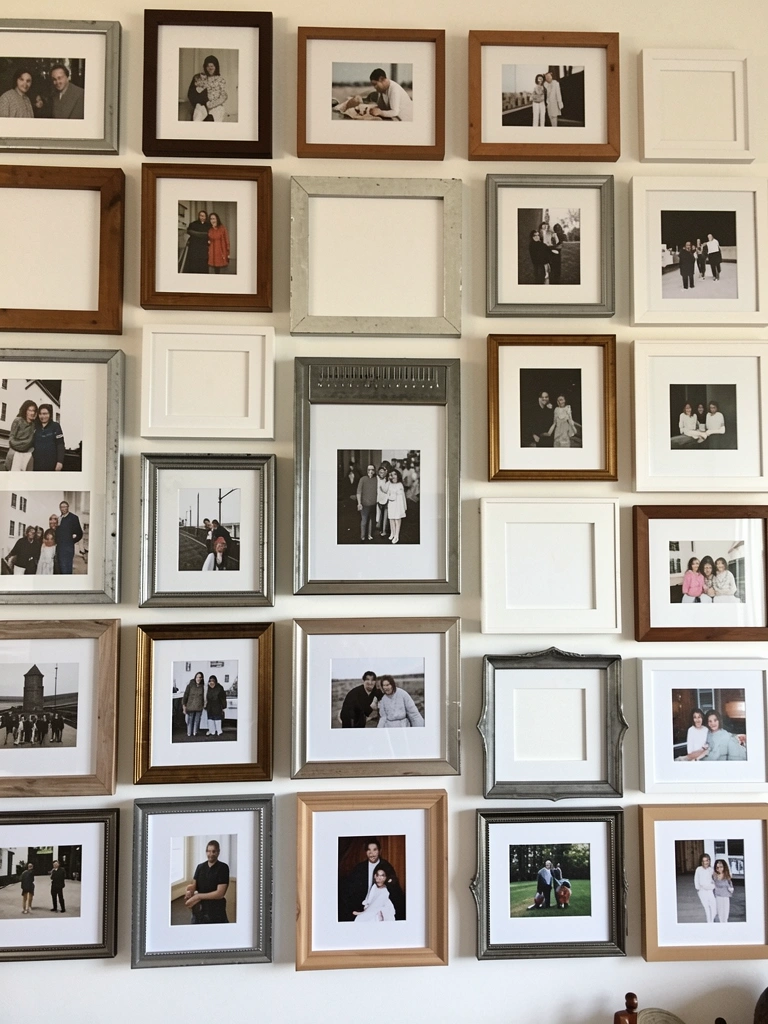
A gallery wall of mismatched frames is quintessentially farmhouse—it celebrates imperfection and creates visual interest that a single piece can’t achieve. It also tells your personal story through collected photographs and art.
Gather frames from thrift stores, estate sales, and IKEA ($3–$20 each) in wood, metal, white, natural, and mixed finishes. Create an asymmetrical grid rather than perfectly aligned rows. Include a mix of photographs, prints, botanical art, and even empty frames for visual interest. Lay frames on the floor first to plan arrangement, then hang. Mix frame sizes and orientations for authentic collected-over-time feel. Swap out photos seasonally or as your life evolves.
Your wall becomes a personal timeline and conversation starter. Gallery walls feel lived-in and genuine in a way single pieces never can.
22. Style Your Coffee Table with Layered Decorating
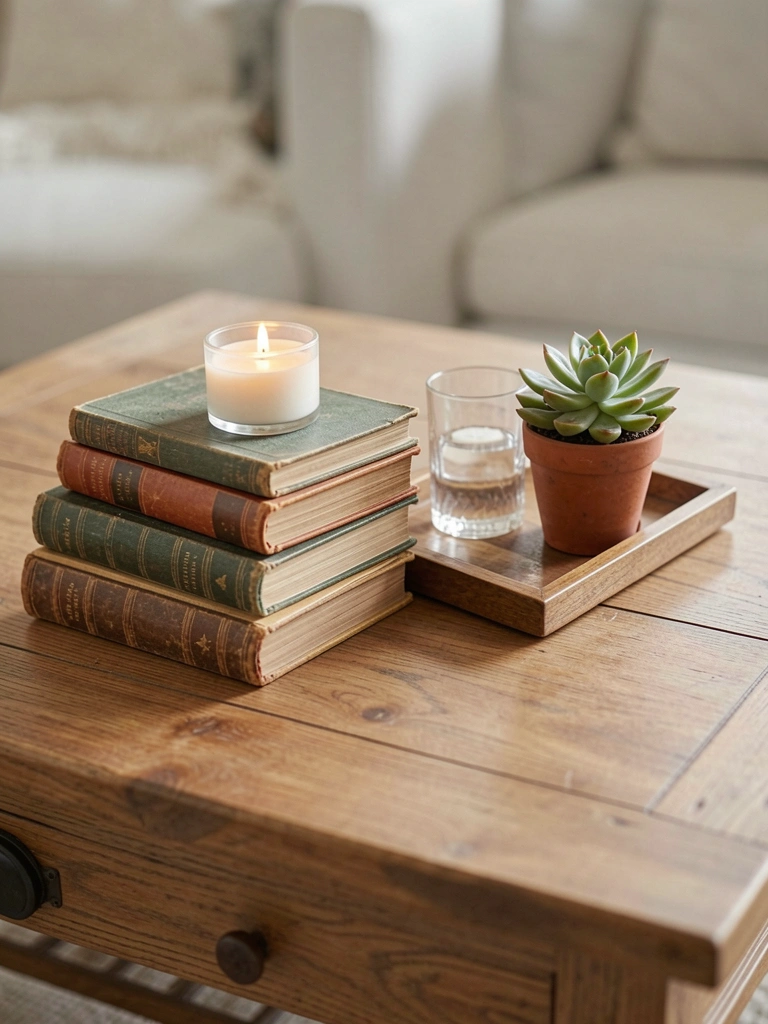
Your coffee table is constantly visible, making styling intentional here pays dividends. Farmhouse coffee table styling is about balance—functional objects mixed with decorative elements, nothing too precious.
Use the “tray trick”: place items on a small wooden or brass tray ($15–$30) to anchor the grouping. Stack 3–4 vintage books ($3–$10 each) as height variation. Add a candle, small plant, or decorative object. Leave one quarter of the table clear for actual use—holding a mug, remote, or open book. Change seasonal styling every 3 months. Don’t overstyle: a farmhouse table serves a family, not just looks pretty.
Your coffee table becomes functional art. Visitors notice the intentional arrangement while the table remains usable for daily life.
23. Install a Wooden Beam Mantel Over Your Fireplace
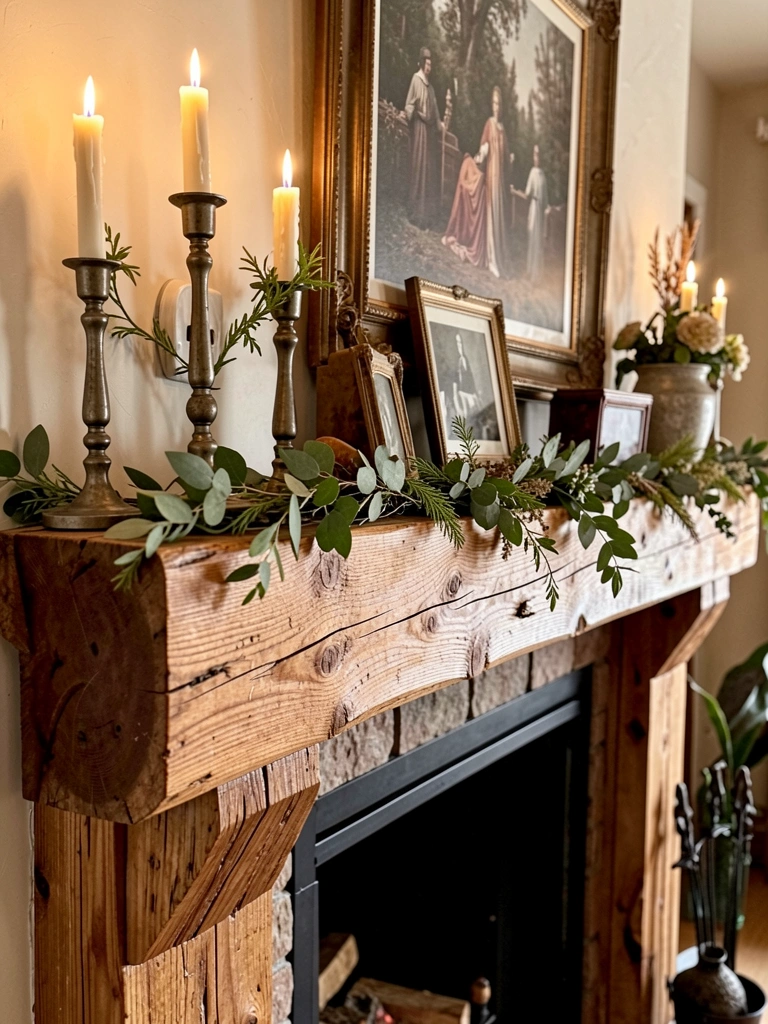
A wooden mantel beam is the ultimate farmhouse focal point—it’s substantial, visibly aged, and creates architectural gravitas without major renovation. This is a statement piece worth investing in.
Source reclaimed wood beams from salvage yards or specialty lumber suppliers ($200–$600 depending on length and wood type). Installation requires professional help ($300–$800) to ensure proper support and safety—this is not a DIY project. Paint the wall behind in shiplap or keep it simple. Style the mantel with symmetrical pairs of candlesticks, a centered mirror or artwork, and layered greenery. The beam itself is the statement; don’t over-style.
Your fireplace becomes unmistakably farmhouse. A wooden beam mantel is an investment that increases perceived home value and becomes the focal point every guest notices.
24. Add Vintage Enamelware for Color and Nostalgia

Vintage enamelware is functional farmhouse decor: mixing bowls, colanders, pitchers, and canisters that were everyday necessities now become charming decorative objects. The worn finishes and nostalgic shapes are quintessentially farmhouse.
Hunt Etsy, estate sales, flea markets, and antique shops for genuine vintage enamelware ($5–$25 per piece depending on age and condition). Look for chipped edges and faded paint—these signs of age add authenticity. Mix colors: white with red trim, blue and white, solid colors. Hang on open shelving, pegboard, or stack on a console. Group by type or color for visual coherence. Don’t refinish vintage pieces; the wear is the charm.
Your space gains nostalgia and handmade character. Enamelware tells a story of everyday living better than any new purchase can.
25. Create Contrast with Dark Wood Ceiling Beams

Dark beams against light walls create visual contrast that makes rooms feel architecturally sophisticated while staying cozy. The contrast draws eyes upward and emphasizes ceiling height.
If installing new beams, go dark: espresso, dark walnut, or even black for modern farmhouse ($100–$150 per faux beam from Home Depot). Paint existing beams dark if they’re currently light wood. The contrast creates drama and definition—it’s bold but reads as intentional, not accidental. Keep walls light to let beams be the focal point. This technique works especially well in open-concept living rooms where it creates visual separation without walls.
Your room gains architectural interest and perceived height. Dark beams become a design statement rather than just structural necessity.
26. Mix Old and New Furniture for Authentic Layering
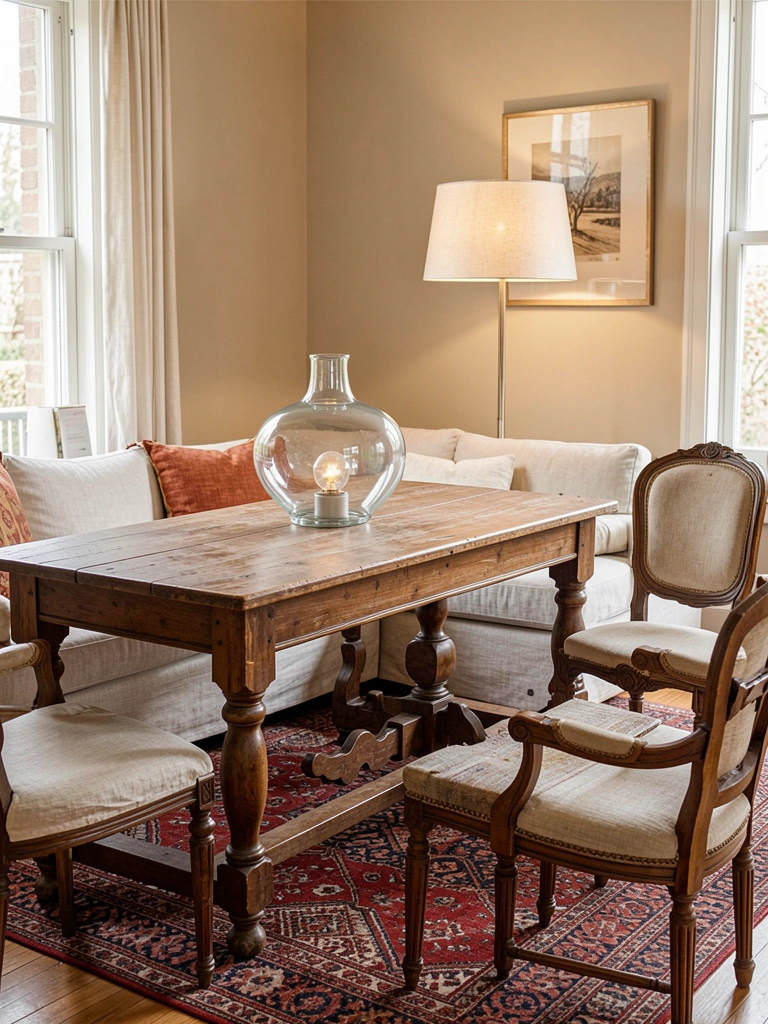
Farmhouse style is fundamentally about mixing periods and styles—nothing says “authentic” like a room that’s evolved over years with pieces from different eras. Too much new furniture feels sterile; too much old feels like a museum.
Aim for a 60/40 or 70/30 mix: more vintage or antique pieces than new, but enough new pieces for comfort and function. Pair a new upholstered sofa with antique side chairs, a modern lamp with a vintage table. Let the room tell a story of different collecting moments. Don’t worry about matching perfectly; varied wood tones, finishes, and styles create authenticity that coordinated suites can’t replicate.
Your room feels genuinely lived-in and collected rather than purchased from one catalog. Guests see a curated space that reflects real taste and patience rather than a staged advertisement.
Save this post and try one styling idea this weekend—pick something small that excites you and see how it shifts your whole room. Which idea will you tackle first?
Leave a Reply