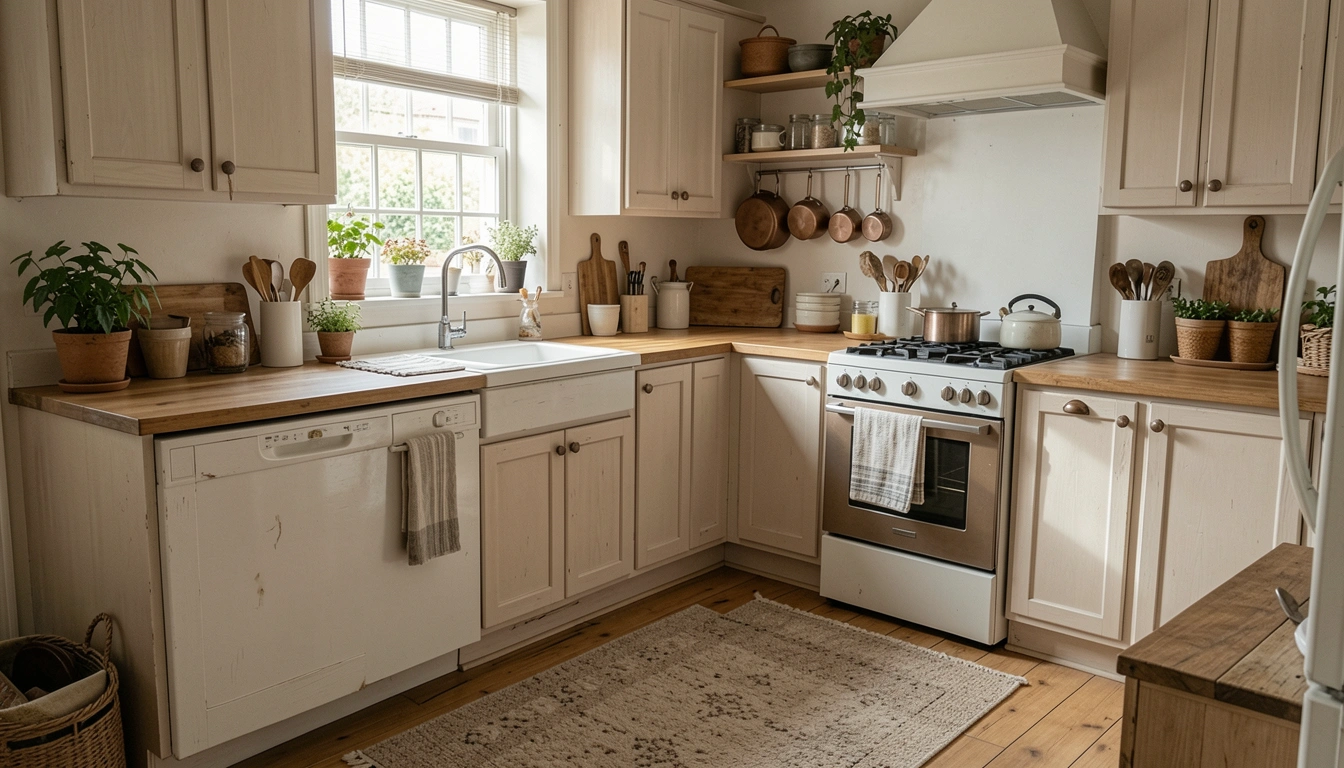
I remember standing in my kitchen, staring at that empty corner floor. Dust gathered there. It pulled the whole room off balance. No one sat or lingered near it.
Kitchens should feel comfortable, even in odd spots. That corner just sat dead.
I've fixed a few like this. It starts with seeing the floor as part of the flow.
How to Decorate Kitchen Corner Floor
This shows you how to fill a kitchen corner floor so it grounds the space. You'll end up with a spot that invites a quick coffee break or plant watering. It's simple changes that make the room feel whole.
What You’ll Need
- small jute area rug 3×5 feet
- tall fiddle leaf fig floor plant in woven basket
- round wooden stool 18-inch height
- seagrass storage basket 14-inch diameter
- ceramic plant pot 10-inch white
- woven floor mat runner neutral tones
- small metal tray 12×12 inches
- dried pampas grass bunch
Step 1: Clear the Corner and Feel the Floor Space
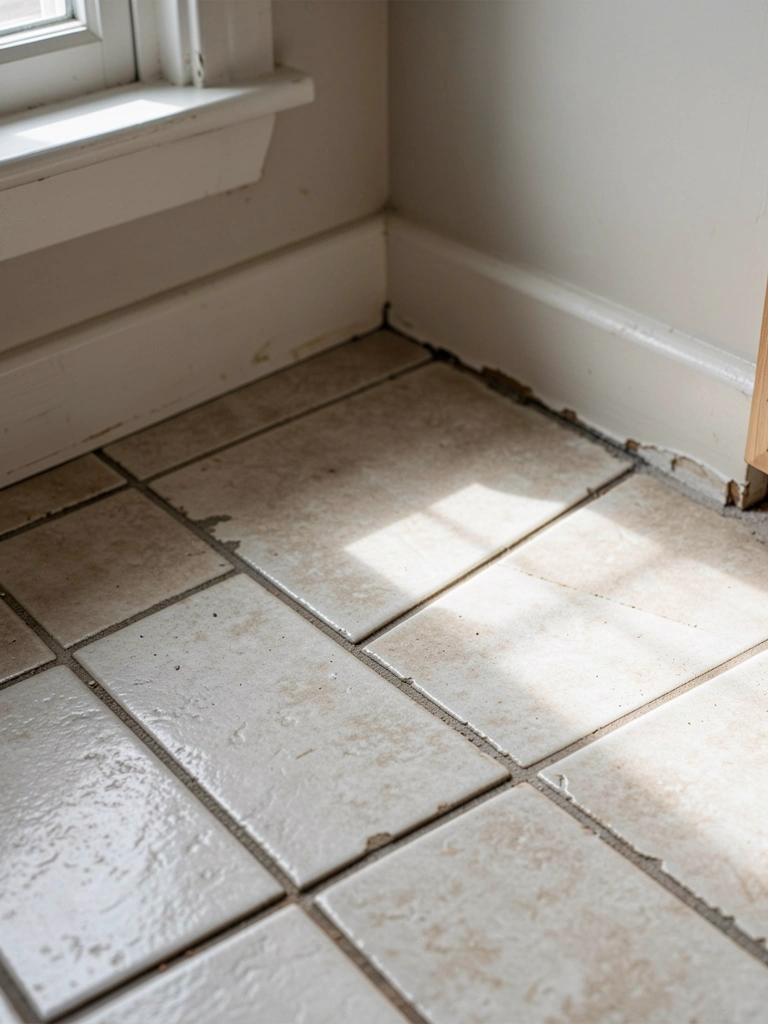
I start by sweeping the corner floor clean. Move out any junk that's piled up. This lets me see the actual shape—maybe it's tight against cabinets or wide open.
Now the floor breathes. It changes from ignored to waiting. People miss how much light hits here during meals; note that for balance.
Don't cram it full right away. That makes it feel crowded. I step back, walk through the kitchen. The floor should pull you in gently.
I place my foot there. Does it feel stable? That's the base feel we're building.
Step 2: Anchor with a Low Rug Layer
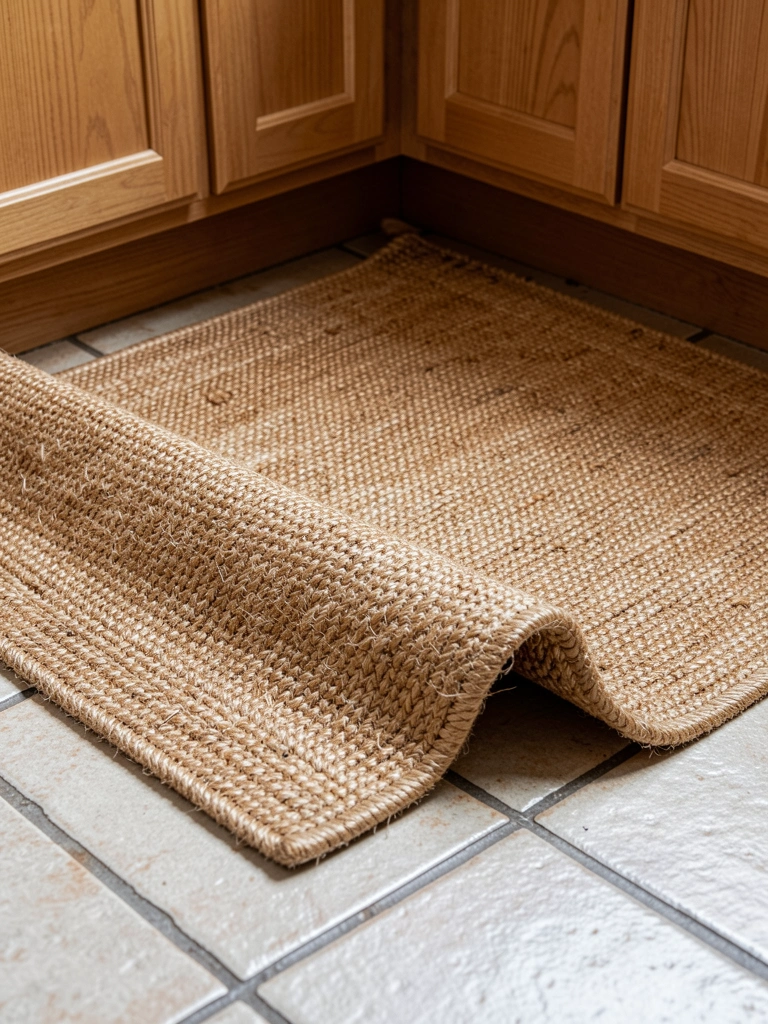
Next, I lay down a small rug. Pick one that fits snug, not wall-to-wall. Jute works—it's neutral, hides spills.
Visually, the corner warms up. The texture softens hard tiles. Most overlook rug height; low-pile keeps it floor-level, not tripping.
Avoid centering it perfectly. Offset slightly toward the room's flow. I tug edges till it feels lived-in.
Stand back. The kitchen path feels smoother now.
Step 3: Build Height from the Floor Up
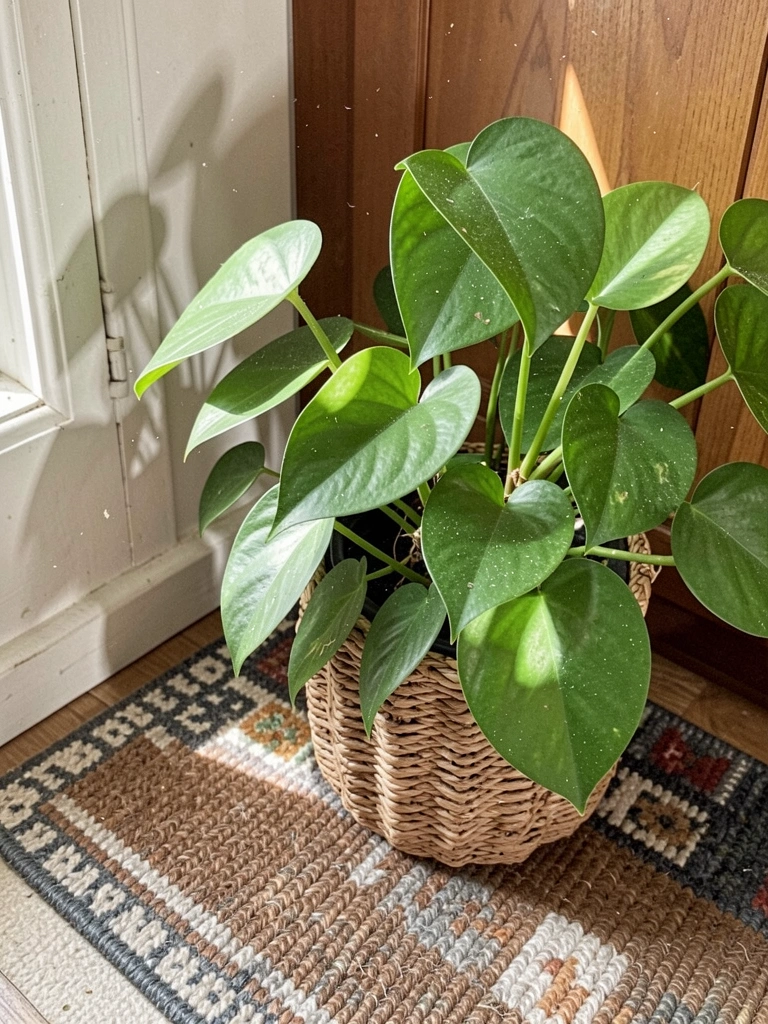
I add a tall plant next, rooted in the rug center. Fiddle leaf fig gives scale without overwhelming.
The corner gains depth—floor to ceiling pull. Insight: plants sway light around; watch how it dances here mornings.
Skip fake ones; they look flat on floor. Real greens breathe life.
I rotate it daily. Keeps the balance fresh.
Step 4: Layer a Seat for Comfort
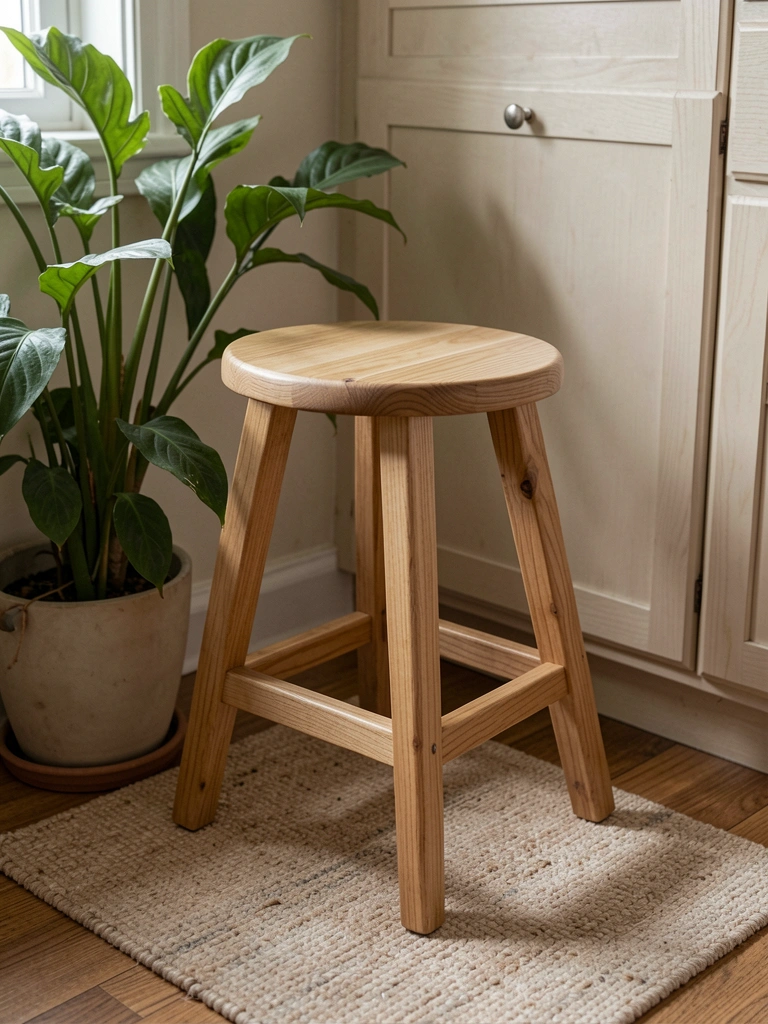
Now a low stool goes beside the plant. Round wood one, just tall enough for perching.
It invites pause—grab a stool for chopping veggies. Floor feels used, not empty. People forget seats ground corners; without, it's just pretty.
Don't match heights exactly. Slight difference adds interest. I test-sit; adjusts the whole feel.
Kitchen flows better.
Step 5: Fill the Base with Baskets
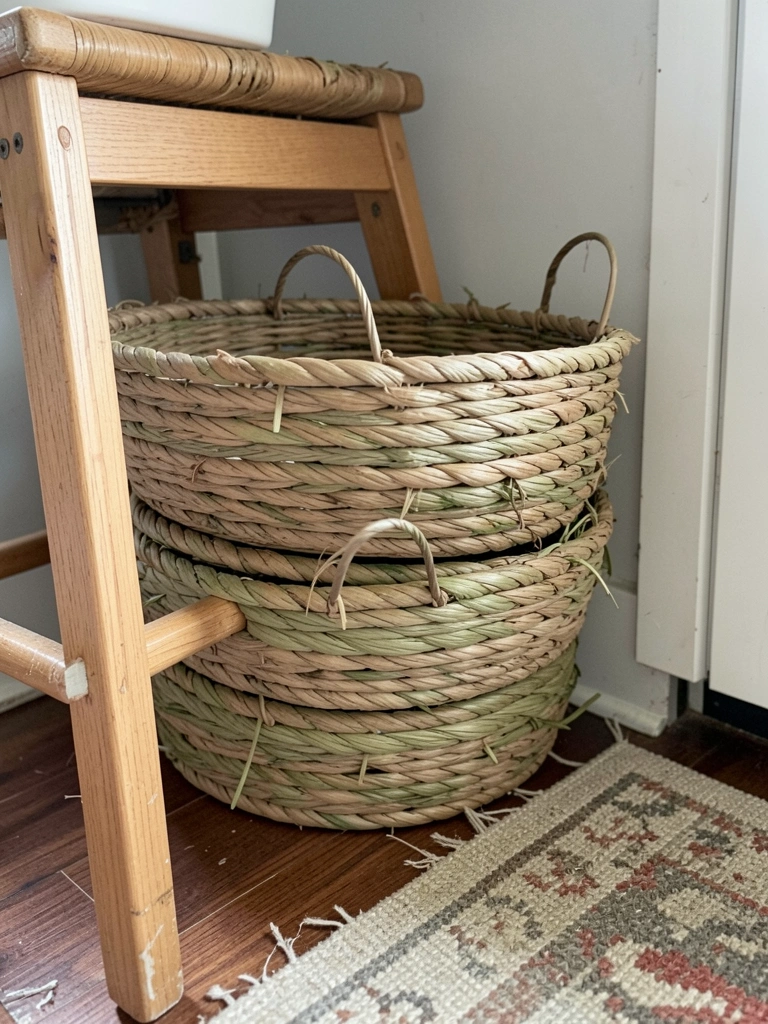
I tuck baskets at the base. One for onions, another empty for towels.
The floor layers complete—nothing echoes. Missed insight: baskets hide mess but show texture peeking out.
Avoid overstuffing; half-full looks intentional. I nudge till shadows play right.
Spot feels settled.
Step 6: Accessorize Low and Balance
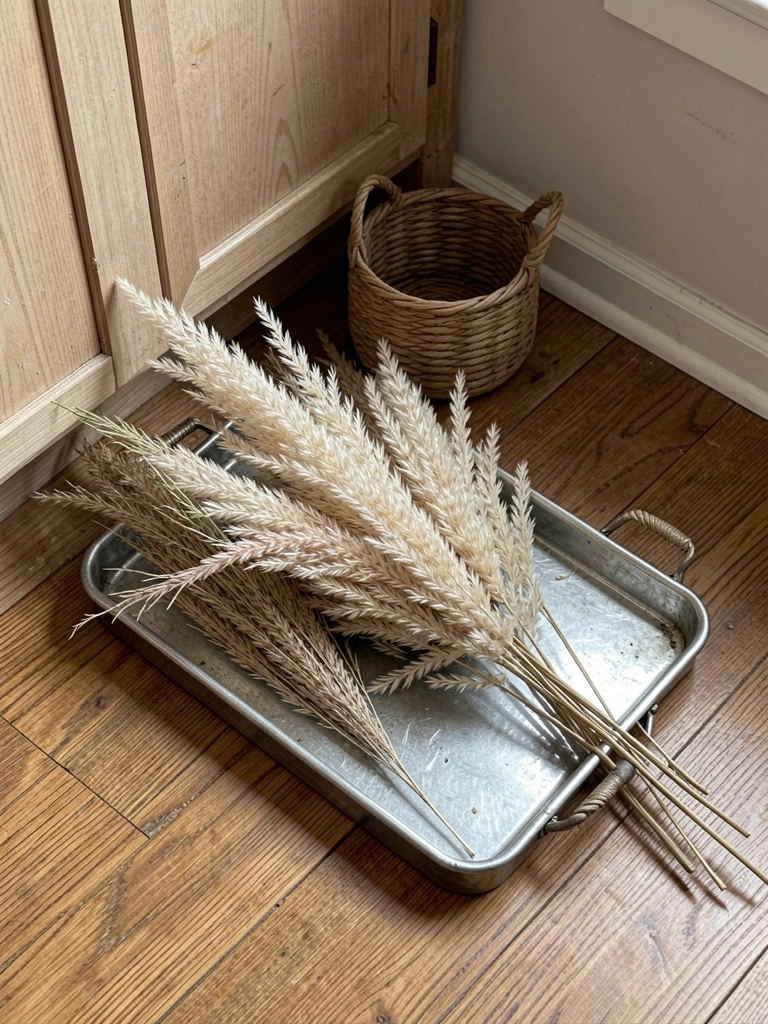
Finally, a tray with dried grasses on the floor edge. Keeps it low, airy.
Everything balances—weight low, height varied. Floorside details tie it. Don't add tall stuff last; overpowers base.
I walk by, glance. Corner holds its own now.
Common Mistakes I’ve Made
I once shoved a big rug in. Tripped everyone.
Or skipped the plant. Flat and boring.
- Push items too close to walls—loses air.
- Ignore foot traffic. Test paths.
- Match everything. Mix textures win.
Learned slow.
Adjusting for Your Kitchen Size
Small kitchens? Scale down—tiny rug, slim plant.
Mine's medium; fits standard.
Larger? Double baskets.
- Measure twice.
- Eye from doorway.
- Less is floor balance.
Feels right adjusted.
Refreshing Through Seasons
Twice yearly, I swap grasses for bulbs.
Rug stays; anchors.
- Spring: Fresh greens.
- Fall: Warm tones.
- Wipe dust weekly.
Keeps corner alive.
Final Thoughts
Start with just the rug. See how it sits.
You've got this—corners fix easy.
Now your kitchen floor feels part of the room. Brew coffee there tomorrow.
Leave a Reply