Introduction
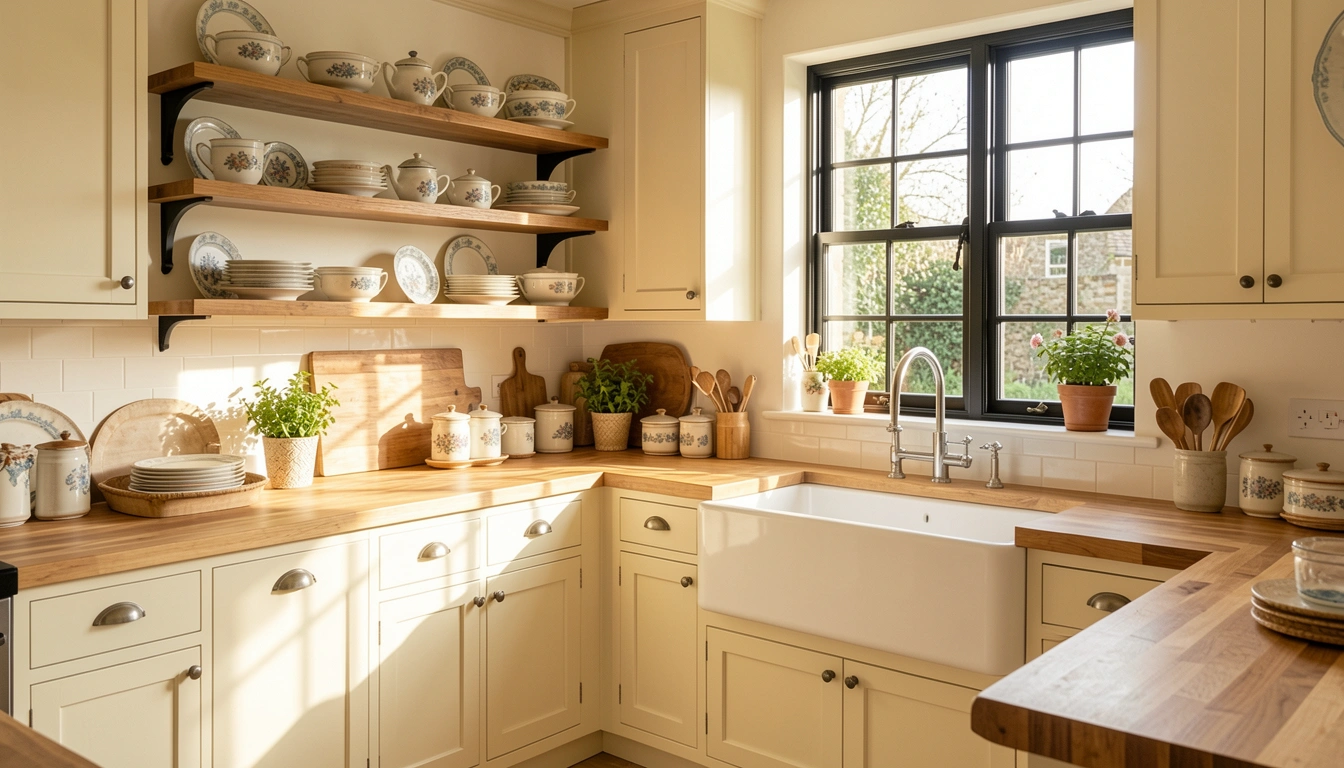
If you’re craving a kitchen that feels both welcoming and sophisticated, modern farmhouse design hits that sweet spot perfectly. It blends the warmth of rustic elements—think exposed wood and vintage touches—with the clean lines and functionality of contemporary spaces. The result? A kitchen that doesn’t feel precious or overly styled, but rather like the heart of a home where people actually gather. Whether you’re renovating from scratch or tweaking what you already have, these 25 ideas will help you create a farmhouse kitchen that’s practical, beautiful, and entirely yours. You’ll discover everything from budget-friendly styling tricks to investment pieces that anchor the whole aesthetic. Let’s get started.
1. Install an Apron-Front Sink as Your Centerpiece
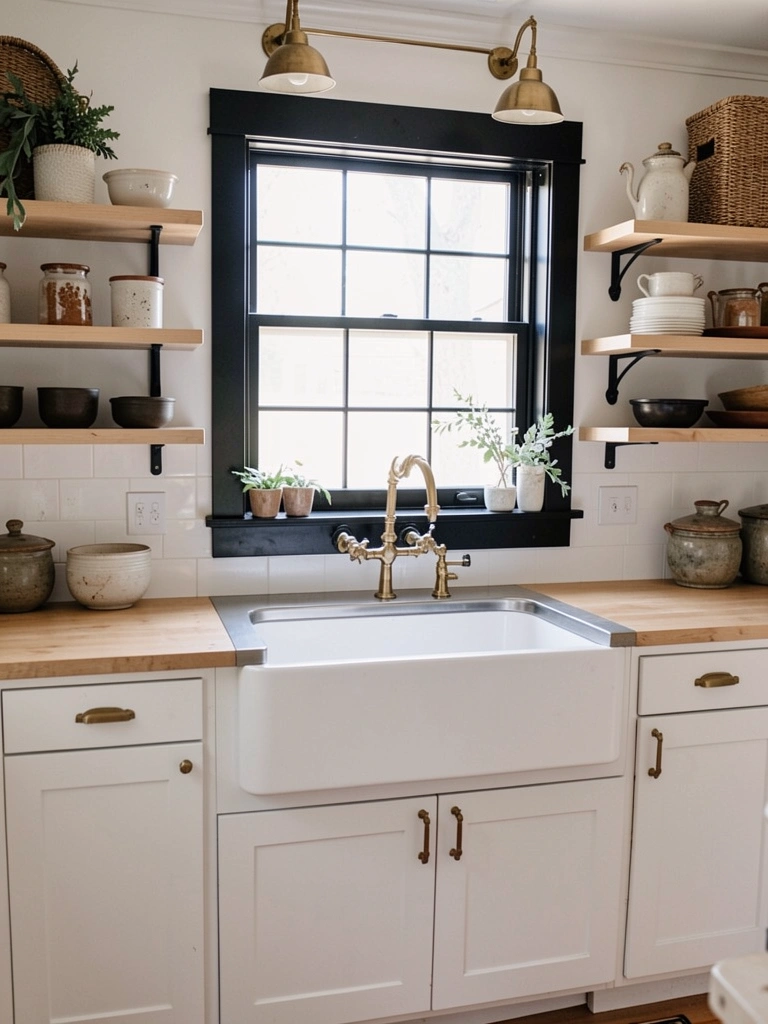
An apron-front sink (also called a farmhouse sink) is the signature piece that defines this style. Its large, exposed front basin and deep capacity make everyday tasks easier while creating an instant focal point in your kitchen.
You can find quality options at Home Depot ($300–$800), Wayfair ($250–$1,200), or Amazon ($200–$600). Ceramic, fireclay, and stainless steel are the most durable materials. Installation takes a professional plumber about 2–3 hours, though it’s not a DIY project for most renters. Pair it with a vintage-style bridge faucet or modern brass fixtures to complete the look.
Position your sink in front of a window if possible—it’s not just prettier, it makes dish duty feel less like a chore. This one piece sets the tone for your entire farmhouse aesthetic.
2. Paint Cabinets in Soft, Muted Tones
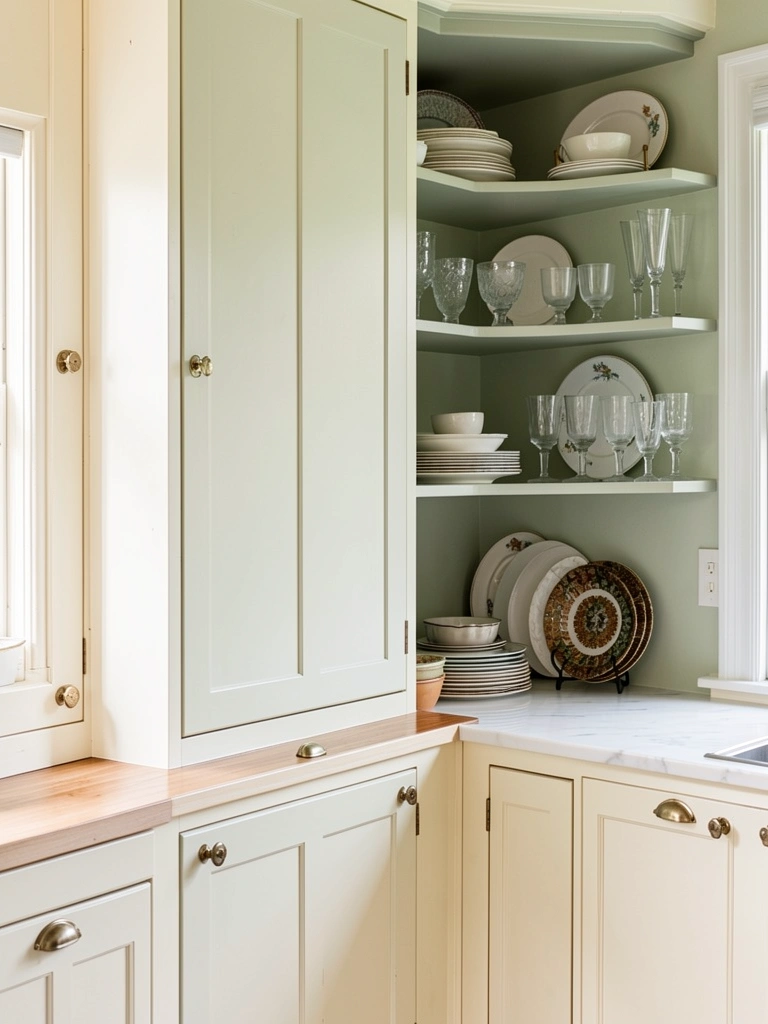
Skip the stark white and embrace softer, personality-filled cabinet colors. Cream, pale sage green, dusty blue, or warm taupe give farmhouse kitchens that lived-in charm without feeling sterile.
Cabinet paint runs $30–$80 per quart, plus prep work and primer. If you’re handy, this is a DIY project taking one weekend (prep, prime, paint in thin coats). For a professional job, expect $1,500–$3,500 depending on cabinet count. Use quality paint like Sherwin-Williams ProClassic or Benjamin Moore Advance—it’s worth the extra cost. Test your color in natural light before committing; what looks perfect in the store may shift dramatically at home.
The payoff is enormous: your kitchen goes from builder-basic to designed-on-purpose in one update. Plus, these softer tones hide fingerprints better than white.
3. Add Open Shelving for Display and Breathing Room

Open shelving replaces upper cabinets or supplements them, creating visual lightness and space for displaying your favorite kitchenware and cookbooks. It’s the farmhouse hallmark that makes kitchens feel airy rather than enclosed.
Floating shelves cost $15–$50 per shelf (basic wood or metal brackets), or reclaimed wood shelves run $40–$150 each. Installation is a 1–2 hour DIY project if you locate studs correctly, or hire a handyperson for $50–$100. The trick is styling intentionally: group like items (all white dishes, glass jars with dried goods), and leave negative space. Too crowded looks cluttered, not charming.
You’ll love how much lighter your kitchen feels, and you’ll actually reach for those pretty bowls and glasses more often. Just commit to keeping shelves tidy—open storage shows everything.
4. Install Shiplap on Accent Walls or Behind Shelves
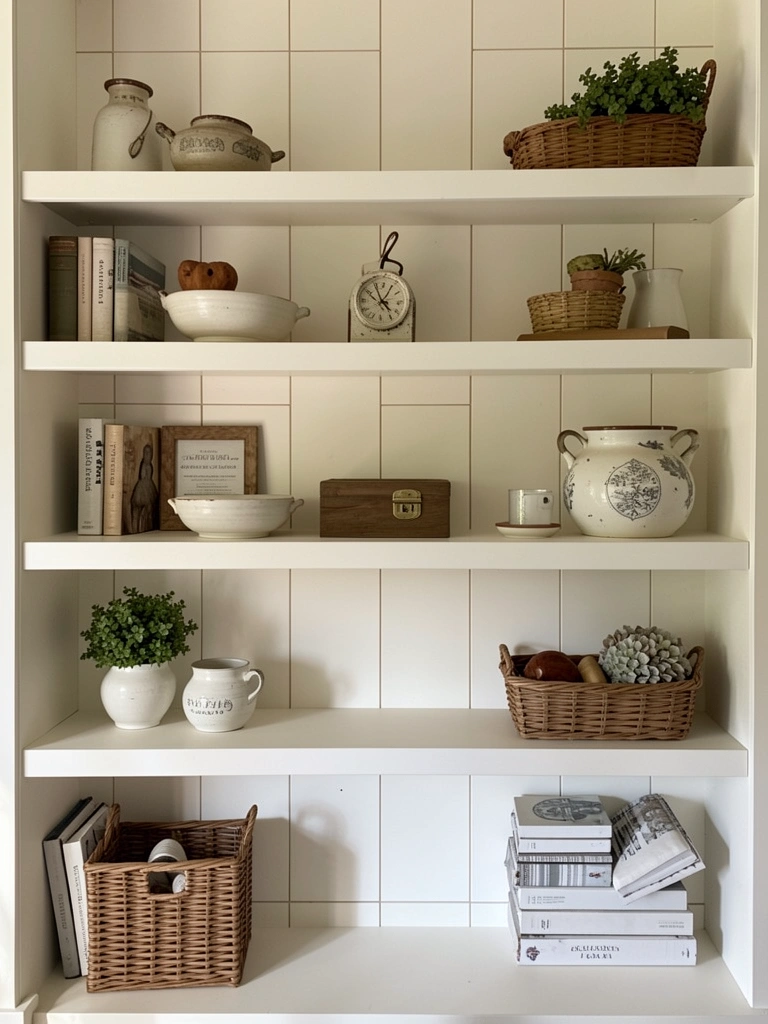
Shiplap—those overlapping horizontal wooden boards—is quintessential farmhouse texture. It adds visual interest without requiring a full renovation and works as a DIY project or hired labor job.
Tongue-and-groove pine shiplap costs $1–$3 per square foot at big-box stores, plus paint ($30–$60). A 4×8-foot accent wall runs about $50–$150 in materials. Installation is manageable if you’re comfortable with a stud finder and nail gun; budget one weekend. Alternatively, hire a carpenter for $200–$600 depending on wall size. Prime and paint in your chosen farmhouse color—cream, white, or pale blue work beautifully.
This single addition gives your kitchen that authentic farmhouse personality that’s hard to fake with decor alone. It’s an investment that pays off visually every single day.
5. Choose Butcher Block or Wood Countertops
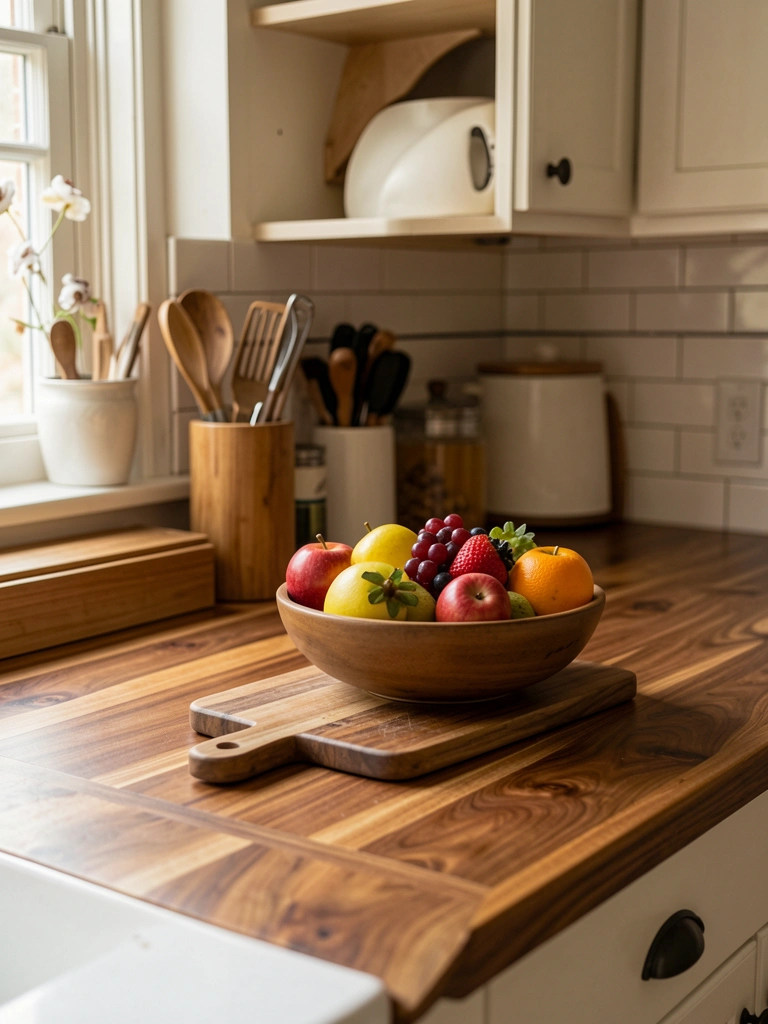
Wood countertops embody farmhouse warmth in a way that cold quartz or laminate simply can’t match. Butcher block, live-edge wood, or reclaimed barn wood bring character and timelessness to your kitchen.
Butcher block runs $1,500–$3,500 installed, while high-end walnut or hand-planed reclaimed wood costs $3,000–$6,000+. Budget options include new wood counters from Lumber Liquidators ($40–$60 per linear foot). Wood requires maintenance—monthly mineral oil conditioning, immediate water cleanup, and heat protection—but that patina and warmth are irreplaceable. Pair with a wooden cutting board for styling continuity.
Yes, wood demands care, but it ages beautifully and develops character that makes your kitchen story-rich. Many farmhouse lovers consider maintenance a small price for authenticity.
6. Swap Out Hardware for Vintage or Brass Pieces
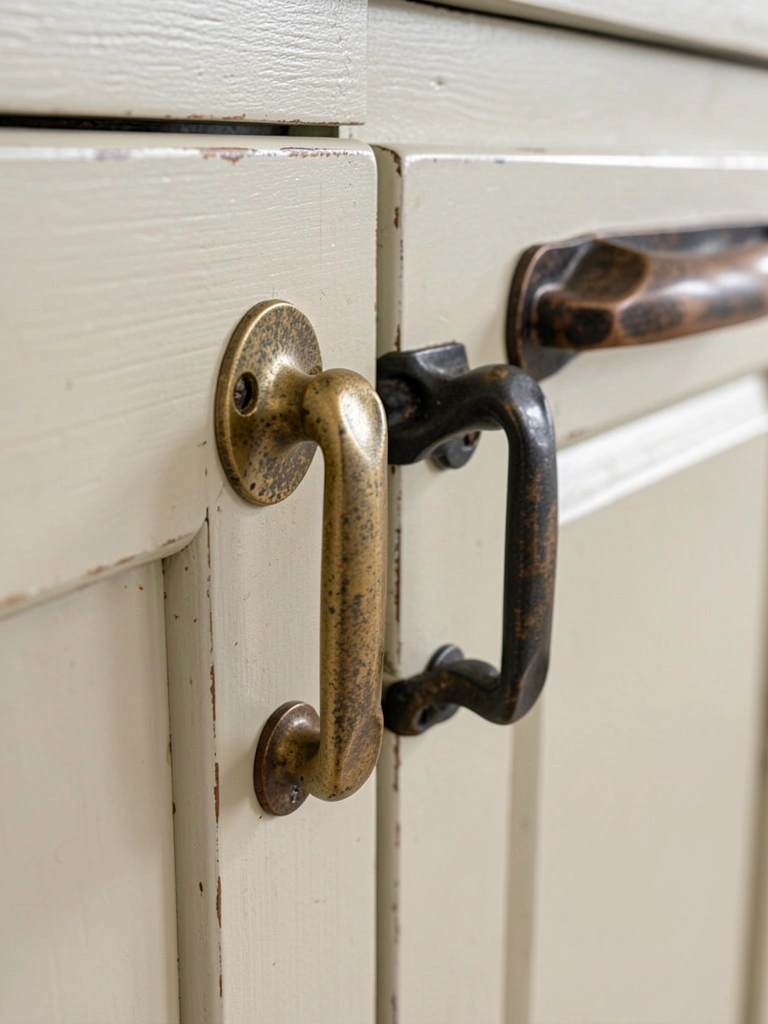
Hardware is the jewelry of kitchen design—a tiny change that makes enormous visual impact. Replacing builder-grade chrome knobs and pulls with vintage brass, oil-rubbed bronze, or wrought iron instantly boosts farmhouse credibility.
Vintage hardware ranges from $2–$10 per piece at Etsy, eBay, or Anthropologie. New reproduction pieces cost $3–$15 each from Wayfair, Rejuvenation, or Restoration Hardware. A full cabinet refresh (20–40 pieces) runs $60–$400 total. Installation is pure DIY—just unscrew old hardware, align holes, and install new pieces. Takes 30–60 minutes for an entire kitchen.
The transformation is disproportionate to the effort. Your cabinets go from forgettable to intentional with this one detail, and it costs less than takeout dinner.
7. Install Black or Dark Wood Trim Around Windows

High-contrast trim—black, charcoal, or dark stained wood framing windows and doorways—defines modern farmhouse style with unexpected graphic punch. It grounds the space and draws the eye where you want it.
Paint-grade trim costs $1–$3 per linear foot, plus primer and paint ($30–$60 total). A standard window frame requires about 12–15 linear feet, so material costs are $15–$45. This is an achievable DIY project if you’re comfortable with tape, primer, and paint; plan one weekend. Alternatively, hire a painter for $200–$400 per window. Use quality exterior or interior trim paint like Benjamin Moore Advance to ensure durability around moisture-prone window areas.
This architectural detail transforms your kitchen from generic to intentional. It’s especially striking against cream or pale-colored walls.
8. Layer Lighting with Pendant Fixtures and Vintage Sconces
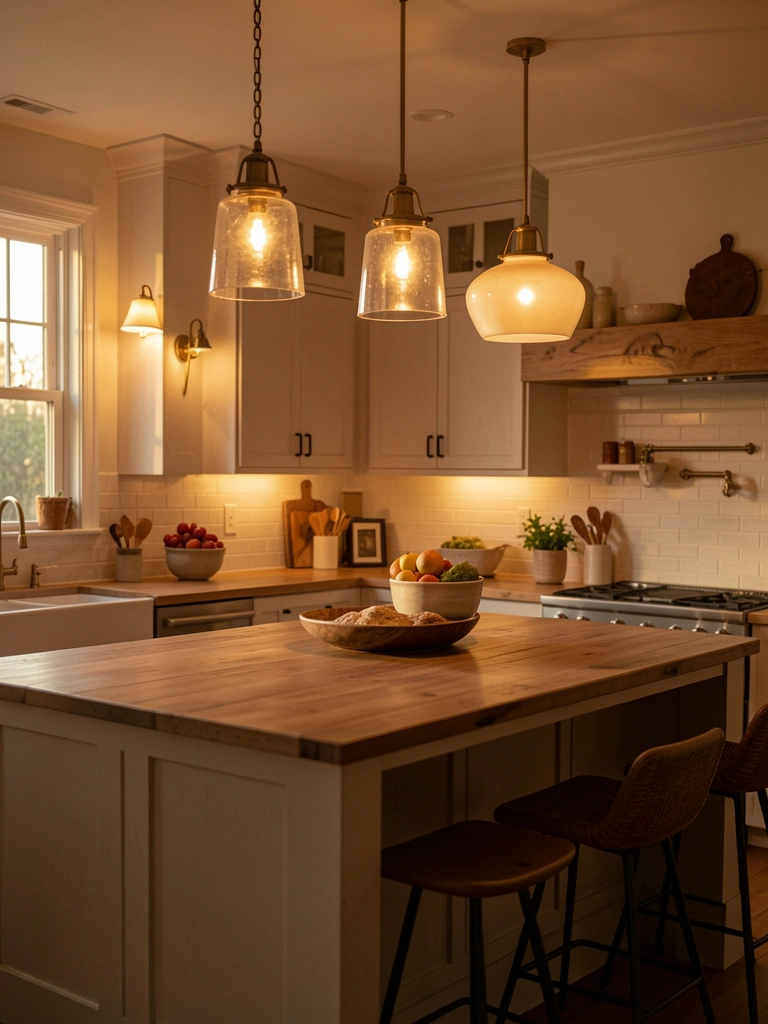
Lighting in farmhouse kitchens should feel warm, welcoming, and layered. Mix statement pendants over islands, softer sconces flanking the sink, and under-cabinet task lighting to create depth and functionality.
Pendant fixtures range from $30–$150 each at IKEA or Target, to $200–$600 from Rejuvenation or Schoolhouse Electric. Vintage sconces cost $20–$100 per pair on Etsy. Installation requires basic electrical knowledge or a licensed electrician ($100–$300 per fixture). Mix metals—brass, black iron, and ceramic—rather than matching everything perfectly. That collected-over-time quality is more farmhouse than matchy-matchy.
Warm light fundamentally changes how your kitchen feels. Suddenly it becomes an inviting gathering space rather than just a functional room. You’ll find yourself spending more time there.
9. Add a Large Wooden Island or Cart
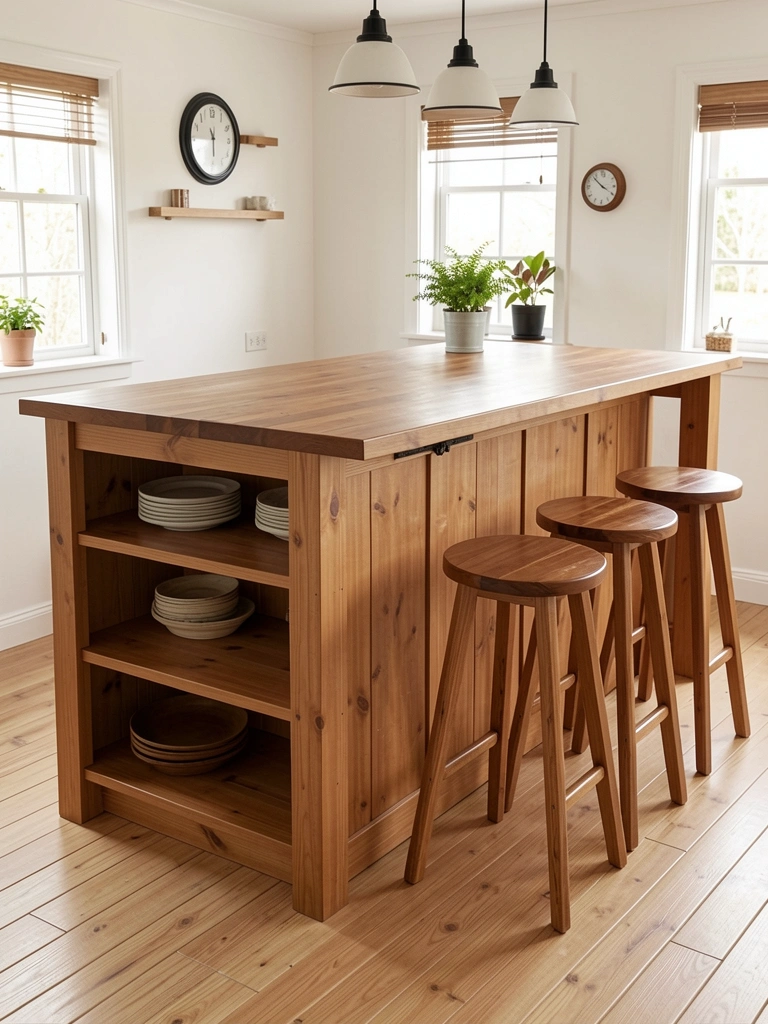
An island serves multiple roles: extra prep space, storage, casual dining, and a visual anchor. A wooden island feels more farmhouse than sleek granite—it’s warm and approachable.
New wooden islands cost $400–$1,500 from IKEA, Wayfair, or local woodworkers. Reclaimed wood or custom builds run $1,500–$4,000+. Pair with 24–26 inch bar stools ($80–$300 each) for casual seating. If you rent or want flexibility, cart-style islands on wheels ($200–$800) work beautifully and move when needed. Size matters: ensure at least 24 inches of walking space on all sides to avoid a cramped feel.
An island becomes the heartbeat of your kitchen—where people naturally gather, chat while you cook, and eat casual meals. It transforms a purely utilitarian space into a social hub.
10. Install Open Shelving Above Your Sink
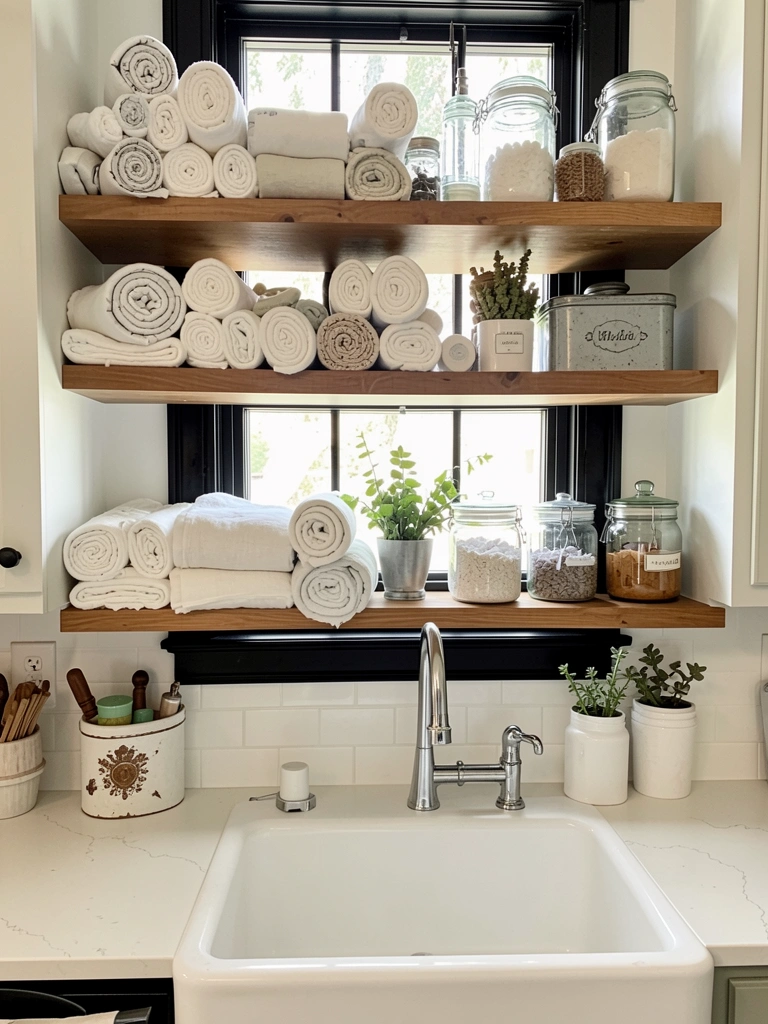
The wall above your sink is prime real estate for displaying both beauty and function. Open shelves here let you corral dish towels, soap dispensers, and pretty storage while keeping essentials within arm’s reach.
Floating shelves cost $15–$50 each, and you’ll likely need 2–3. Total material investment: $50–$150 plus installation (DIY, 1–2 hours, or $50–$100 hired help). Use the opportunity to anchor your farmhouse aesthetic: display vintage-style hand towels, glass water bottles, and creamy ceramic soap dispensers. The key is mixing function with beauty.
This zone becomes a daily reminder of your thoughtful design. Plus, your family learns to grab what they need from pretty display rather than digging through cabinets.
11. Use Vintage or Reproduction Tile for Backsplash
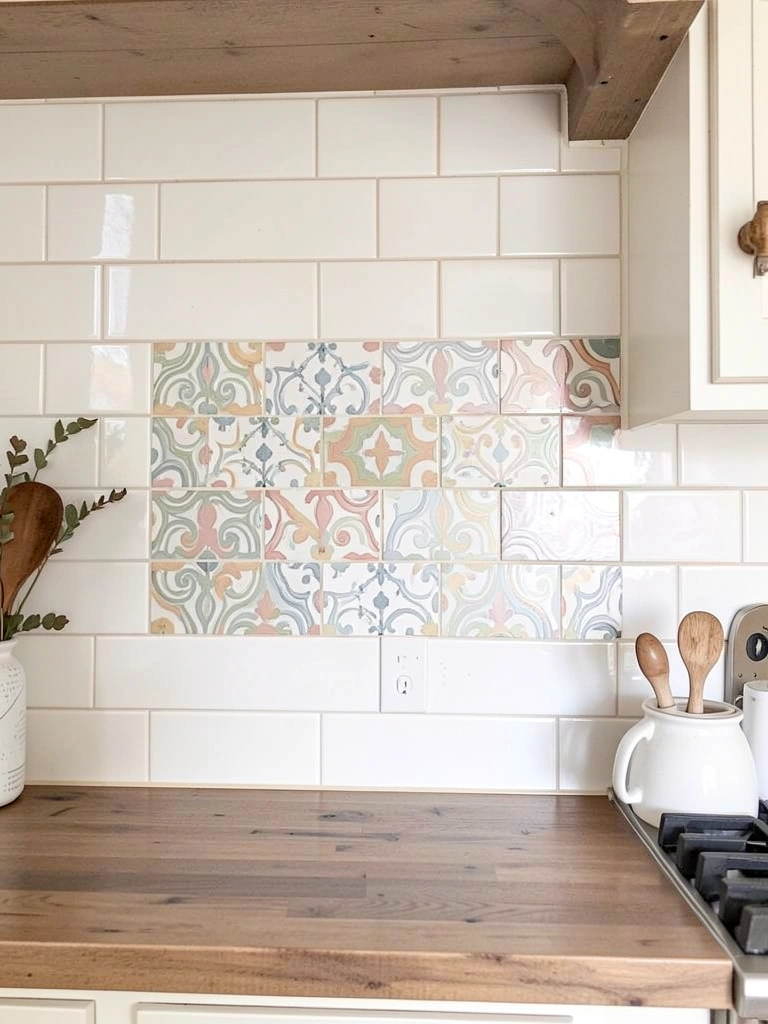
A classic subway tile or vintage-reproduction tile backsplash is farmhouse 101. Whether white subway, soft blue, or handmade-looking glazed tiles, this backsplash style grounds the entire aesthetic.
Subway tile costs $1–$5 per square foot, while vintage or artisanal reproduction tiles run $3–$10 per square foot. A standard kitchen backsplash (30–40 square feet) costs $100–$300 in materials, plus grout and adhesive. Professional installation runs $500–$1,500 depending on complexity. DIY is possible if you have basic tile experience; plan a full weekend. Neutral grout (white, light gray, or beige) keeps the look clean; darker grout creates more contrast and hides stains better.
A well-designed backsplash ties the whole kitchen together and makes the space feel professionally finished, not DIY-basic.
12. Incorporate Vintage Accessories and Collections
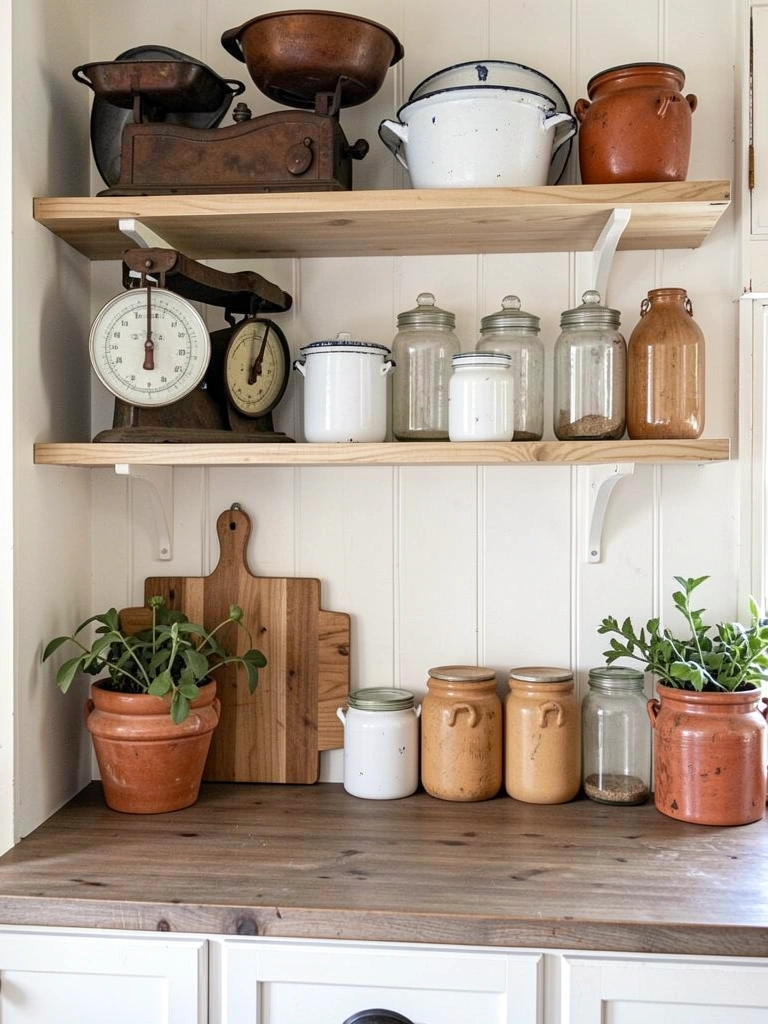
Farmhouse style thrives on vintage—it’s not about matching sets but rather a curated collection of meaningful pieces gathered over time. Vintage scales, enamelware, old crocks, and inherited glassware tell your kitchen’s story.
Vintage pieces range from free (inherited or found) to $5–$50 per item at thrift stores, estate sales, and Etsy. Budget $100–$300 to start a meaningful collection. The trick is mixing scales: a large vintage scale as a statement piece, smaller crocks and jars grouped together, vintage linens folded and displayed. Rotate pieces seasonally to keep the space feeling fresh.
Your kitchen becomes less about perfect design and more about your actual life and history. That authenticity is what makes farmhouse kitchens feel like real homes.
13. Paint or Stain Beams or Ceiling Elements
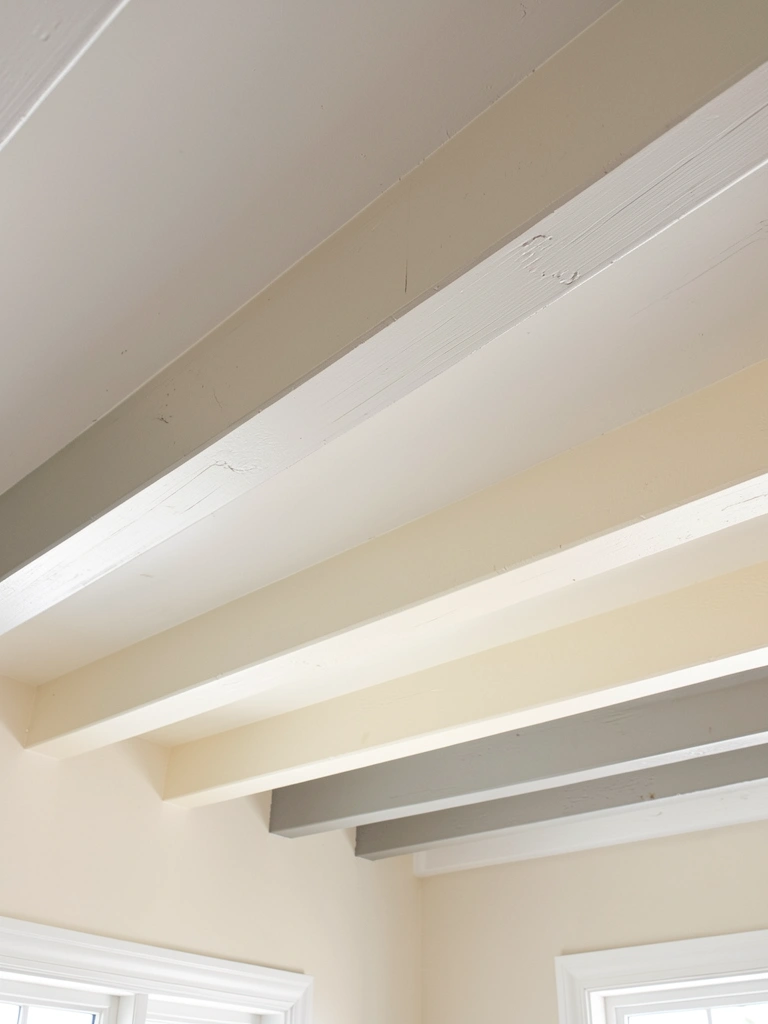
If you have ceiling beams or can install faux beams, painting them in soft colors adds architectural interest and authentic farmhouse charm. Even popcorn ceilings look less aggressive when softened with paint.
Ceiling paint costs $30–$60 per gallon. DIY painting your entire ceiling takes a weekend plus proper scaffolding or a tall ladder setup. Professional painters charge $400–$800 for a full kitchen ceiling. Faux beams (foam or polyurethane) cost $5–$15 per linear foot and require adhesive and painting. Real wood beams run $20–$50 per linear foot installed.
This overhead element subtly elevates your entire space. Suddenly your kitchen feels more substantial, more considered—like a room worth lingering in.
14. Choose Brass or Black Iron Faucets
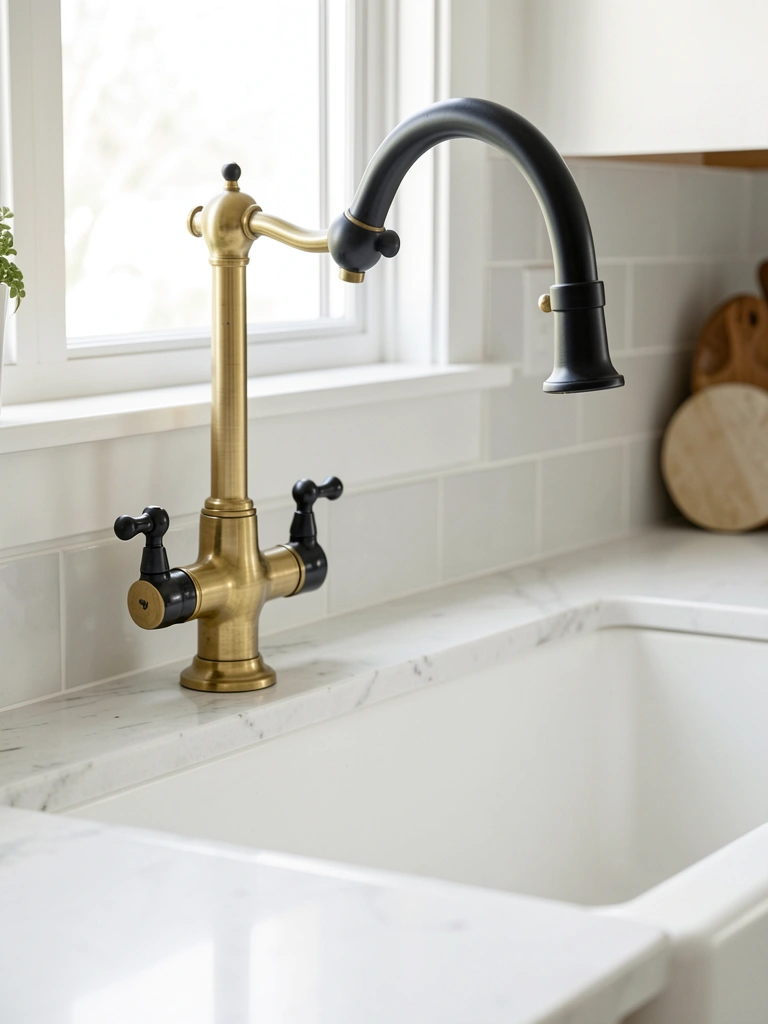
Your faucet is another hardware piece that sets the tone. Vintage-inspired brass, oil-rubbed bronze, or black matte faucets feel authentically farmhouse—far more character than shiny chrome.
Bridge-style or gooseneck faucets in brass or black cost $150–$400 from Wayfair, Rejuvenation, or Lowe’s. Professional installation runs $100–$200. If you’re replacing an existing faucet, DIY is possible but requires plumbing confidence. Consider finishes that hide water spots—brushed finishes work better than polished.
Your faucet becomes part of the daily ritual. Using something beautiful and intentional, rather than generic, makes ordinary tasks feel slightly more pleasant.
15. Add Wainscoting or Beadboard Walls
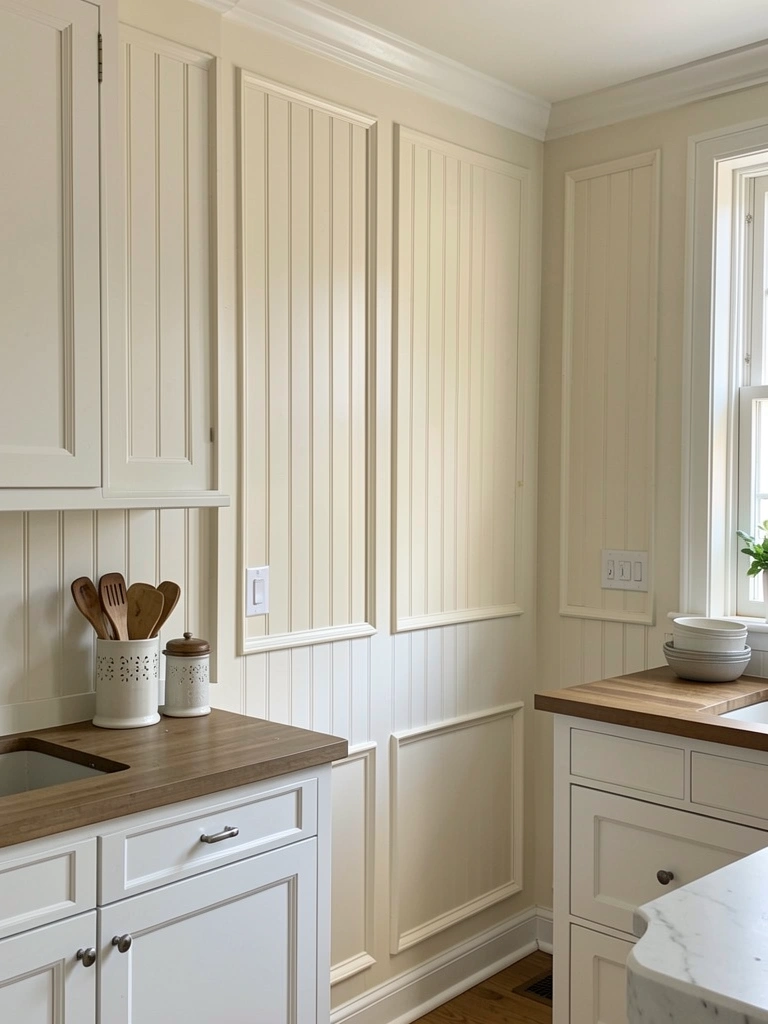
Wainscoting—paneling that runs partway up the wall—adds architectural depth and farmhouse authenticity. Beadboard (narrow tongue-and-groove boards) is the traditional choice, though modern alternatives exist.
Beadboard costs $0.50–$2 per square foot, plus primer and paint. A full kitchen wall (200–300 square feet) runs $200–$400 in materials. Installation is moderate DIY: plan 2–3 days for a full wall, or hire help for $300–$800. Paint in cream, white, or soft colors to avoid a closed-in feeling.
This detail anchors the farmhouse aesthetic while adding textural interest at eye level. It makes even a modest kitchen feel thoughtfully designed.
16. Use Vintage Scales and Measuring Tools as Decor
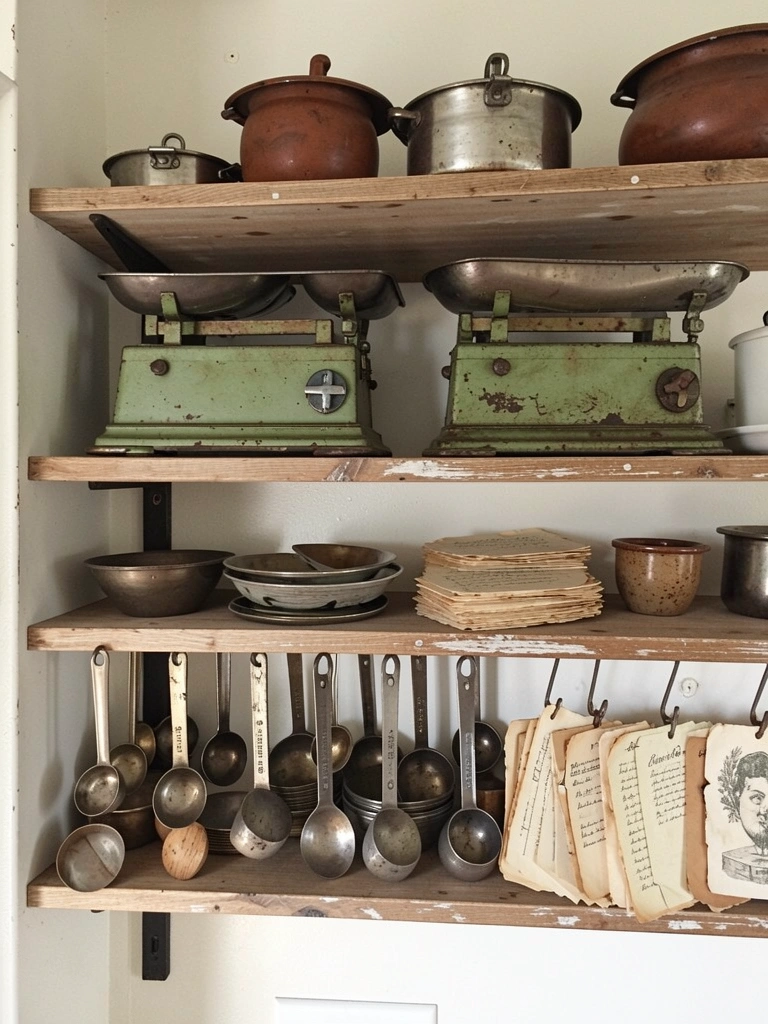
Farmhouse kitchens celebrate functional objects as art. Vintage kitchen scales, old measuring cups, and antique recipe boxes aren’t just practical—they’re beautiful design elements that celebrate cooking itself.
Vintage scales typically cost $5–$30 each on Etsy or at thrift stores. Display them on open shelves, hang them on walls with hooks, or group several together for impact. Measure your space first to ensure pieces don’t overwhelm; a large scale needs breathing room. Mix metals and finishes for collected authenticity.
These pieces do double duty: they’re actually useful while adding personality and warmth. Your kitchen becomes a celebration of cooking rather than just a place where it happens.
17. Install a Wooden Range Hood or Build Surrounds
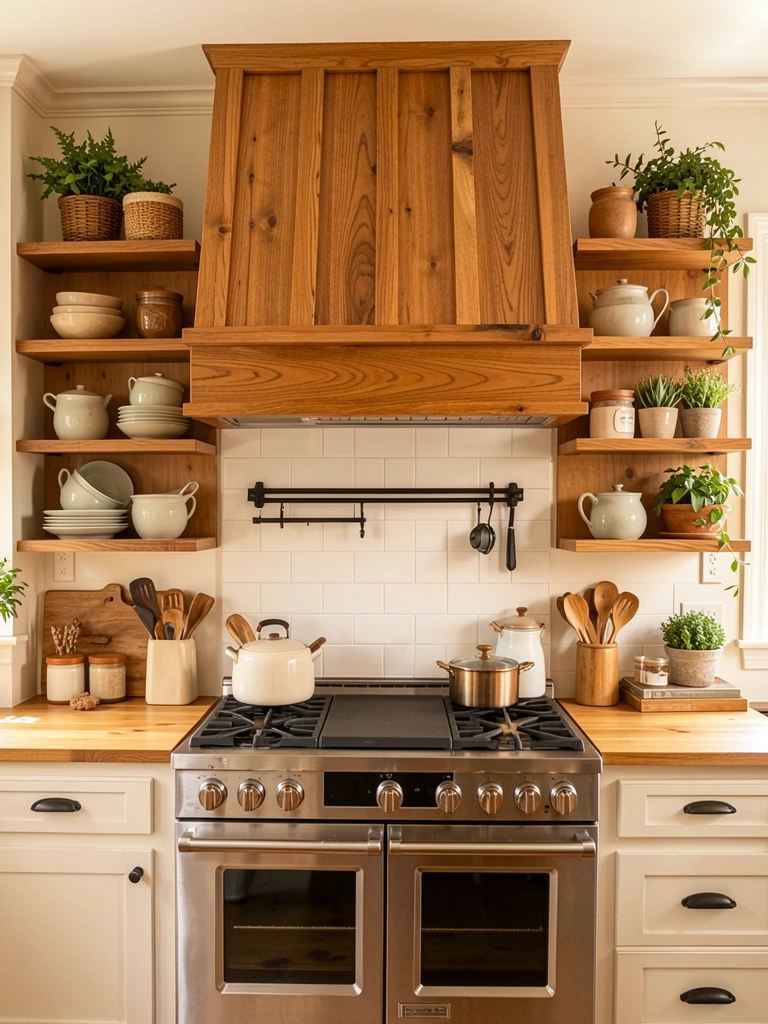
A wooden range hood—or a wooden mantel-style surround around an existing hood—creates an instant focal point and anchors the farmhouse aesthetic. Wood is warmer and more character-filled than stainless steel.
Wooden range hoods cost $500–$1,500 ready-made from Etsy or specialty retailers. Custom builds by local woodworkers run $1,500–$3,500. DIY surrounds using reclaimed wood are possible for handy folks; materials cost $200–$600. Professional installation ($200–$400) ensures proper ventilation and codes compliance.
This centerpiece transforms your entire kitchen’s personality. Suddenly the cooking zone becomes a beautiful statement rather than just utilitarian machinery.
18. Create a Coffee or Beverage Station
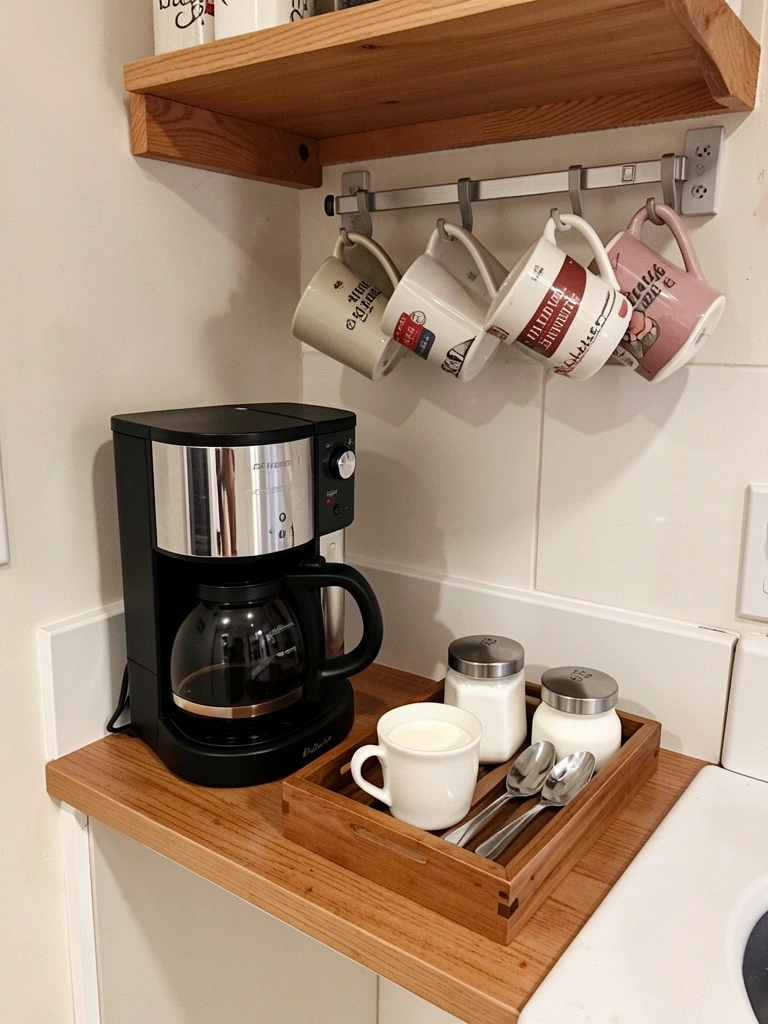
A dedicated coffee or beverage station—even just a small corner—makes mornings feel like self-care rather than rushing. Style it with vintage accessories and pretty containers for farmhouse charm.
Budget $30–$100 for a basic setup: a small wooden table or shelf ($20–$50), a coffee maker you already own or a small model ($30–$80), and mugs displayed on hooks or in a rack. Add pretty canisters ($5–$20 each) for sugar and coffee beans. This is pure styling with minimal cost—and you’re using pieces you already have.
Suddenly you have a small ritual corner that feels intentional. Even when busy, taking time at your coffee station shifts your entire morning energy.
19. Mix Open and Closed Storage for Balance
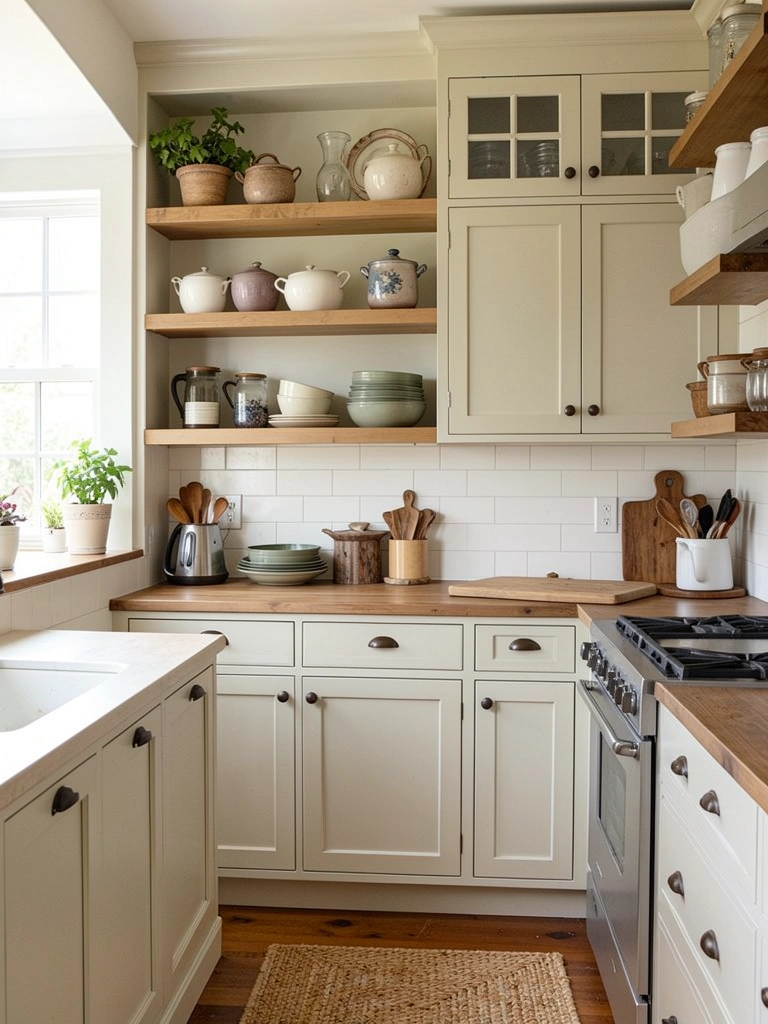
Pure open shelving can feel cluttered; pure cabinets feel closed-off. The farmhouse sweet spot combines both—some beautiful display pieces visible, others tucked away to keep clutter hidden.
No extra cost if you’re rearranging existing storage. The investment comes if you’re adding cabinets ($500–$2,000) or open shelving ($100–$500). The real work is styling: display items you actually use and love, store daily dishes and clutter in cabinets. Rotate what’s visible seasonally for freshness.
This balance creates a kitchen that feels both lived-in and designed. You get the warmth of display pieces without the fatigue of managing too many visible items.
20. Paint Cabinets Two-Tone (Upper and Lower Different Colors)
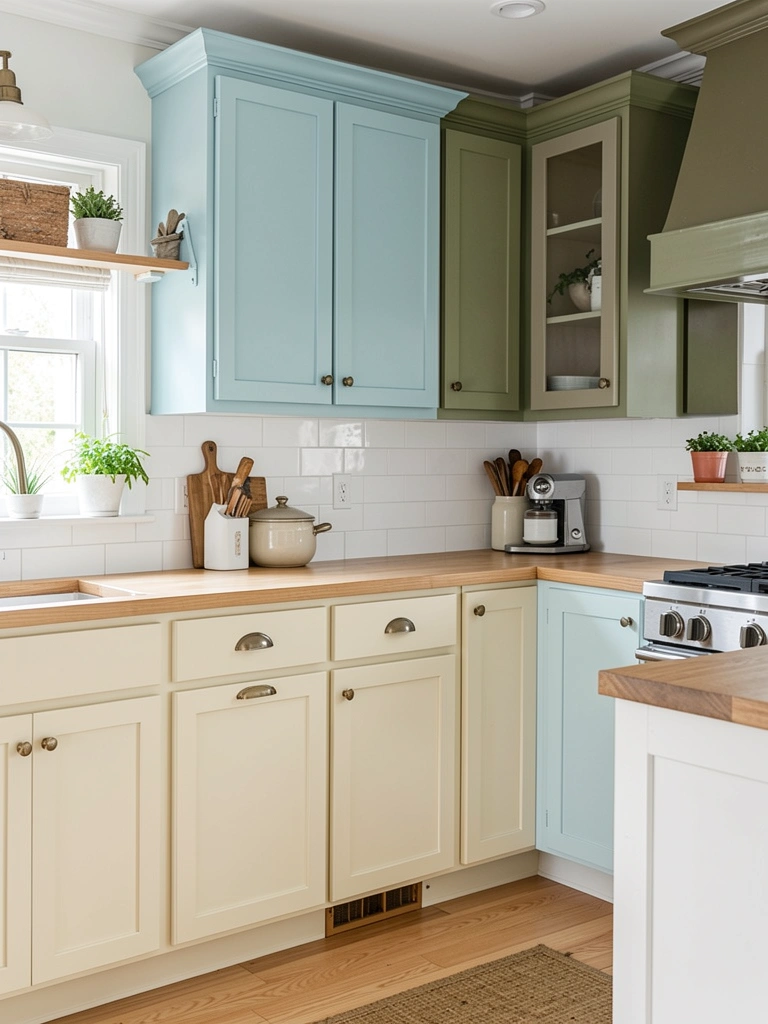
Two-tone cabinetry adds visual interest and breaks up the visual weight of an all-one-color kitchen. Cream base with pale blue uppers, or white base with sage green uppers, feels contemporary-farmhouse.
Paint costs $60–$120 total (two quality quarts). This is a DIY project if you already painted your cabinets; plan 3–4 days for two separate paint colors (allowing drying time). Professional painters charge $2,000–$3,500 for two-tone cabinet work. The key is choosing colors that complement rather than clash—test both colors in natural light before committing.
This subtle variation creates sophisticated visual interest. Your kitchen feels more intentionally designed and less cookie-cutter.
21. Add a Wooden Plate Rack or Wall-Mounted Display
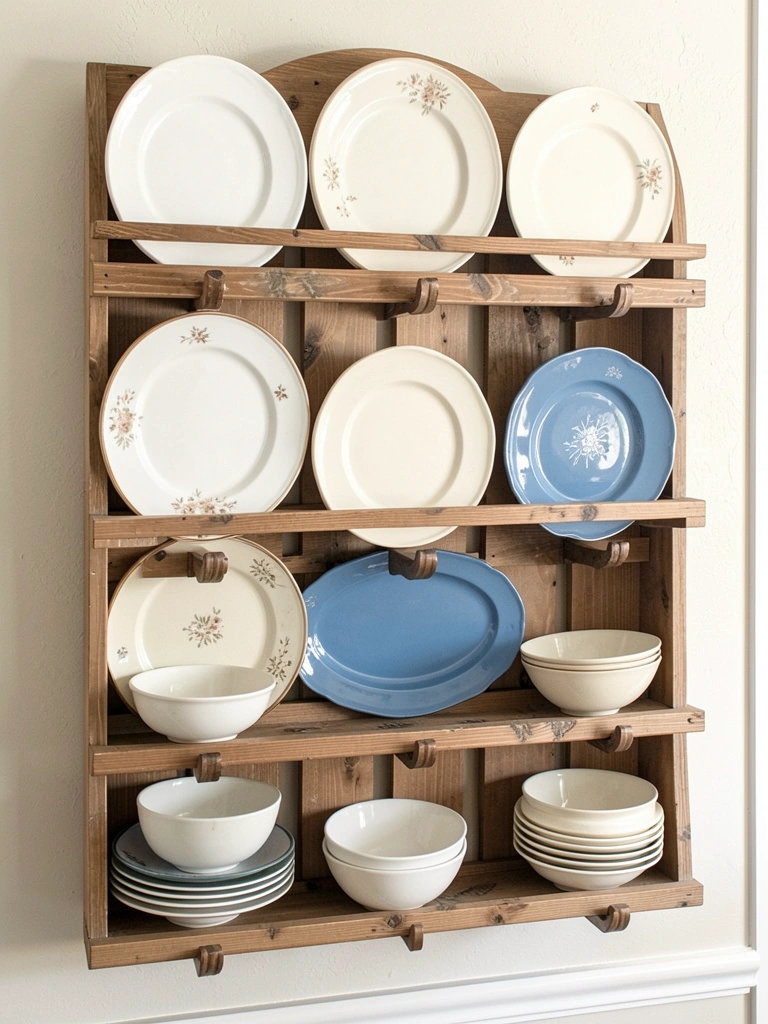
Plate racks celebrate beautiful dishware as functional art. Whether a traditional wooden plate rail or modern wall brackets, displaying plates and platters adds farmhouse character instantly.
Wooden plate racks cost $50–$200 from Wayfair, Etsy, or local woodworkers. DIY wall-mounted display using wooden rails and plate hangers is possible for $30–$80 in materials. Installation requires stud-finding and wall anchors; plan 1–2 hours. Hang a mix of solid-colored dishes (cream, white, blue) with one or two patterned plates for visual interest.
Displaying beautiful dishes you actually own (rather than hiding them) makes your kitchen feel like a curated collection rather than just storage. It’s personal and warming.
22. Install or Style Open Shelving in a Corner Nook
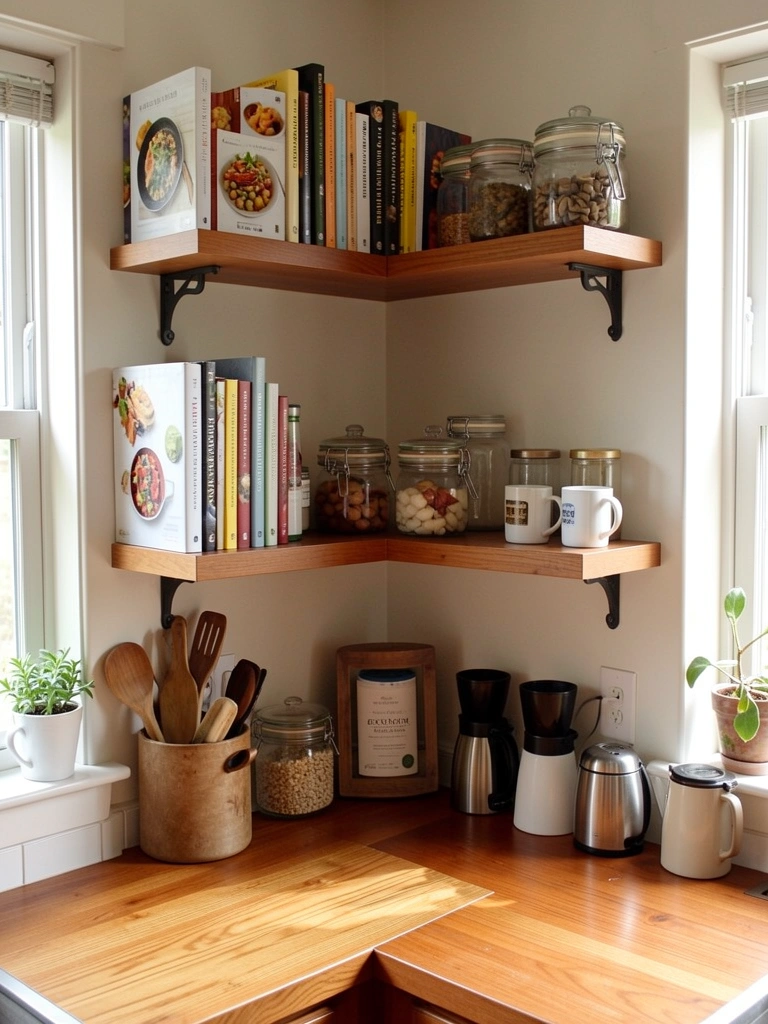
A corner nook with open shelving is often-wasted space. Shelves here create a charming display zone for cookbooks, frequently-used items, and styling—that collected-over-time feeling farmhouse lovers crave.
Corner shelves cost $30–$100 per unit, plus installation of $50–$150 (DIY or hired). The key is styling depth: place larger items (cookbooks, jars) in back, smaller items in front. Add a small plant or vintage pitcher for organic texture. Keep it balanced—too much clutter defeats the purpose.
This small investment creates a feature-worthy zone that photographs beautifully and feels intentionally designed. It transforms overlooked corner space into a showstopper.
23. Use Vintage or Earthenware Canisters and Containers
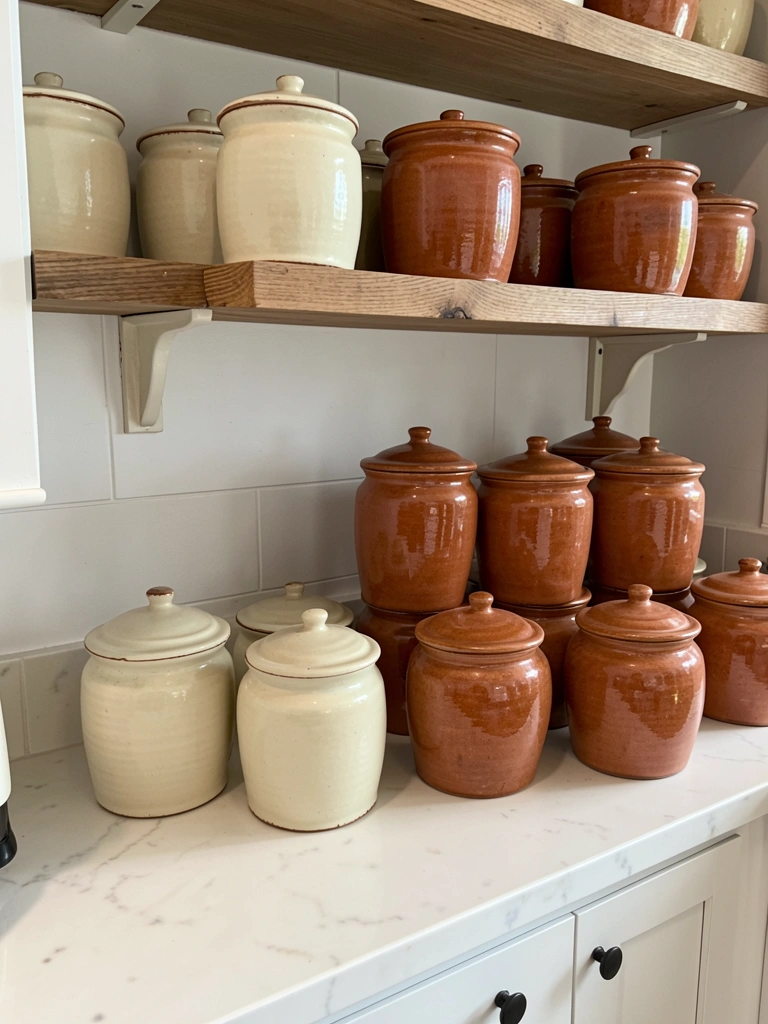
Vintage earthenware canisters, crocks, and ceramic jars store pantry staples while adding authentic farmhouse texture. Unlike trendy matching sets, collecting varied vintage pieces feels more genuine.
Vintage canisters typically cost $5–$20 each from thrift stores, Etsy, or estate sales. Budget $50–$150 to start a meaningful collection. Group pieces by color family (creams and taupes, or rust and terra cotta) for cohesion without looking matchy. Fill with flour, sugar, coffee, and dried goods—both beautiful and practical.
These everyday containers become quiet decor. When you pass them daily, they reinforce your intentional, farmhouse-loving aesthetic.
24. Create a Windowsill Herb or Plant Station
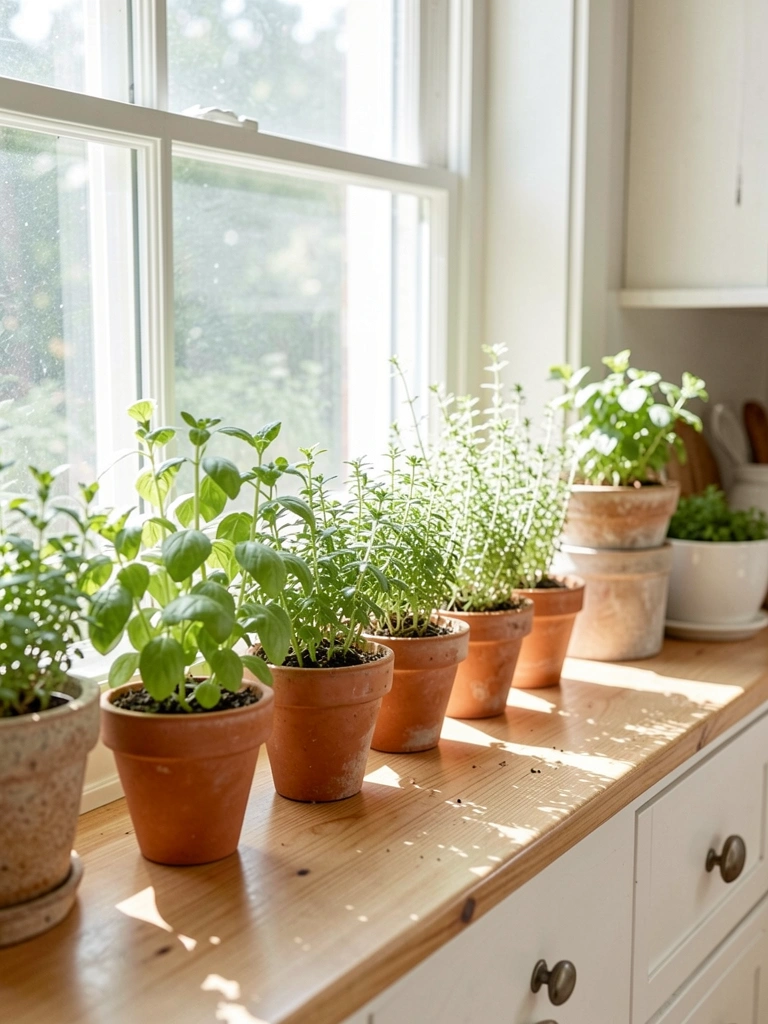
A kitchen windowsill is perfect for growing fresh herbs and small plants. It adds life, greenery, and the practical benefit of fresh herbs within arm’s reach while cooking.
Terra cotta pots cost $1–$5 each, soil is $5–$10, and herb seedlings are $2–$5 each from Home Depot or nurseries. Total budget: $25–$50 for a full windowsill setup. Basil, parsley, and chives thrive on kitchen windowsills with decent light. Maintenance is minimal—water when soil is dry, pinch off leaves as needed.
This living element brings the outdoors in while serving your daily cooking needs. Plus, herbs you grow yourself taste infinitely better than store-bought.
25. Mix Metallics for Subtle Visual Interest
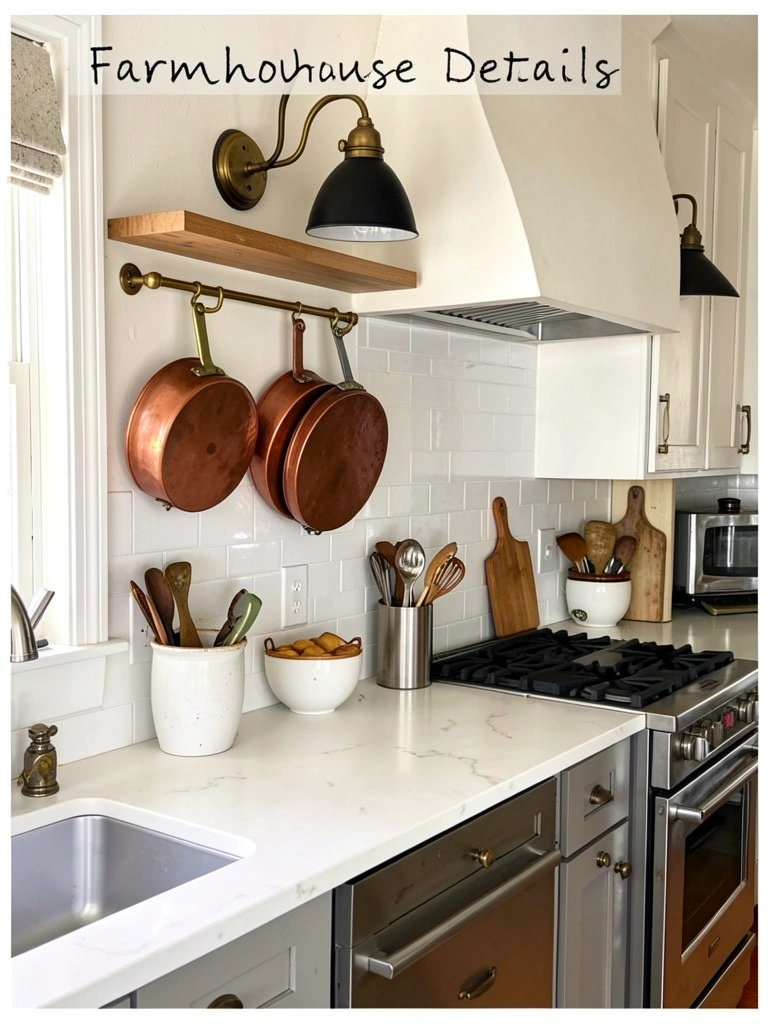
Farmhouse style doesn’t demand perfectly matched metals. Instead, mixing brass, black iron, copper, and brushed nickel creates layered, collected-over-time authenticity that’s more interesting than uniformity.
No additional cost if you’re already choosing fixtures and hardware—just mix finishes intentionally. Brass hardware, black sconces, stainless appliances, and copper accents work beautifully together when you view them as a palette rather than individual pieces. The key: keep one metal slightly dominant (maybe brass) so the mix feels intentional rather than chaotic.
This approach frees you from the tyranny of “matching everything.” Your kitchen becomes more interesting, more personal, and honestly more sophisticated than cookie-cutter perfection.
26. Layer Textiles: Kitchen Linens, Rugs, and Runners
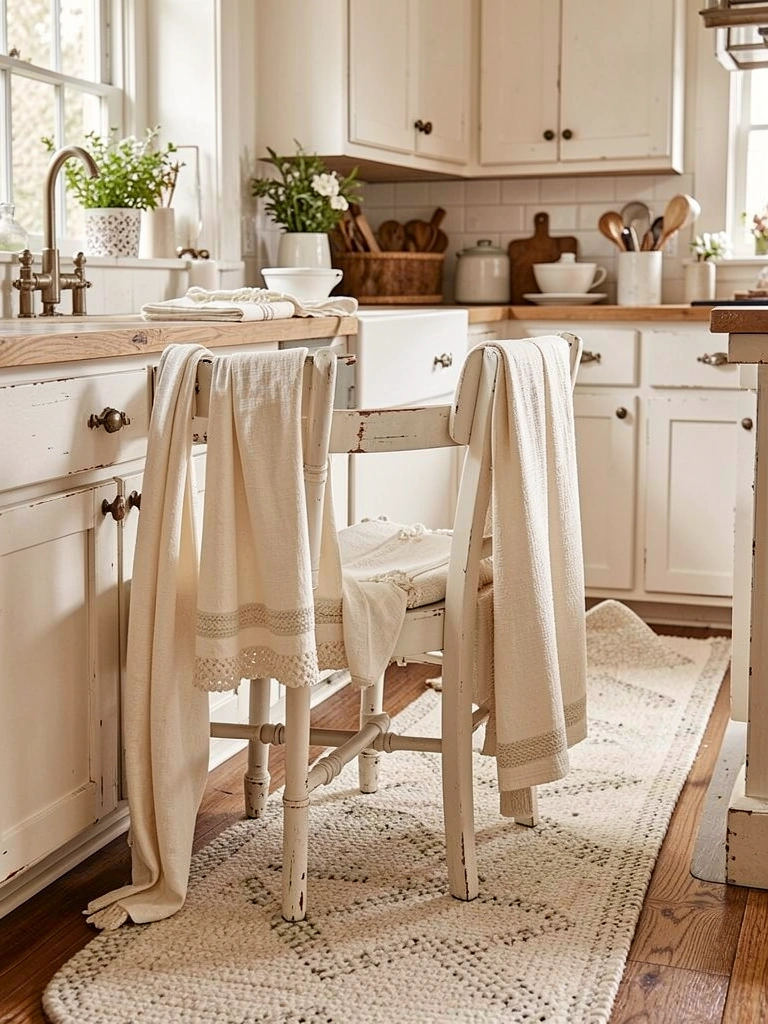
Textiles—linens, runners, and tea towels—add warmth and softness that make kitchens feel like homes rather than showrooms. Layering different textures in a cohesive color palette is pure farmhouse charm.
A quality kitchen runner costs $30–$100 from Wayfair or Target. Vintage linens are free to $10 each from thrift stores or inherited collections. Natural fiber linens (linen, cotton, hemp) in creams, taupes, and soft blues layer beautifully. Drape a tea towel over a hook near the sink, lay a runner in front of the stove, and style shelves with folded linens. Budget $50–$150 to refresh your entire textile collection.
Textiles warm up even industrial-feeling kitchens instantly. They’re also practical—linens age beautifully and gain character with use.
Save this post for your farmhouse kitchen journey. Pick one idea that speaks to you and start there—you don’t need to overhaul everything at once. Even a single thoughtful addition shifts your entire kitchen’s personality toward warm, welcoming, and authentically yours.
Leave a Reply