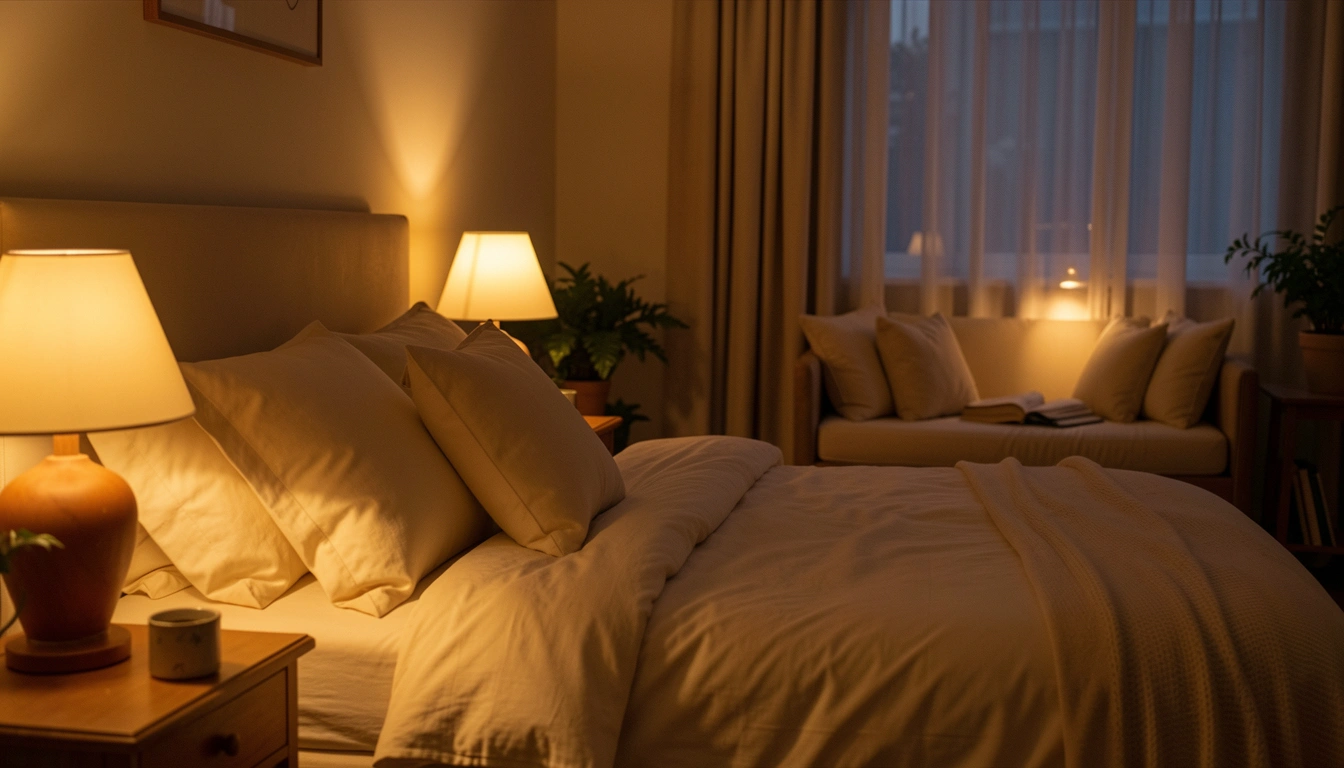
There’s a reason you wind down differently depending on the light around you. Harsh overhead fixtures drain your energy, while thoughtfully layered lighting creates a sanctuary where your body naturally signals it’s time to rest. The right evening lighting doesn’t just look beautiful—it actually helps you sleep better by supporting your body’s natural rhythms. This guide walks you through 25 lighting ideas, from budget-friendly swaps to investment pieces, that build a genuinely peaceful evening atmosphere. Whether you rent or own, have a tiny bedroom or sprawling master suite, you’ll find approaches that work with your space and budget. Let’s create a bedroom that feels like an actual retreat.
1. Layer with Warm Dimmers on Existing Fixtures
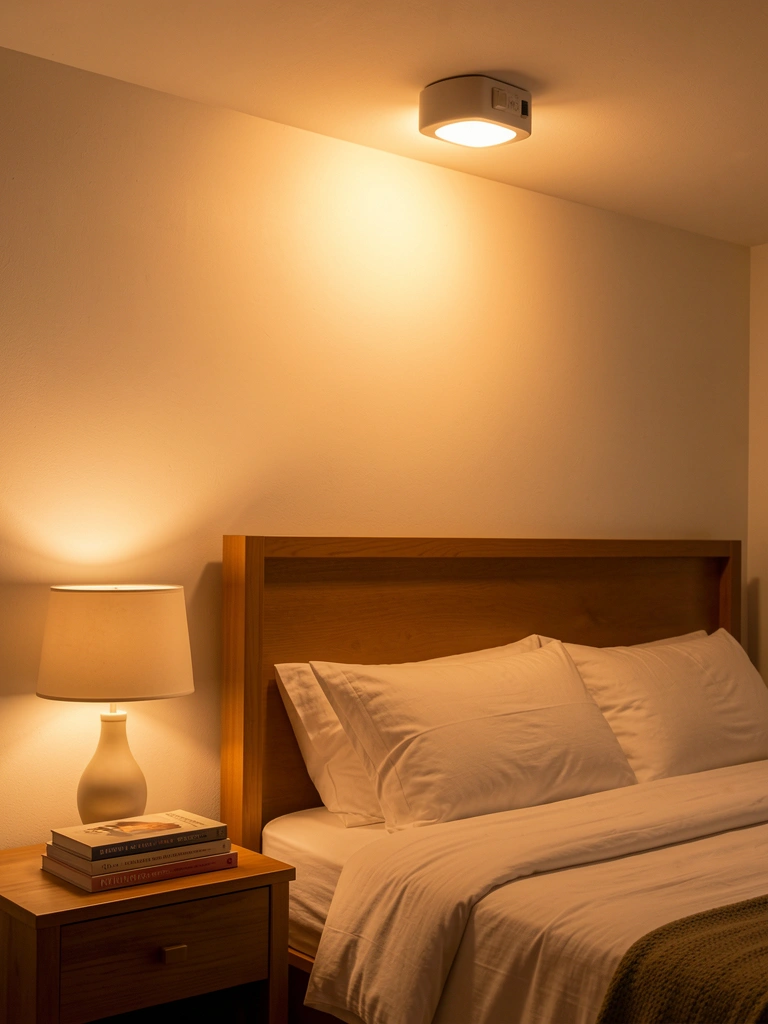
Dimmers are the easiest lighting upgrade most people overlook—they cost almost nothing but change everything. Instead of choosing between bright and off, you control exactly how much light you need. Install a dimmer switch ($15–$40 at Home Depot or Lowe’s) on your existing overhead or wall fixture in about 20 minutes with a screwdriver. Pair it with warm-white bulbs (2700K color temperature, $8–$15 for a pack) so even at full brightness, your light feels cozy rather than clinical.
The magic happens at night: dim to 40–50% while you’re getting ready, then drop to 10–20% once you’re in bed. Your brain gets the signal that evening is here, melatonin kicks in naturally, and you drift off more easily. Renters, check with your landlord first, but most allow dimmer switches since they’re reversible.
2. Add Bedside Task Lighting for Reading
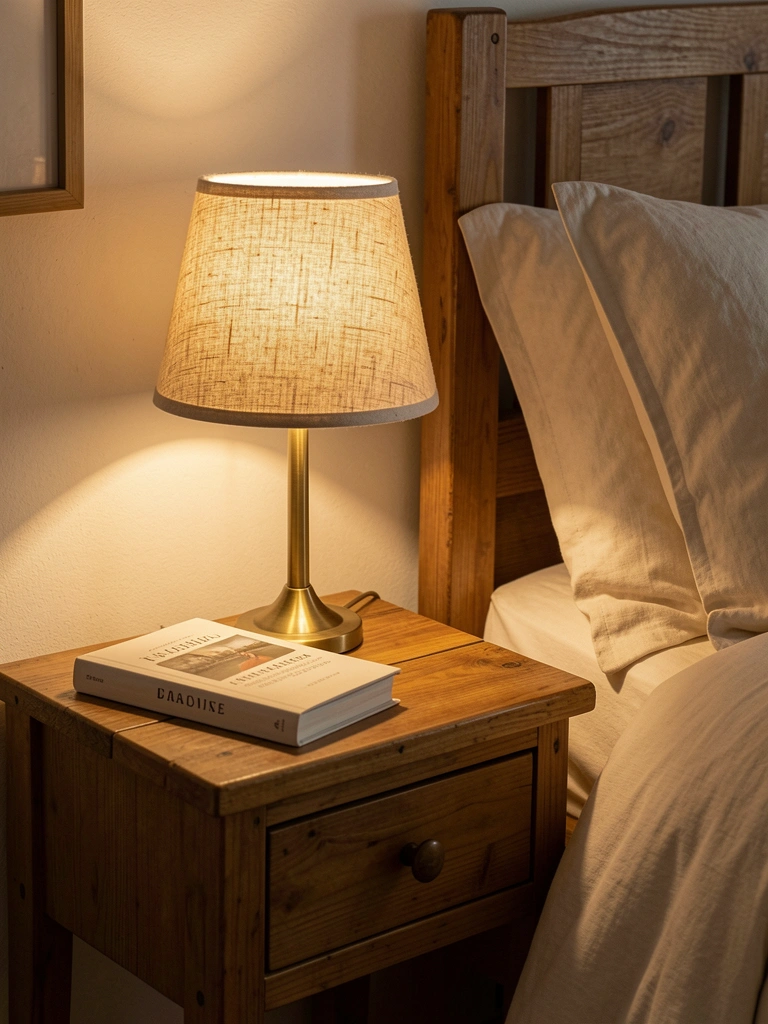
Bedside lamps aren’t luxury—they’re essential for protecting your sleep while still having light when you need it. A good task lamp keeps light focused on your book or phone instead of flooding your whole room. Look for swing-arm lamps ($30–$80, IKEA, Wayfair) or small brass table lamps ($40–$120, Target, West Elm) with fabric shades that diffuse light softly.
Choose warm bulbs (2700K) under 60 watts so light stays intimate. Position your lamp 12–15 inches away from where your head rests—close enough to read, far enough that you’re not strained. The best part? You can turn off overhead lights entirely and rely on this single, gentle source. This also means your partner isn’t blinded if they sleep earlier or later than you.
3. Install Wall Sconces Instead of Bedside Tables
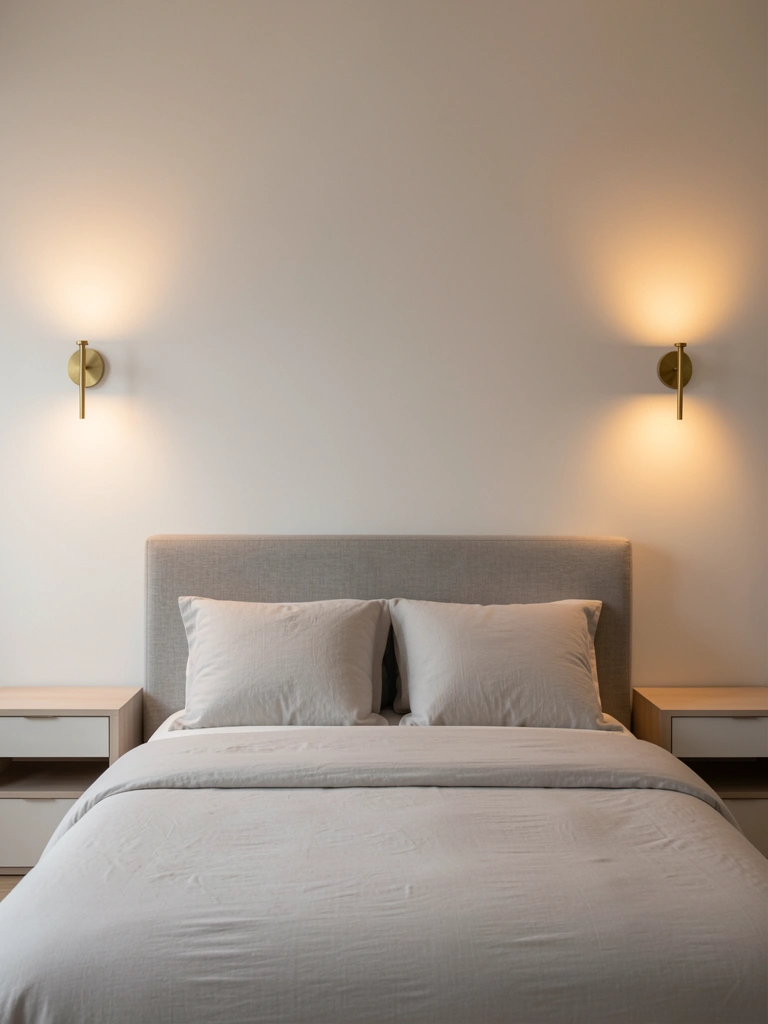
Wall sconces save space and create a sophisticated look while cutting down on bedside clutter. Mount a pair flanking your headboard ($60–$200 per pair, Rejuvenation, Schoolhouse Electric, IKEA) so each side of the bed gets its own light. Sconces work especially well in small bedrooms or if you have minimal nightstand space.
Installation takes 30–45 minutes if you’re comfortable with basic wiring; otherwise, hire an electrician ($100–$150 for the job). Pair them with downward-facing shades that direct light onto the bed rather than up the wall. Look for models with individual switches or dimmer compatibility so you control each side separately. The clean, hotel-like feel makes your room look intentional and calming—no cords, no clutter, just warm light exactly where you want it.
4. Use Ambient Floor Lamps in Room Corners
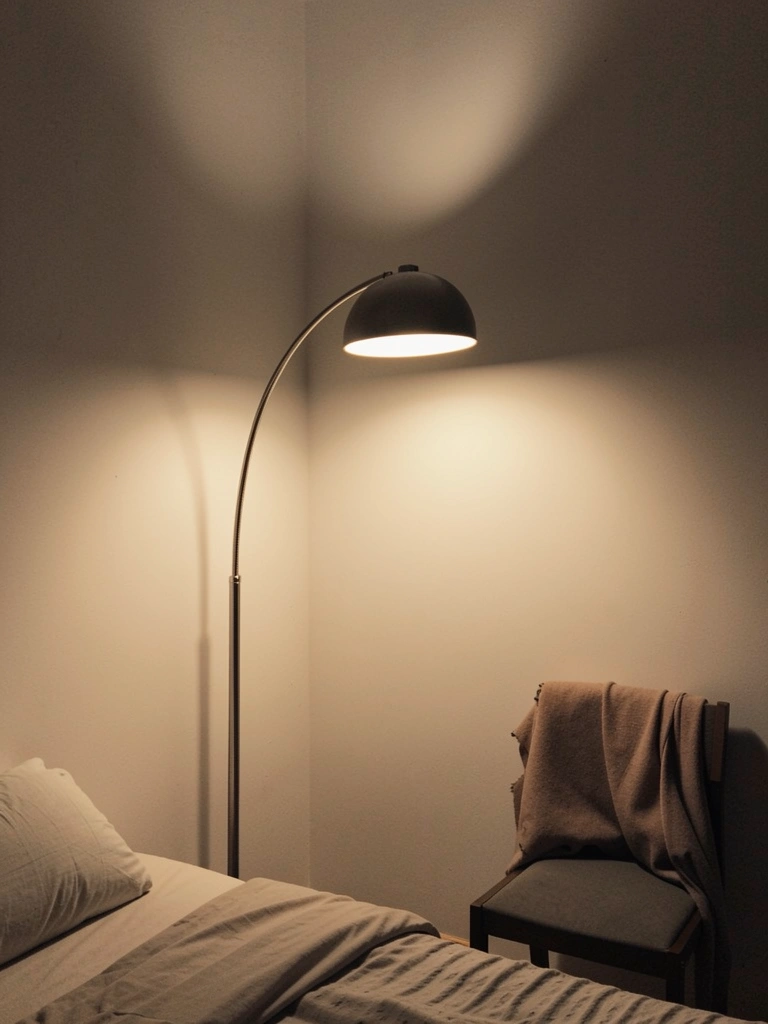
Floor lamps are renter-friendly, flexible, and can dramatically change how a room feels without any installation. Place a tall arc or tripod floor lamp ($40–$150, Target, West Elm, Wayfair) in a corner to cast indirect light across the ceiling and upper walls. This creates ambient “wash” lighting that feels enveloping without being direct or harsh.
Choose models with 3-way bulbs or dimmer-compatible bases ($50–$200) so you adjust brightness. Warm brass or matte black finishes blend with any style. Position it 2–3 feet from the corner and 4–5 feet from your bed so light wraps around the room rather than shining in your eyes. The bonus? You can unplug it and move it anywhere, making it perfect for renters. One strategically placed corner lamp often replaces the need for your overhead fixture entirely.
5. Hang Edison Bulbs for Warm Nostalgic Glow
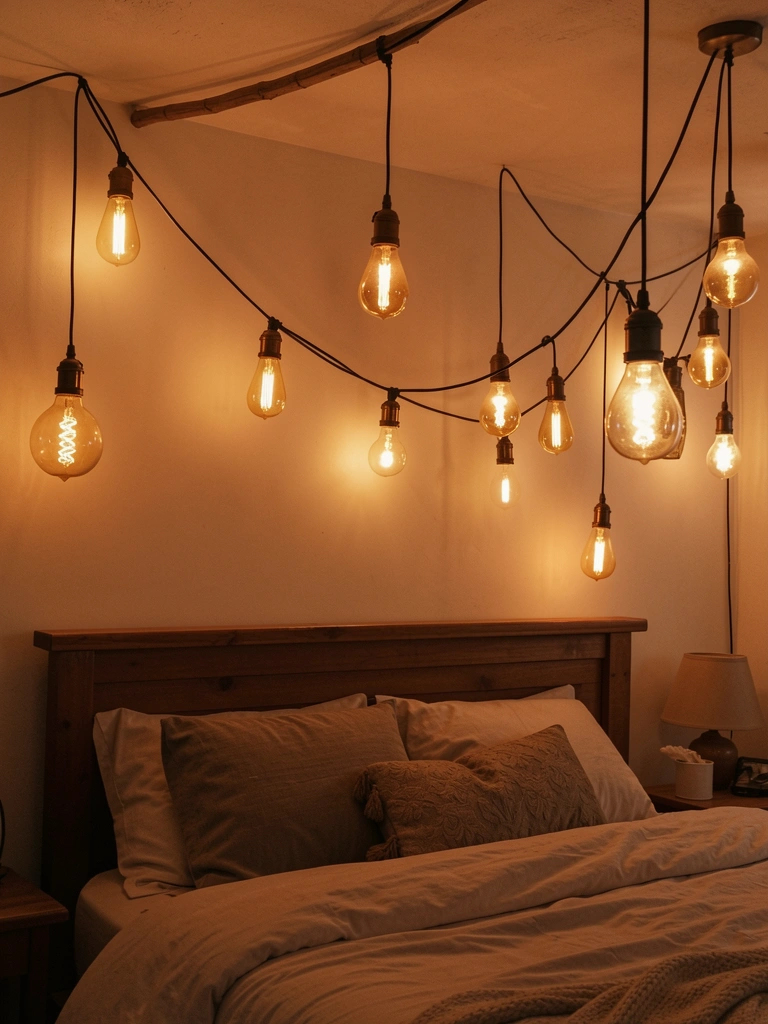
Edison-style bulbs with visible filaments create that warm, old-fashioned glow that feels instantly cozy. These aren’t just decorative—they’re genuinely softer than typical bulbs because the filament design diffuses light naturally. Purchase individual Edison bulbs ($8–$15 each, Amazon, Etsy, Home Depot) and either hang them in a simple pendant fixture or use a swag hook setup ($20–$40) to suspend them over your bed or reading nook.
Go for 2700K color temperature for maximum warmth. The wattage should stay under 40–60W to keep them soft and sleep-friendly. If you want multiple bulbs, hang them at slightly different heights and distances for a less rigid, more organic look. The result feels like you’re reading by candlelight but with reliable, controllable light. Renters love this option because it doesn’t require permanent installation.
6. Install Track Lighting with Warm Spotlights
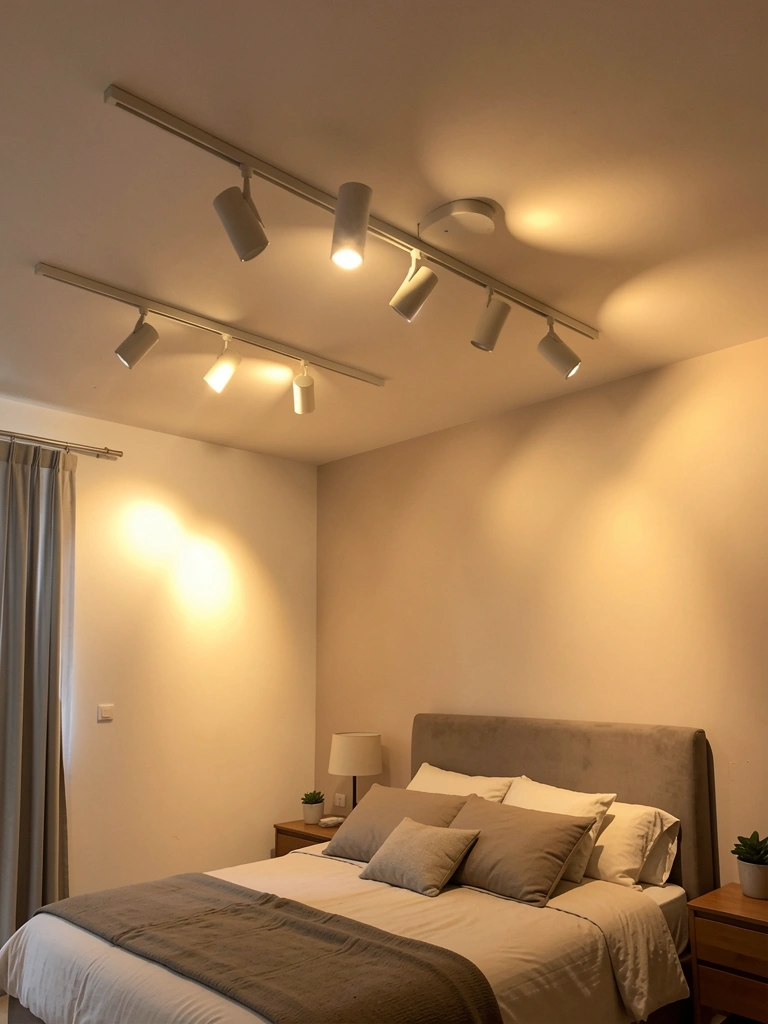
Track lighting gives you sculptural control over light placement without needing new ceiling wiring. Mount a small track system ($80–$200, Home Depot, Lowe’s, Rejuvenation) along one wall or ceiling edge, then position spotlights to highlight different zones: bed, reading corner, dresser. Each light pivots independently, letting you adjust angles as needed.
Install in 1–2 hours if you’re handy; otherwise, hire an electrician ($150–$300). Pair track lights with warm-white spotlights (2700K, 50–75W) and matte black or brass fixtures to keep the look warm and contemporary. Add a dimmer control ($30–$60) so you lower overall brightness at night. The flexibility means you can accent artwork, create mood lighting, or focus light exactly where you need it—all with one fixture system. This approach works beautifully in bedrooms with high ceilings or awkward layouts.
7. Layer Lampshades with Linen or Frosted Diffusers
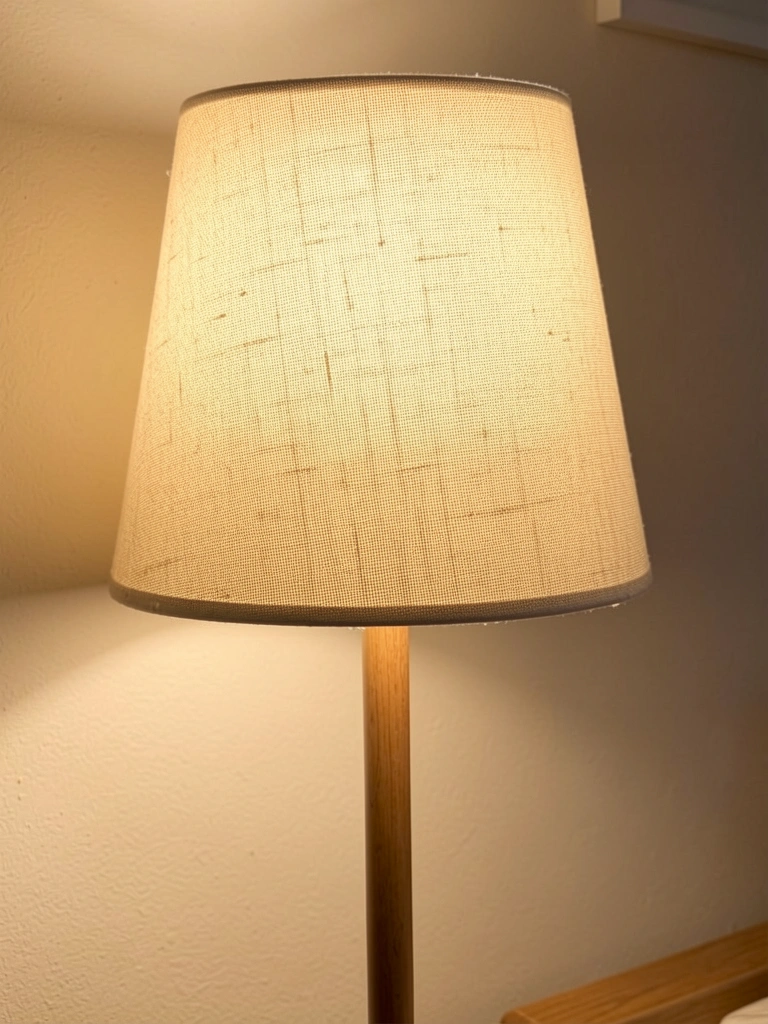
Even if you already have lamps, upgrading the shade changes how light disperses. Swap out thin or shiny shades for linen, cotton, or frosted diffuser shades ($20–$60, Target, West Elm, IKEA). These materials scatter light instead of concentrating it, making the glow feel softer and more enveloping.
Measure your lamp base (typically 10–14 inches wide for bedside lamps) and choose a shade that matches. Look for warm cream, soft gray, or pale yellow shades—these colors reflect warm light rather than cool it. Frosted plastic options are budget-friendly ($15–$25) if fabric feels out of reach. This 5-minute swap makes a dramatic difference. Your existing lamp now casts that dreamy glow instead of a glaring pool. It’s one of the cheapest ways to upgrade your lighting feel.
8. Create a Reading Nook with Overhead Task Lighting
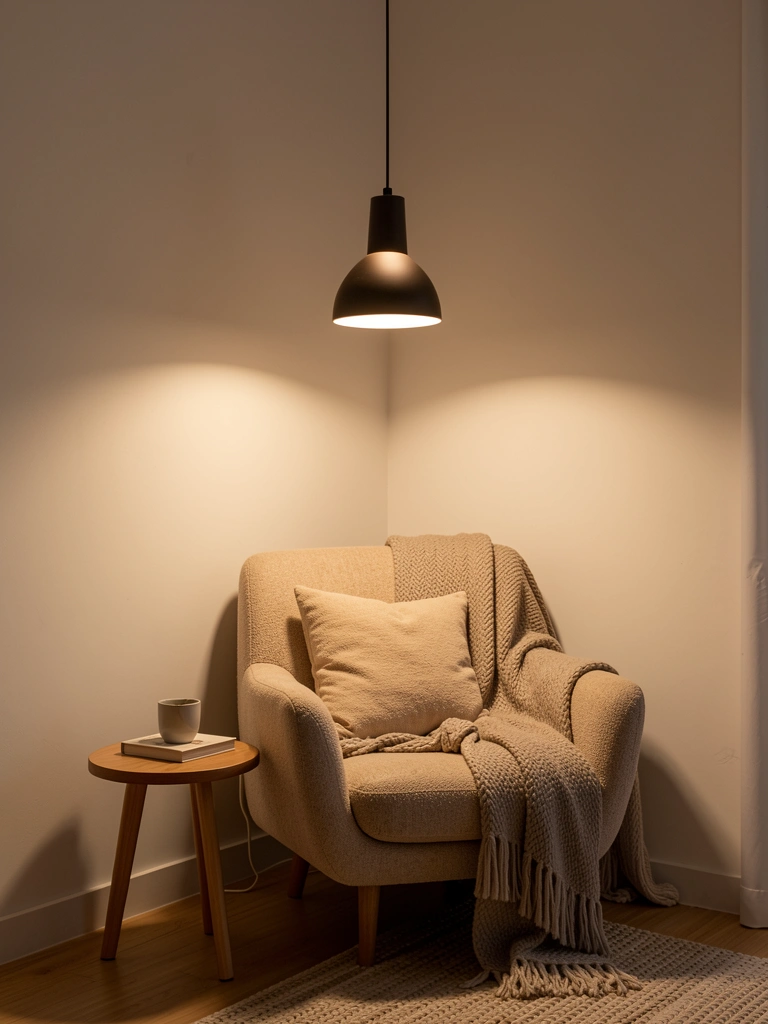
If you have a bedroom corner you’re not using, claim it as a reading sanctuary with targeted lighting. Install a pendant light ($40–$150, IKEA, West Elm, Anthropologie) or adjustable clamp lamp ($25–$60) positioned 18–24 inches above where you’ll sit. This focused light is perfect for evening reading without disturbing a sleeping partner.
Choose warm-white bulbs (2700K, 40–60W) and a diffused shade so light doesn’t glare. Position your reading chair away from direct bedroom views—in a corner or near a window—to create psychological separation from the sleep zone. Add a small side table ($30–$80) for books and tea. The beauty here is intentionality: your body recognizes this corner as “wind-down space,” not sleep space, so reading happens here while your bed stays pure for rest. This works in both large and small bedrooms.
9. Use Candles (Real or LED) for Ambient Warmth

Real candles provide beautiful ambiance, but if you’re worried about safety or have pets or kids, high-quality LED candles ($15–$50 per set, IKEA, Target, Wayfair) offer the same effect with zero risk. Look for candles with realistic flickering and warm-white bulbs (2700K) so they actually mimic candlelight rather than looking plasticky.
Place clusters of 3–5 candles on your dresser, nightstand, or windowsill—spread them across the room rather than grouping tightly so light distributes evenly. Real candles should burn 2–3 hours before bed; LED versions run 8–20 hours on a charge. Neither should be your primary light source, but layered with dimmed overhead or lamplight, candles create that spa-like quality that signals relaxation. The flickering motion is genuinely calming—your brain responds to it. Use these 30 minutes before bed, then switch to dimmed lamps for sleeping.
10. Install Indirect Strip Lighting Behind the Headboard
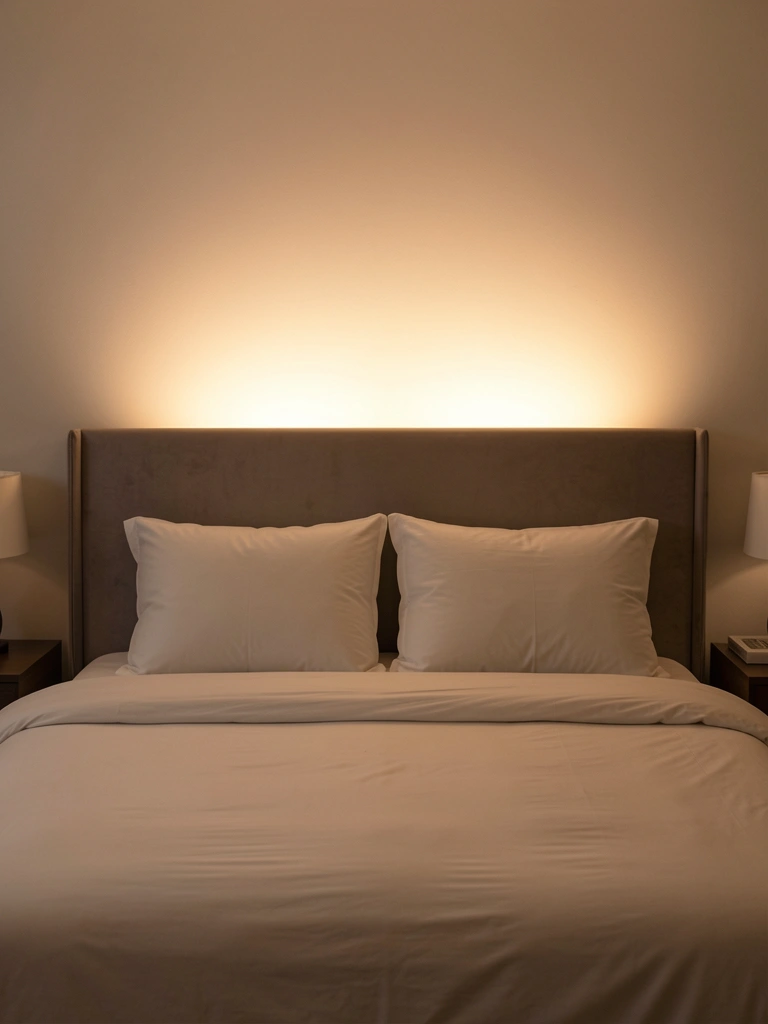
Hidden strip lighting adds high-end visual drama and actually serves a purpose: it prevents light from hitting your eyes directly while still illuminating the room. Install adhesive LED strips ($30–$80, Amazon, Home Depot) behind your headboard so light bounces off the wall instead of coming straight at you.
Choose warm-white strips (2700K) and ideally ones with dimmer compatibility ($20–$40 extra). Installation takes 20 minutes: clean the wall, peel and stick the strip, plug it in (or wire it if you want permanent installation). This creates ambient light that feels intentional and design-forward—perfect if you want a contemporary, sophisticated look. You can run the strip low all evening, then turn it off when you sleep. The indirect approach means your eyes adjust gently rather than being shocked by sudden brightness or darkness.
11. Add Uplighting to Highlight Artwork or Textured Walls
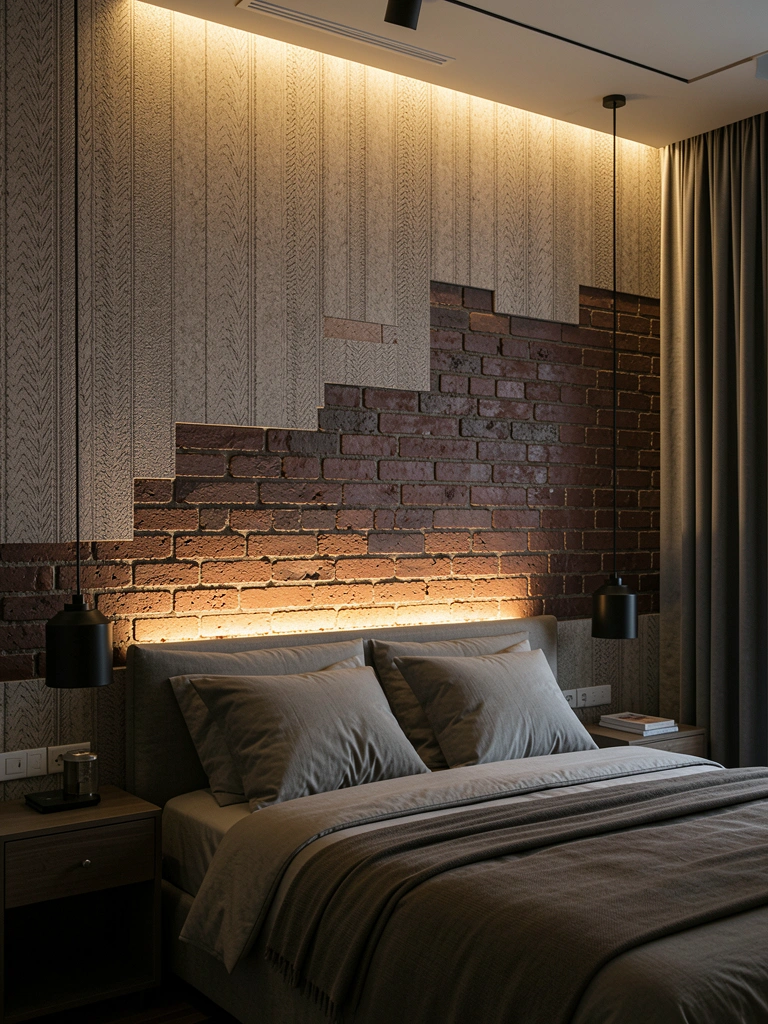
Uplighting isn’t just for galleries—it brings bedroom walls to life and creates visual interest without direct overhead light. Place a small uplighter or accent lamp ($40–$120, Rejuvenation, Design Within Reach) on the floor pointing upward at a feature wall, textured surface, or artwork. This draws the eye up and makes the room feel taller while adding ambient glow.
Alternatively, use affordable clamp lights ($25–$50, Home Depot) with a 25–40W warm bulb. Position it 12–18 inches from the wall and angle it up. The light bounces off the wall and ceiling, creating soft ambient fill without any direct source visible. This technique works beautifully with textured wallpaper, exposed wood, or painted accent walls. The result looks intentional and gallery-like—your bedroom suddenly feels curated rather than generic.
12. Install a Dimmer on Wall Sconces for Dual Control
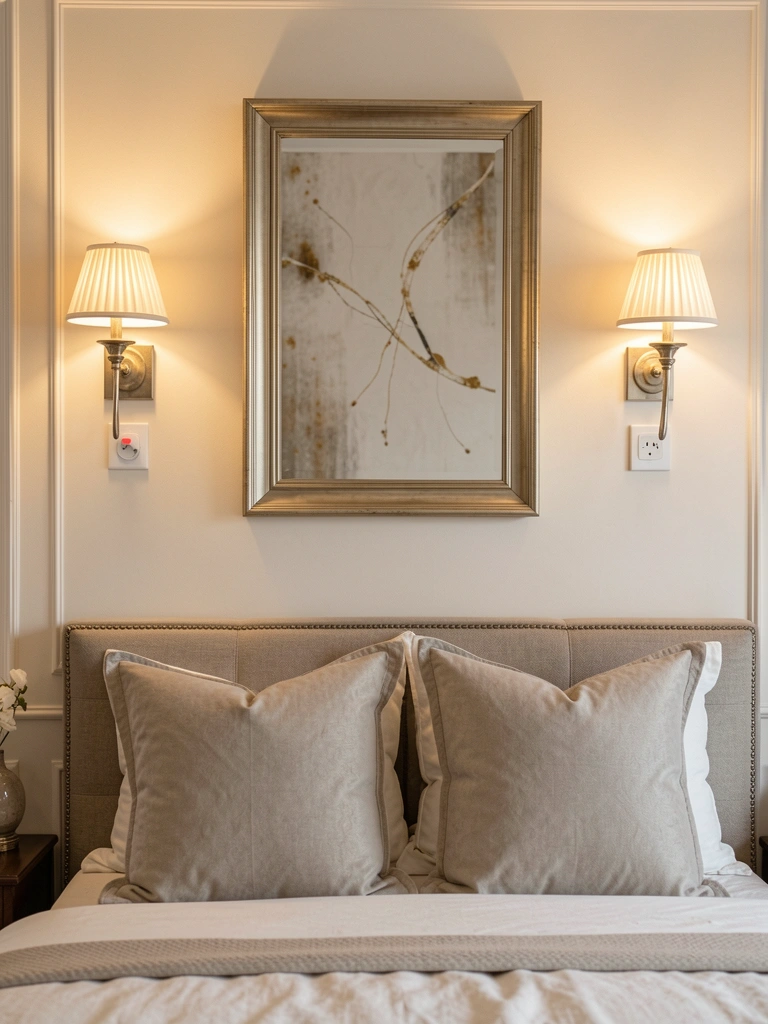
Wall sconces are wonderful, but adding individual dimmer switches ($15–$40 each, Home Depot) to each sconce gives you restaurant-level control over your mood lighting. Install dimmer switches so you can lower both sconces together or adjust each side independently—perfect if one person sleeps earlier than the other.
This upgrade takes 45 minutes to an hour if you’re comfortable with basic electrical work; hire an electrician ($150–$300 total) if not. The advantage is massive: you can dim to 20% for a partner who’s still reading, while you relax in darkness. Or dim both to 40% for a calm evening together. Pair with warm-white bulbs (2700K, 40–60W) so even at full brightness, light feels cozy. This level of control costs $30–$80 in total hardware but changes how you actually use your bedroom each night.
13. Hang Sheer Curtains to Soften Direct Lamplight
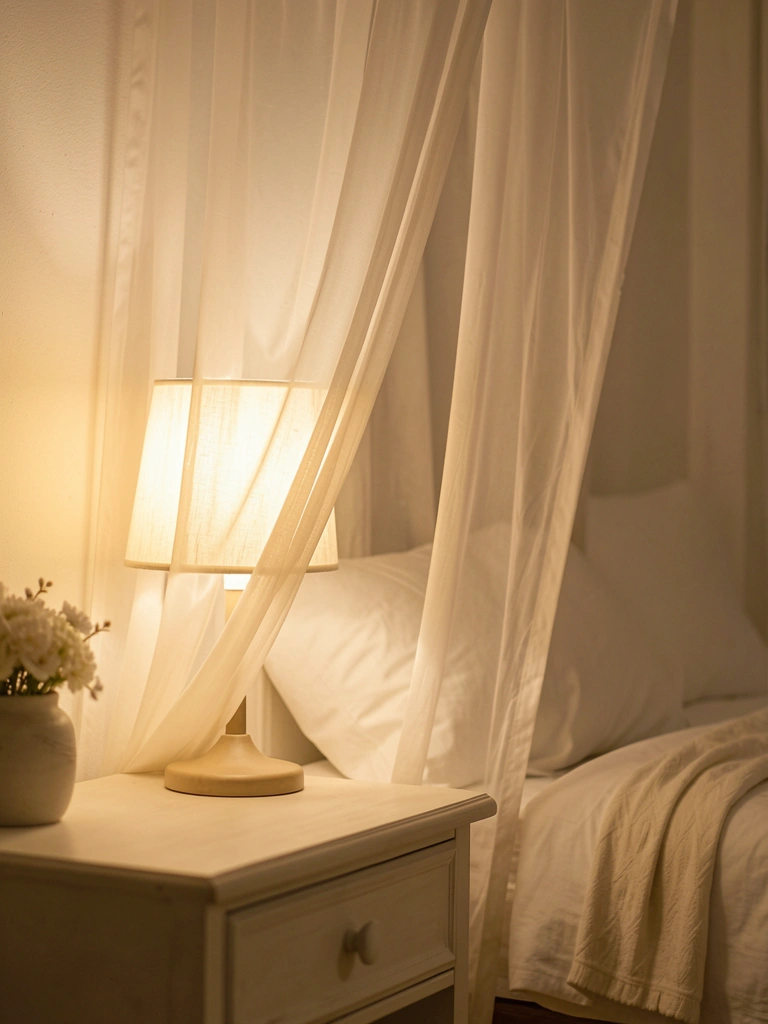
If you have a bright lamp that’s too harsh even at low settings, hang sheer curtain fabric ($15–$40 per yard, Joann Fabrics, Amazon) between the lamp and your bed to diffuse it further. This creates a romantic, Moroccan-riad quality without any installation—just drape it carefully or use removable adhesive hooks.
This trick is renter-friendly and costs almost nothing. Use lightweight linen, cotton voile, or traditional sheer curtain fabric in cream, white, or pale yellow. The fabric softens direct glare while still allowing light through, creating a gentle glow that feels like silk-filtered candlelight. Adjust the distance between lamp and fabric to control how much diffusion you want. This is perfect if you love a specific lamp’s design but find its brightness jarring. The fabric fix transforms it instantly.
14. Add a Light Bar Above the Bedroom Mirror

If you have a bedroom vanity or mirror for morning routines, a vanity light bar ($50–$150, Amazon, Wayfair, IKEA) ensures you can actually see yourself without shadows. Mount it 24–30 inches above the mirror surface so light falls evenly on your face. Choose warm-white bulbs (2700K) so you see your actual skin tone rather than a washed-out version.
Look for dimmable models ($80–$150) so you can lower brightness in the evening if you’re getting ready for bed. Installation takes 30 minutes if you’re handy; hire an electrician ($75–$150) if needed. The key is mounting it high enough that you don’t shadow your own face, and warm enough that evening light doesn’t feel clinical. Once installed, this becomes your go-to for any nighttime mirror tasks without needing overhead lights. It’s a small upgrade with huge functional impact.
15. Use Smart Bulbs for Automated Evening Transitions
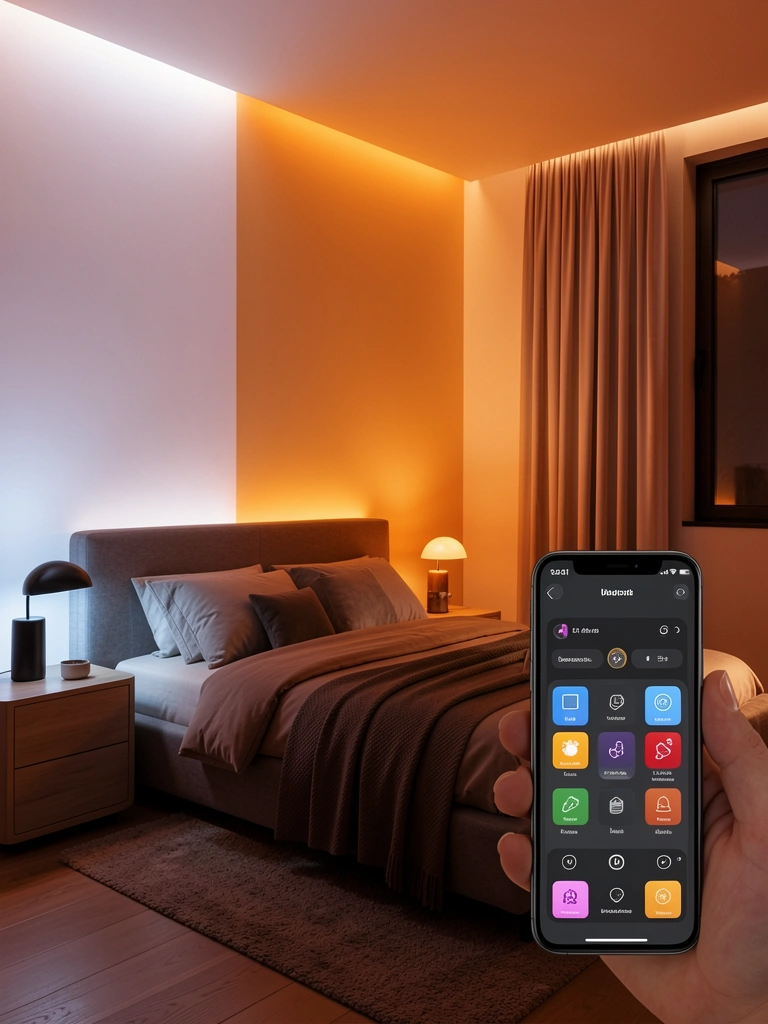
Smart bulbs ($10–$25 each, Philips Hue, LIFX, Wyze) let you automate your lighting to follow your natural rhythm—bright in morning, progressively warmer in evening. Set up a routine that starts dimming at sunset and shifts bulbs from cool white (5000K) to warm amber (2700K) over 2–3 hours.
Install smart bulbs in your primary overhead fixture and bedside lamps—no wiring needed, just screw them in. Connect via smartphone app and set schedules that fit your routine. If you’re out late, one tap dims everything to 30% automatically. The beauty? Your circadian rhythm gets real support—your body thinks it’s actually getting sunset light, not artificial darkness followed by bed. This costs $50–$100 in bulbs upfront but saves money long-term since you’re using less light overall. Perfect for anyone with irregular sleep schedules.
16. Install a Motion-Sensor Nightlight for Safe Pathways
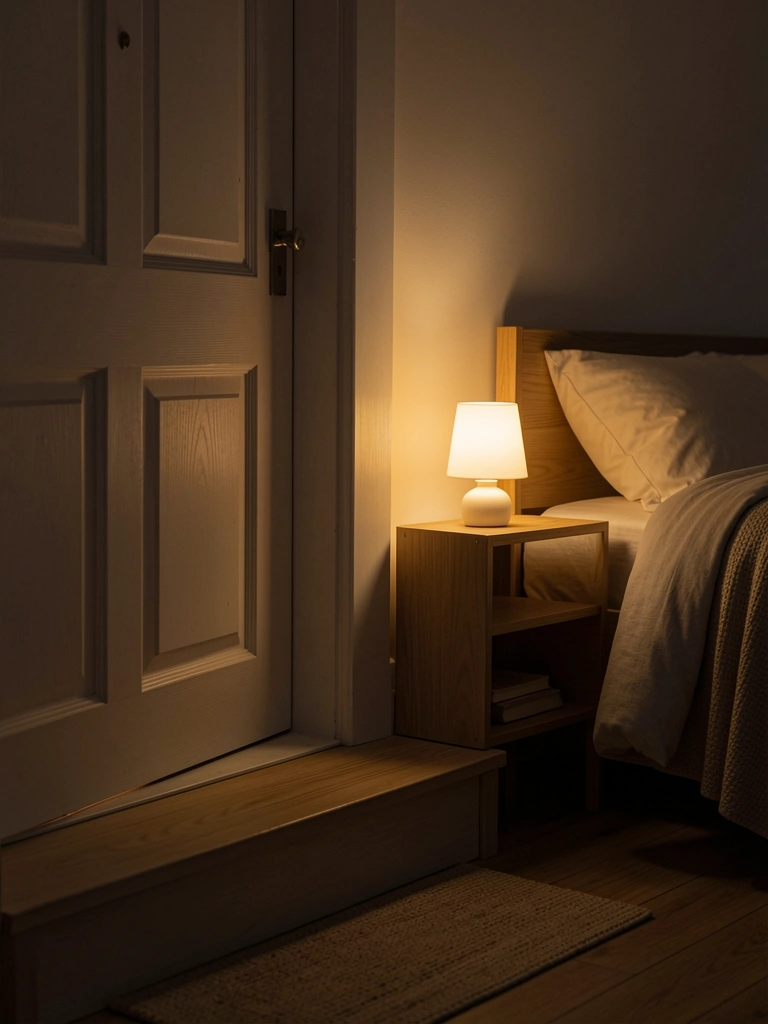
A motion-sensor nightlight ($15–$40, Amazon, Target, Home Depot) provides safe pathways at night without flooding your room with light. Mount one near the bedroom door or beside the bed so it activates when you get up but doesn’t shine when you’re sleeping.
Choose warm-white models (2700K) with adjustable brightness—ideally 5–20% at full strength so it never jolts you awake. Battery-operated versions avoid any wiring and work in rentals. The sensor typically activates within 6 inches, so set it where you’ll naturally pass. This is a game-changer if you struggle with stubbed toes at night or navigate around a sleeping partner. It provides just enough light to be safe without disrupting sleep quality. Cost is minimal, benefit enormous.
17. Hang Fabric Panels to Define Lighting Zones

If you share a bed with someone on a different schedule, hanging sheer fabric panels ($30–$80, Joann Fabrics, Etsy) creates separate lighting zones while keeping the room connected. Hang panels from ceiling tracks ($40–$100, Amazon) or use removable tension rods ($20–$50).
This isn’t permanent and works in rentals. Panel placement lets one person have reading light while the other sleeps undisturbed. The fabric filters light so it doesn’t fully block a partner’s space, but creates enough separation that brightness doesn’t interfere. This costs $100–$200 total and solves one of the biggest couple-sleep problems: conflicting light needs. It’s also beautiful—looks intentional and design-forward, not like a temporary fix.
18. Install Recessed Lighting with Warm Bulbs on a Dimmer

Recessed lighting sounds expensive, but kits exist for renters and smaller spaces. Install a recessed lighting kit ($100–$300, Amazon, Home Depot) with 4–6 lights across your ceiling on a dimmer switch ($30–$60). These lights sit flush with the ceiling, keeping your bedroom looking sleek and uncluttered.
If you own your home, hire an electrician ($500–$1,200 for installation). If you rent, look for wireless recessed options ($200–$400 total, Sunforce, others) that require no wiring. Choose warm-white bulbs (2700K, 40–50W) so even at full brightness, light feels cozy. Set your dimmer to 30–40% in evening hours. The advantage: clean, professional look with zero visible fixtures marring your design. Recessed lights work beautifully with minimal design schemes or transitional styles.
19. Place Warm Pendant Lights at Varying Heights

Multiple pendants at varying heights add visual interest and distribute light evenly without creating one bright focal point. Hang 2–3 pendant fixtures ($60–$150 each, IKEA, West Elm, Wayfair) from a ceiling rail or individual hooks, positioning them 18–36 inches apart vertically and horizontally.
Space them roughly 24–30 inches above furniture or 60–66 inches above the floor for bedside use. Choose matching or complementary designs in brass, matte black, or woven materials. Install on a single dimmer circuit ($30–$60) so you control all three together. This approach feels intentional and collected—like you’ve curated each piece—while functionally providing layered ambient light. The varying heights make the space look taller and more dynamic than standard flush-mount fixtures.
20. Use Warm Table Lamps with Fabric Shades on Floating Shelves
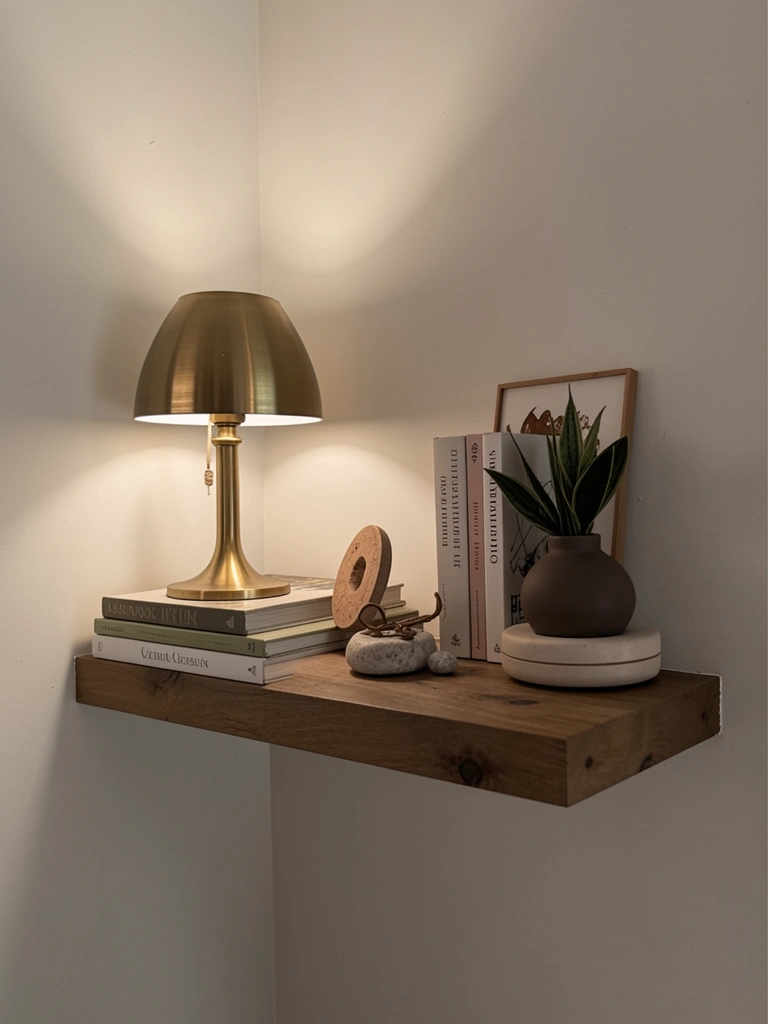
Floating shelves ($30–$80, IKEA, Target, Wayfair) with small brass or ceramic table lamps ($30–$80) create functional nightstands without visual bulk. Mount shelves 24–30 inches above mattress height and position a lamp on each side with enough clearance for books and a water glass.
Install shelves properly into studs or use heavy-duty anchors ($15–$40). Pair with warm-white bulbs (2700K, 25–40W) so light stays intimate. Choose lamps with proportions that fit the shelf—avoid oversized bases that dominate the space. This approach works beautifully in small bedrooms or minimalist designs where traditional nightstands feel too heavy. The shelf becomes part of your design rather than just functional furniture. You get storage, lighting, and that curated, thoughtful feel all in one.
21. Install a Dimmable Chandelier for Elevated Coziness
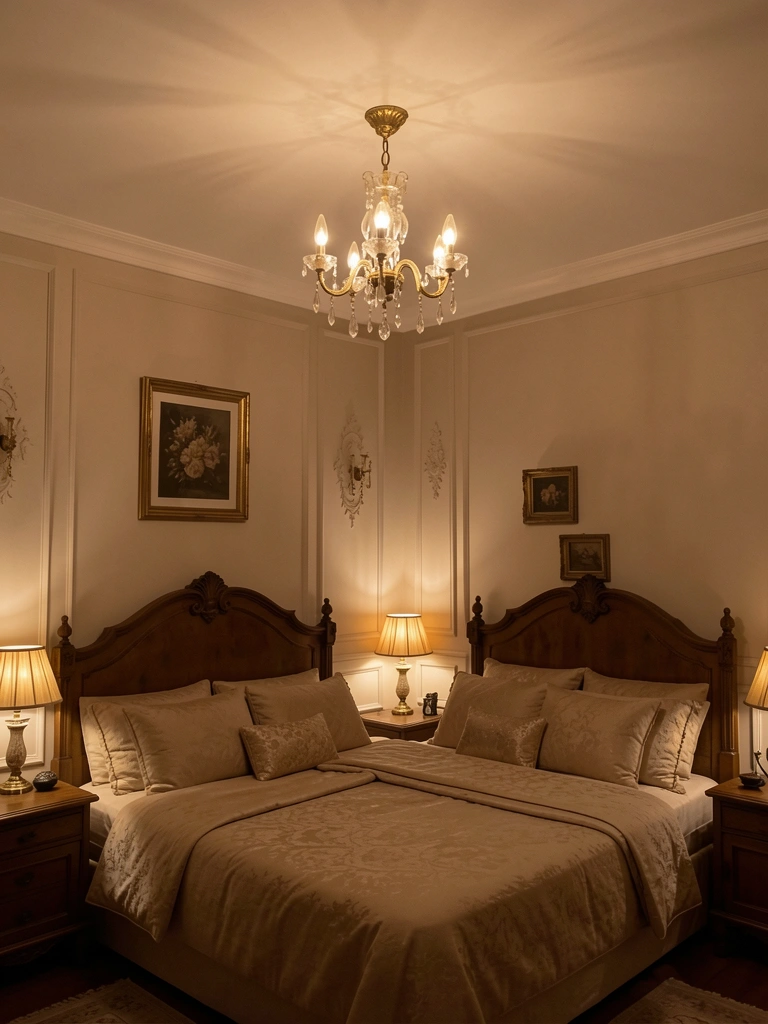
Chandeliers aren’t just for formal spaces—a smaller, warm-toned chandelier ($80–$300, Wayfair, Rejuvenation, Design Within Reach) adds elegance to a bedroom while providing adjustable ambient light. Choose styles with fabric or frosted shades to diffuse light, not crystal that might create glare.
Install on a dimmer switch ($30–$60) for evening control. Hire an electrician unless you’re experienced ($150–$300 for installation). Pair with warm-white, lower-wattage bulbs (2700K, 40W each) even if the fixture holds multiple bulbs. A chandelier dimmed to 30–40% creates that spa-hotel quality where light feels luxurious but still sleep-inducing. This is an investment piece ($150–$400 total with installation) but transforms how a room feels. It’s particularly beautiful in bedrooms with higher ceilings or traditional design.
22. Create Accent Lighting Around Architectural Features
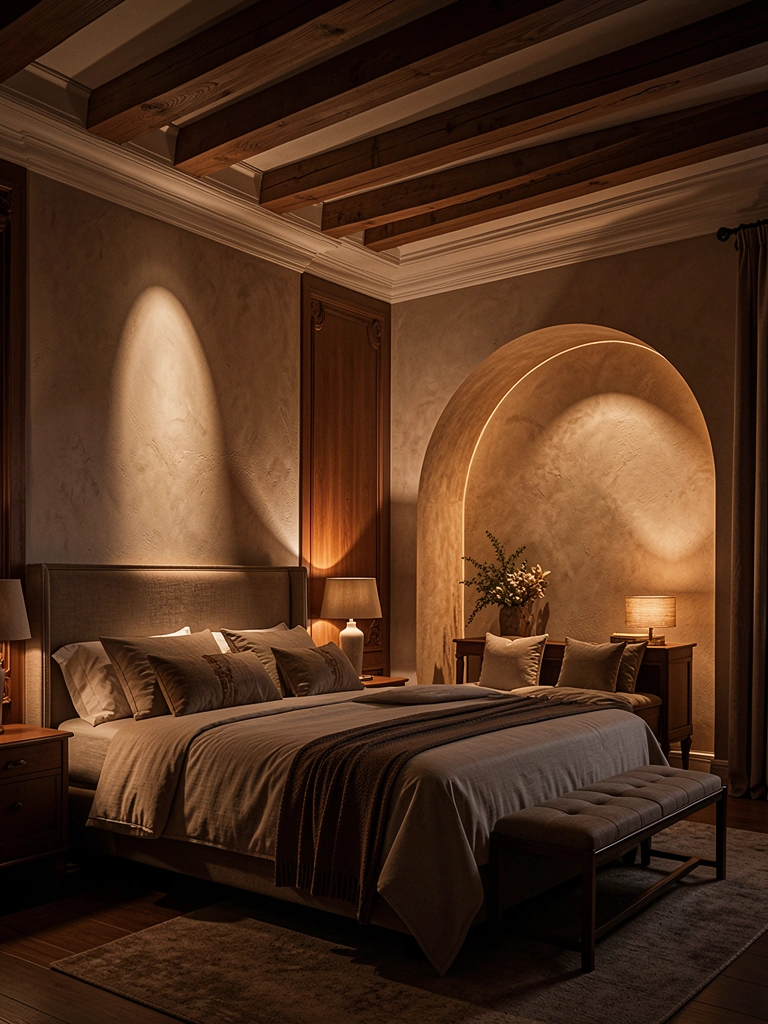
If your bedroom has architectural interest—exposed beams, crown molding, a coffered ceiling—use small spotlight fixtures ($30–$80 each, Rejuvenation) to accent these features with warm light. This draws the eye to beautiful details while providing ambient illumination.
Mount spotlights on the ceiling or walls pointing at these features and wire them to a dimmer switch ($30–$60). This costs $150–$400 depending on how many fixtures you use, but the visual payoff is significant. The interplay of light and shadow on architectural elements creates depth and coziness that flat overhead lighting never achieves. Your bedroom suddenly looks designed and intentional rather than generic. This approach works especially well in older homes or bedroom renovations where you want to showcase original details.
23. Add a Warm Floor Lamp Behind Furniture for Ambient Fill
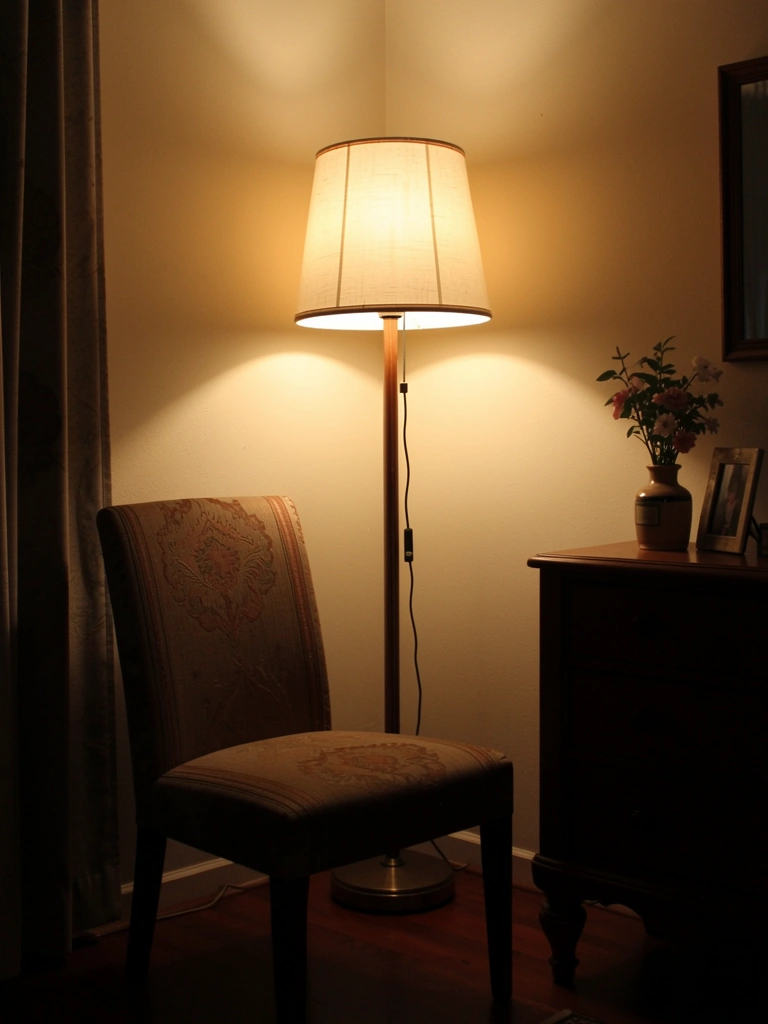
One of the easiest tricks: position a floor lamp ($40–$150) behind furniture—a chair, dresser, or the side of your bed—so light fills the room indirectly. You see the glow, not the fixture, creating that magazine-worthy ambient quality.
Use a tall arc lamp or torchiere ($50–$120) with a warm bulb (2700K, 60–75W). Add a dimmer-compatible base ($20–$40 extra) for evening control. This costs $70–$170 total and requires zero installation. The genius is that light bounces off your wall and ceiling rather than hitting you directly, so it feels softer and more enveloping than a standard lamp. It works beautifully as your only evening light source or layered with bedside lamps. Renters especially love this because it’s plug-and-go.
24. Use Warm RGB Bulbs for Color-Mood Flexibility
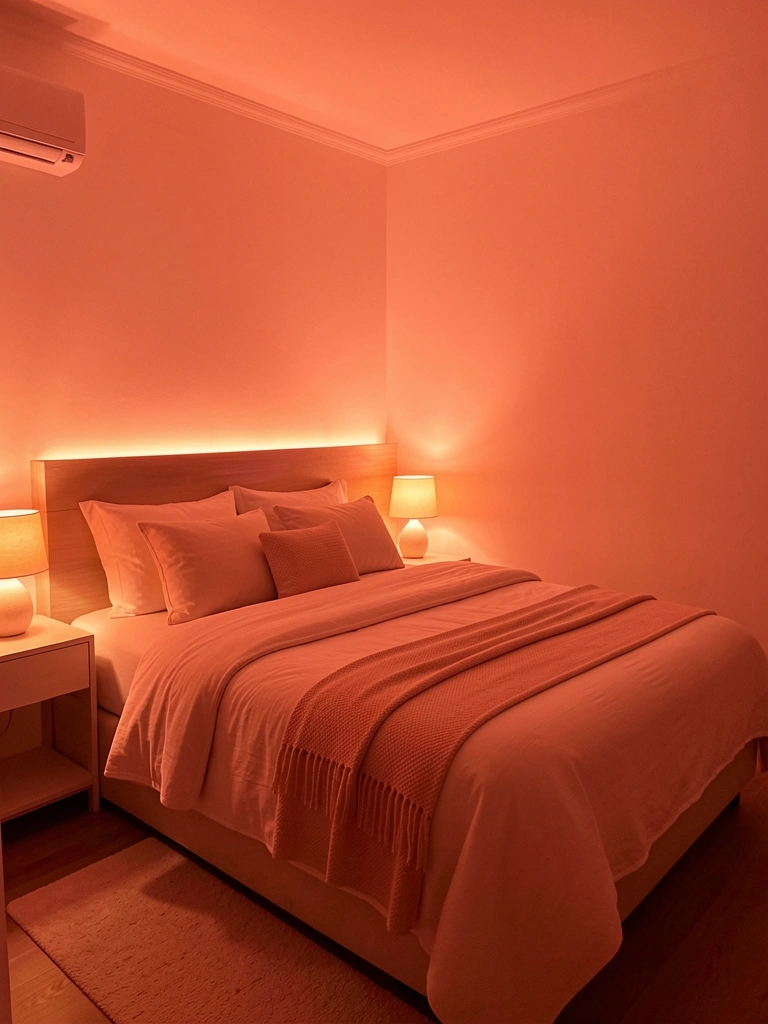
Smart RGB bulbs ($15–$30 each, Philips Hue, LIFX, Nanoleaf) let you adjust both brightness and color temperature. While you won’t want full-spectrum color at night, setting these to warm amber or soft coral tones ($2,700K equivalent) creates a uniquely calming atmosphere.
Install in 1–2 key fixtures (overhead, bedside, or corner lamp). Adjust via app or voice control. The advantage: you’re not stuck with whatever “warm white” the manufacturer decided—you fine-tune it to what feels most relaxing to you. Some people prefer 2700K, others love a hint of amber or peach. RGB bulbs let you experiment. Cost is $40–$60 per fixture, but flexibility is worth it if you’re picky about light quality. Set a routine so lights shift to your preferred evening tone automatically at sunset.
25. Layer Lamplight with Low-Level Background Lighting
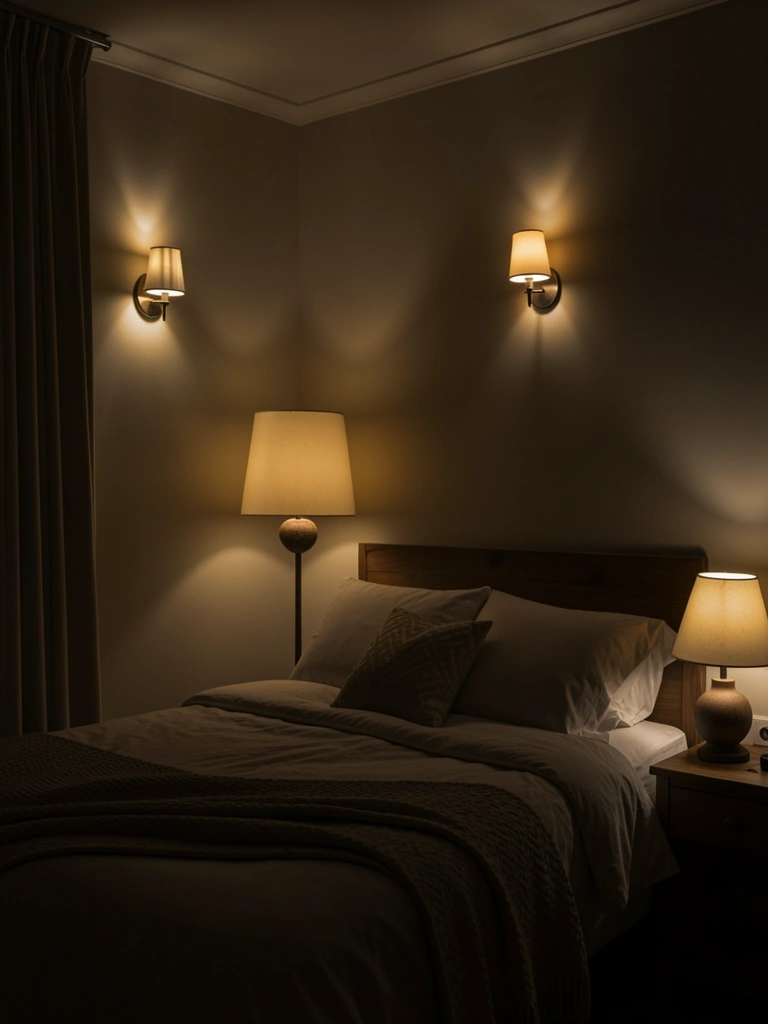
The secret to genuinely cozy lighting is layering: never rely on a single source. Combine a dimmed overhead fixture (30% brightness), wall sconces (40%), a bedside lamp (50%), and a corner floor lamp (20%) so light fills the room from multiple angles without any one source feeling dominant.
Wire different fixtures to different switches or dimmers so you can activate only what you need. Evening routine might look like: overhead + one sconce while getting ready, then shift to bedside lamp + floor lamp once in bed. This costs $200–$500 depending on what you’re adding, but it’s the most transformative approach because it mimics natural light (which comes from multiple directions). Your brain recognizes layered light as genuinely restful. The room never feels dark or harsh—it feels intentionally curated for calm.
Save this guide and try one idea this weekend. Even a single layer of new lighting changes how your bedroom feels, and small changes compound fast. Which approach speaks to you most—going minimal with one perfect lamp, or building a fully layered system? Either way, your bedroom deserves lighting that feels like a real retreat.
Leave a Reply