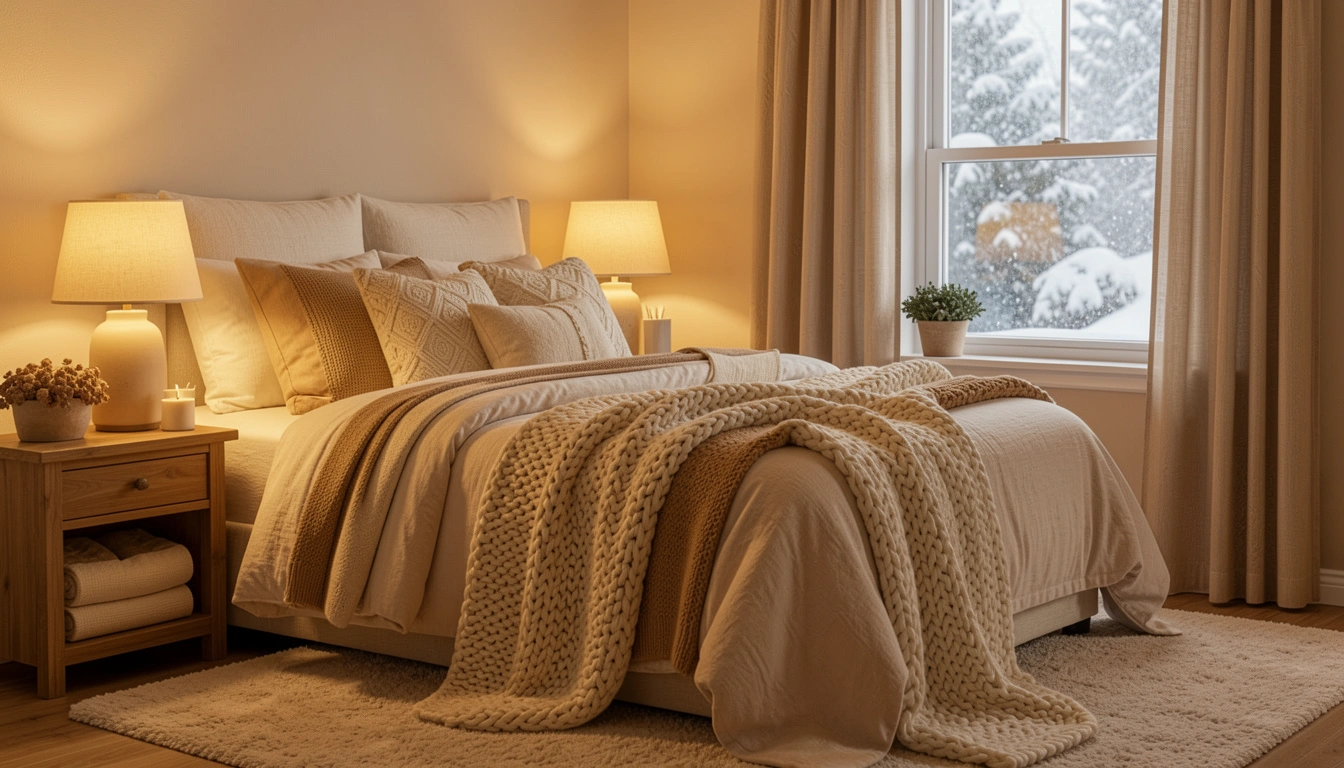
Winter doesn’t have to mean sacrificing style for comfort—but honestly, that’s the best part about a cozy bedroom aesthetic. You can have both. The right mix of textures, lighting, and warmth creates a space that actually feels like a retreat on cold nights, not just somewhere you sleep. Whether you’re dealing with a tiny apartment or a sprawling master, these 27 ideas work for any budget and skill level. We’re talking free styling shifts, quick thrifted finds, and a few investment pieces that’ll make you never want to leave your bedroom. Let’s make your space feel like a warm hug.
1. Layer Your Lighting for Instant Coziness
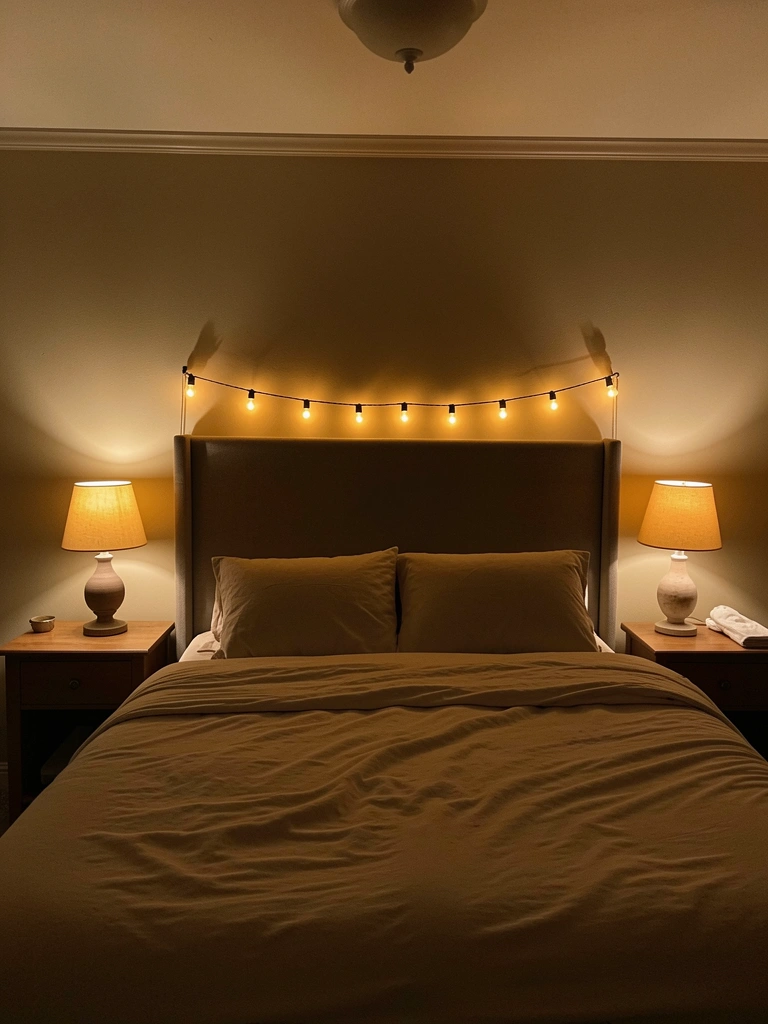
Cold, bright overhead lighting is the enemy of a cozy bedroom. Layered lighting—combining bedside lamps, wall sconces, and string lights—gives you control and warmth year-round. Start by adding warm-bulb bedside lamps ($20-$60 at Target or IKEA) with dimmers if your fixtures allow it. Position them on nightstands to create pools of light rather than one harsh overhead glow.
If you’re renting, adhesive wall sconces ($25-$50 on Amazon) work without drilling. String Edison bulbs or fairy lights around the headboard or along shelves for an extra layer of soft ambiance. The key is using warm white bulbs (2700K color temperature) instead of bright white—they genuinely feel warmer. This takes 30 minutes to set up and costs nothing if you’re switching bulbs you already own.
You’ll notice the difference the moment you turn off the overhead light. Your room stops feeling clinical and starts feeling like a sanctuary.
2. Add a Textured Accent Wall Without Paint
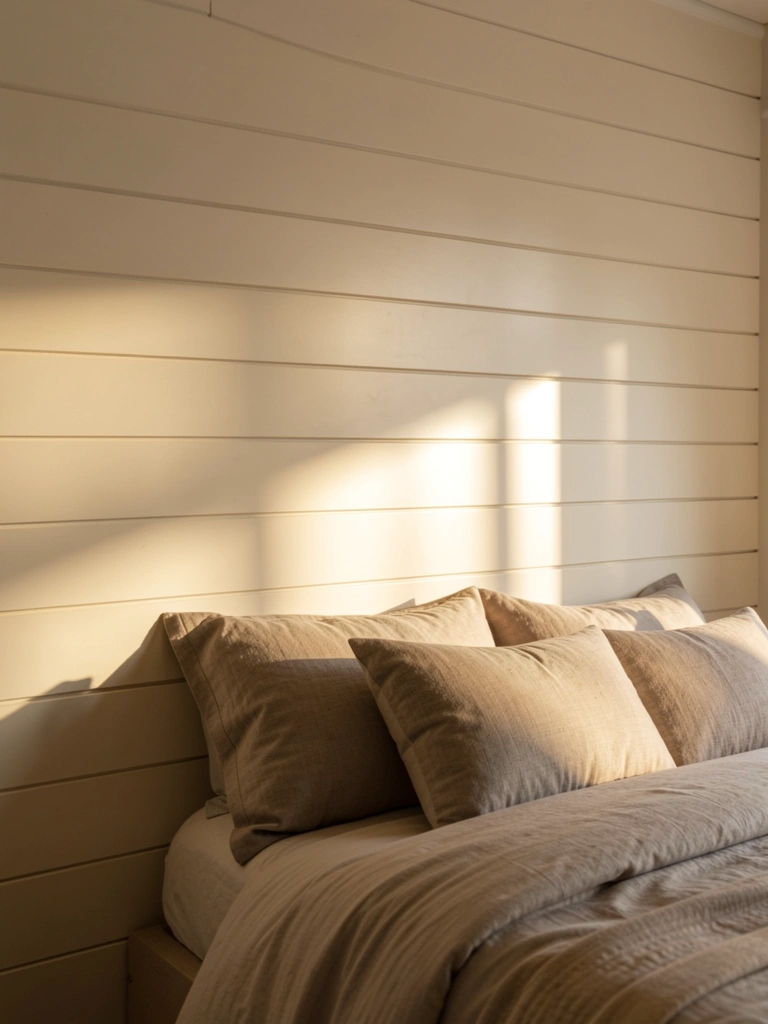
Painting requires commitment, but textured wall treatments don’t. Removable shiplap panels, peel-and-stick wallpaper with tactile finishes, or even fabric panels create visual warmth and dimension without permanent changes. Removable shiplap ($1-$3 per square foot) comes pre-finished and installs with construction adhesive or nails.
For renters, textured peel-and-stick wallpaper ($20-$50 per roll, 2-3 rolls cover one accent wall) mimics plaster, grasscloth, or woven textures. Apply it to one wall behind your bed for maximum impact. If you want to go budget-friendly, hang neutral-colored fabric (linen or cotton) using removable picture hangers—creates soft texture for $15-$30 and peels off without damage.
A textured wall catches light differently than flat paint, adding depth and visual interest without requiring a weekend project. Your room instantly feels more intentional and less like a blank slate.
3. Invest in Quality Bedding That Feels Like Heaven
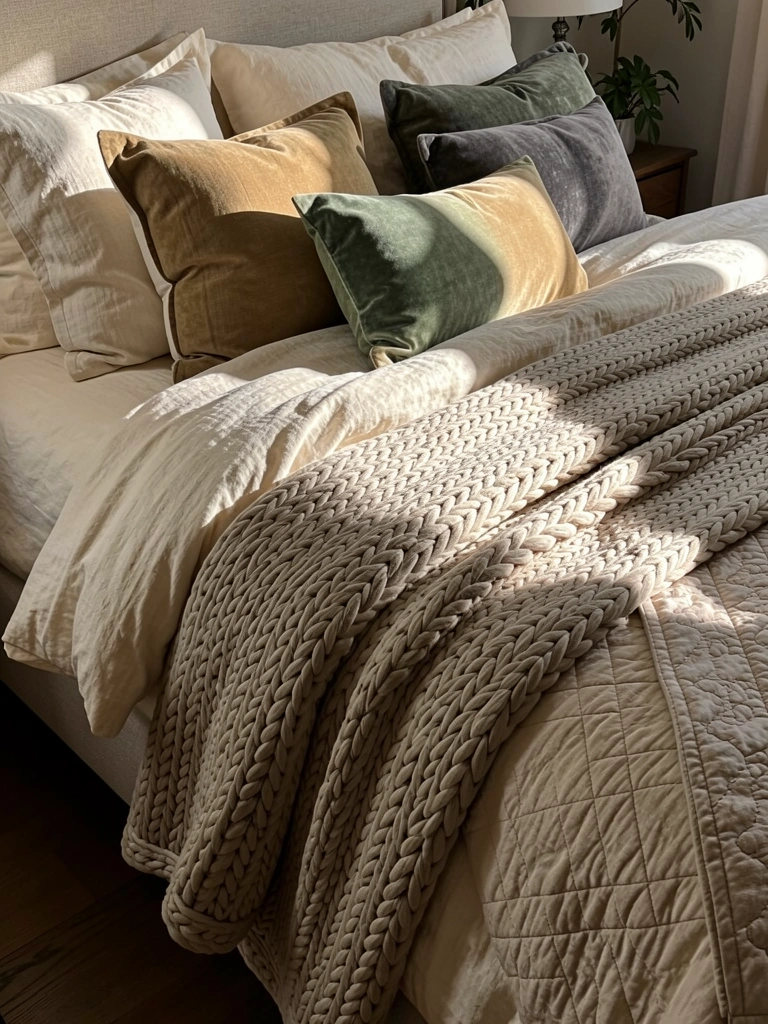
You spend a third of your life in bed—cheap sheets aren’t worth it. High-quality linen or organic cotton bedding ($80-$200 for sheets) actually costs less over time since it lasts years longer than budget alternatives. Look for 300+ thread count cotton (Egyptian or Pima) or European linen that softens with every wash.
Brands like Brooklinen, Parachute, or even mid-range options from Target ($40-$80) work if high-end feels out of reach. Pair sheets with a weighted blanket ($80-$250) designed specifically for sleep support—they’re scientifically proven to reduce anxiety and improve rest. Layer in a quilted throw ($30-$80) at the foot of the bed for extra texture and warmth you can pull up without overheating.
High-quality bedding doesn’t just feel luxurious when you slide in at night—it actually improves sleep quality and lasts through dozens of washes.
4. Create a Reading Nook in the Corner
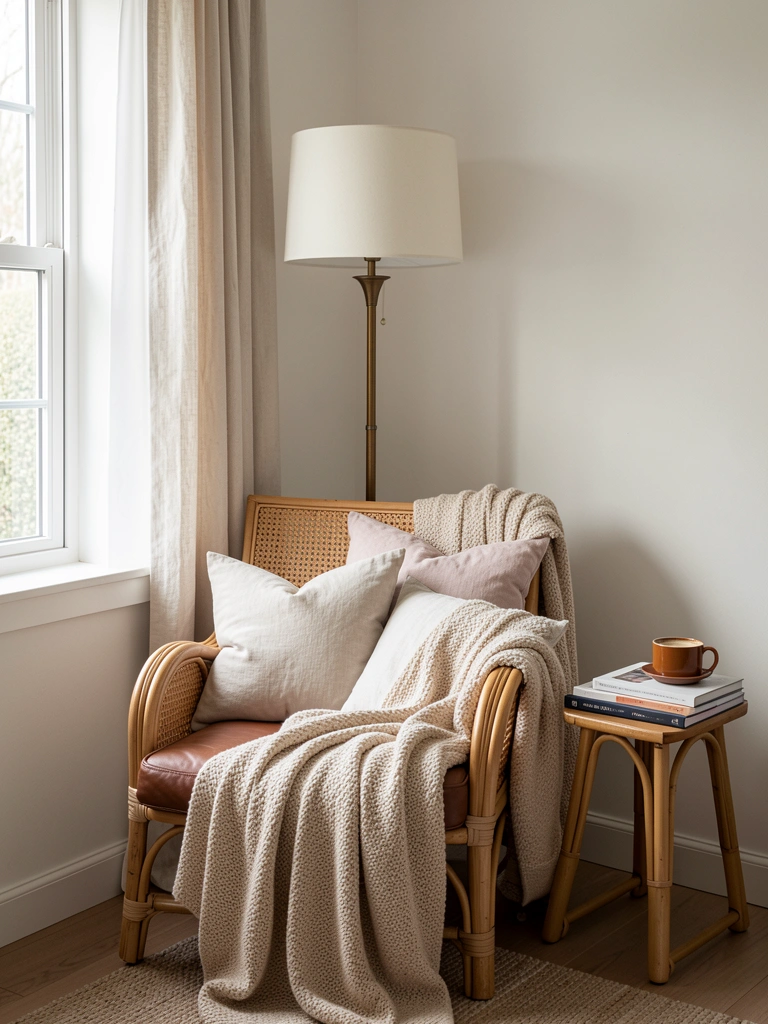
A bedroom without a reading corner misses prime real estate for coziness. If you have even 4 feet of corner space, claim it. Start with a comfortable chair ($100-$300 for secondhand upholstered options or IKEA staples like Strandmon) or even a cushioned bench if space is tight. Layer it with pillows and a throw blanket.
Add a narrow side table ($25-$60 at IKEA) for books and tea, and position a floor lamp with adjustable arms ($30-$80) behind the chair for task lighting. String a small shelf above for book storage ($15-$50). The beauty of this corner is that it costs nothing to use it—no one forces you to sit elsewhere.
This becomes the most-used spot in your bedroom, especially on winter evenings. You’ll have a designated sanctuary that feels separate from sleep, giving your brain permission to actually rest in bed.
5. Swap Harsh White for Warm Neutrals
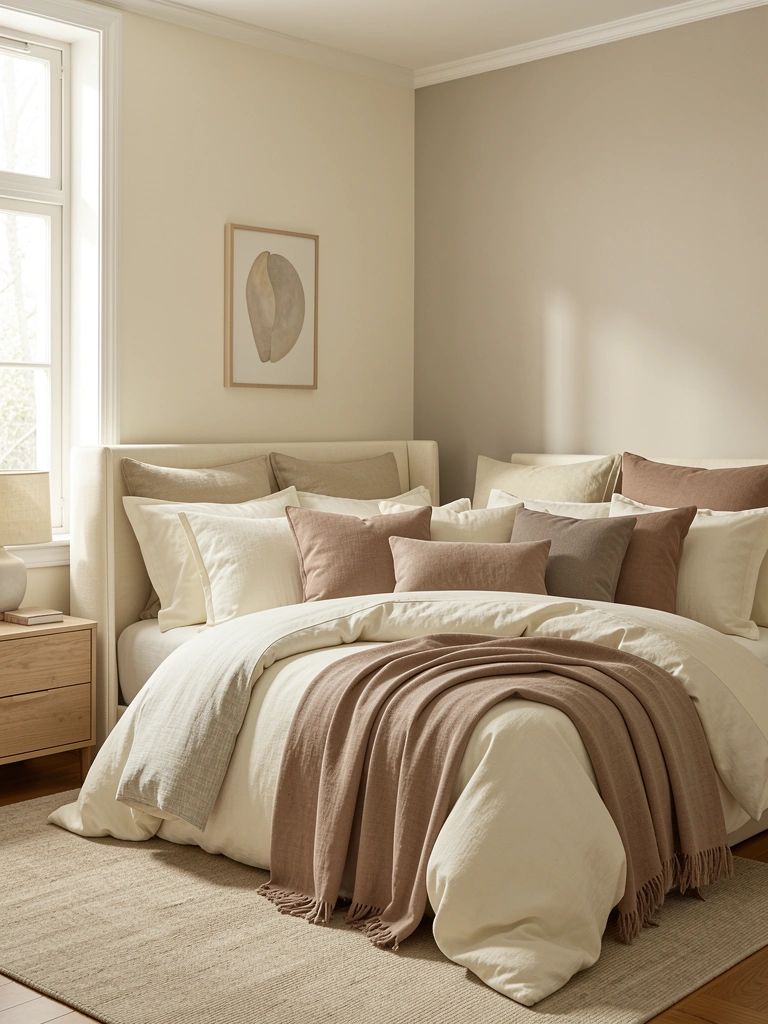
Bright white walls and bedding feel clinical, not cozy. Warm neutrals—cream, greige (gray-beige blend), warm taupe, or soft sand tones—make everything feel more inviting. If repainting feels too much, start by swapping bedding to warm neutrals ($40-$150 for a full set) and see how it shifts the room’s energy.
Paint is the bigger investment ($200-$400 for one room) but worth it if you’re staying put for a while. Sherwin-Williams “Accessible Beige,” “Urbane Bronze,” or Benjamin Moore “Hale Navy” are tested warm neutrals that work year-round. If you’re renting, peel-and-stick wallpaper in warm tones ($30-$60) covers accent walls temporarily.
The moment you move away from clinical white, your bedroom stops feeling like a hotel room and starts feeling like home. Everything—including you—looks warmer and more relaxed.
6. Layer Multiple Throw Blankets at the Foot
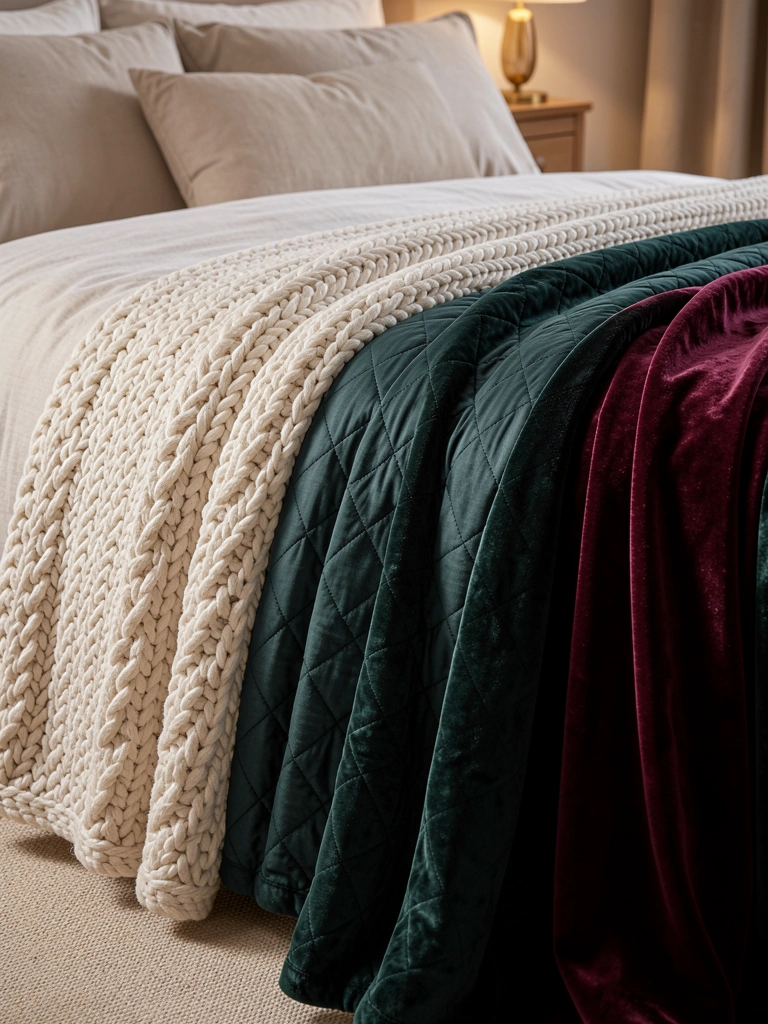
One throw blanket is practical. Three creates abundance and coziness. Layering throws in different textures—chunky knit, quilted linen, and velvet—gives your bed visual depth and lets you grab whatever feels right that day. Buy quality throws at different price points: a chunky knit ($30-$80), a quilted throw ($25-$60), and one splurge-worthy cashmere or faux fur piece ($40-$150).
Drape or fold them loosely at the foot of the bed rather than neatly folding (more visual impact for Instagram-worthy styling). Mix textures intentionally—if one is smooth, pair it with something ribbed or chunky. Rotate them seasonally to keep your room feeling fresh.
Your bed becomes a visual anchor that looks styled and inviting rather than bare. Plus, you have options depending on your mood and how cold the night gets.
7. Add a Ceiling Detail That Changes Everything
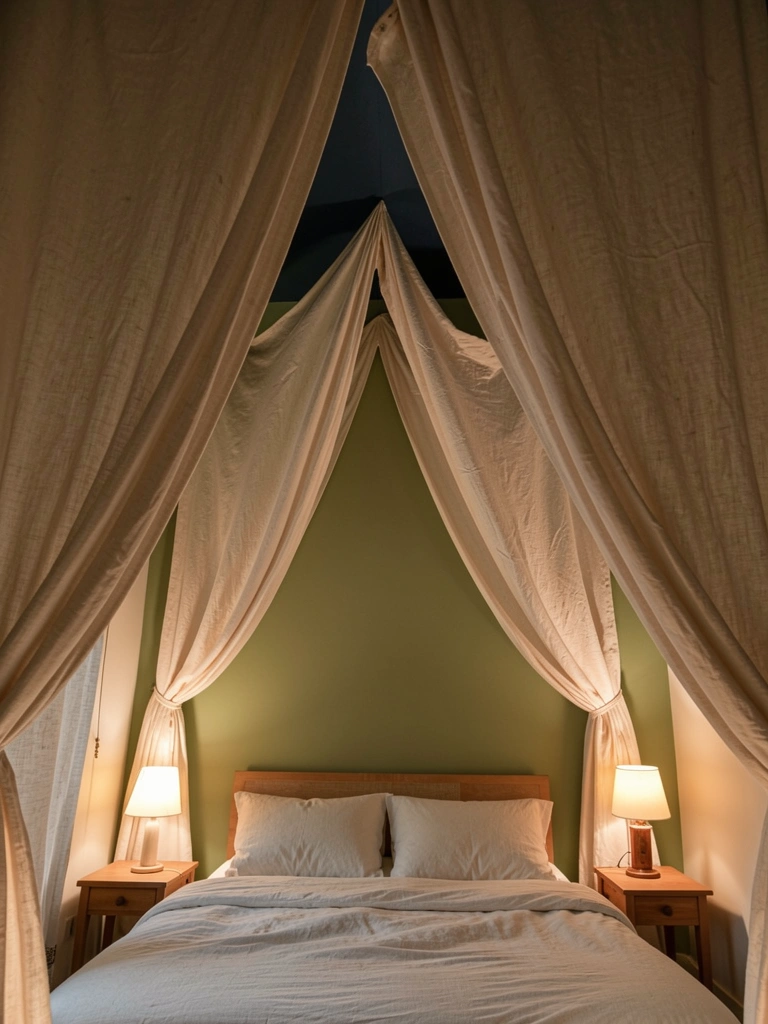
Most people ignore the ceiling, but it’s prime real estate for coziness. If you have a high ceiling, a fabric drape canopy ($20-$80 in fabric plus inexpensive hooks) creates an intimate, den-like feeling. Cream or neutral linen works best for warm vibes.
For lower ceilings or renters, paint the ceiling in a warm color—sage green, warm gray, or soft navy ($100-$200 including materials and effort)—and keep walls lighter. This makes the room feel wrapped and contained rather than echoing and empty. If painting feels extreme, adhesive ceiling tiles ($30-$50) add texture without commitment.
The ceiling is the fifth wall no one thinks about. Once you add detail up there, the whole room feels more intentional and designed specifically for you.
8. Choose Rounded Furniture Over Sharp Angles
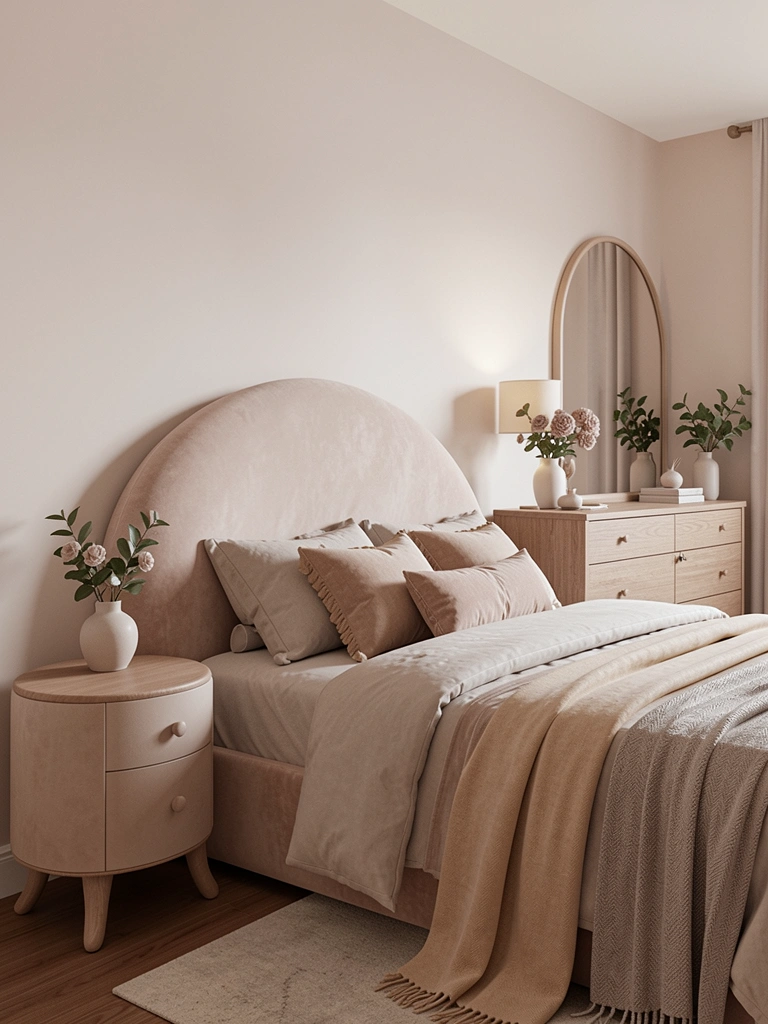
Sharp angles feel stimulating; rounded shapes feel calming. Your brain registers the difference, even if you don’t consciously think about it. Swap rectilinear furniture for curved alternatives when possible. Start with a rounded or arched headboard ($150-$500) in upholstered fabric—it’s often the room’s focal point anyway.
Add nightstands with curved legs ($100-$300 each) instead of box-like options, and hang an arched or round mirror ($50-$150) instead of rectangular. These swaps don’t cost significantly more but completely shift the room’s energy. You don’t need to replace everything at once; prioritize the headboard since you see it every day.
Renter-friendly option: a peel-and-stick mural ($25-$60) of an arched window or doorway creates the illusion of curved architecture without actual furniture changes.
The softer shapes make your brain relax the moment you enter the room. It’s psychological, but it works—cozy spaces have fewer sharp angles.
9. Thrift Statement Art for Personal Style
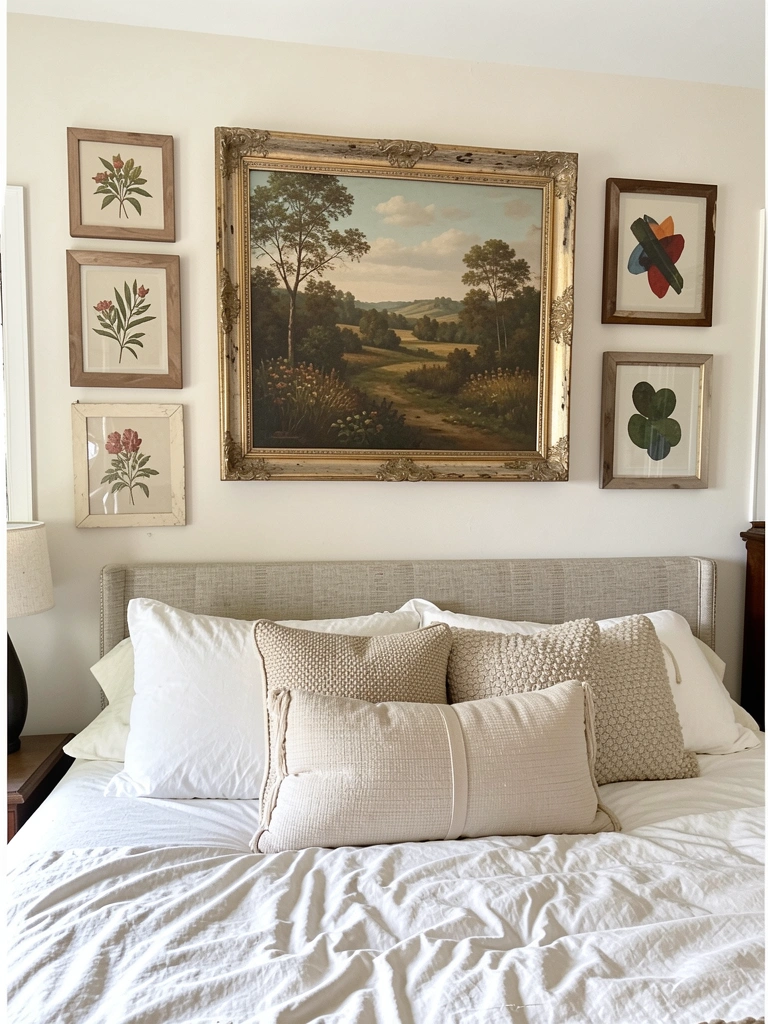
Mass-produced art from big-box stores feels generic. Thrifted or vintage pieces instantly make a space feel personal and layered. Hit local thrift stores, Goodwill, or Facebook Marketplace ($5-$50 per piece) and look for large landscape paintings, botanical prints, or abstract pieces that feel warm and inviting. Frame mismatches are intentional—they look more collected and less “designer catalog.”
Create a gallery wall behind your bed with an odd number of pieces (3, 5, or 7) at varying heights. You’re not trying to match perfectly; you’re curating a story. Mix frame styles and painting sizes. If you find one incredible statement piece, let it stand alone and build around it with smaller framed pieces.
Original art—even if it’s $10 thrifted—makes your room feel like it belongs to you specifically, not to a rental company or a design template.
10. Use Warm Wood Tones in Furniture and Accents
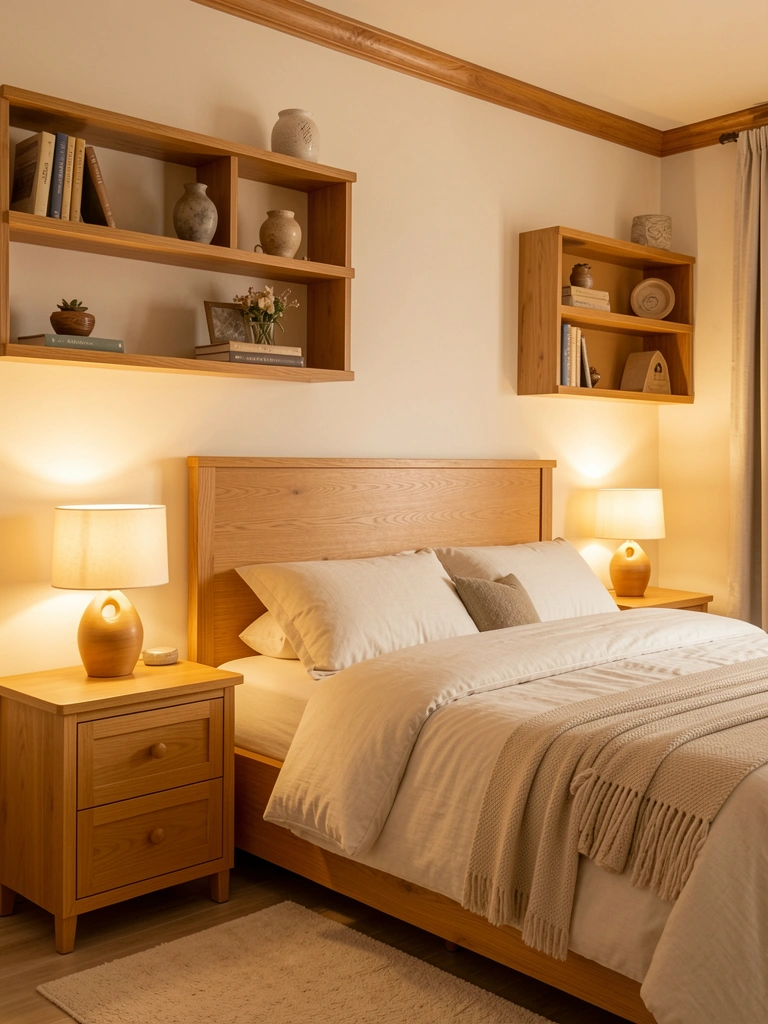
Cool-toned or gray wood feels cold; warm wood feels welcoming. Prioritize warm honey, oak, or walnut tones over cool grays or blacks. Start with wooden nightstands ($80-$250) in warm tones, and build from there. If you can’t replace large furniture, add warm wood shelving ($30-$100 per shelf) or a wooden accent headboard ($150-$400).
Thrifting is your friend here—older furniture often has richer warm wood tones than new pieces. Look for mid-century wooden pieces that add both warmth and character. Even small touches like a wooden picture frame ($10-$30), wooden bowl for bedside ($15-$40), or wooden floor lamp ($40-$120) shift the room’s temperature.
Warm wood automatically makes a room feel more grounded and less sterile. Combined with soft lighting, it’s instant coziness.
11. Keep Your Color Palette to 3-4 Tones Maximum
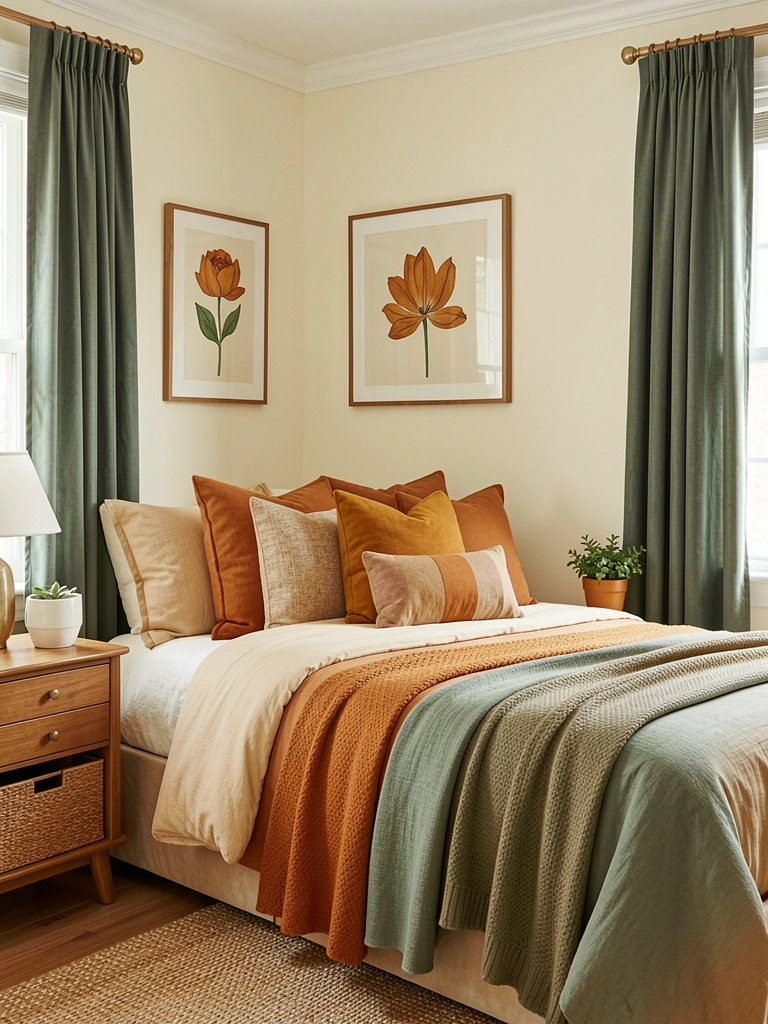
Too many colors fight for attention and create chaos. Stick to 3-4 main colors to make your room feel cohesive and calm. Start with a neutral base (cream, warm gray, or soft taupe) for walls, then choose one warm accent color (terracotta, warm caramel, or soft rust) and one cool accent color (sage, dusty blue, or soft forest green).
Your fourth color (optional) is for pops—a deep color used sparingly in art, pillows, or throws. Map this out before buying anything. Take photos of color swatches in your lighting and compare them side by side to ensure they harmonize.
A cohesive color palette requires zero extra money but completely changes how “finished” your room feels. Everything looks intentional instead of accidental.
12. Install Floor-to-Ceiling Curtains or Drapes
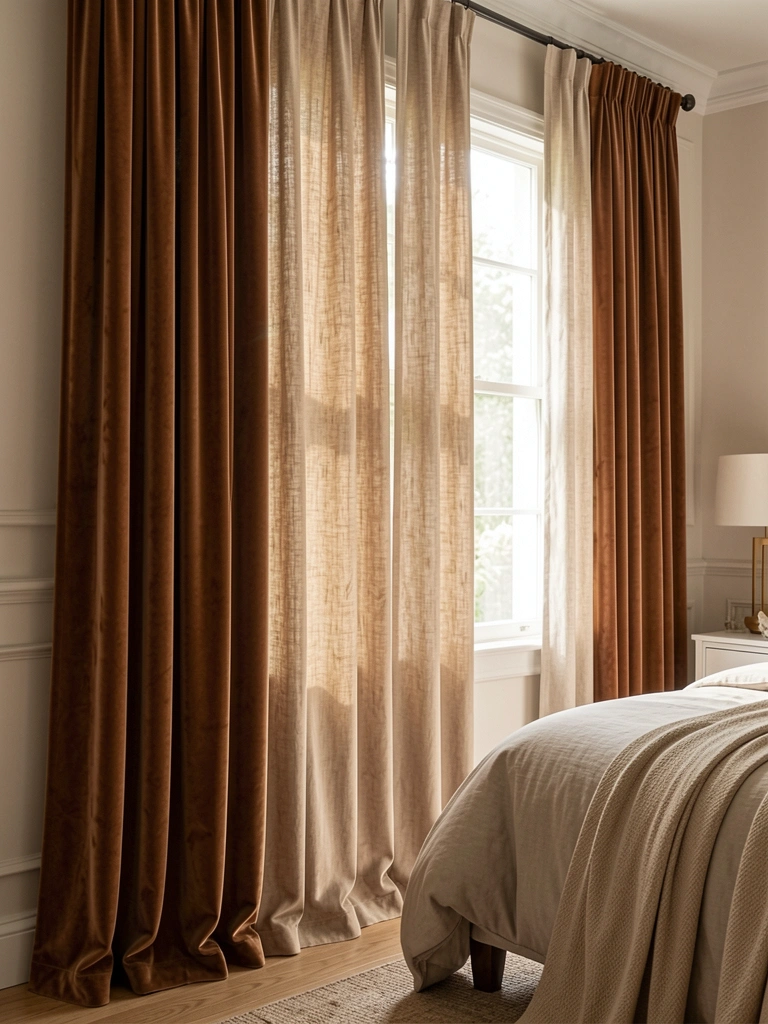
Floor-to-ceiling curtains create luxury and drama instantly. Hang curtain rods as close to the ceiling as possible (even 6 inches higher than the window) and let fabric reach the floor or pool slightly. Use heavyweight linen, cotton, or velvet ($15-$40 per yard) in warm neutrals or soft jewel tones.
Budget option: Buy basic curtain panels from IKEA or Target ($20-$50 per panel) and hang them from a higher rod. Pricey investment option: custom curtains from Etsy ($100-$300) in fabrics you love. Renter hack: Use tension rods and removable adhesive hooks to install temporary curtains without drilling.
Tall curtains visually expand the room, block light for better sleep, and add acoustic softness (a bonus for noise reduction). The payoff is worth the small investment.
13. Create Layers with Pillows in Mixed Textures

Pillow styling separates “made bed” from “luxury hotel vibes.” Layer 4-6 pillows of different sizes and textures for maximum coziness. Buy a standard pillow ($30-$80), add a body pillow ($40-$100), include smaller throw pillows ($15-$50 each), and vary the covers between linen, velvet, quilted cotton, and chunky knit.
Mix colors within your palette (whites, creams, taupes, and one accent color) but ensure they coordinate. Lean pillows against the headboard at different angles rather than rigid rows—it looks more inviting and lived-in. You’ll actually use them for reading or propping yourself up, not just decoration.
Layered pillows add visual abundance and practical comfort. Your bed becomes a place you actively want to spend time, not just somewhere you sleep.
14. Add Plants for Air Quality and Visual Interest
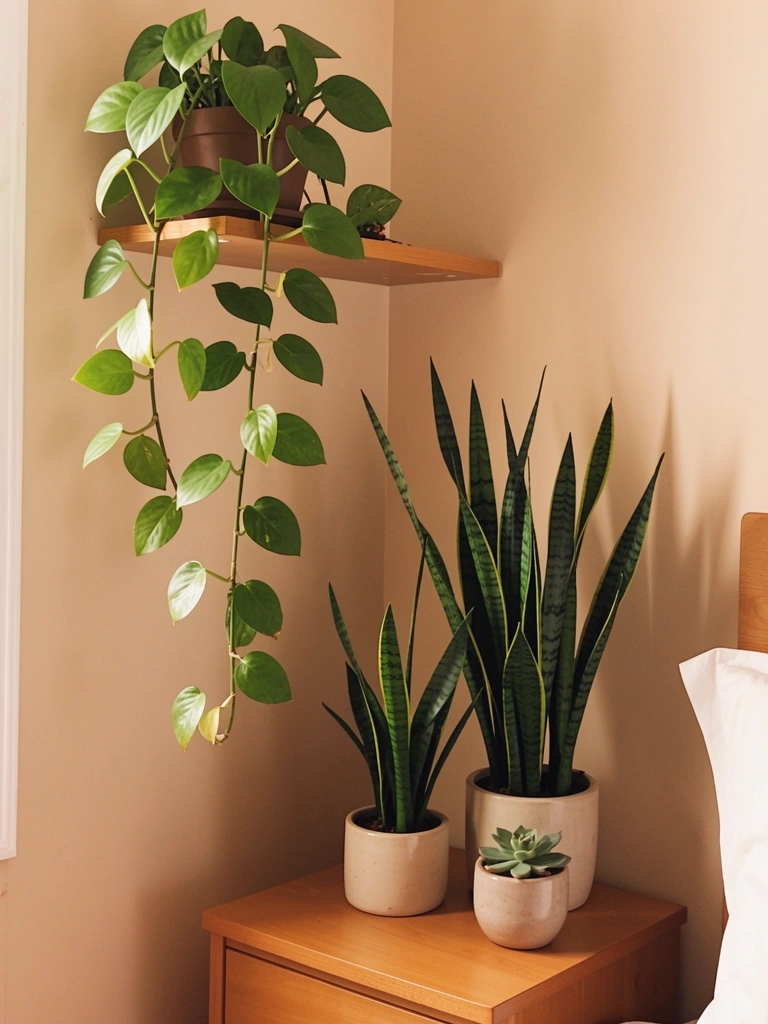
Plants improve air quality and add organic texture that screams cozy. Start with low-light tolerant varieties like pothos, snake plants, or ZZ plants if your bedroom isn’t bright ($10-$30 each). Place them on nightstands, shelves, or corners where they won’t get knocked over during sleep.
Choose ceramic or woven pots that coordinate with your color palette ($10-$40 each) to make the display intentional. Trailing plants like pothos add movement, while upright plants like snake plants add structure. Group three plants at varying heights for impact without clutter.
Low-maintenance plants (water monthly, tolerate neglect) are actually the coziest because you won’t stress about killing them. The greenery shifts the room’s energy from cold to organic and alive.
15. Install Blackout Shades for Better Sleep
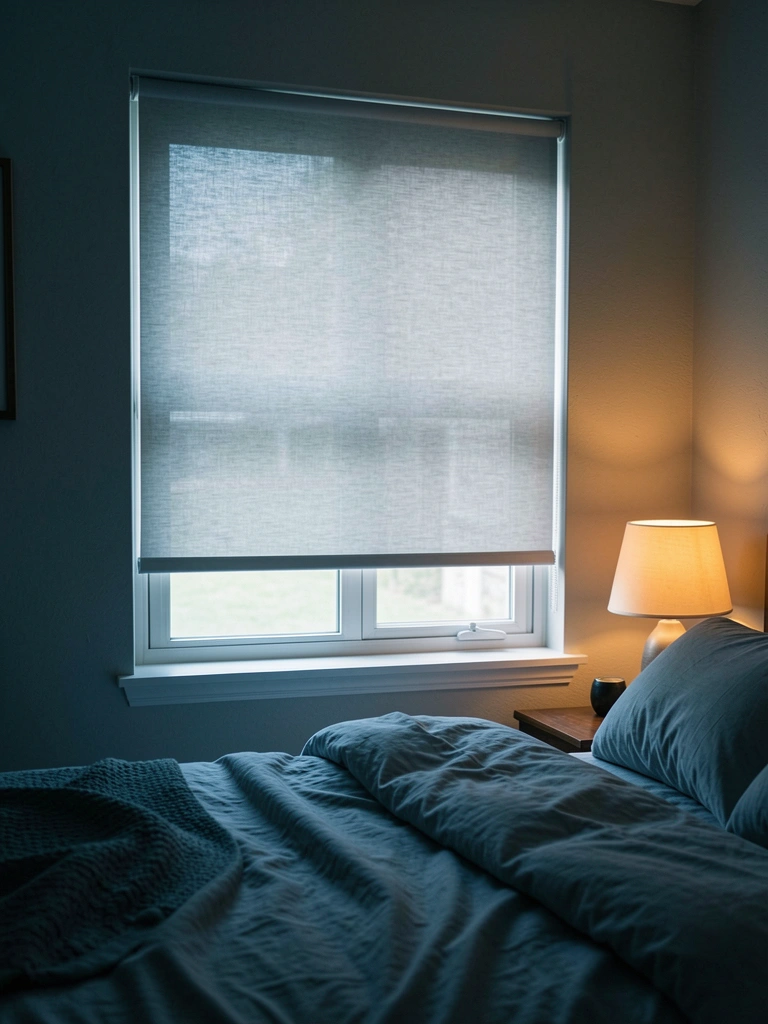
External light disrupts sleep, and blackout shades solve it. Install thermal blackout shades ($40-$100 per window) that block light and regulate temperature or use removable blackout liners ($15-$30) on existing curtains if you’re renting. They’re not glamorous but absolutely functional.
Pair them with soft fabric curtains in your chosen color—the blackout shade behind serves a purpose while your pretty curtains serve aesthetics. This combination gives you both function and style. Install shades or liners in 30 minutes per window with basic tools.
You’ll sleep deeper and longer once light is truly blocked out. The cozy bedroom aesthetic loses all appeal if you’re exhausted.
16. Add Warmth with a Quality Area Rug
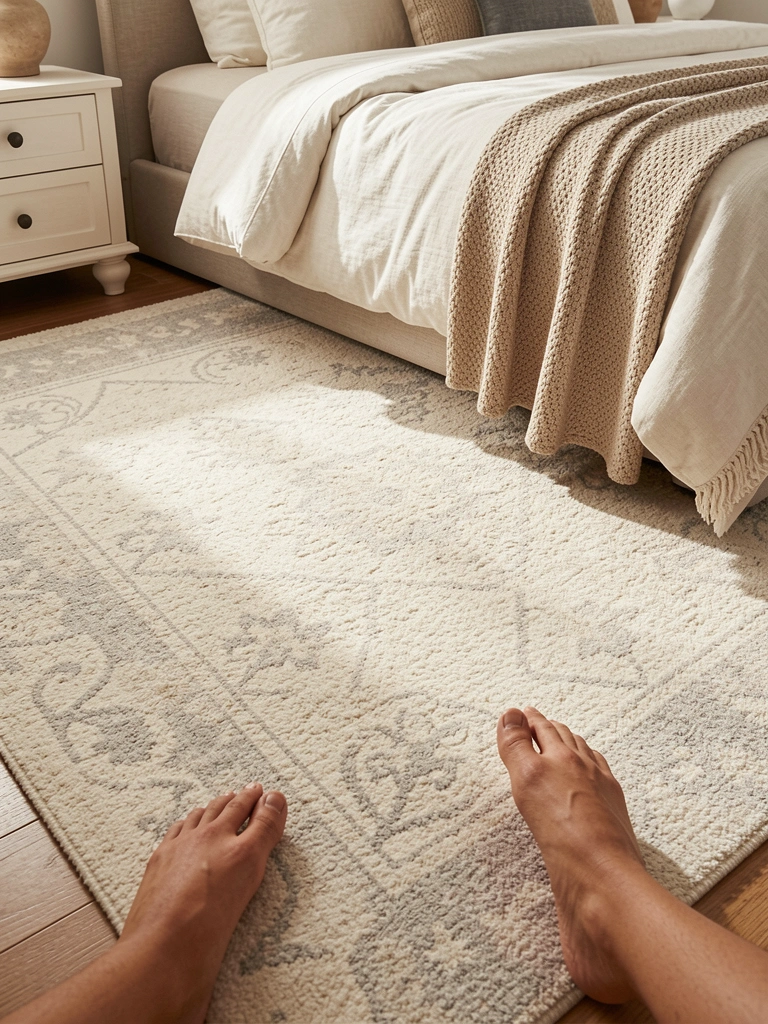
Cold floors are cozy’s enemy. A large area rug (at least 8×10, ideally larger) under the bed creates softness and warmth underfoot. Choose natural fiber rugs like wool, jute, or sisal ($100-$400) for longevity and texture, or budget options like plush synthetic blends ($50-$150).
Position the rug so your feet land on it when getting out of bed—this is the only moment that matters. Neutral tones (cream, warm gray, soft taupe) let the room’s color palette shine; patterns add visual interest if your palette feels too plain. A quality rug worth having professionally cleaned will last years and actually improve over time.
The difference between cold hardwood underfoot and warm rug is immediately felt (literally). This elevates the coziness factor more than you’d expect.
17. Hang Fabric or String Lights for Ambient Glow
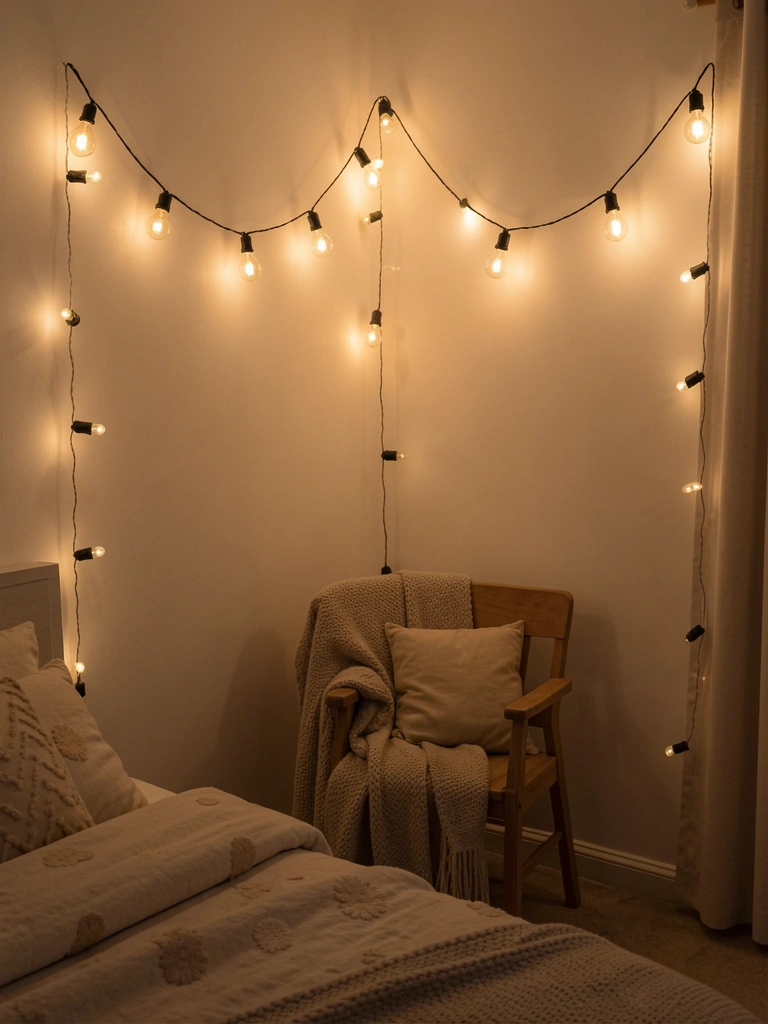
String lights are cozy’s shortcut. Warm white Edison bulbs or fairy lights ($15-$40) create ambient glow perfect for winter evenings. Drape them around the headboard, along a shelf, or above a reading nook. Avoid bright white or cool-toned lights—warm (2700K) is essential.
Plug-in options work for renters; hardwired is permanent for owners. Space lights 6-12 inches apart for even glow and avoid bunching. Start with one strand and add more if you want dense coverage. The key is using them as ambient lighting, not reading light.
The moment you turn these on, your room shifts into “sanctuary mode.” String lights signal relaxation to your brain in a way other lighting can’t.
18. Layer Your Window Treatments with Sheers and Sheers
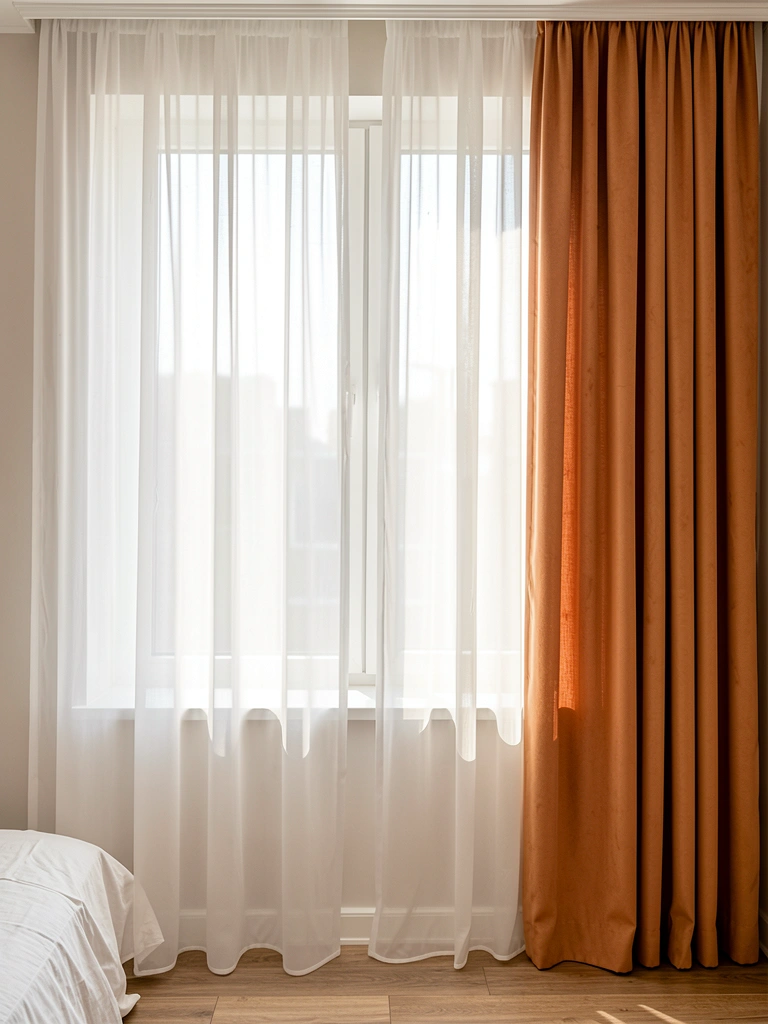
Single curtain panels are practical but lack sophistication. Layer sheer curtains with heavier drapes for both function and aesthetics. Hang lightweight sheer panels ($20-$50) inside and heavier curtains ($30-$80) outside to control light and privacy while looking intentional.
This works in any space—you can use two separate rods or a double curtain rod ($25-$60). Sheers diffuse harsh daylight, and heavier curtains block it entirely. In winter, this layering also adds slight insulation. Renter-friendly: Use tension rods with one lightweight and one heavy panel for the same effect.
Layered windows look professionally designed and give you precise control over your light and privacy.
19. Curate a Nightstand That Serves You
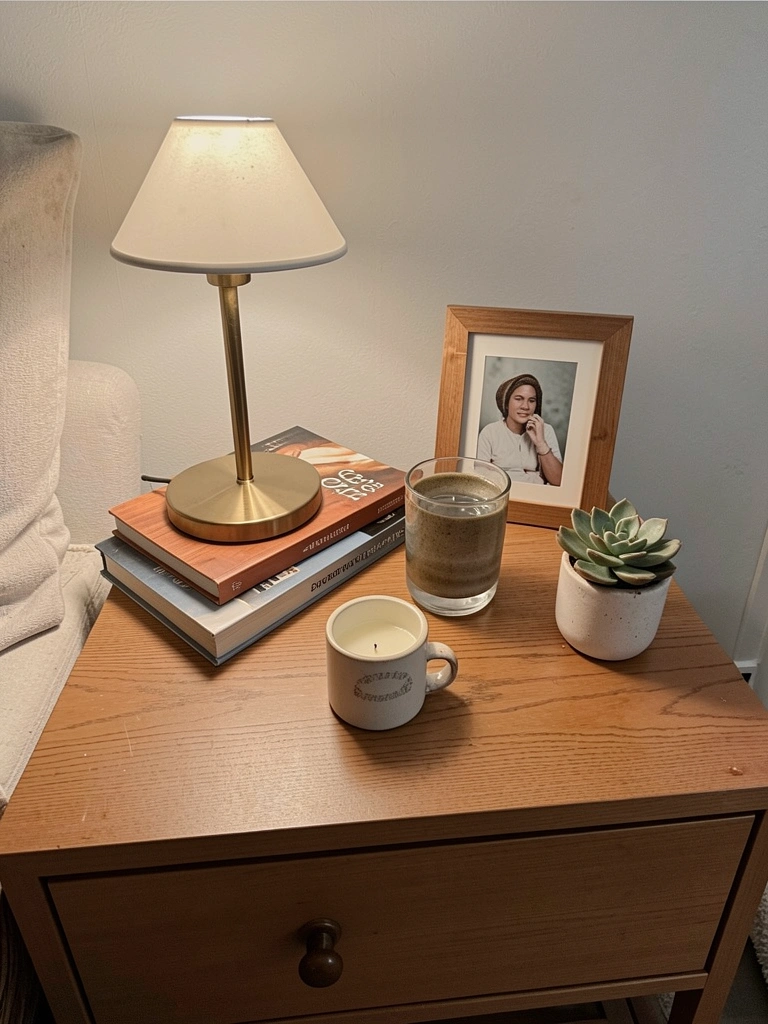
Your nightstand should be functional and beautiful, not a catch-all for random items. Keep only what you use: a reading lamp, water glass or mug, current book, and optionally a plant or candle. Curate these items intentionally rather than letting things accumulate.
Choose matching or coordinating containers ($10-$30) for drawer organization. A small tray ($15-$40) groups items and prevents them from scattering. Rotate your current book and one or two backups rather than piling the whole collection there. The nightstand should feel calm, not cluttered.
A curated nightstand feels intentional and restful. You reach for what you need without visual noise surrounding it.
20. Incorporate Textured Throw Pillows Beyond the Bed
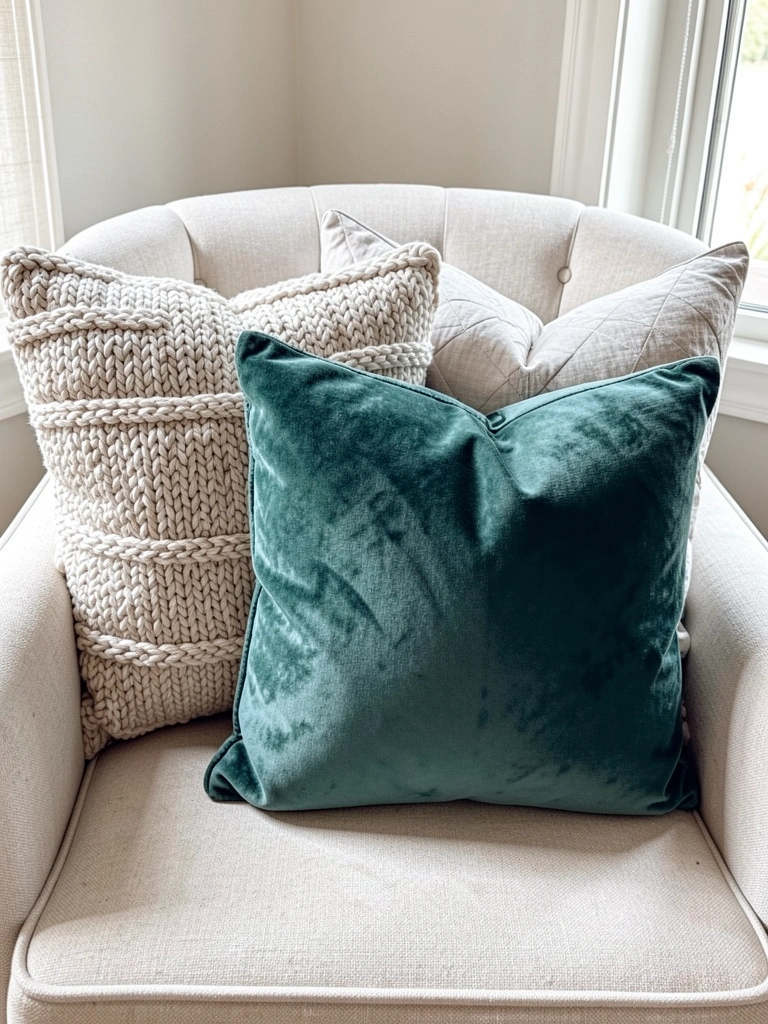
Pillows aren’t just for beds. Add textured throw pillows ($20-$60 each) to chairs, benches, or window seats. Mix a chunky knit pillow, a quilted one, and a velvet option in coordinating colors. Vary sizes (12×12, 14×14, and a smaller accent) for visual interest.
Thrift or buy covers from IKEA, Target, or Etsy and fill them with inexpensive pillow inserts. Swap pillows seasonally or whenever you want a refresh (costs nothing, just moving things around). Pillows are the easiest way to add texture without commitment.
Textured pillows scattered throughout the room multiply the cozy factor. They’re also the most affordable way to add personality and warmth.
21. Choose Velvet or Linen Upholstery for Headboards
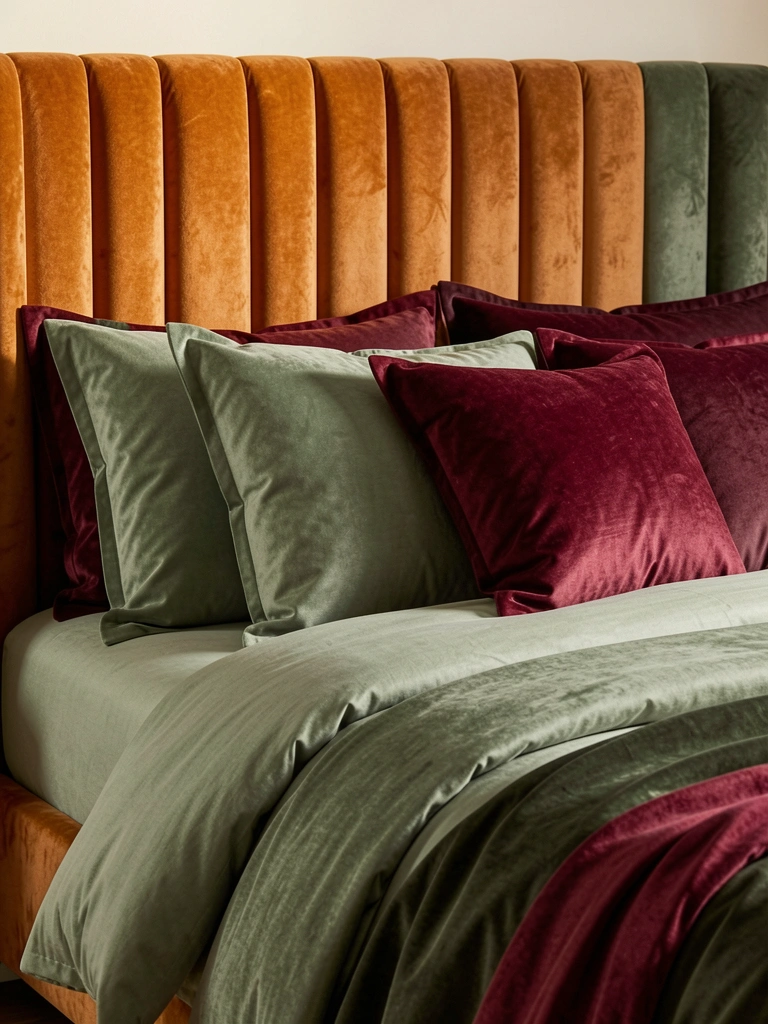
An upholstered headboard is the bedroom’s focal point. Choose velvet or linen upholstery ($150-$500 for a full headboard) in a warm tone or jewel color that complements your palette. Velvet feels luxurious and catches light beautifully; linen feels organic and slightly textured.
If a full headboard investment is too much, a fabric wall hanging or tapestry ($30-$80) behind the bed creates the same focal point feel. Panel it with contrasting fabric on either side for depth. Renter option: removable fabric wall panels ($40-$100) that stick on without damage.
An upholstered or fabric headboard instantly elevates the room from “basic bedroom” to “considered space.” It’s where your eye lands first.
22. Create a Diffuser or Candle Station on the Dresser
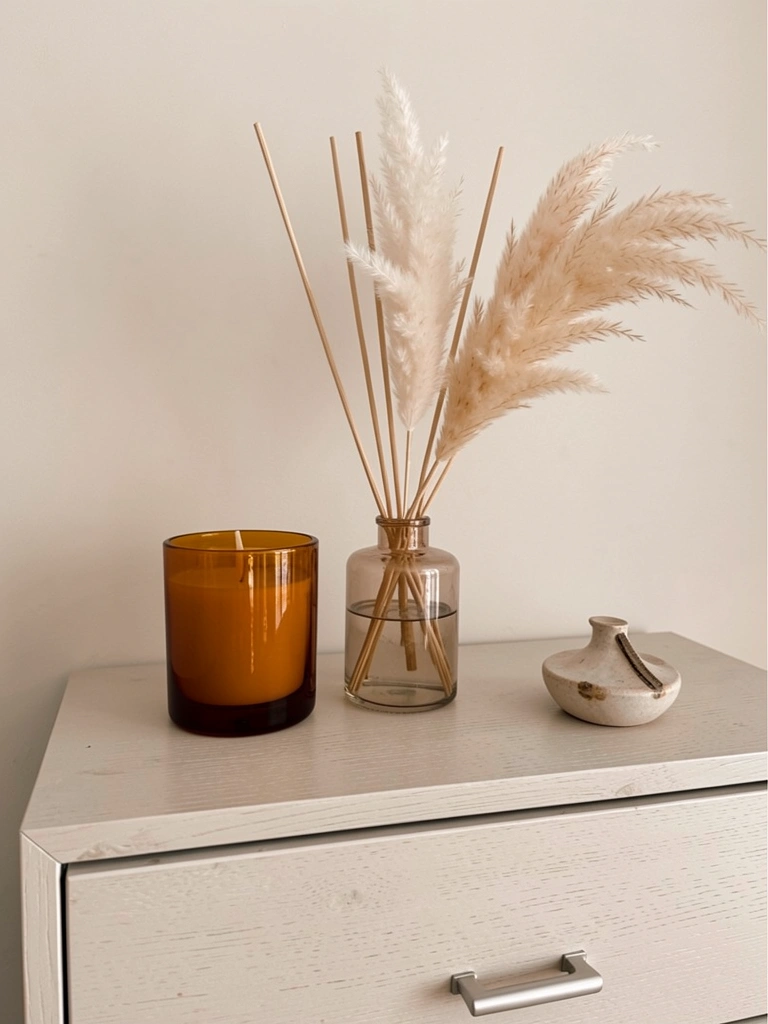
Scent is cozy’s often-overlooked element. Place a warm-scented candle ($15-$40) and an essential oil diffuser ($25-$60) on your dresser or nightstand. Scents like vanilla, sandalwood, cedar, or amber create warmth, while floral or citrus can feel cold.
Light the candle during evening wind-down and run the diffuser while you sleep (using gentle, watery blends). Keep candles in warm-toned holders or vessels ($10-$30) to align with your aesthetic. Swap scents seasonally or when you want variety (costs minimal).
A scented room feels cozier than an unscented one. Scent memories are powerful—over time, your bedroom’s specific scent becomes part of its identity.
23. Add Wooden Shelving for Books and Décor
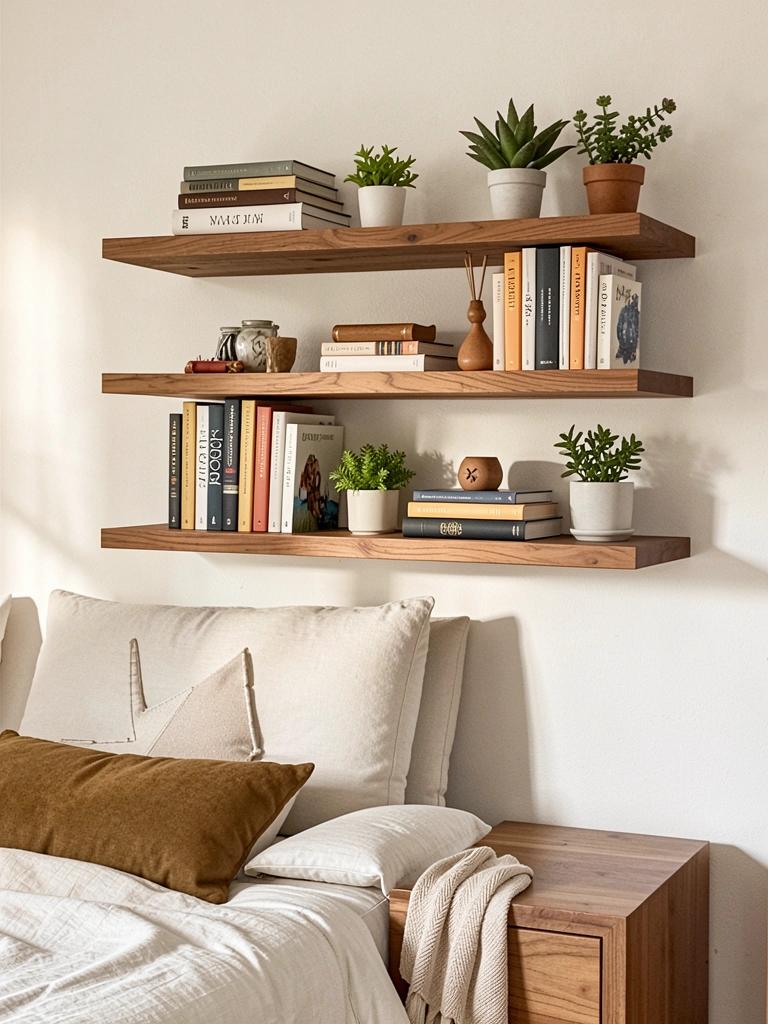
Wooden shelves in warm tones add depth and practicality. Install floating shelves ($40-$100 per shelf, including installation materials) in honey or warm oak finishes above nightstands or along an empty wall. Style them with books, small plants, and meaningful objects.
If you’re renting, tall bookcases ($80-$200) achieve the same effect without drilling. Style shelves with intention—alternate between stacked books, standing books, small plants, and objects in a rhythm that feels balanced, not chaotic. Leave breathing room (one-third empty space) so it doesn’t feel cluttered.
Styled shelving adds visual interest, storage, and a sense of layered coziness. Books and plants make any space feel more personal and lived-in.
24. Use Warm Metallics Sparingly for Glam
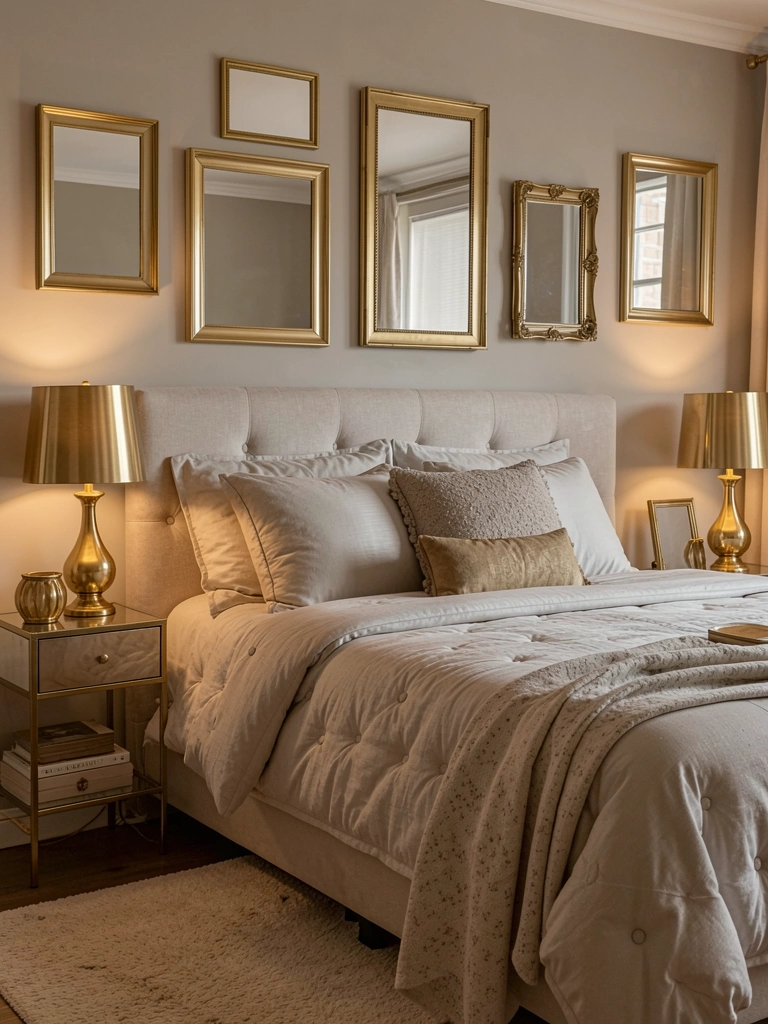
Metallics add warmth and subtle glamour. Choose warm metals like brass or gold ($10-$50 per item) over cool silvers or chrome. Limit yourself to 3-5 metallized items: picture frames, lamp bases, a mirror frame, or shelf brackets. The key is sparse placement—one item per surface feels intentional; scattered everywhere feels cluttered.
Mix metals if needed (brass and copper work together), but consistency within the warm family is safer. Thrift brass frames and lamps ($5-$20 each) from antique stores for affordable glamour. Avoid chrome or brushed nickel unless your room skews modern rather than cozy-warm.
Warm metallics catch light and add visual richness without requiring bold statement pieces. It’s an understated way to add luxury.
25. Create Zones Within the Room
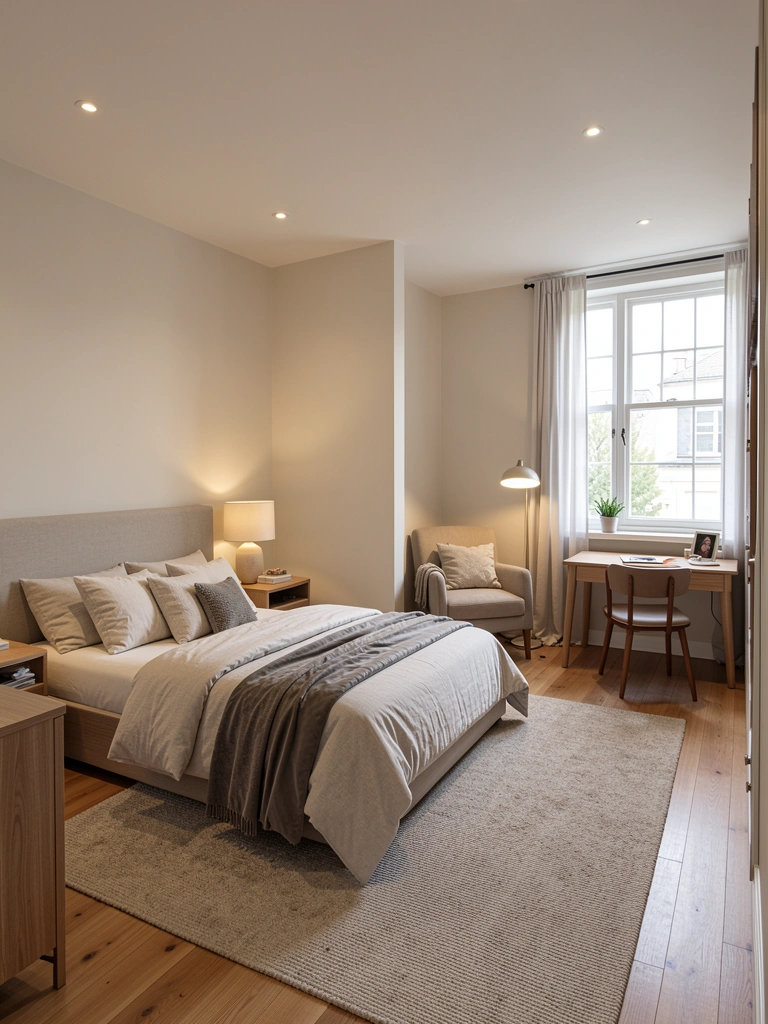
If you have space, divide your bedroom into functional zones. A bed zone, a reading zone, and optionally a work zone each get their own lighting and furniture. This helps your brain compartmentalize—sleep happens in one area, relaxation in another, work in a third.
Use area rugs ($50-$150) to define each zone, different lighting for different activities, and subtle visual separators like plants or shelving. Even in smaller rooms, a chair in a corner plus a small side table creates a “reading zone” distinct from the bed.
Zoning makes a bedroom feel larger and more multifunctional. It also signals to your brain: “Here is where I sleep,” “Here is where I relax,” preventing that weird space where everything blends together.
26. Invest in Luxe Pillowcases for Face and Scalp

Sleep isn’t just about comfort—it’s about reducing friction on your skin and hair. Silk or satin pillowcases ($30-$80 per pillowcase, or lower-cost sateen options at $15-$40) reduce creasing and breakage while feeling absolutely luxurious. They regulate temperature better than cotton, making them perfect for warm sleepers.
Brands like Slip, Fishers Finery, or even budget-friendly Amazon options work. Wash on delicate or hand wash to protect the fibers. Use these for sleeping and swap them with regular cotton pillowcases if you prefer (though why would you after feeling the difference?).
Silk pillowcases are a small investment that impacts you personally every single night. That’s cozy.
27. Keep One Wall Intentionally Bare for Balance
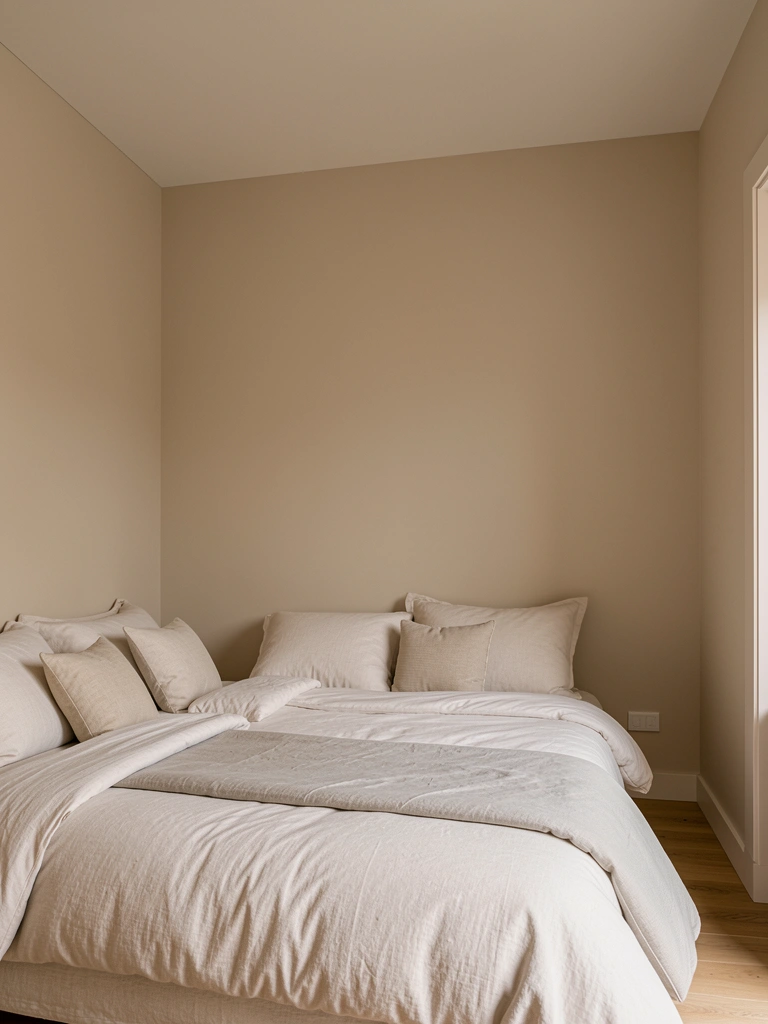
In the quest for cozy layering, resist the urge to fill every square inch. One bare wall (or mostly bare) creates visual rest and prevents overwhelm. Leave negative space intentionally rather than feeling like you need to fill it. This applies to shelves, too—leave one-third to one-half of shelving empty.
Cozy doesn’t mean cluttered. Strategic emptiness actually enhances the coziness because your brain isn’t overstimulated. It’s like visual breathing room.
A balanced room with intentional empty space feels more curated and restful than one where every surface is styled.
Save this post and try just one or two ideas this weekend. Which will you start with? Whether it’s rehanging your curtains higher or swapping out one pillow, these small changes add up fast—and your bedroom deserves to feel like a retreat.
Leave a Reply