Introduction
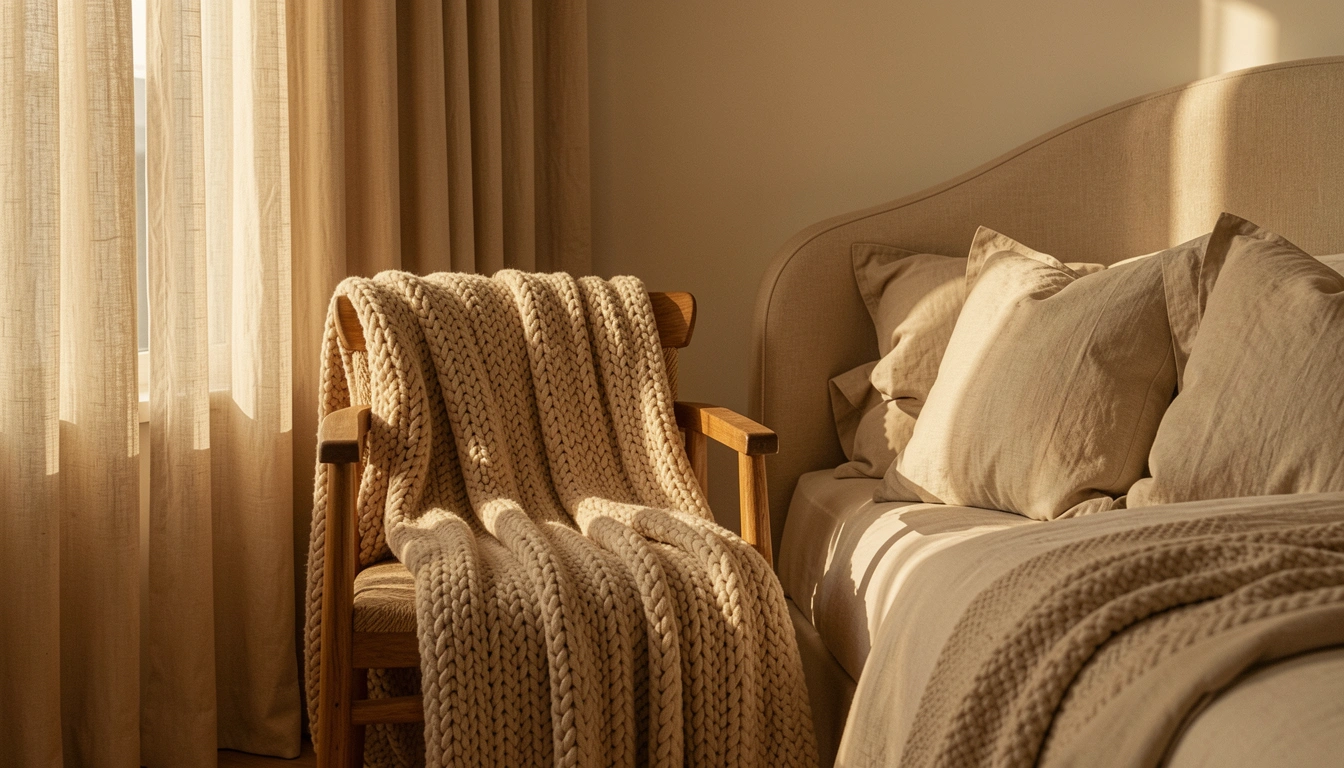
Your bedroom should feel like a hug the moment you walk in—but if yours feels cold, flat, or uninspired, you’re not alone. The bedroom design trends that dominated the last few years (looking at you, minimalist gray) have left a lot of us craving warmth and personality. The good news? Creating a cozy, inviting space doesn’t require a complete overhaul or a huge budget. Whether you’re a renter with limited options or a homeowner ready to invest, these 23 ideas blend trending techniques with practical solutions. You’ll discover how to layer textures, mix patterns confidently, incorporate natural materials, and add those personality-packed details that make your space feel authentically yours. Let’s build a bedroom that actually feels as good as it looks.
1. Layer Textured Walls Without Commitment
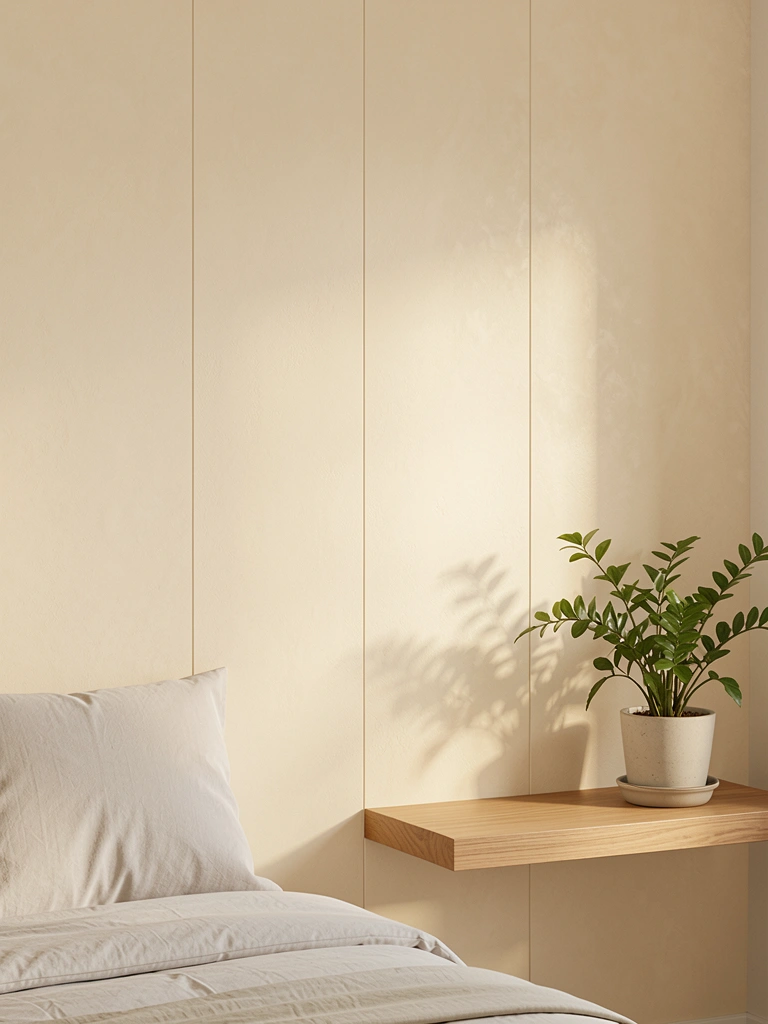
Textured walls add instant depth and visual interest without requiring paint or permanent changes. They’re the secret behind bedrooms that feel expensive and thoughtfully designed, not sterile.
Start with peel-and-stick textured wallpaper (Budget: $30–$80 per wall) from brands like Spoonflower or Wayfair—renters love this option since it removes cleanly. If you own, consider textured paint techniques like suede finish or faux plaster ($15–$40 per gallon, plus 2–3 hours of application). Another renter-friendly hack: hang lightweight fabric panels (linen or linen-blend) on one accent wall for soft, tactile appeal ($20–$60).
Pro tip: Pair textured walls with smooth bedding to create contrast. The tactile combo makes your space feel sophisticated and layered.
Your bedroom suddenly looks like it was styled by someone with a clear vision. Guests will notice the thoughtful details, and you’ll feel the difference every time you enter.
2. Swap Sharp Furniture for Curved Pieces
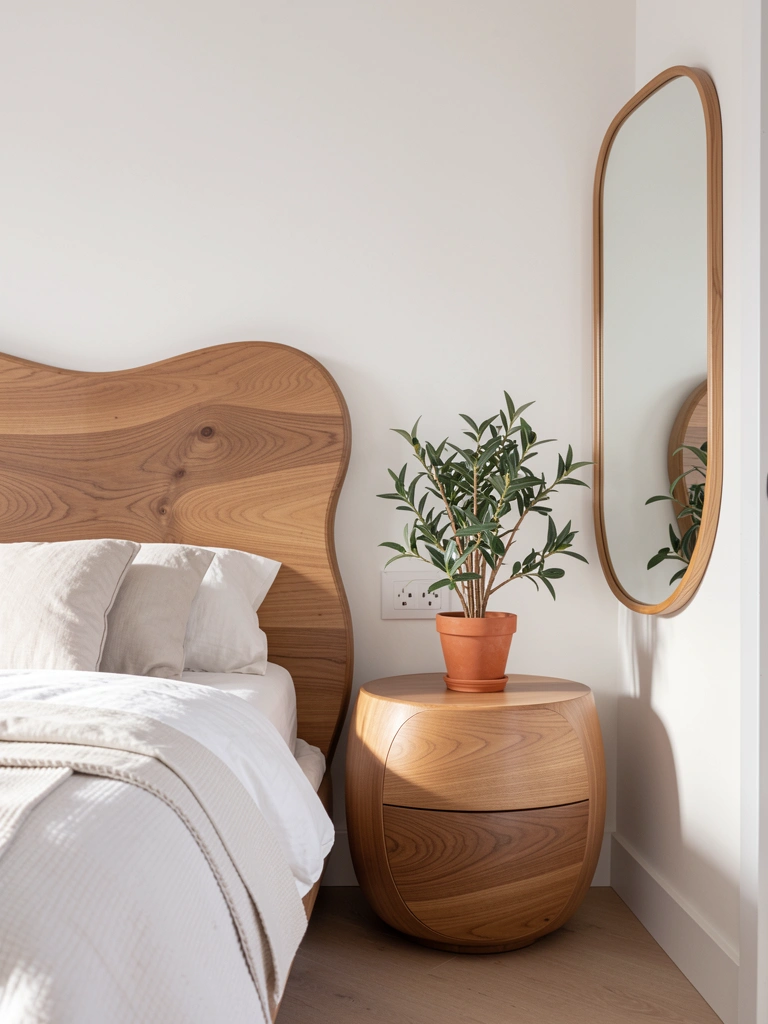
Curved furniture replaces the clinical feel of sharp angles with organic calm—exactly what sleep sanctuaries need. Even one curved statement piece shifts the entire room’s energy.
Invest in a curved headboard ($200–$600 for quality wood options on Wayfair, Article, or West Elm). Can’t splurge? Start with curved nightstands ($80–$180) or a round mirror ($50–$150) with a soft wooden frame. Budget option: Look for vintage curved pieces on Facebook Marketplace or Craigslist ($30–$100). IKEA’s curved shelves ($30–$50) also work beautifully for plants and decor.
Installation takes 1–2 hours (or hire help for $50–$100). The shift is subtle but powerful—your brain registers the space as calmer and more inviting instantly.
You’ll notice yourself relaxing more quickly when bedtime arrives. Rounded lines feel supportive, not demanding.
3. Introduce Earth Tones Through Accent Bedding
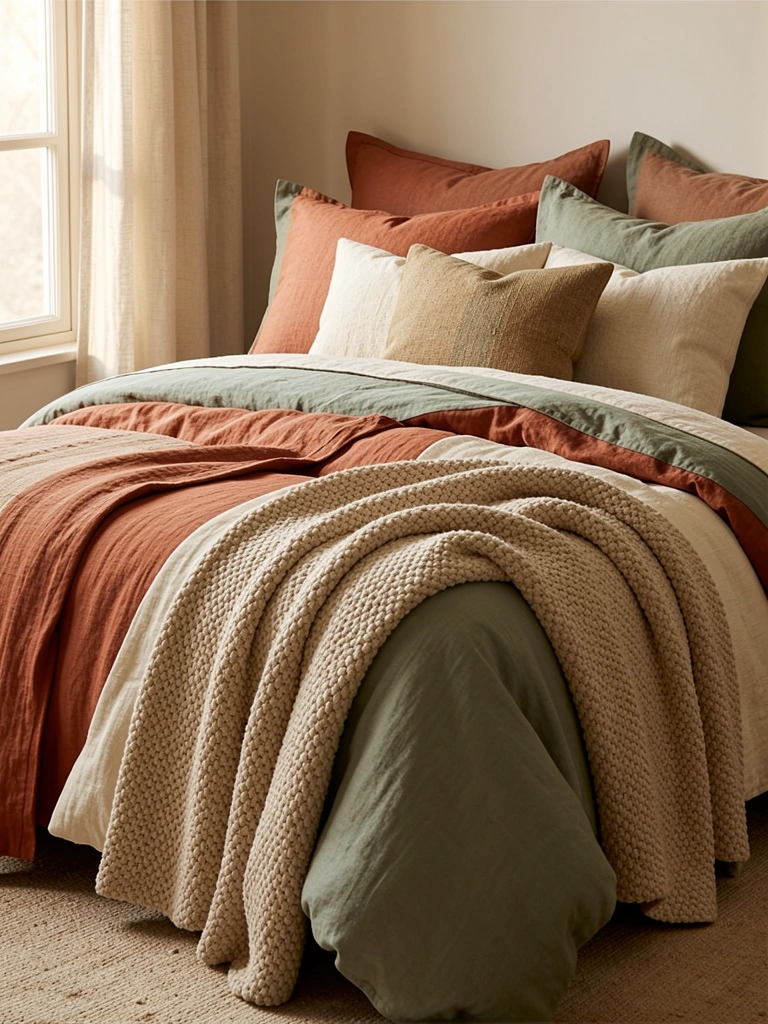
Earth tones ground bold designs and create a naturally calming palette—but they work best as accents layered over neutrals, not as your entire room.
Choose one statement bedding color from this palette: terracotta, warm ochre, sage green, or warm taupe ($40–$100 for quality sheets from Parachute, Brooklinen, or Pottery Barn). Layer it with neutral base sheets (cream or soft gray, $30–$60). Add throw pillows in complementary earth tones ($15–$40 each). Swap out bedding takes 15 minutes, and it’s totally renter-friendly.
Pro tip: Mix matte and slightly textured fabrics (like linen and cotton) in these warm tones for depth that photos don’t even capture.
The room feels grounded and intentional without being monotone. You’ve created a cohesive look that actually encourages better sleep.
4. Add Floor-to-Ceiling Curtains for Drama
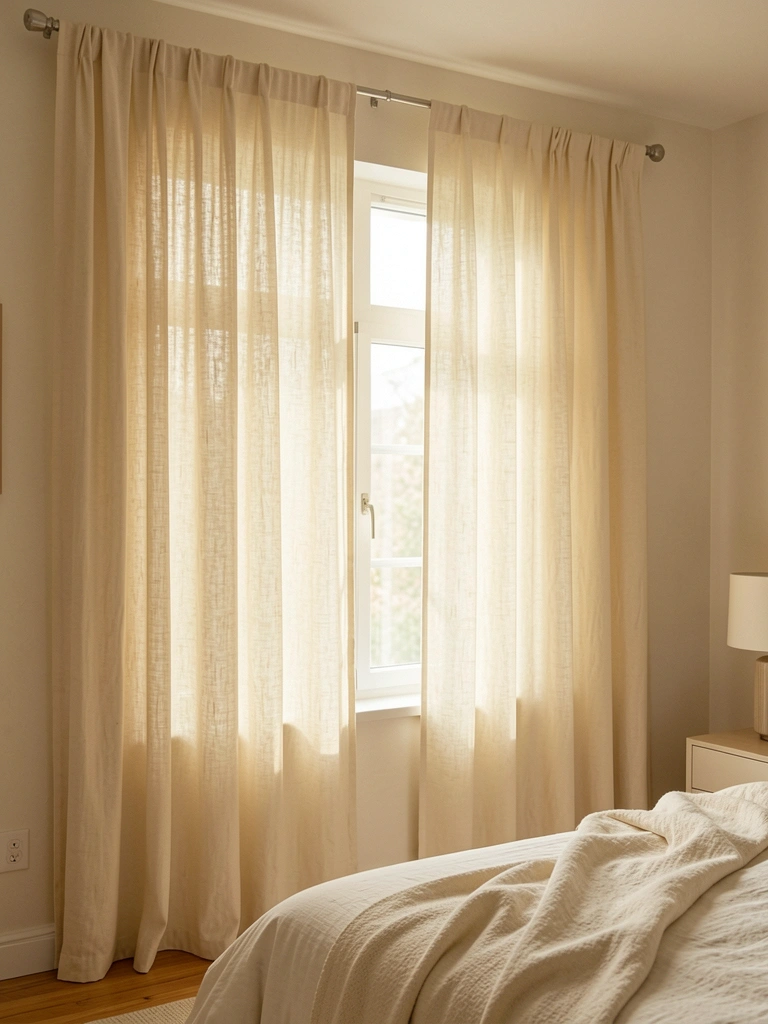
Floor-to-ceiling curtains instantly elevate any bedroom by drawing the eye upward and controlling light like nothing else can. They’re genuinely transformative for small spaces too.
Measure from your ceiling (not the window top) to the floor, then add 1–2 inches for a subtle puddle. Buy linen or linen-blend curtains ($50–$150 per panel, depending on width). Attach a simple curtain rod ($20–$50 from IKEA, Target, or Home Depot) close to the ceiling. You’ll need 2–4 hours and possibly a second person. Renters: Damage-free adhesive rods exist ($15–$25) though they work best on smooth walls.
Pro tip: Slightly longer curtains that just kiss the floor photograph beautifully and feel more luxe than standard hemmed panels.
Your room instantly looks taller and more intentional. Light control becomes genuinely restful—no more harsh morning sun or street light.
5. Mix Patterns Confidently: Stripes + Florals
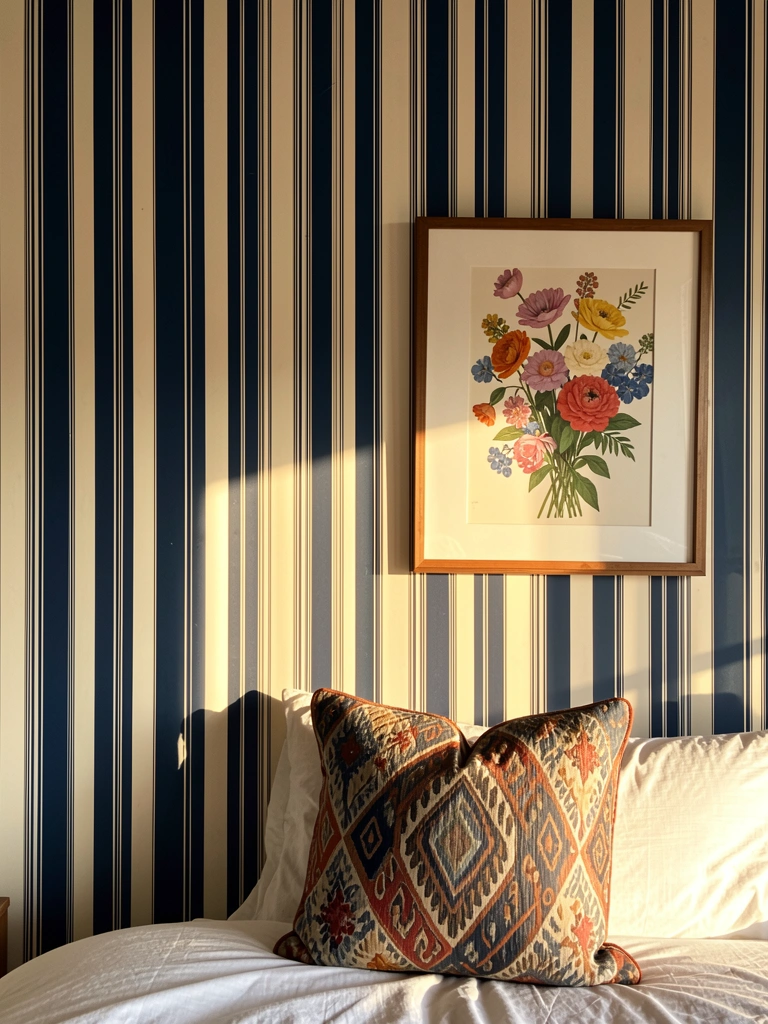
Pattern mixing (the grandmillennial trend) feels intimidating but creates personality that solid colors can’t match. The key is sticking to a color palette and varying scale.
Start with one bold pattern (florals, stripes, or geometric) on wallpaper or one statement pillow ($20–$80). Choose 2–3 coordinating colors. Layer in a second pattern in a different scale—if you use large florals, add small stripes or polka dots ($15–$40 per pillow). Use solid complementary pillows as anchors between patterned ones.
Paint or wallpaper takes 2–4 hours. Pillow swaps take minutes and cost nothing if you already have extras.
Pro tip: Start small—swap pillows before committing to wallpaper. You’ll build confidence fast.
Suddenly your bedroom looks curated and playful, not generic. This is where your personality finally shows.
6. Source Vintage Pieces for Authentic Soul
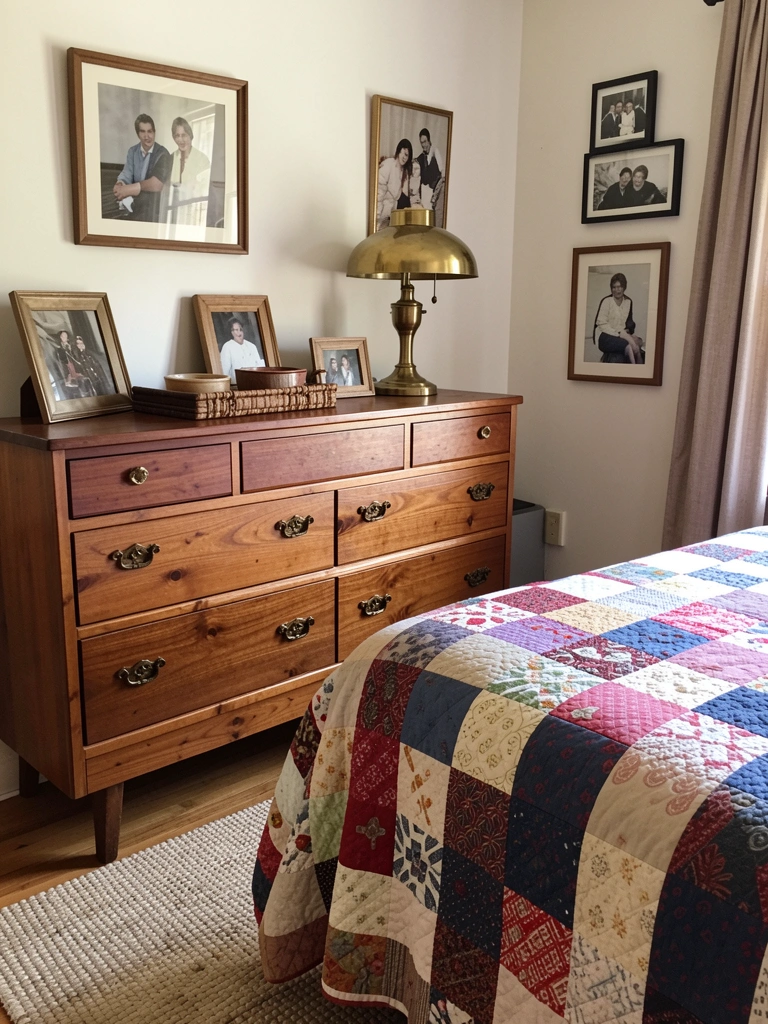
Vintage and handmade pieces tell a story that mass-produced furniture simply cannot. They add character, sustainability, and often cost far less than new alternatives.
Hunt on Facebook Marketplace, Craigslist, or Etsy for solid wood nightstands ($20–$80), dressers ($30–$150), and chairs ($15–$60). Thrift stores like Goodwill or local vintage shops offer deals too. For handmade textiles, explore Etsy quilts or throws ($40–$150). Bonus: Many vintage pieces need refinishing, which adds personalization (DIY with spray paint or take to a professional for $50–$150).
Allow 1–2 weeks for hunting and 2–4 hours for refinishing if needed.
Pro tip: Mix one vintage statement piece with 70% new/modern items to avoid chaotic “antique store” vibes.
Your bedroom becomes a reflection of your taste and history, not a showroom. Visitors genuinely compliment the authenticity.
7. Paint an Accent Wall in Cherry Red or Deep Green
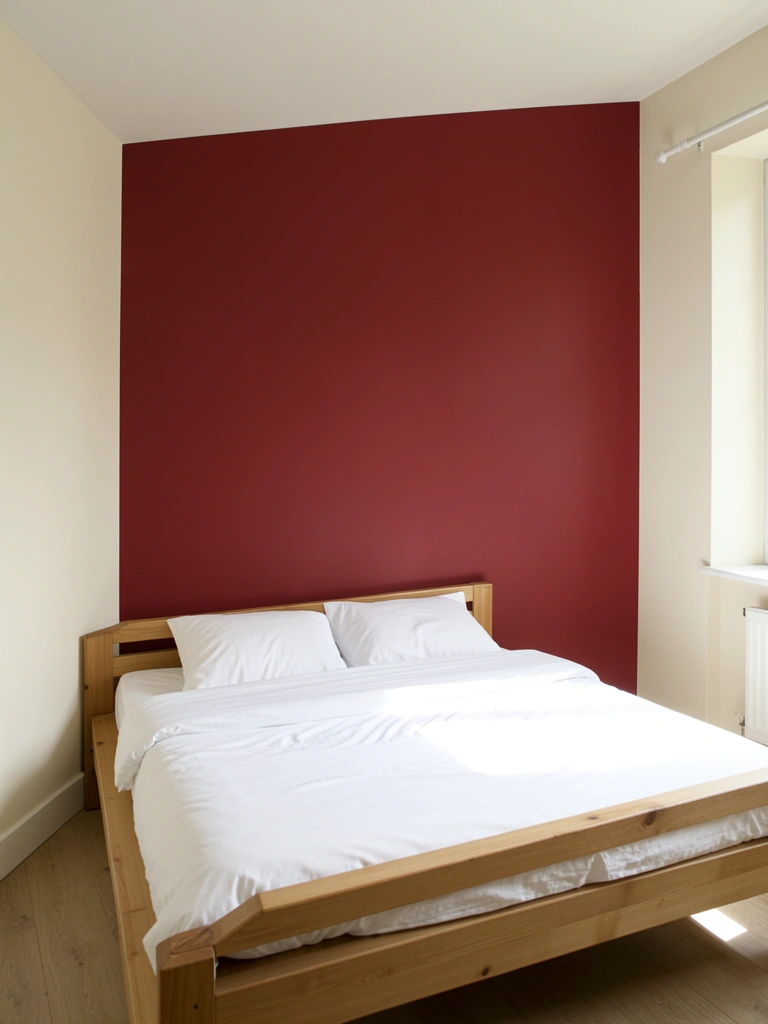
A single accent wall in a statement color like cherry red or forest green wakes up neutral rooms without overwhelming the space. Cherry searches spiked 100% year-over-year—there’s a reason this hue is everywhere.
Choose your wall (usually the one behind your bed). Measure the square footage and buy 2 quarts of quality paint ($15–$25 per quart, Sherwin-Williams and Benjamin Moore offer rich jewel tones). Invest in good brushes and painter’s tape ($15–$20). The actual painting takes 2–3 hours plus drying time.
Renters: Use removable wallpaper in these colors instead ($30–$80).
Pro tip: These deep tones look richer in soft, warm lighting—consider adding a bedside lamp or warm string lights nearby.
The room instantly feels intentional and sophisticated. Suddenly neutral bedding and simple furniture look curated instead of bland.
8. Layer Rugs for Warmth and Definition
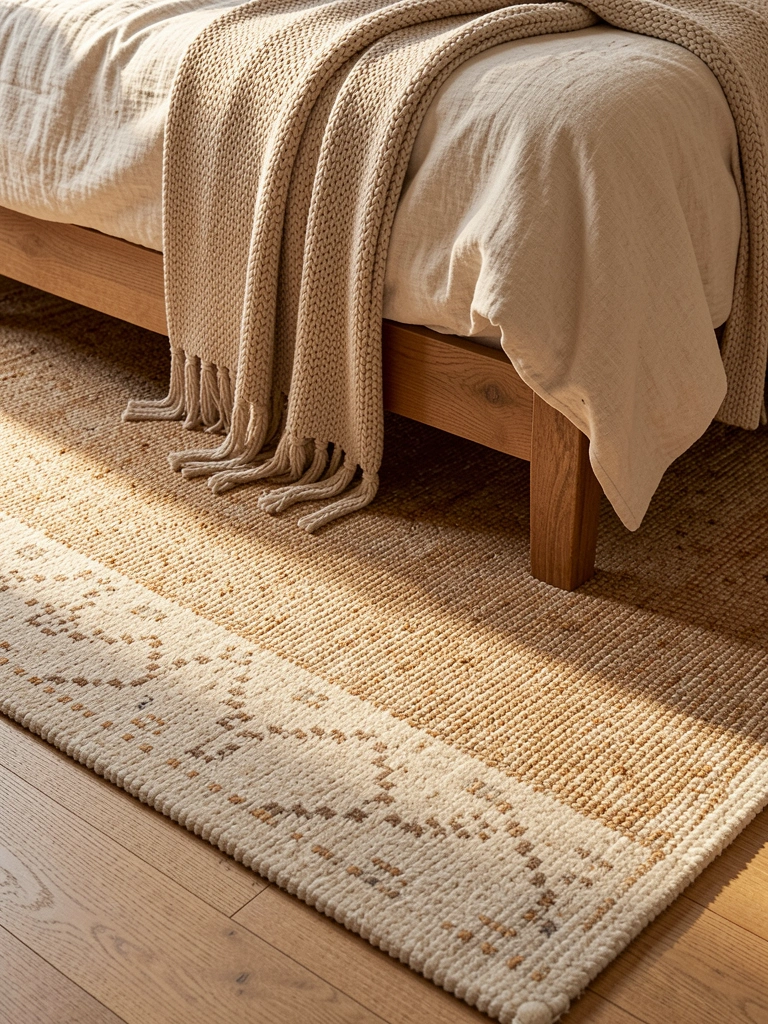
Layered rugs add warmth, define sleeping spaces, and create the texture that makes bedrooms feel genuinely cozy. This trend works in rentals and owned homes alike.
Start with a large neutral base rug (jute, sisal, or wool, 8×10 ft: $80–$250) as your foundation. Layer a smaller patterned or textured rug on top (5×8 ft: $50–$150). Budget option: Use what you already own or check vintage/thrift stores ($10–$40). Higher-end option: Invest in one exceptional wool or natural fiber rug ($200–$500) that anchors the entire room.
Laying takes 15 minutes. Rugs are totally renter-friendly—just roll them up when you move.
Pro tip: Angle the top rug slightly (even just 5 degrees) for a styled, intentional look.
Your feet land on warmth instead of cold flooring. The room feels instantly more sophisticated and less institutional.
9. Add Plants for Biophilic Calm
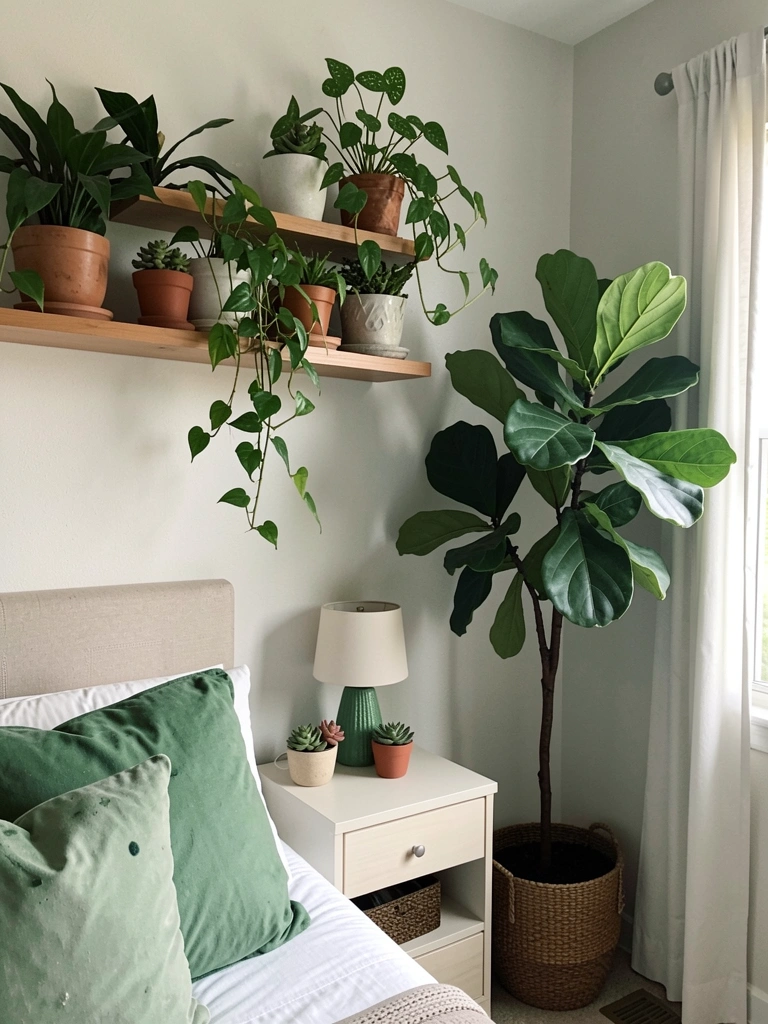
Plants boost calm through biophilic design—your brain literally responds positively to living things. They’re also forgiving if you’re not a “plant parent” yet.
Start with low-maintenance plants: pothos, snake plants, ZZ plants, or rubber plants ($10–$30 each). Group 3–5 plants at varying heights on floating shelves ($20–$60) or a corner stand ($30–$80). Place one large statement plant (fiddle leaf fig or monstera, $30–$80) near your window. Pots add cost ($5–$40 each depending on style).
Installation takes 1–2 hours for shelves; daily care is minimal (weekly watering).
Pro tip: Plants on shelves at eye level have more visual impact than floor-level placement. Group odd numbers (3 or 5) together for visual balance.
The room becomes a living space—literally. Sleep quality improves when you’re surrounded by growth and greenery.
10. Choose Quality Natural Bedding in Linen or Wool
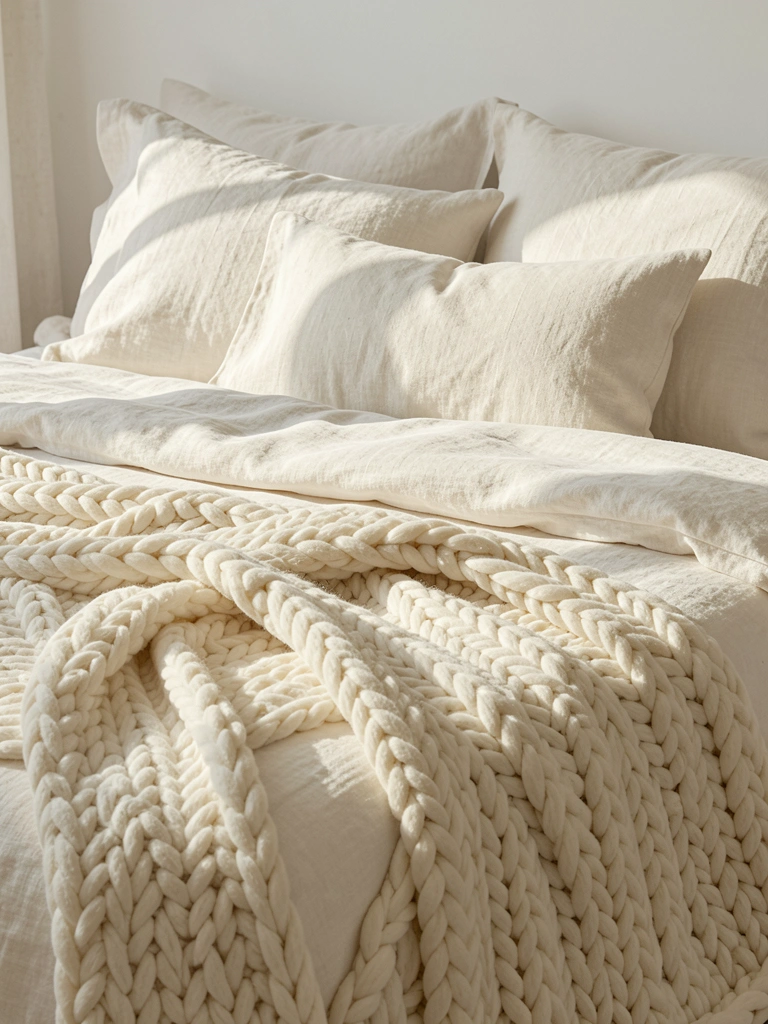
Natural bedding (linen, organic cotton, merino wool) elevates sleep quality and aligns with the luxury sustainability trend. These fabrics feel genuinely different and last years longer.
Invest in 100% linen sheets ($80–$150 per set from Parachute, Etsy, or Brooklinen). Add a merino wool throw blanket ($50–$120 from Woolroom or Everlane). Both improve over time—they actually get softer with washing. Budget option: Start with one organic cotton sheet set ($40–$80) and build from there.
Shopping takes 30 minutes; setup is immediate.
Pro tip: Linen wrinkles naturally—this is charming, not a flaw. Embrace it.
Climbing into bed becomes a tactile experience that encourages better sleep. You’ll notice yourself relaxing faster and sleeping deeper.
11. Create a Statement Headboard with Fabric or Wood
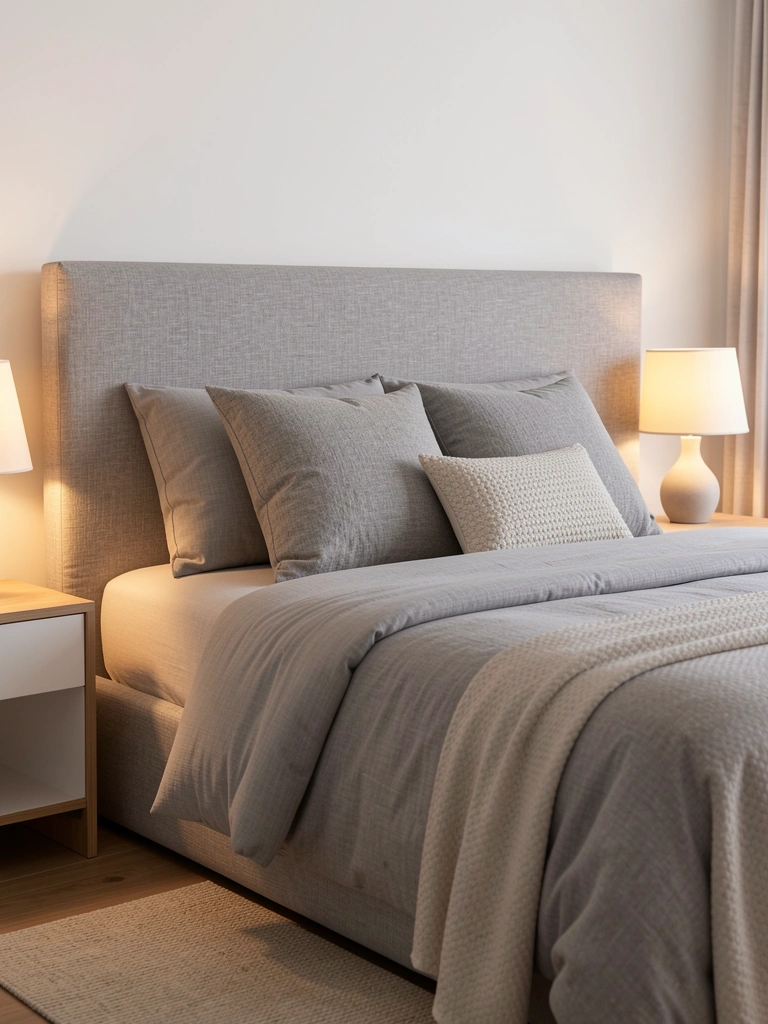
A statement headboard anchors your bed as the room’s focal point without requiring major renovation. Fabric and wood options both work beautifully.
For renters: Hang removable fabric panels ($30–$80) or use a peel-and-stick headboard decal ($20–$60). For owners: Invest in an upholstered headboard ($200–$600) or a solid wood statement headboard ($300–$800 from Article, West Elm, or local woodworkers). DIY option: Build one from plywood and fabric for $50–$150.
Installation ranges from 30 minutes (fabric panels) to half a day (wood). Some pieces ship ready-to-hang.
Pro tip: Choose headboard fabric in a texture that contrasts with your walls—matte linen against smooth walls creates depth.
Your bed becomes the undeniable centerpiece. The room organizes visually around this one strong statement.
12. Hang Large-Format Art That Reflects Your Taste
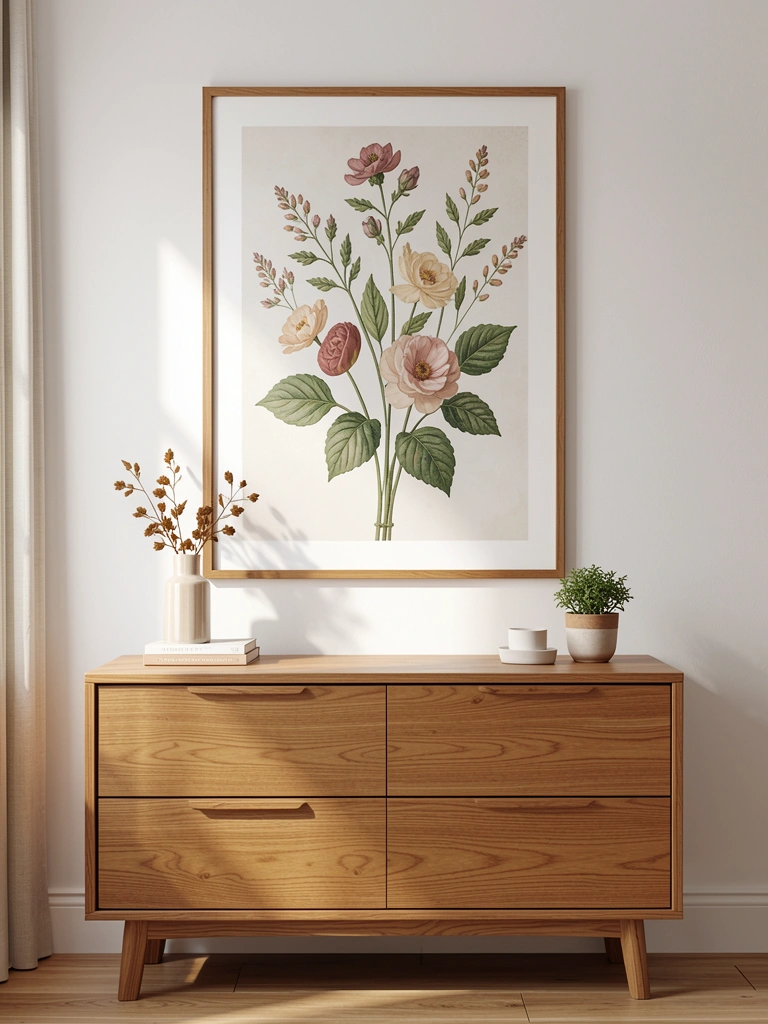
Large artwork personalizes a room more effectively than any trendy accessory. Art-led design is having a moment because it actually works—it communicates who you are.
Find art on Etsy, Minted, local galleries, or print-on-demand sites ($20–$200 depending on size and quality). Frame it at Michael’s, Framebridge, or a local framer ($40–$150 for framing). Go oversized—one 36″x48″ print has more impact than five small ones. Budget hack: Print high-quality digital files yourself ($5–$15) and use affordable frames from IKEA ($15–$40).
Hanging takes 30 minutes. Changing art out later is renter-friendly.
Pro tip: Choose art in colors that already exist in your room for instant cohesion. Abstract, botanical, or vintage styles all photograph beautifully.
Your bedroom finally feels like it belongs to you, not a generic rental or showroom. Visitors immediately notice the curated, intentional style.
13. Install Floating Shelves for Plants and Styling
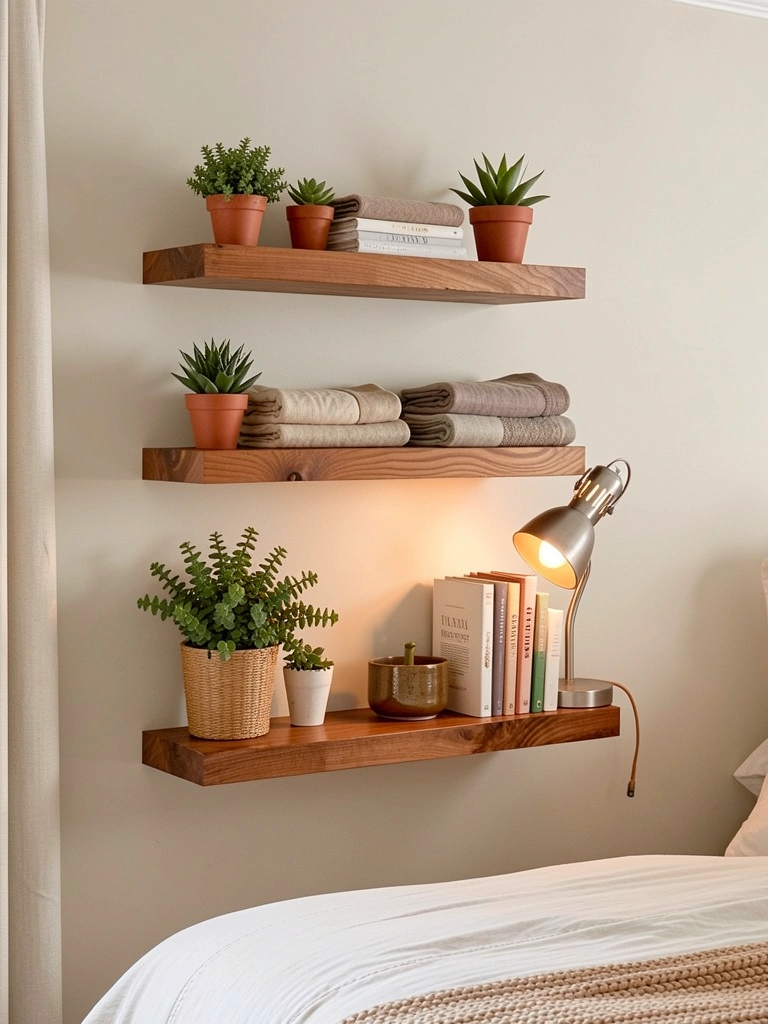
Floating shelves provide storage and styling real estate without taking floor space—they’re renter-friendly, budget-conscious, and endlessly functional.
Buy wooden floating shelves ($20–$50 each from IKEA, Home Depot, or Amazon). Install floating shelf brackets ($15–$30 per shelf, included with some shelves). The actual installation takes 1–2 hours with basic tools. Renters: Adhesive shelves exist ($15–$40) but work best on smooth walls and with light items only.
Styling takes as long as you want—start simple with just plants and books.
Pro tip: Style shelves with odd numbers of items (3, 5) and alternate between practical (books, storage boxes) and decorative (plants, art).
You’ve added personality and function without visual bulk. The shelves become another design layer instead of clutter.
14. Invest in Quality Lighting Beyond the Ceiling Fixture
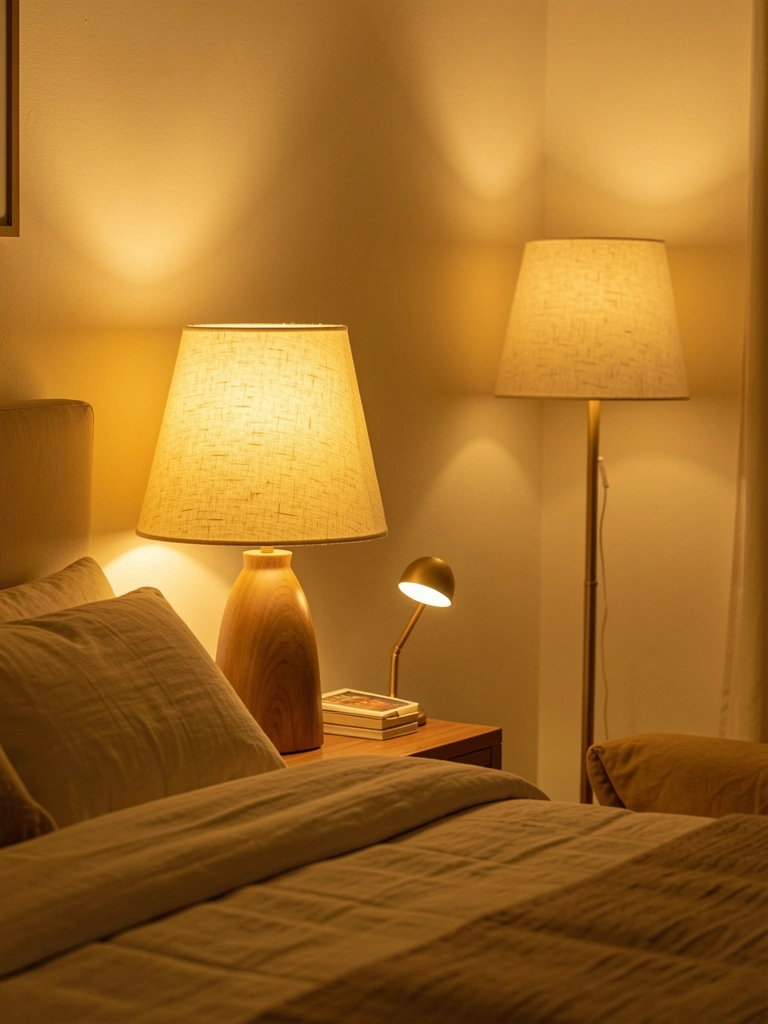
Lighting fundamentally changes how a room feels—harsh overhead lights drain energy, while layered warm lighting invites rest. This is one investment that pays off immediately.
Add a bedside lamp with a warm bulb ($30–$80 from Article, Target, or IKEA). Include a floor lamp for reading ($40–$150). Upgrade bulbs to warm 2700K LED bulbs ($3–$10 each—these are crucial). A small reading light clipped to a headboard ($15–$40) adds functionality. Total: $100–$280 for a complete lighting refresh.
Setup takes 30 minutes. Bulb swaps take 5 minutes but create massive visual and emotional shifts.
Pro tip: Avoid cool-toned (blue) light after sunset—it disrupts sleep. Stick to warm (yellow) tones in your bedroom.
Your room becomes genuinely relaxing. Evening wind-down becomes easier because the lighting supports it.
15. Layer Throw Pillows in Coordinating Textures
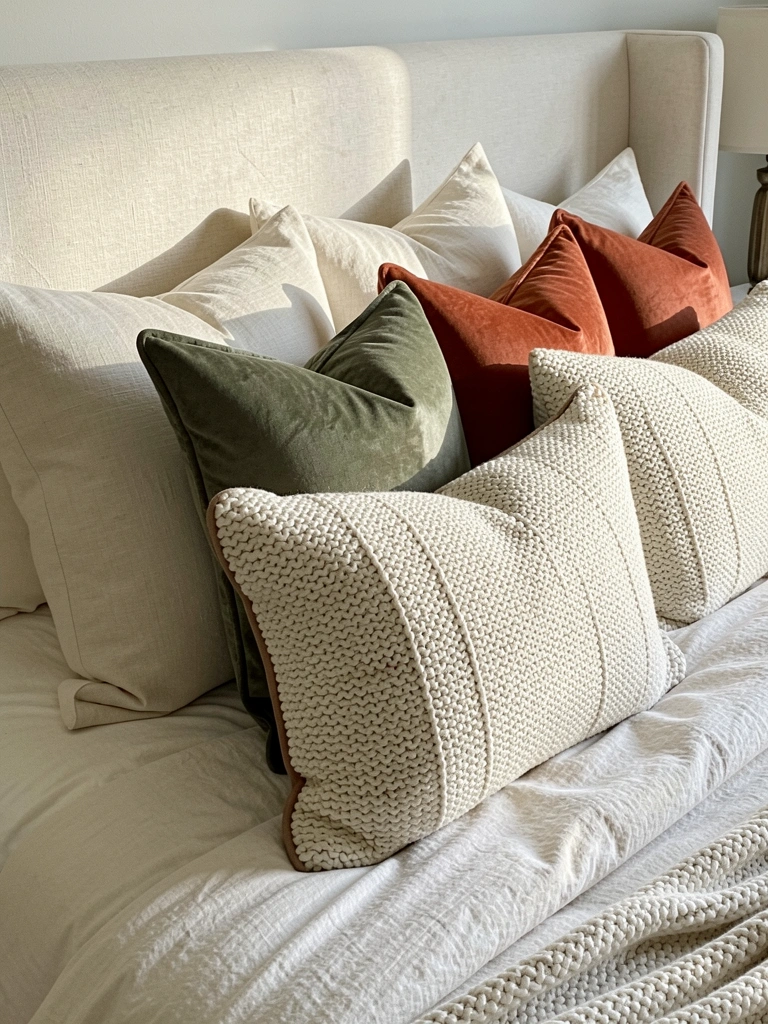
Throw pillow layering is the easiest way to add texture, color, and personality without commitment. You can swap them seasonally or whenever you crave change.
Start with a neutral base pillow in linen or cotton ($20–$40). Add a patterned pillow in your accent color ($15–$35). Include a velvet or textured pillow ($20–$50) for luxury feel. Aim for 4–6 pillows total on a standard bed. Budget hack: Use pillows you already own and thrift stores ($5–$15 each).
Shopping and arranging takes 1 hour.
Pro tip: Mix matte and slightly shiny textures (matte linen + subtle velvet) for a styled, dimensional look.
Your bed becomes inviting and layered. Every time you enter the room, you see intentional styling that says “this matters.”
16. Add a Cozy Reading Nook with a Chair and Throw
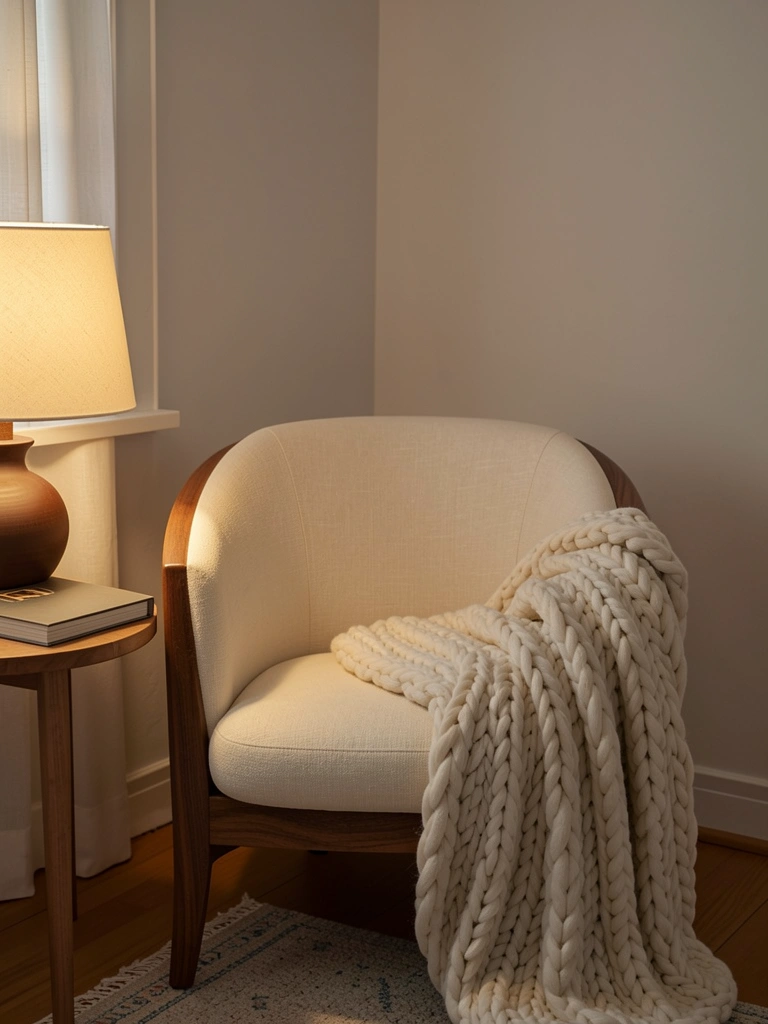
A reading nook transforms unused corner space into a sanctuary within your sanctuary. It’s not luxury—it’s necessity for people who actually read in bed.
Find a comfortable chair ($100–$300 new, $30–$100 vintage from Craigslist or Facebook Marketplace). Add a small side table ($30–$80). Drape a chunky throw blanket ($40–$120). Include a clip-on reading light ($15–$40). Total investment: $150–$540, customizable to your budget.
Setup takes 2 hours (move furniture, arrange, add lighting).
Pro tip: Position the nook near a window for natural reading light during the day.
You’ve created a dedicated retreat space. Instead of scrolling in bed, you now have an intentional spot for actual rest and reading.
17. Swap Out Cabinet Hardware for Brass or Wood Details
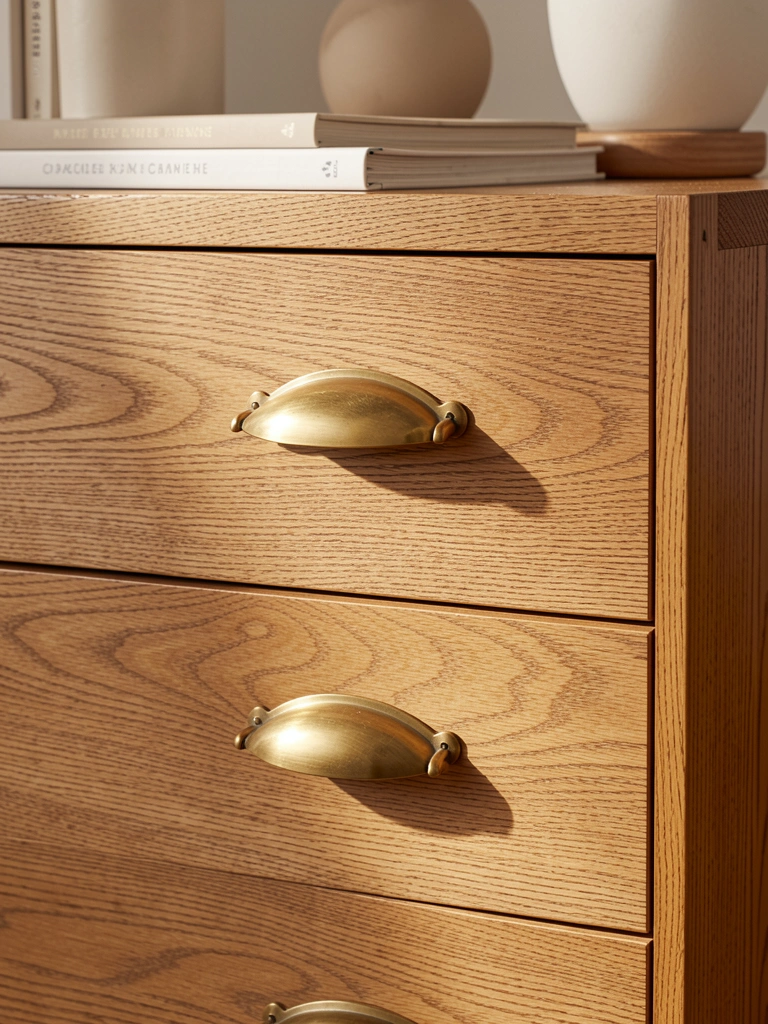
Hardware might seem small, but brass, wood, or matte black pulls instantly update existing furniture. This is a 15-minute refresh that costs under $50.
Replace existing hardware on dressers or nightstands with brass pulls ($2–$8 per pull from IKEA, Wayfair, or local hardware stores). Wood knobs ($3–$10 each) work beautifully on rustic pieces. You’ll need a drill (or ask a handy friend). Total cost: $20–$50 for a full dresser. Takes 30–45 minutes.
Renters: This modification is removable—keep original hardware and reinstall when you move.
Pro tip: Mix metals in one room (brass + wood) as long as they’re the same warmth tone (both warm, not mixing warm brass with cool chrome).
Your existing furniture suddenly looks intentional and updated. This single change can make a dated piece feel current.
18. Paint Wooden Furniture in Earth Tones or Soft Pastels
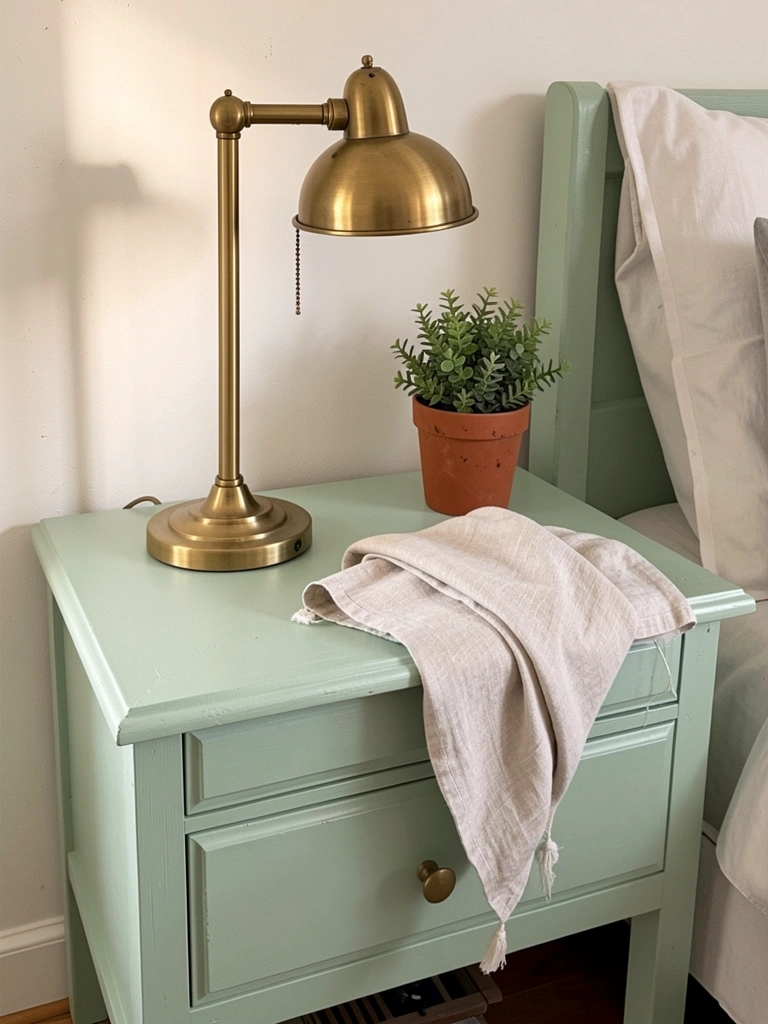
Refreshing wooden furniture with paint is cheap, high-impact, and deeply satisfying. You’re literally creating new pieces from what you already own.
Choose paint in soft earth tones (sage green, warm taupe, terracotta) or soft pastels (cream, blush) from Benjamin Moore, Sherwin-Williams, or craft stores ($15–$25 per quart). Sand lightly ($0 if you already have sandpaper, $10–$20 if buying), apply 2–3 coats ($0–$10 in brushes), and seal if desired ($10–$20). Total cost: $35–$75 per piece.
Painting takes 4–6 hours plus drying time spread across 2–3 days.
Pro tip: Use chalk paint for easy application—it requires less prep and fewer coats than standard paint ($12–$18).
You’ve transformed a piece into exactly what your room needed. Suddenly that old thrifted nightstand fits your aesthetic perfectly.
19. Layer Window Treatments: Sheer + Blackout Options
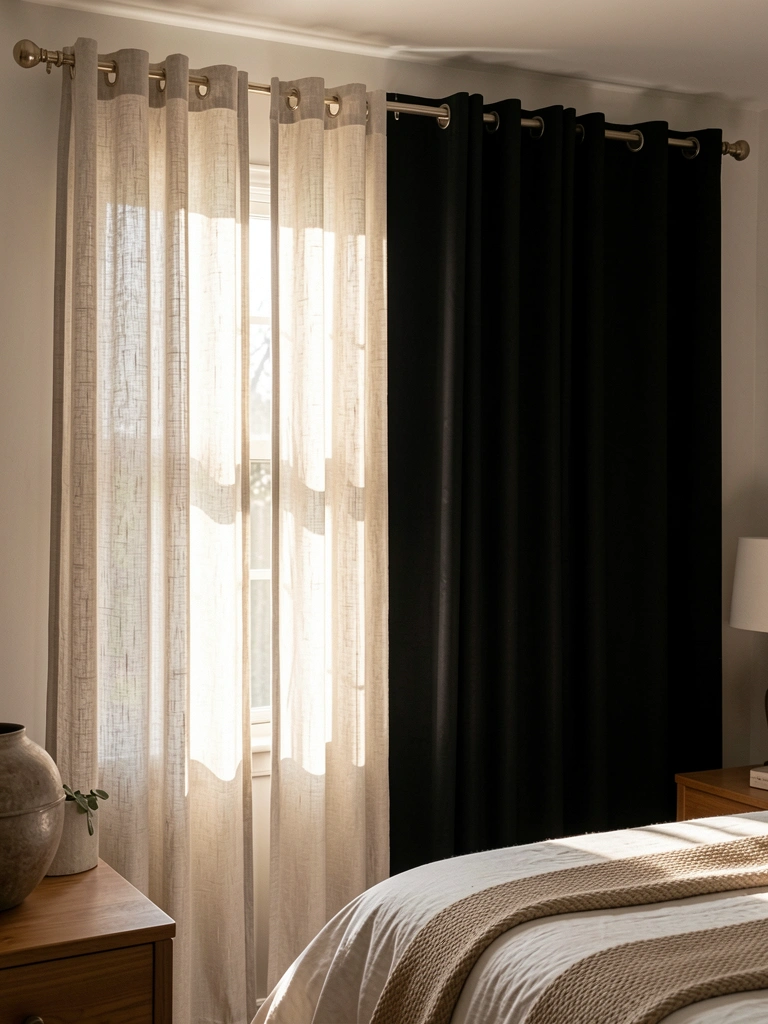
Layered window treatments give you light control and style—exactly what sleep spaces need. You get softness during the day and total darkness when needed.
Install a lightweight tension rod near the window ($15–$30) with blackout panels ($30–$80 per panel). Add sheer linen curtains on a second rod ($40–$100 per pair) mounted higher or on the same rod. Renters: Adhesive rods work if your walls are smooth ($15–$25). Total: $100–$235.
Installation takes 1–2 hours. Layering is totally renter-friendly since nothing is permanent.
Pro tip: Sheer fabrics in cream or warm gray let filtered light in without washing out your room’s colors.
You control light like never before. Early mornings feel peaceful instead of jarring, and nap time is genuinely dark when you need it.
20. Incorporate Raw Materials: Cork, Marble, or Reclaimed Wood
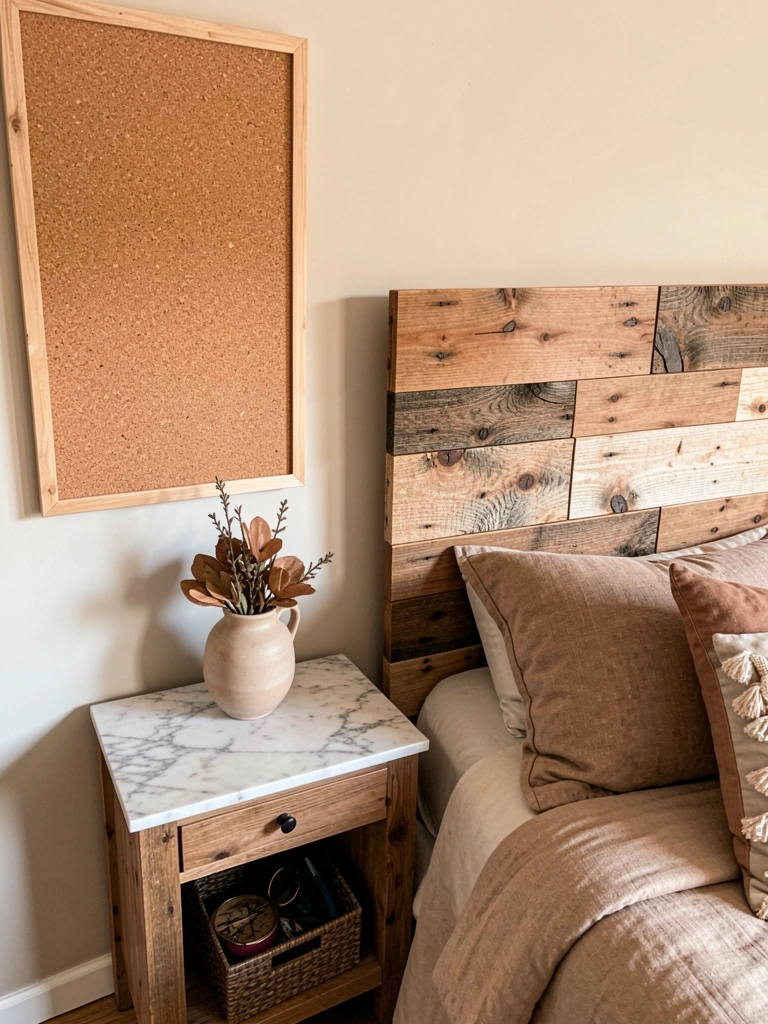
Raw materials ground modern designs with earthy authenticity. They read as thoughtful and expensive even when sourced affordably.
Add a cork bulletin board or wall tiles ($20–$60, easily installed on renters’ walls). Swap nightstands for a marble-topped option ($80–$250) or DIY by placing a marble slab on a simple frame ($50–$150). Source reclaimed wood planks for a headboard ($50–$200 from salvage yards, Etsy, or building demolition sites). Each adds organic texture without trend-chasing.
Projects range from 15 minutes (hanging cork) to 2–3 hours (assembling reclaimed wood).
Pro tip: Mix raw materials with softer textures (linen, wool, plants) so your room doesn’t feel cold or industrial.
Your room gains sophisticated, grounded energy. It looks like it belongs to someone who knows what they’re doing—even if you’re figuring it out as you go.
21. Use Removable Wallpaper for Quick Pattern Impact

Removable wallpaper is the renter’s secret weapon and a low-commitment way to add pattern. You get bold design without permanent commitment.
Choose from Spoonflower, Etsy, Wayfair, or Peel & Stick Wallpaper brands ($20–$80 per roll depending on coverage). Measure your walls carefully. Installation takes 2–4 hours and requires patience but no tools. Removal is genuinely painless—just peel slowly.
Total cost: $30–$100 for one accent wall.
Pro tip: Apply wallpaper to one wall only for impact. Two walls can overwhelm a bedroom.
Your room changes completely. When you move, you take it with you—zero damage, zero stress.
22. Create Texture Contrast with Smooth vs. Chunky Fabrics
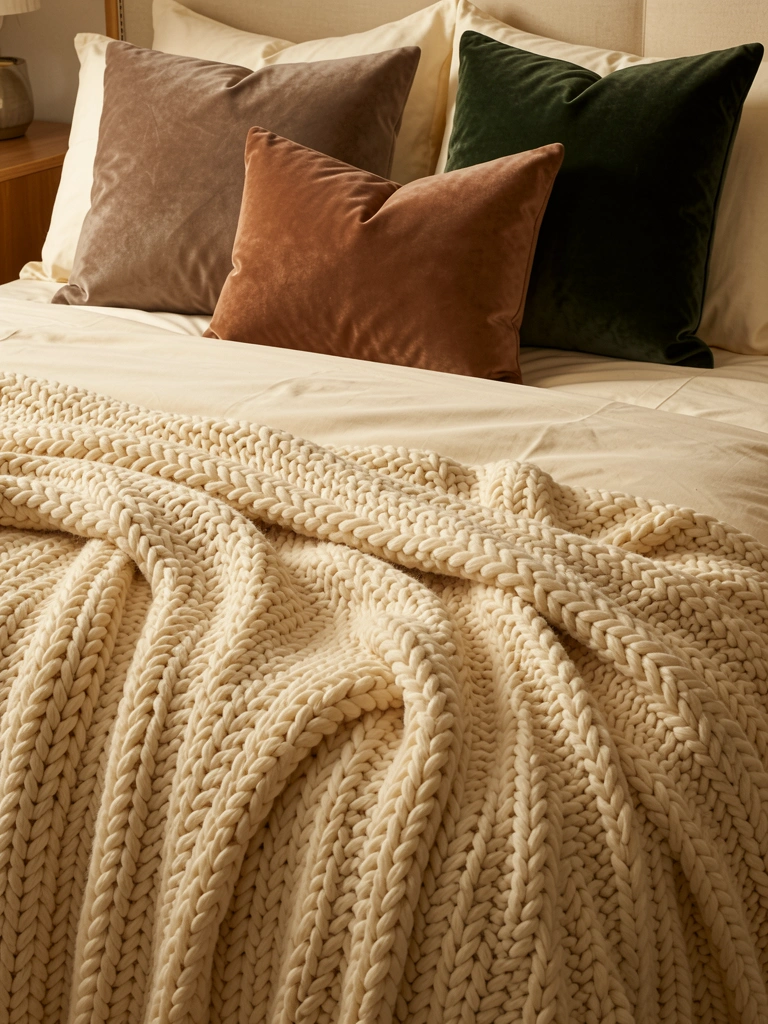
Texture contrast is how high-end styling happens—mixing matte linen, soft velvet, chunky knits, and smooth cotton creates depth that photos actually capture.
Start with smooth linen or cotton sheets as your base ($40–$80). Layer a chunky knit throw ($40–$120). Add smooth velvet pillows ($20–$50 each). Include a linen throw pillow ($15–$35). The key is intentional contrast, not matching textures.
Shopping takes 1–2 hours. Arrangement is immediate.
Pro tip: Group similar textures together (all smooth or all chunky) rather than alternating—it looks more intentional.
Your bed becomes genuinely touchable and inviting. Visitors immediately notice how good it looks and feels.
23. Add a Small Vintage Rug or Textile as Wall Art
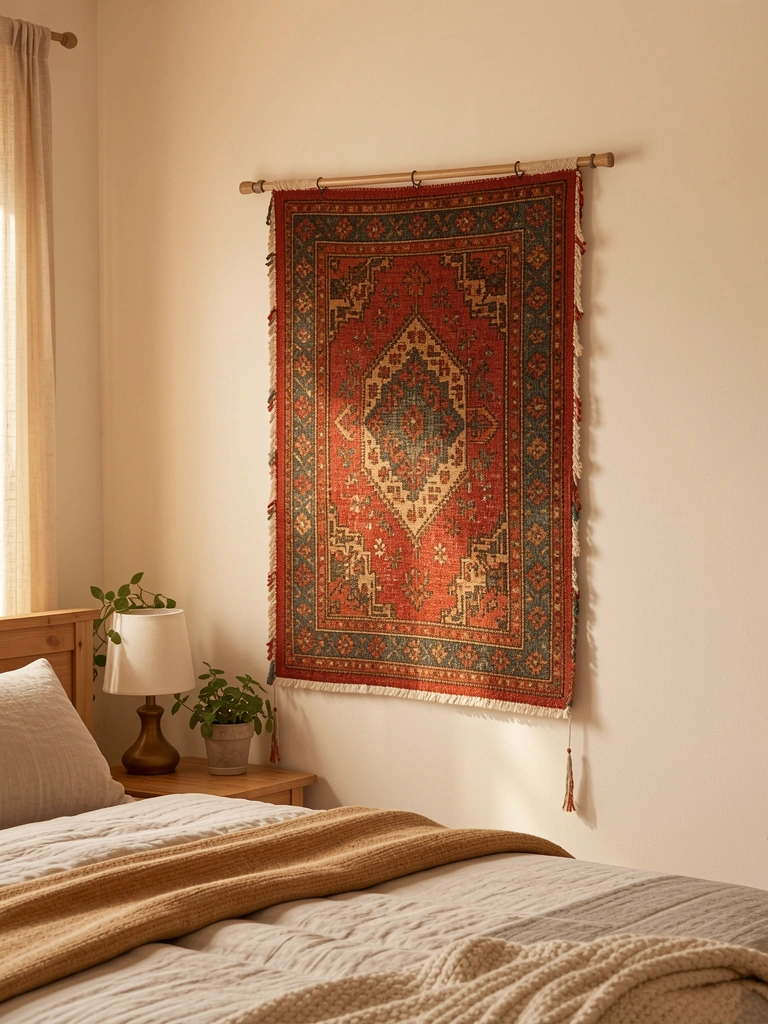
Hanging textiles as wall art is underrated—it adds craftsmanship, color, and personal history in one move. Vintage rugs and textiles tell stories.
Find small vintage rugs or handwoven textiles ($20–$80) on Etsy, Facebook Marketplace, or thrift stores. Mount on a simple hanging rod ($10–$20) using basic hooks ($5–$10). Installation takes 30 minutes.
Budget hack: Fold a favorite textile and lean it on a shelf instead of wall-mounting.
Pro tip: Choose textiles in colors that already exist in your room for cohesion. A single textile becomes an art piece, not random clutter.
You’ve added warmth and personality while supporting handmade craftsmanship. The room feels collected and intentional—like somewhere real people live.
Pin this list for your next bedroom refresh. Try just one idea this weekend and watch how it shifts the entire vibe. Your cozy sanctuary is closer than you think.
Leave a Reply