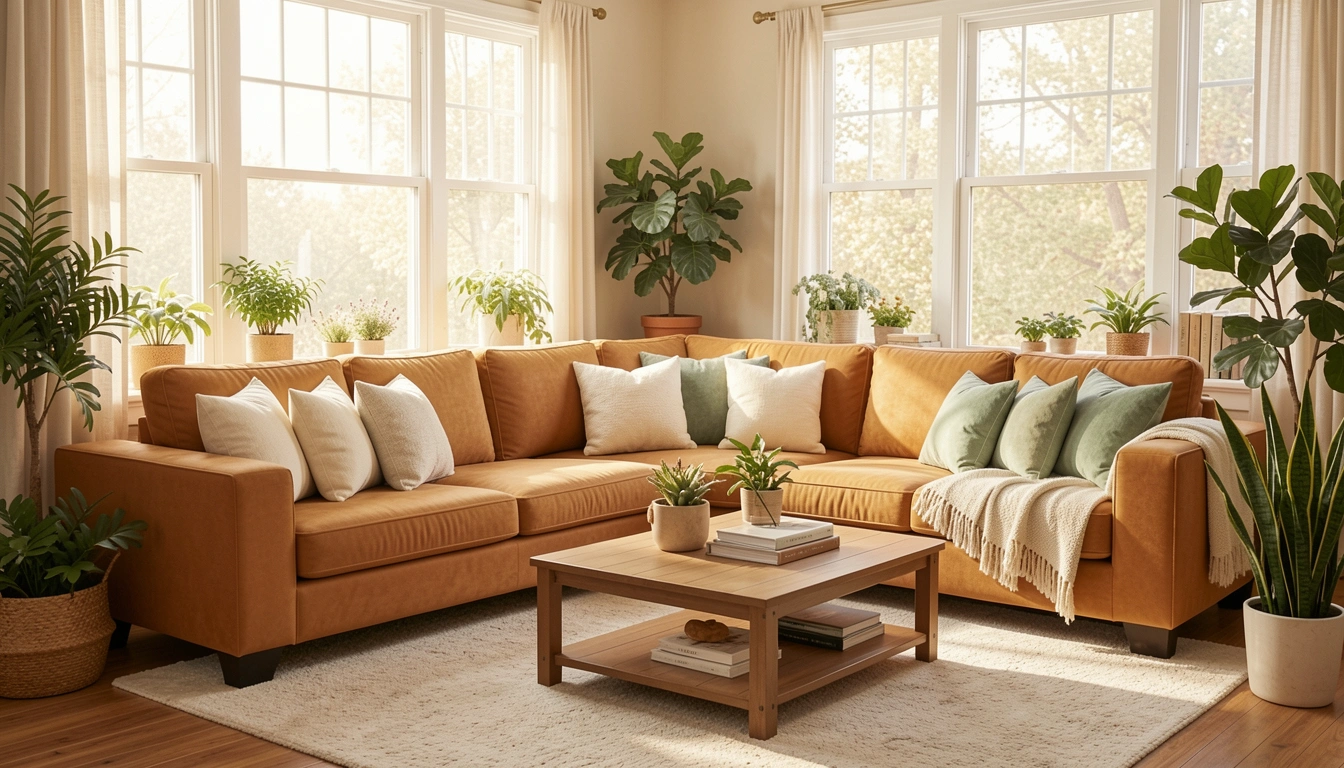
An L-shaped sofa is one of the smartest furniture investments you can make—it combines seating capacity with smart space planning, giving you room for lounging, entertaining, and actually living. But choosing the right L-shaped sofa goes beyond just finding one that fits; it’s about maximizing comfort, traffic flow, and the entire look of your room. Whether you’re working with a sprawling open-plan living area or a cozier space, there are strategic ways to position, style, and configure your L-shaped sectional to make it work harder for your daily life. We’ve gathered 23 design ideas that show you exactly how to make your L-shaped sofa the anchor of a room that feels both beautiful and functional—no design degree required.
1. Anchor a Curved L-Shape in an Open-Plan Zone
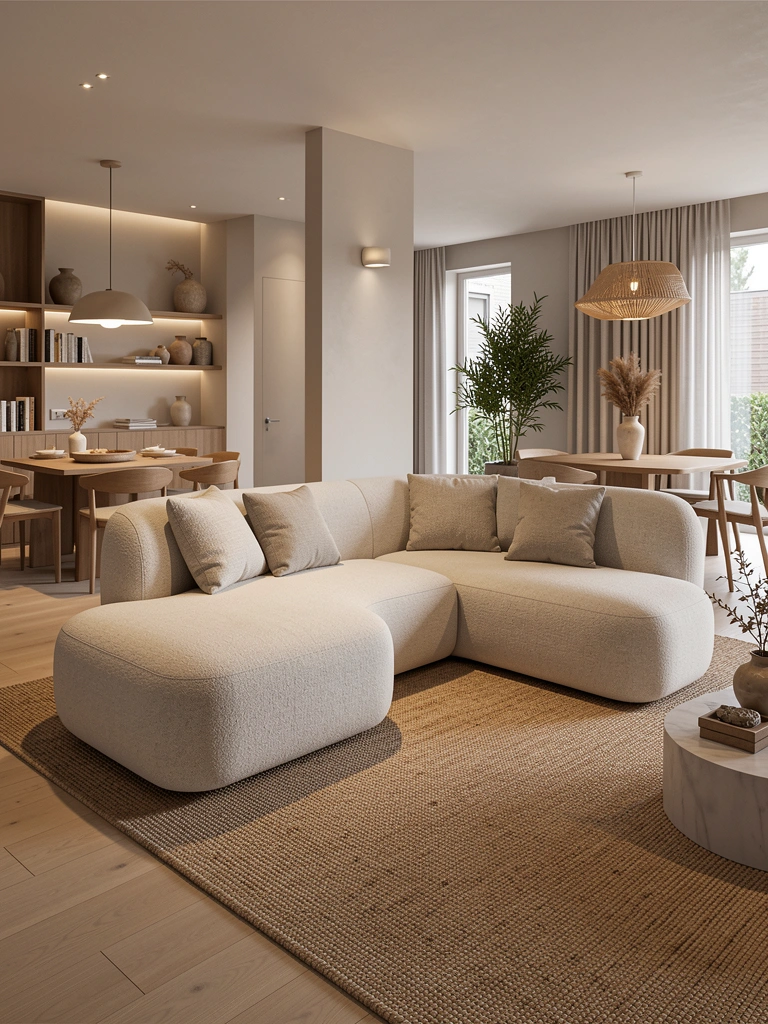
Curved L-shaped sofas are having a major moment because they soften room layouts and feel more intimate than sharp right angles. A gently curved sectional positioned away from walls creates an invisible boundary in an open-plan space, naturally zoning the living area without a wall or room divider.
Start by measuring your floor space and positioning the curve to face the main focal point—typically the TV or a fireplace. Curved sectionals are available from Blu Dot, Article, and Wayfair ($1,200–$3,500 depending on size and fabric). The slight arc takes up roughly the same floor space as a traditional L, but the visual impact is softer and more conversational. It takes about 2–3 hours to assemble (often doable solo with help from a friend).
Pro tip: A curved sectional works best when you float it rather than tuck it tight into corners—this lets the silhouette shine and improves traffic flow. You’ll immediately notice how much more open and designed your living room feels.
2. Layer Warm Lighting Behind Your L-Shaped Sofa
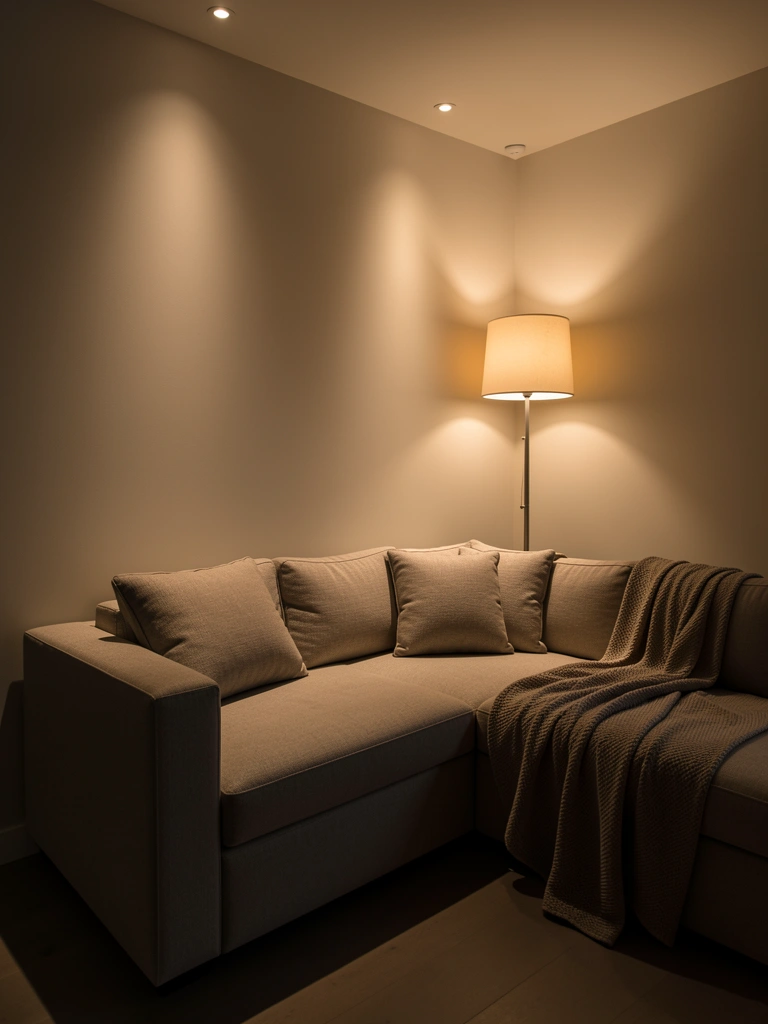
Poor lighting can make even a beautiful sofa feel flat and uninviting. Adding warm light sources behind your L-shaped sectional—whether recessed ceiling lights, wall sconces, or a tall arc floor lamp—completely changes the mood and makes the space feel more intentional and spa-like.
Install recessed lights ($15–$40 per fixture, plus installation) if you’re open to minor electrical work, or opt for a portable arc floor lamp ($80–$300) that requires zero installation. Position the lamp behind the corner or along the back edge so light spills onto the wall and softly illuminates the sofa from behind. This takes 15 minutes for a lamp or a weekend for electrical work.
Renter-friendly option: A tripod floor lamp with a dimmer bulb achieves the same cozy effect without any commitment. You’ll notice the entire room suddenly feels warmer, more intimate, and far more magazine-worthy.
3. Define Traffic Flow with Your L-Shape Placement
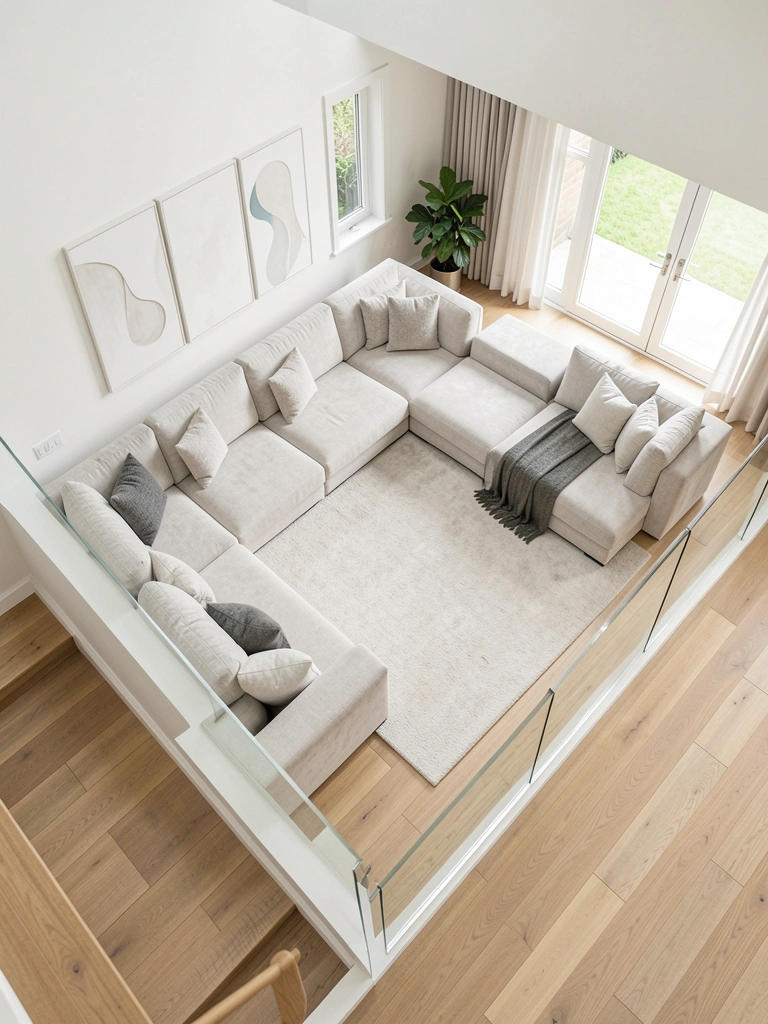
The way you position your L-shaped sofa can either invite movement through your space or create an awkward traffic jam. The best layouts leave at least 18–24 inches of clear walking space on the open sides of your sectional and ensure the “short leg” of the L faces toward main entry points or the kitchen, keeping sightlines open.
Measure your doorways and natural movement paths before deciding on your L orientation. Sketch a quick floor plan (free with Pinterest’s room planning tools or Canva) to test different angles. Moving furniture typically takes 30 minutes to an hour and requires zero budget.
Pro tip: The most functional L-shapes have the long run perpendicular to windows or the TV, and the short leg angled slightly inward—this maximizes the view while keeping the room from feeling blocked. Suddenly, navigating your living room feels effortless, and guests naturally flow through your space instead of feeling trapped.
4. Mix Modular Pieces to Customize Your Configuration
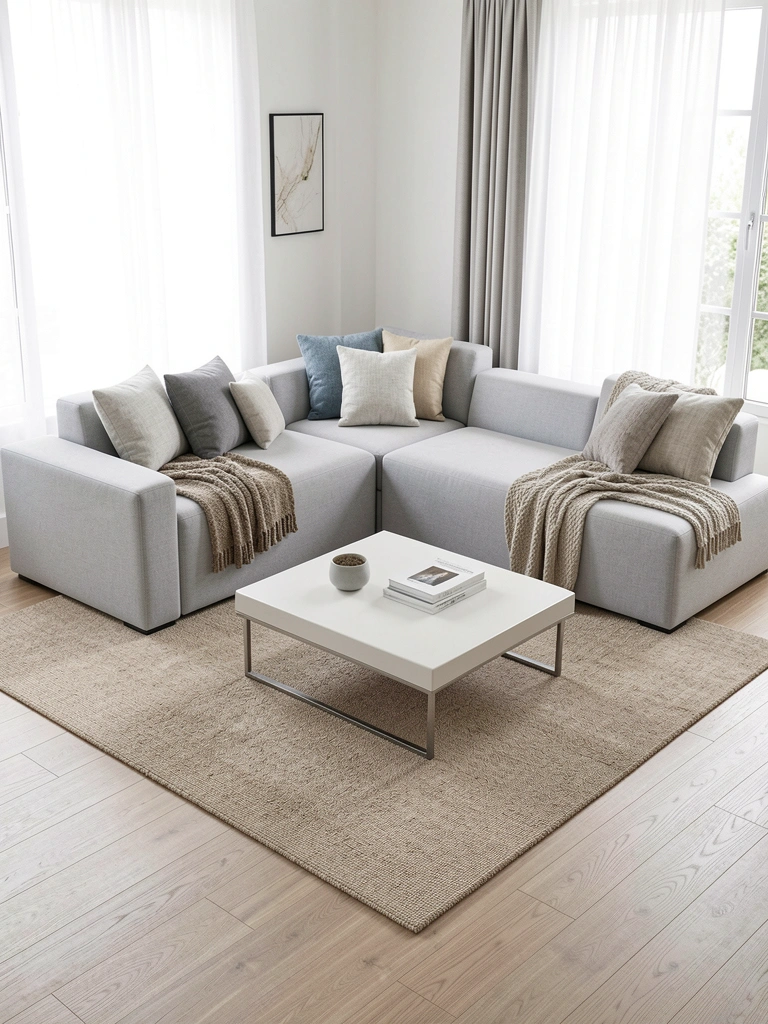
Modular L-shaped sofas are the ultimate in flexibility—if life changes (you move, your family grows, you want a new layout), you can reconfigure or swap pieces without buying a new sofa. Many brands now offer sectionals that let you move the corner unit, add more seating, or shift the footprint entirely.
Look for brands like Article, West Elm, Room & Board, or Blu Dot ($1,500–$4,000+ for full modular systems) that clearly sell individual sections separately. A basic modular L with corner unit and 2–3 seating pieces costs roughly the same as a fixed sectional but gives you way more control. Assembly takes 2–4 hours depending on complexity.
Bonus: Many modular sofas have interchangeable cushion covers, so you can refresh the look (or hide wear) without replacing the whole sofa. Your space adapts to life changes instead of the other way around.
5. Float Your L-Sofa for a Designed, Open Feel
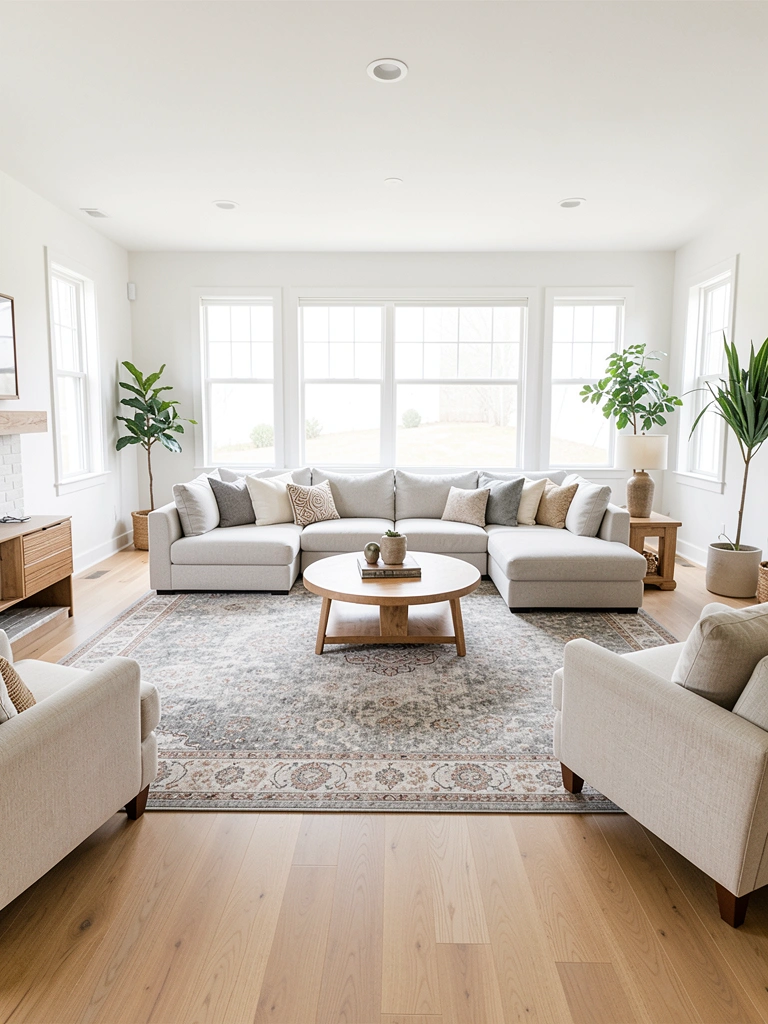
Pushing your L-shaped sofa flush against walls is a default move—but floating it (positioning it away from walls, typically over a rug) instantly makes your room feel more high-design and spacious. This layout works especially well in open-plan homes and larger living rooms where anchoring a rug under the sofa creates a natural focal point.
Start with a large area rug ($100–$400) that extends under the front two-thirds of your sectional. Float the sofa over the rug, leaving 12–18 inches on all visible sides. Add a coffee table or ottoman in front to complete the anchored look. This costs only the price of a rug and takes zero installation time.
Pro tip: A floating arrangement feels most intentional when you add a console table or side table behind the sofa—it gives the back a finished look and adds styling surface. Your living room immediately reads as thoughtful and spacious, even in smaller areas.
6. Choose Performance Fabrics for Real-Life Living
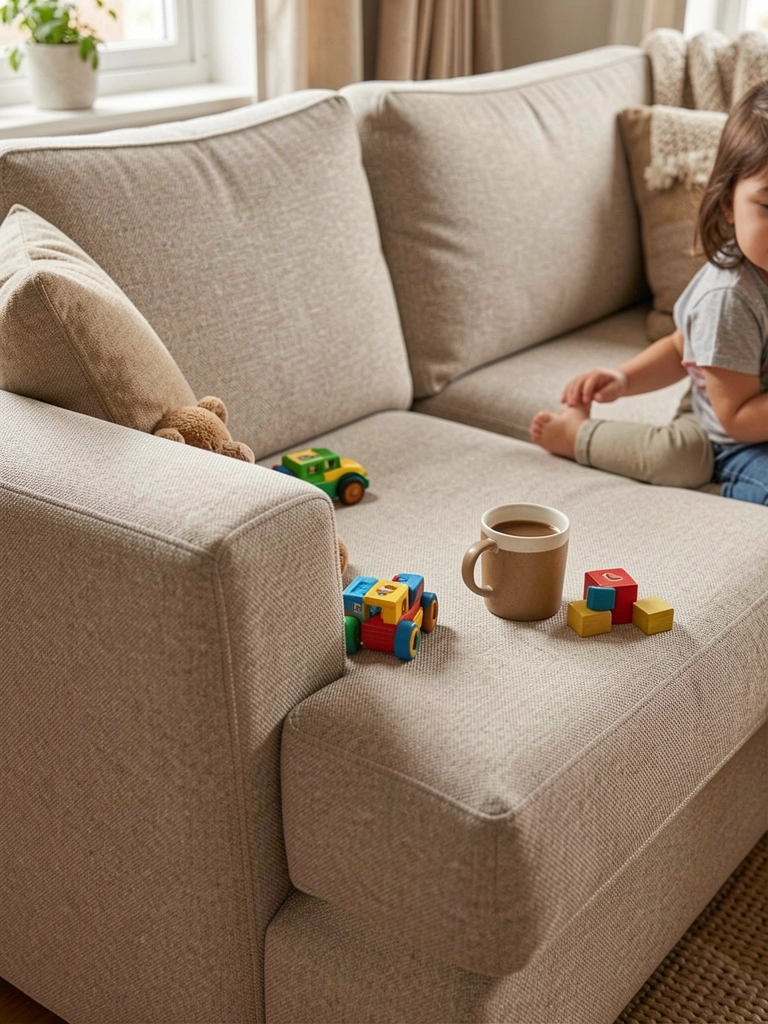
Performance fabrics (microfiber, Crypton, polyester blends) resist stains, pet damage, and wear way better than traditional linen or cotton—and modern performance fabrics feel just as soft and look just as good. If you have pets, kids, or just want a sofa that survives spills, this is non-negotiable.
Sofas upholstered in performance fabrics run $800–$3,500 depending on size, and they cost roughly the same as traditional fabrics these days. Brands like Room & Board, West Elm, Wayfair, and Article clearly label performance options. Most performance fabrics can be spot-cleaned with mild soap and water—takes 5 minutes per spill.
Pro tip: Ask about “performance fabric blend”—this gets you 80% of the durability benefit at a slightly lower price point. You’ll feel confident letting people actually sit on your sofa without panic.
7. Add a Low-Profile Sectional for a Modern, Relaxed Vibe
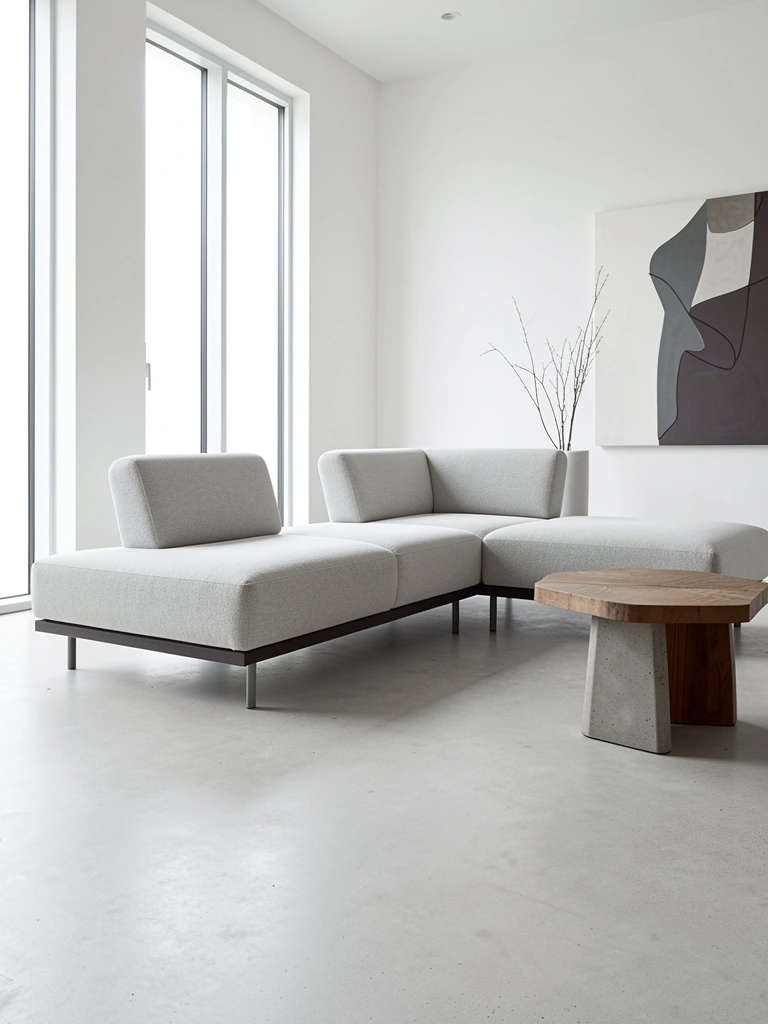
Low-profile sectionals (shorter backs, thin arms, elevated on thin or no-show legs) feel more modern and refined than traditional deep-backed sofas, and they optically open up even smaller rooms since you can see more wall and floor space around them. These are ideal if you want a sofa that feels like furniture, not a bulky block.
Brands like Blu Dot, Hay, and Article specialize in low-profile sections ($1,200–$3,000). The trade-off: slightly less back support, so they’re better for perching and lounging than deep napping. Assembly is similar to standard sofas (2–3 hours).
Styling bonus: Low-profile sofas photograph beautifully and work with minimalist or modern interiors. Your room instantly feels more intentional and less “furnished,” more “designed.”
8. Incorporate a Chaise Lounge Leg for Lounging
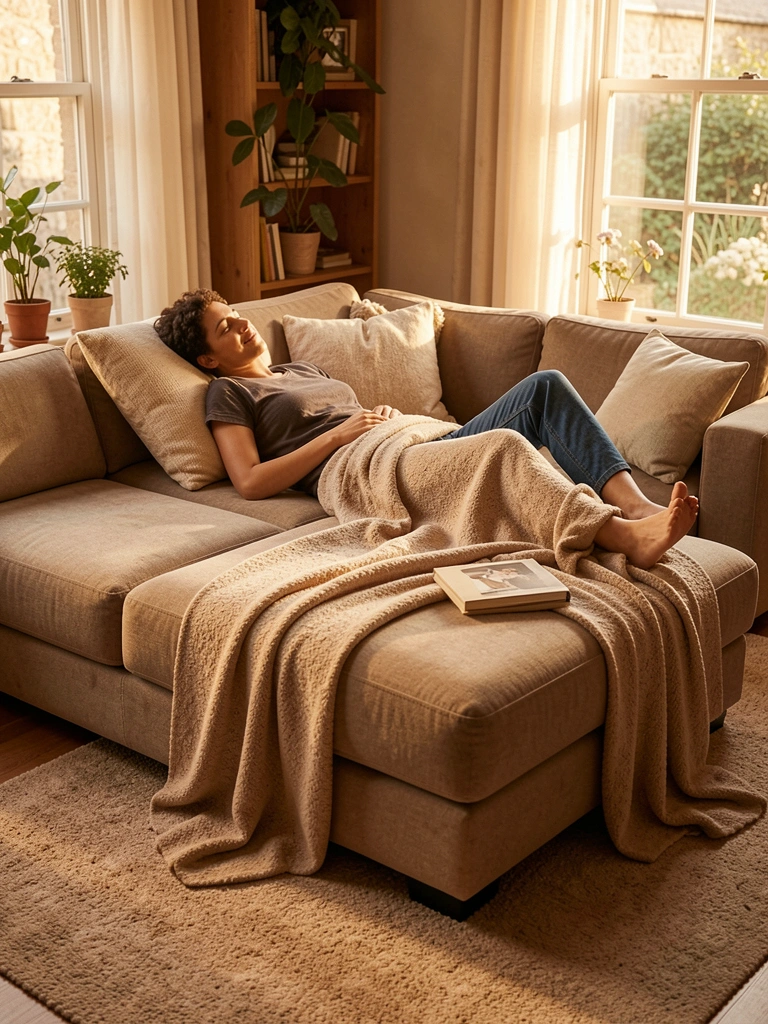
An L-shaped sectional with one leg extended into a chaise lounge section gives you a place to stretch out and truly recline—perfect if you like reading, napping, or just collapsing after a long day. The chaise transforms your sectional from “seating for guests” to “actually comfortable for you.”
Look for “L-shaped sectional with chaise” on Wayfair, Overstock, or Amazon ($900–$2,500 depending on size and material). A chaise adds roughly 2–3 feet to one leg of your L. Installation and setup take 3–4 hours (often easier with help).
Pro tip: Position the chaise where you most naturally recline—often at the end that faces a window or the TV. This one addition totally changes how you use your sofa daily.
9. Style Your L-Sofa with Layered Throw Pillows and Textures
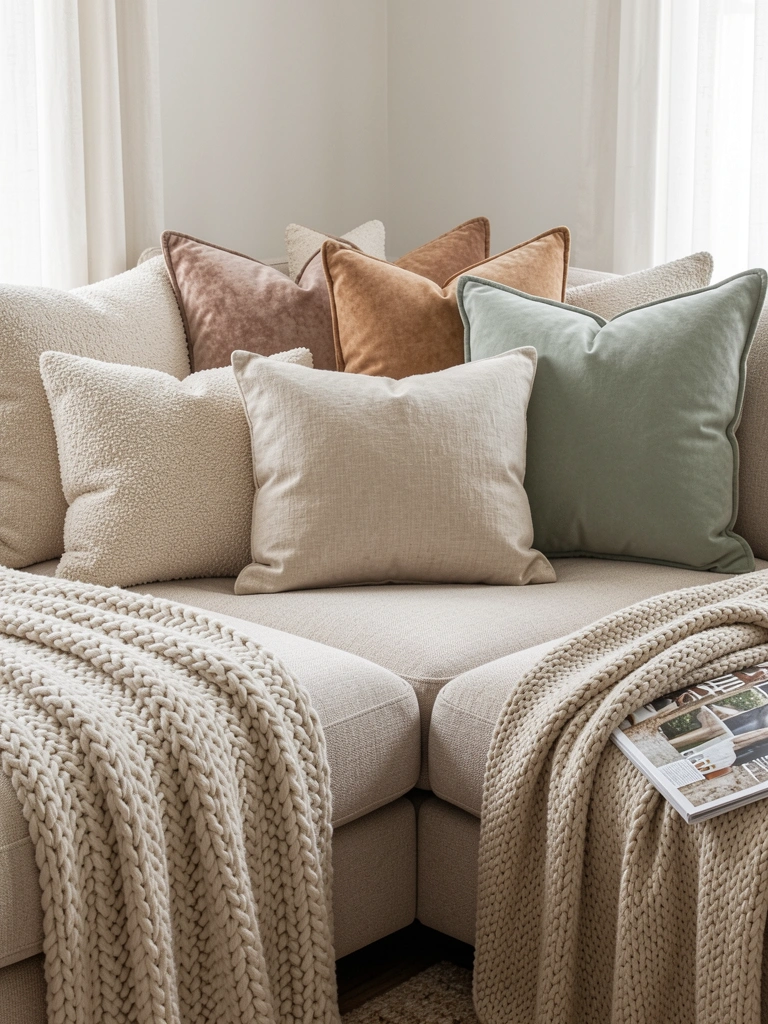
Throw pillows and layered textures are the fastest way to make an L-shaped sofa look curated, expensive, and intentionally styled. A mix of textures (bouclé, velvet, linen) in a cohesive color palette instantly upgrades the visual appeal without any structural changes.
Buy a mix of throw pillows ($20–$60 each) from Target, West Elm, or Amazon—aim for 5–7 pillows depending on your sofa size. Layer them by height and texture, leaving one corner arm exposed for a relaxed feel. Add a chunky throw blanket ($40–$120) draped casually over the back or armrest. This takes 10 minutes to arrange and costs $100–$400 for a complete styling refresh.
Pro tip: Stick to a 3-color palette (two neutrals + one accent color) to avoid a chaotic look. Suddenly, your sofa looks magazine-ready and way more expensive than it actually was.
10. Position Your L-Sofa to Support Conversation Areas
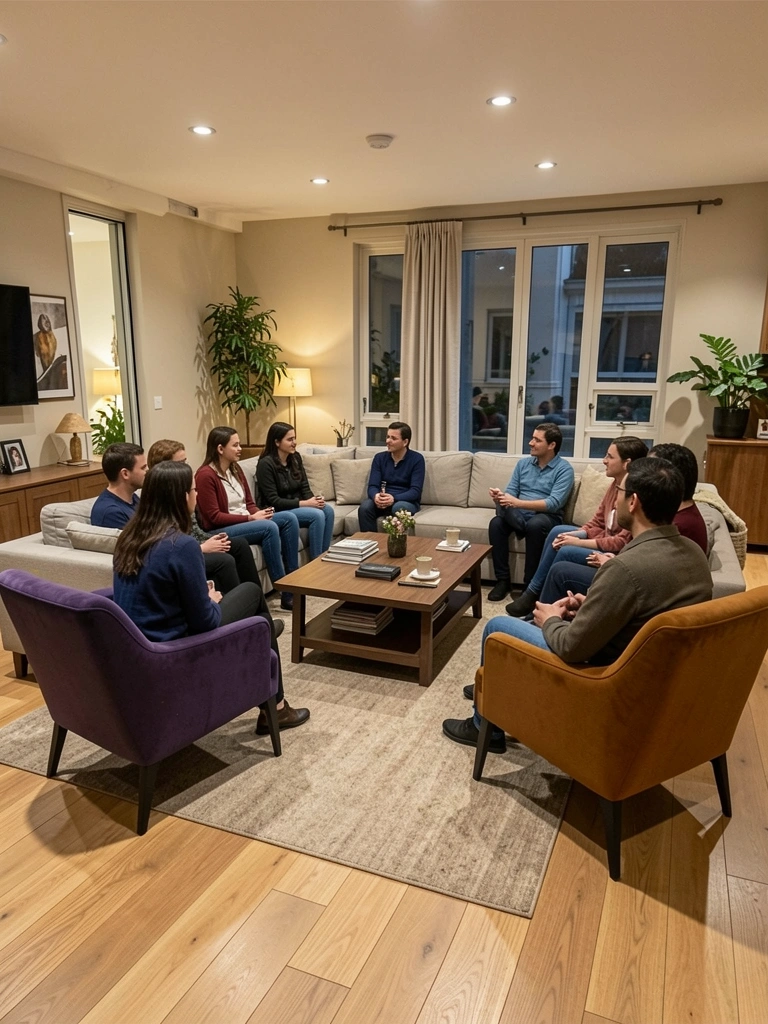
L-shaped sofas naturally encourage conversation because they create a gathering spot where multiple people can sit facing one another—they’re inherently more social than a standard linear sofa. To maximize this, position your L perpendicular to other seating (armchairs, ottomans) so people can easily make eye contact and chat.
Position your L approximately 3–4 feet from a coffee table, then angle 1–2 accent chairs across from it at roughly 90 degrees. This takes 15–20 minutes to arrange and costs nothing beyond furniture you might already have.
Result: Your living room naturally becomes a gathering spot. Guests sit down and conversations flow more naturally—there’s no awkward “staring at a TV” vibe unless you want one.
11. Choose an Oversized L-Sectional for Cloud-Like Comfort
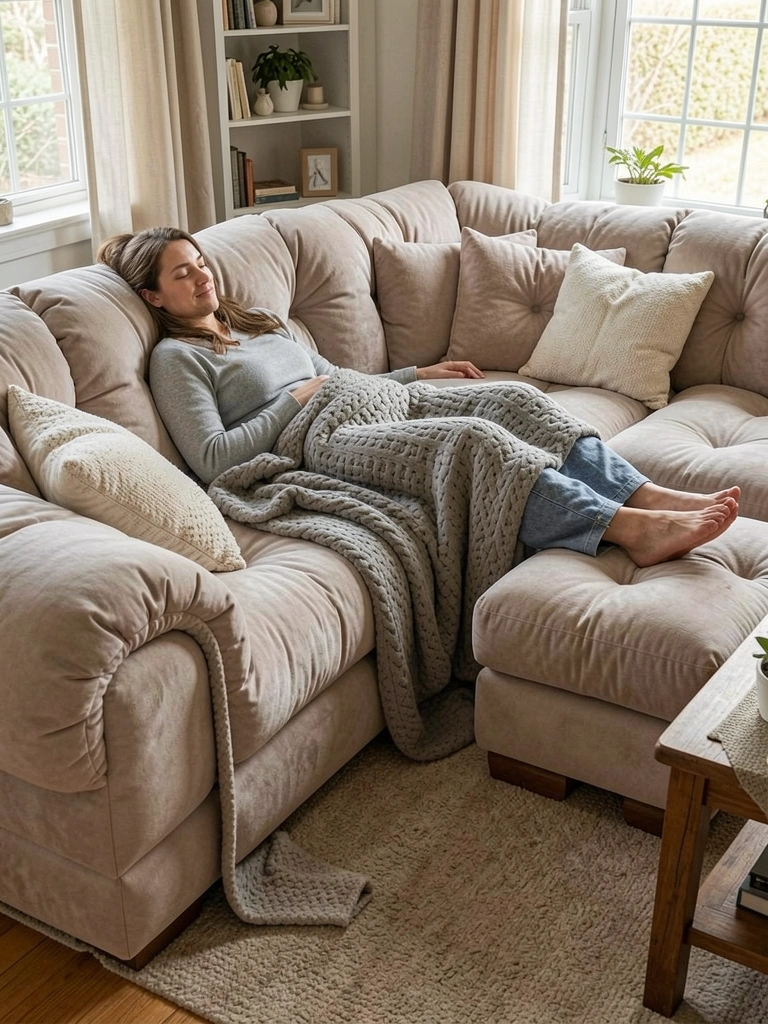
Oversized, cloud-like L-shaped sofas (extra-deep seats, plush cushioning, wide armrests) prioritize sink-in comfort over formal elegance—they’re meant for actual lounging, not just looking at. If your living room is your retreat, not your showroom, a plush L-sectional is worth the investment.
Brands like Pottery Barn, Crate and Barrel, Room & Board, and Wayfair offer oversized options ($1,500–$4,000+). The trade-off: these sofas are deeper (require more floor space) and heavier (trickier to move). Most are firm enough to support proper posture when you do sit upright. Assembly typically takes 3–4 hours.
Pro tip: Pair an oversized sectional with firm throw pillows for lumbar support, so you’re comfortable whether you’re lounging or working from home. The best part? You’ll actually want to be in your living room instead of retreating to the bedroom.
12. Use an L-Sectional to Divide Open-Plan Spaces Visually
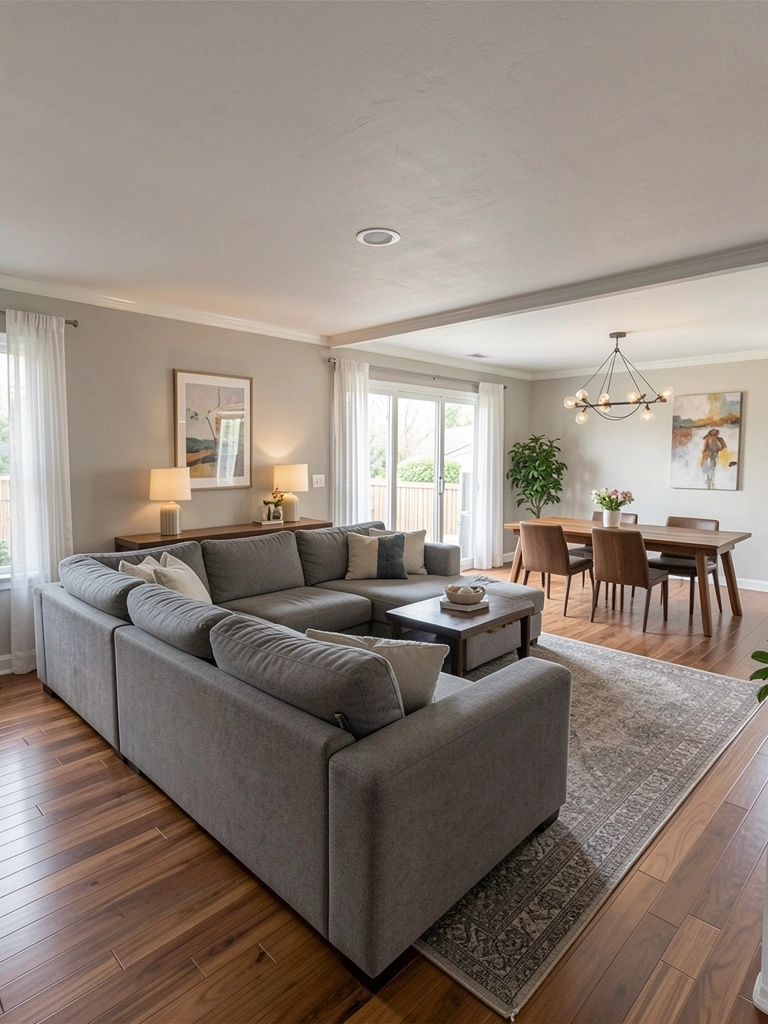
In open-plan living, an L-shaped sectional can act as a visual and functional divider between your living room and dining area without needing a wall or room divider. The back of the sofa becomes a subtle boundary, and the seating arrangement naturally defines which zone is for what.
Position your L with the open side facing the main living area (fireplace, TV, windows) and the back angled slightly toward the dining or kitchen zone. No structural changes needed—it’s just strategic positioning. This costs nothing and takes 30 minutes to arrange.
Result: Suddenly your open-plan space feels intentional and zoned. People understand that the L-sofa area is for relaxation, and the other side is for dining—without any cramped, closed-off feeling.
13. Pair Your L-Sofa with a Statement Accent Wall
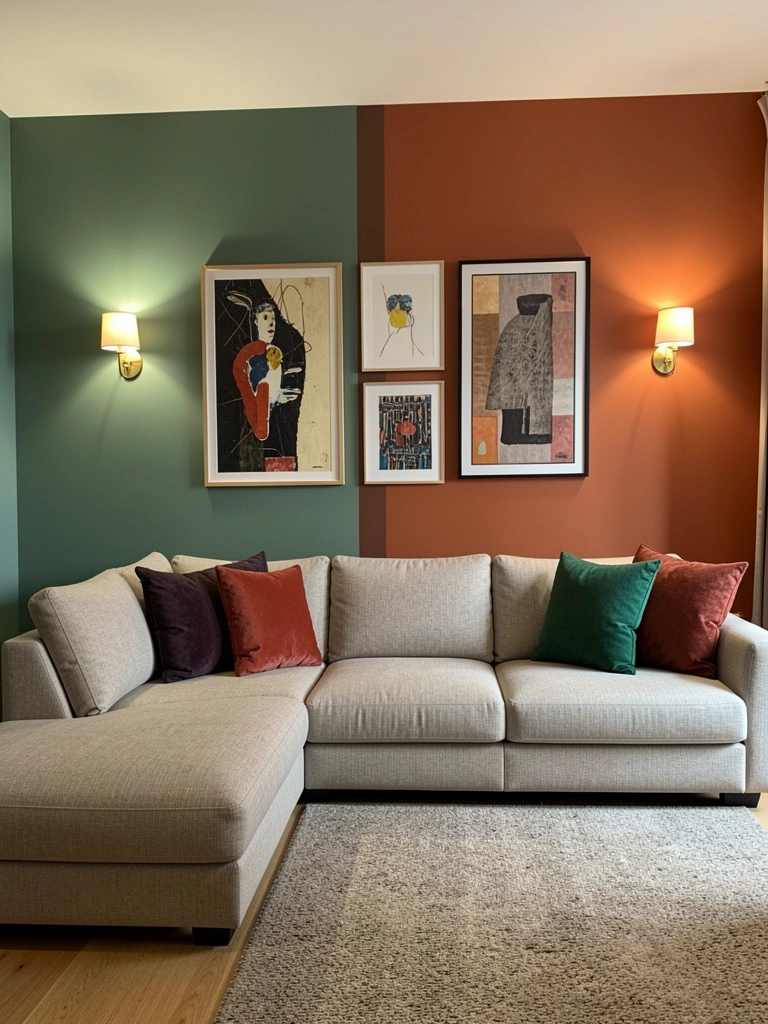
A strategically chosen accent wall behind your L-shaped sofa draws the eye, adds depth, and makes the seating area feel like an intentional focal point. Deep, muted colors (sage green, warm terracotta, soft navy) work best because they complement most sofa fabrics without feeling overwhelming.
Paint your chosen wall with 2–3 cans of quality paint ($15–$35 per can) and a weekend of work (or hire a painter, $300–$800 depending on wall size). Neutral sofas show best against bold walls; patterned sofas need more muted walls.
Pro tip: Add floating shelves or artwork to the accent wall to layer visual interest. Your living room suddenly feels intentionally designed instead of accidentally arranged.
14. Select a Warm, Earthy Color for Timeless Appeal
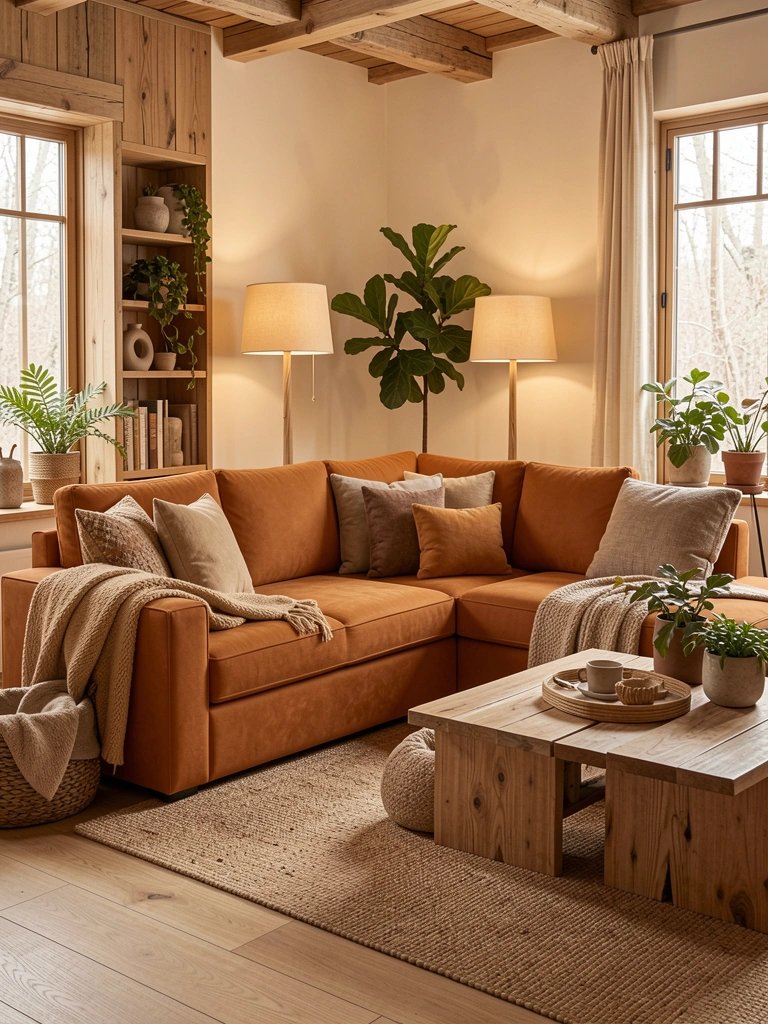
Warm, earthy colors (camel, clay, sand, warm greige, soft terracotta) are trending because they feel calming, work with almost any decor style, and age beautifully. Unlike trendy jewel tones, earthy L-sofas stay relevant for 7–10 years, making them a smart long-term investment.
Choose your sofa color before committing—order free fabric swatches from Wayfair, Article, or brand websites and look at them in your space’s actual lighting for 2–3 days. This costs nothing and prevents a major color-regret situation. Most sofas in neutral tones cost the same as other colors.
Bonus: Neutral-toned L-sofas pair easily with statement pillows, throws, or artwork, so you can refresh your look without replacing the whole sofa. Earthy tones feel sophisticated and intentional instead of “default beige.”
15. Add an Ottoman or Poufs for Flexible Seating
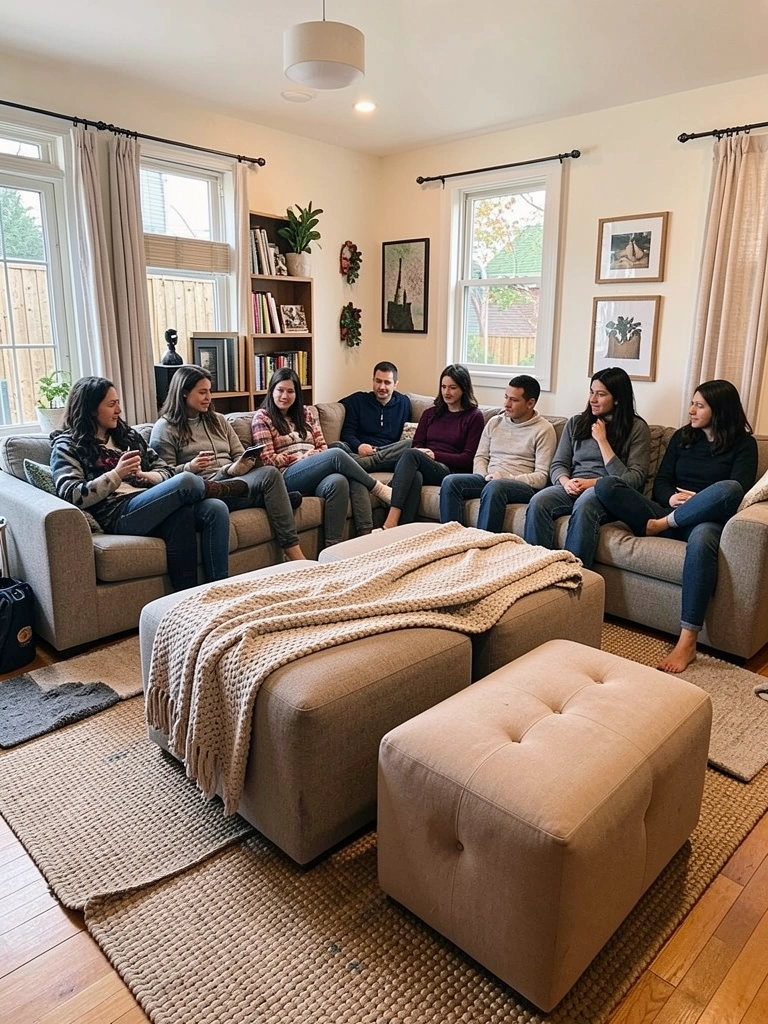
An ottoman or poufs add flexibility—they’re extra seating when guests come over, a footrest when you’re relaxing, a side table for drinks or a laptop, or even hidden storage in some designs. They’re the most multifunctional furniture piece you can buy for your L-shaped setup.
Purchase an ottoman ($200–$600) or two small poufs ($80–$150 each) in a complementary fabric—try Article, West Elm, Wayfair, or Overstock. Position it 12–18 inches in front of your L-sofa as a visual anchor. No assembly needed for most poufs (ottomans take 15 minutes).
Pro tip: Choose performance fabrics for ottomans too if you have pets or kids—they take a beating. One ottoman instantly adds flexibility and makes your living room feel less “rigid furniture” and more adaptable to real life.
16. Maximize Space with a Right-Facing L vs. Left-Facing L

The direction your L-shaped sofa faces (left or right) dramatically affects traffic flow and how your room feels. Before ordering, sketch your room’s layout and test both directions to see which maximizes function and sight lines. Right-facing means the chaise or open leg extends to the right; left-facing means it extends left.
Measure your room walls, doorways, and windows with a measuring tape (free or under $15), sketch it out on paper or use a free app like Planner 5D, and position your L both ways. This takes 20 minutes and costs nothing. Most retailers offer both options for similar pricing.
Pro tip: The best direction depends on your room’s fixed elements (fireplace, TV, windows)—position the open leg of your L toward the room’s main focal point. Choosing correctly means better sight lines, easier traffic flow, and a room that just feels right.
17. Invest in High-Quality Cushion Cores for Longevity
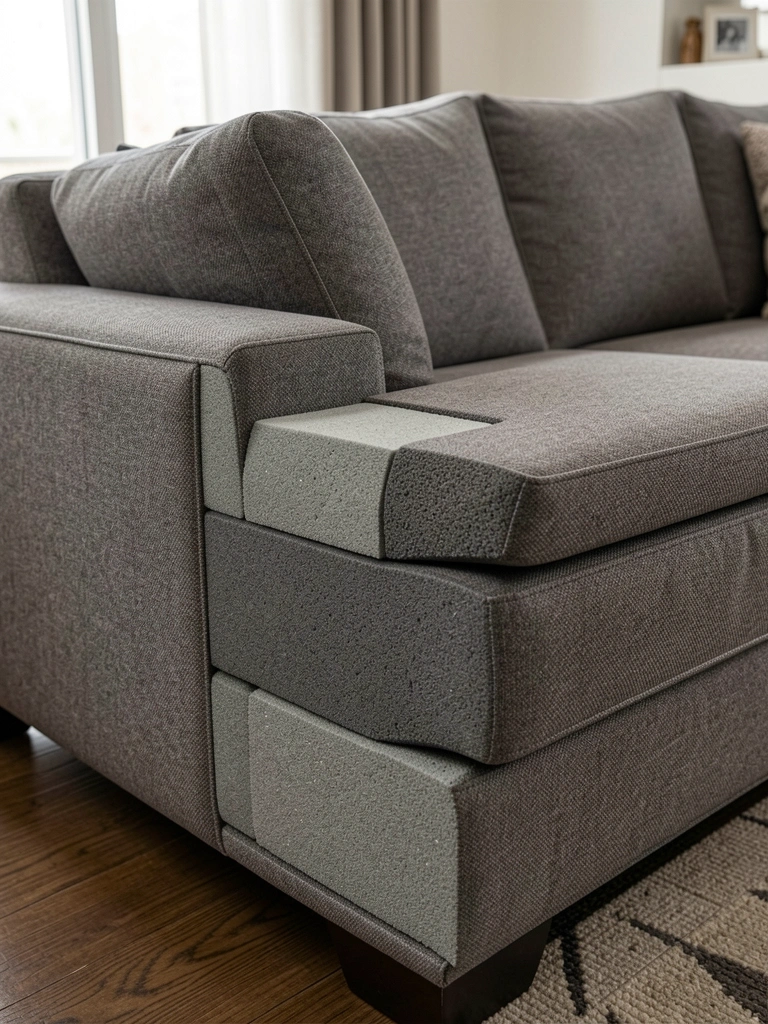
Not all L-shaped sofas are built the same. High-density foam cushion cores (rated 1.8 density or higher) hold their shape for 7–10 years; cheap foam flattens within 2–3 years. When shopping, ask about cushion construction and insist on high-density foam for longevity.
When comparing sofas at the same price point, always ask about cushion density, frame material (hardwood is better than plywood), and suspension type (eight-way hand-tied is best). Better construction costs roughly $200–$400 more upfront but extends your sofa’s life by 5+ years. This translates to saving thousands long-term.
Pro tip: Read reviews specifically mentioning “cushion durability after 2 years” to see real-world longevity feedback. Investing in better cushion quality now means your L-sofa stays comfortable and beautiful instead of sagging after a few years.
18. Create a Reading Nook in Your L-Sofa Corner
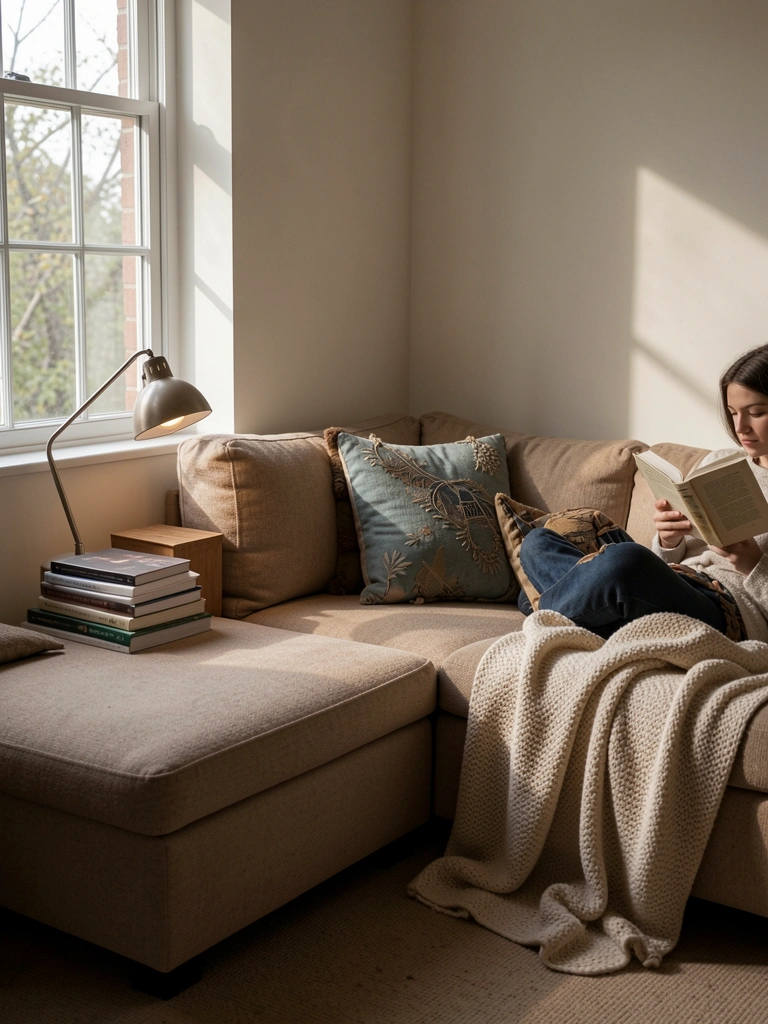
The corner seat of an L-shaped sofa is prime real estate for creating a cozy reading or lounging nook. Position your L with the corner unit near a window (if possible) and style it with a reading lamp, side table, throw blanket, and pillows. It becomes a designated retreat spot.
Arrange your L with the corner closest to natural light, add a swing-arm wall lamp ($50–$150) or a small floor lamp ($40–$120), and style with a side table ($80–$200) and a chunky throw blanket ($40–$100). Total setup cost: $170–$570. Takes 1–2 hours to arrange and light.
Result: You have a defined retreat space that makes you actually want to read instead of scrolling on your phone. The corner nook becomes the most-used spot in your living room.
19. Select a Pet-Friendly L-Sofa Fabric and Layout
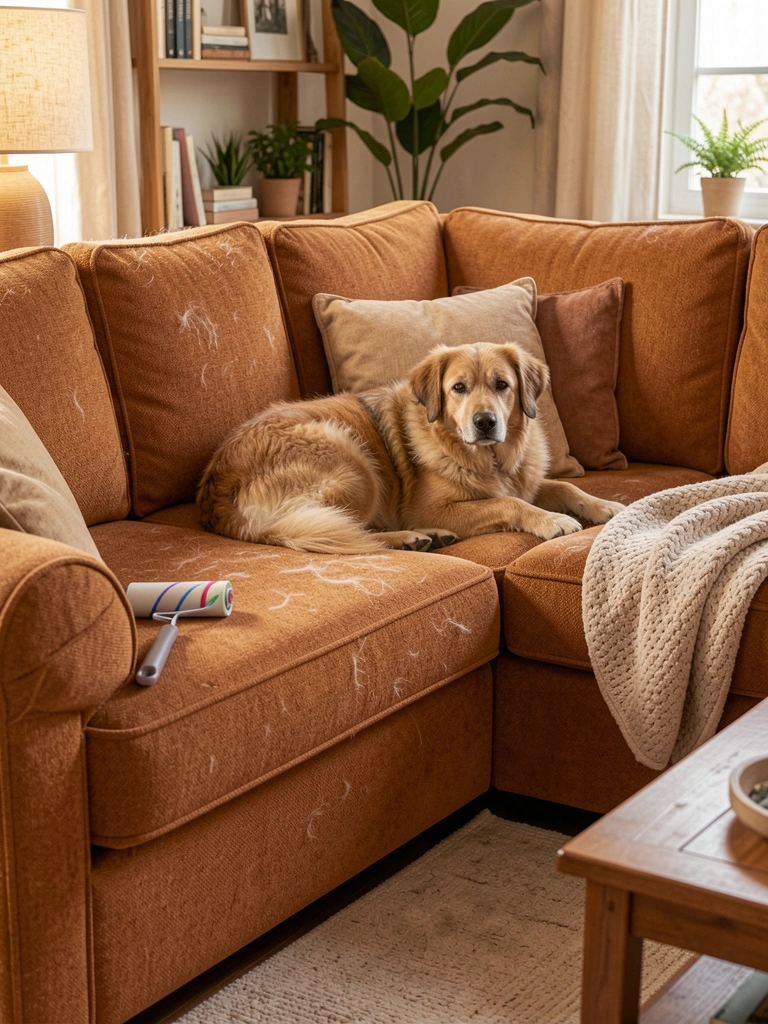
If you have pets, choose an L-shaped sofa that can withstand fur, claws, and accidents without showing wear. Performance fabrics are pet-proof, but fabric color and weave also matter—darker tones and tighter weaves hide pet hair better than light, fluffy textures.
Select a performance fabric sectional ($1,000–$3,500) in a darker neutral tone (charcoal, warm gray, chocolate). Brands like Article, Wayfair, and West Elm clearly label pet-friendly options. Pair your sofa with a pet blanket or throw ($30–$80) on the most-used section to protect upholstery and provide a designated pet spot.
Pro tip: Position your L so the chaise or long side doesn’t block your pet’s access to other rooms—pets like open sightlines and freedom of movement. Your sofa stays fresher and your pet feels included instead of excluded.
20. Incorporate Wooden Legs for Warmth and Visual Lift
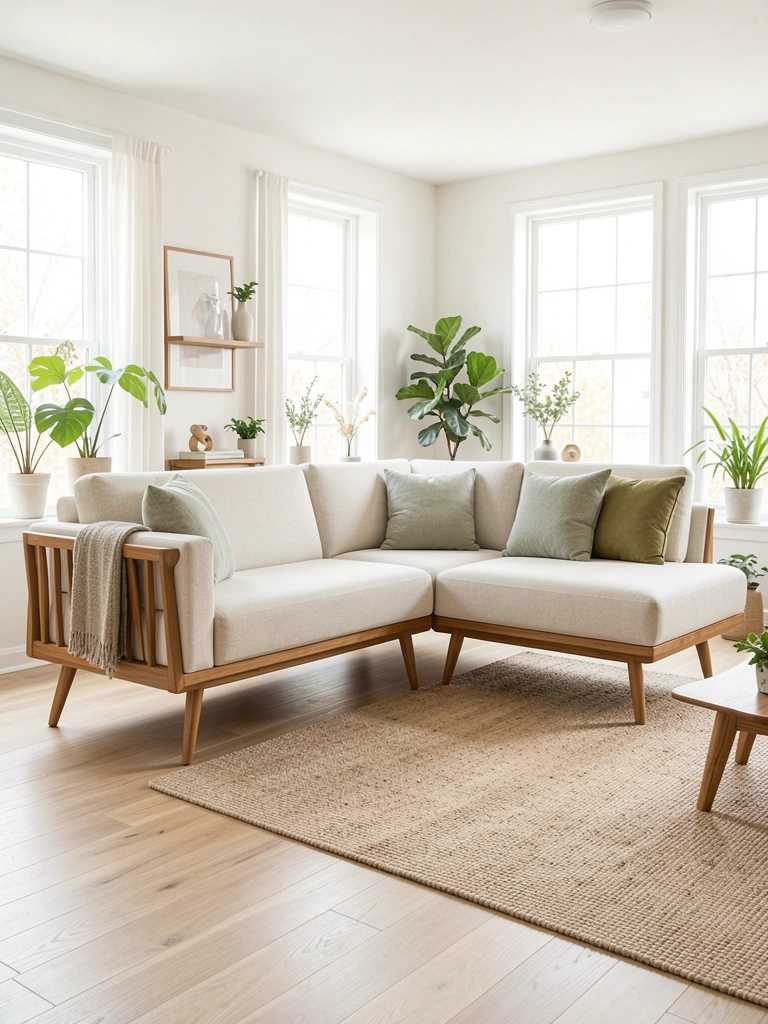
Sofas on wooden legs (especially tapered or mid-century styles) look lighter, less bulky, and more intentionally designed than low-slung sofas on tracks or skirted bases. The visible floor under the sofa optically opens up your room. Most modern L-sofas come with at least minimal legs, but you can sometimes upgrade to nicer wood for $100–$300.
When ordering your L-sofa, ask about leg options and costs—some retailers offer free upgrades from plastic to wood. If your existing sofa has low skirting, adding legs ($150–$400 for professional installation) is sometimes possible with a furniture repair specialist.
Styling advantage: Wooden legs add warmth and make your sectional look more like a designed piece than a generic “couch.” The improved sight lines under the sofa instantly make your room feel more open.
21. Use an L-Sofa to Create a Symmetrical Living Room Layout
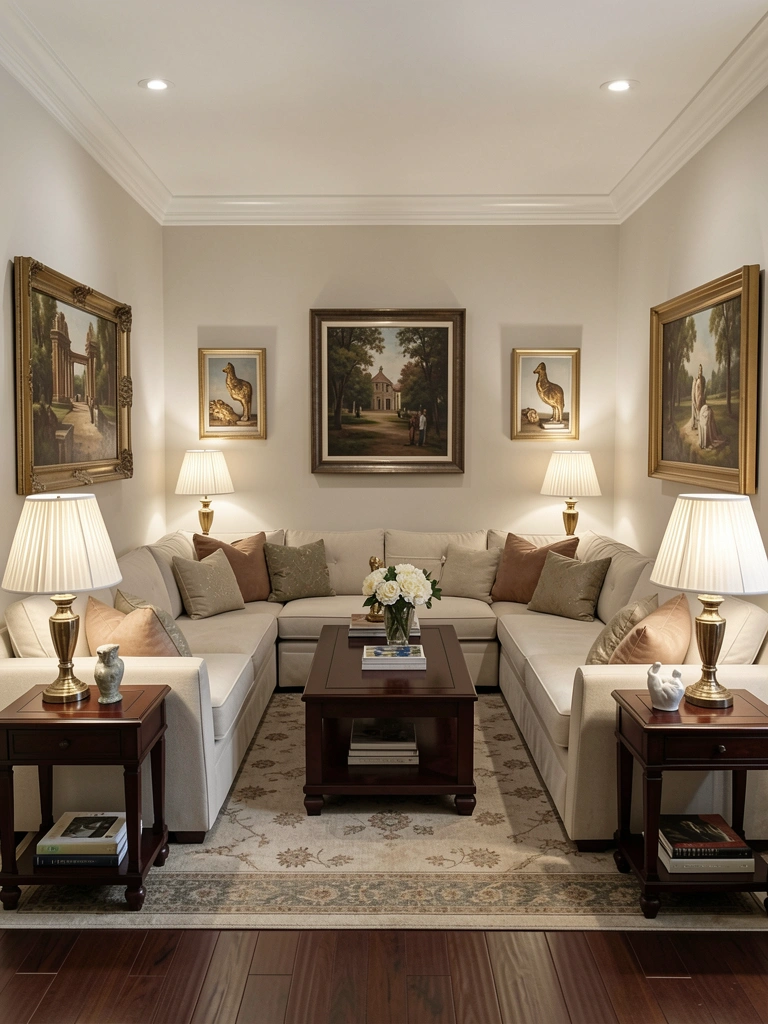
An L-shaped sofa is perfect for creating symmetrical, formal layouts—position it as one “wall” of a seating group and mirror the arrangement with matching accent chairs, side tables, and lamps on either side. This works beautifully in more traditional or transitional living rooms.
Position your L with the long side parallel to one wall, then add matching side tables ($150–$300 each) and lamps ($80–$200 each) on either end. Add symmetrical accent chairs ($300–$700 each) if space allows. Arrange artwork and decor in balanced pairs. This takes 1–2 hours and costs $600–$1,500+ depending on pieces chosen.
Pro tip: Symmetrical layouts feel more intentional and formal—they’re ideal if you love a curated, magazine-ready look. Your living room immediately reads as thoughtfully designed instead of casually thrown together.
22. Hide Unsightly Storage Underneath with a Raised Platform
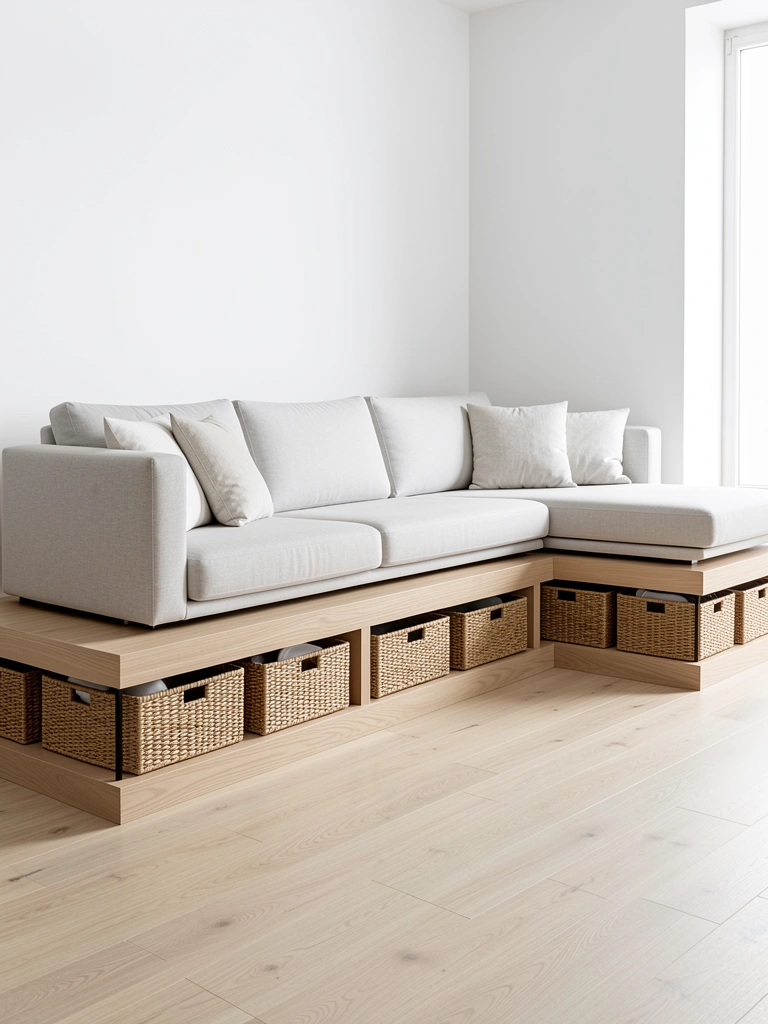
If you need hidden storage and your L-sofa has clearance underneath, a low platform or riser can elevate your sectional while creating space for storage baskets, bins, or even a compact bar cart. This works especially well if your sofa sits on legs rather than a skirt.
Add a low platform (DIY with pallets and casters, $50–$150, or purchase a ready-made platform, $300–$600) and style underneath with woven baskets ($30–$100 each). This takes 1–2 hours to install and organize.
Practical bonus: You gain functional storage while the hidden base keeps everything looking clean and curated. Your living room stays organized without appearing cluttered.
23. Layer an Area Rug to Define Your L-Sofa Seating Zone
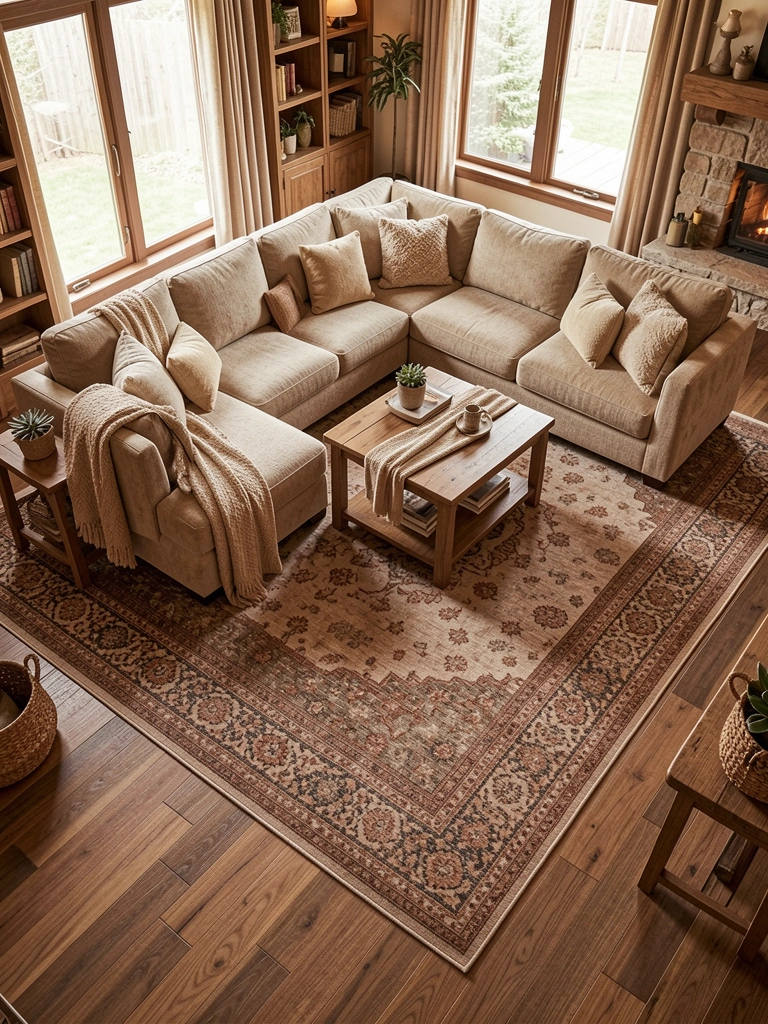
An area rug ties together all your living room elements and visually defines your L-shaped seating zone as one intentional grouping. The rug should extend under at least the front two-thirds of your sectional and ideally under a coffee table in front.
Purchase a large area rug ($200–$800) in a neutral tone or subtle pattern that complements your sofa color. Lay it down before arranging your L-sofa to ensure proper placement. This takes 15 minutes and costs $200–$800.
Pro tip: A rug in a slightly warmer tone than your sofa (or a subtle pattern) prevents the space from feeling flat. The rug anchors the seating and instantly makes your room feel more finished and intentional—like the layout was actually planned instead of accidentally arranged.
Save this post and try at least one idea this weekend—whether it’s repositioning your L-sofa to face a new direction, adding throw pillows and a cozy throw, or investing in better lighting behind your sectional. Small changes compound fast, and your living room deserves to feel like the most comfortable room in your home.
Leave a Reply