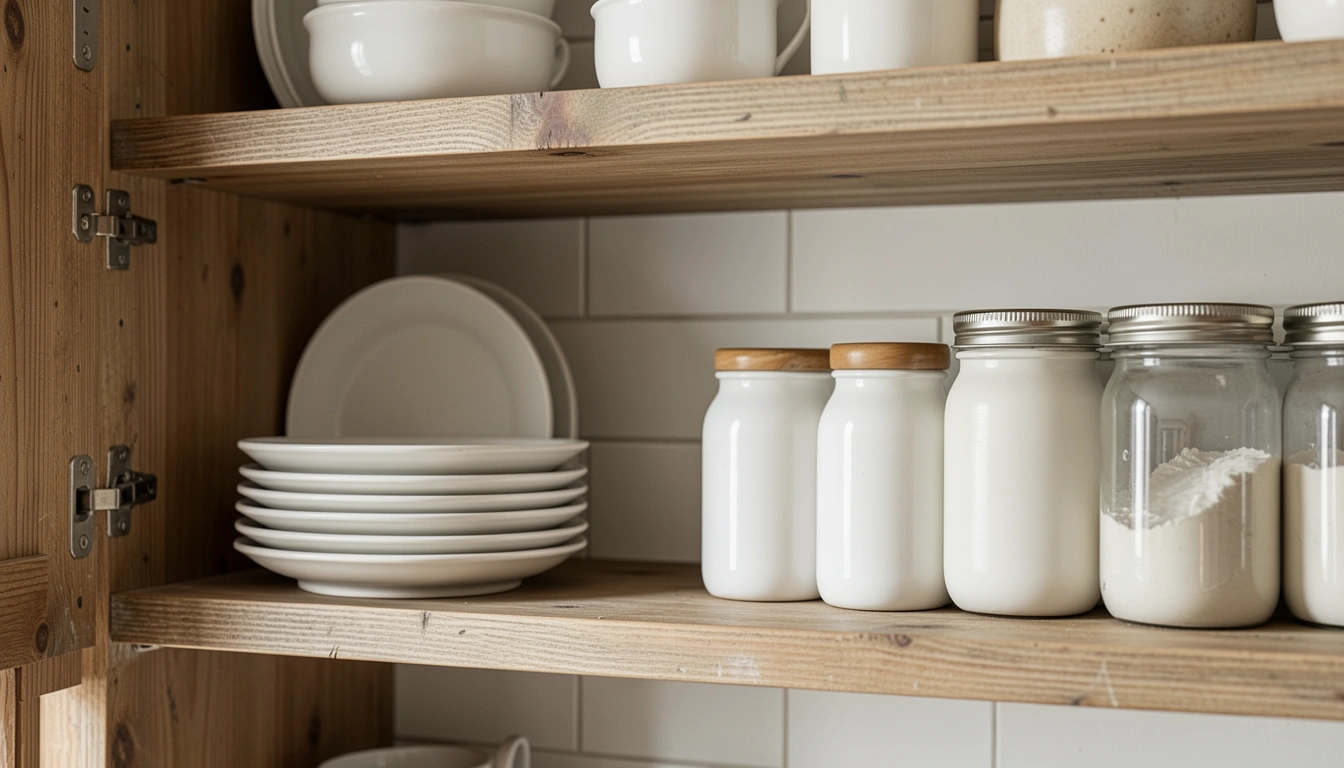
I remember staring at my bare kitchen walls, feeling like the room was just echoing. Then I added open shelves, and suddenly it breathed—warm, like a hug from an old friend. No more cold cabinets hiding everything.
I'd tried fancy stuff before, but it gathered dust. Simple things, like jars I already had, changed it. Made cooking feel easier, more homey.
Now, my shelves hold what we use daily. No perfection, just real life stacked right.
10 Cozy Farmhouse Kitchen Shelving Ideas
These 10 cozy farmhouse kitchen shelving ideas come straight from kitchens I've shaped over years. They're practical, forgiving, and make any space feel settled. You'll see exactly how to do each one.
1. Vintage Mason Jars Lined Up for Spices and Grains
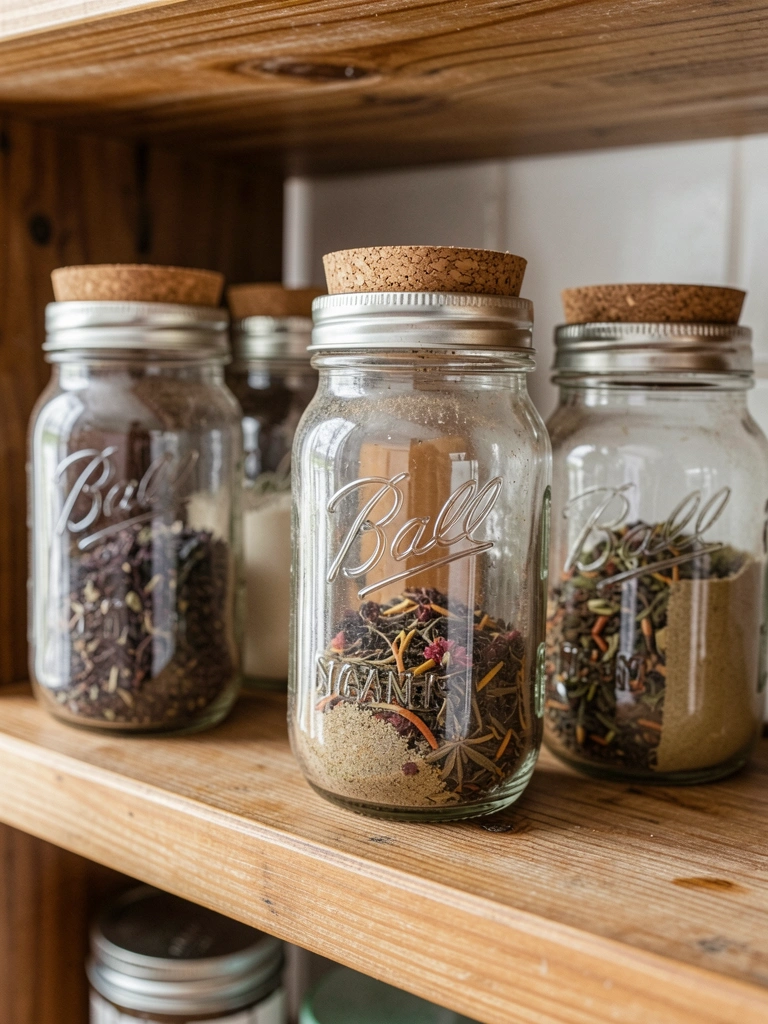
I started with a dozen old mason jars from my grandma's attic, filling them with oats, rice, and spices we grab every morning. They turned my shelf from empty to full without trying too hard. The light catches the glass just right, softening the whole kitchen.
Before, spices were lost in drawers. Now, everything's at eye level, and reaching for cumin feels calm, not frantic. I learned to group by color—whites and clears up top, deeper tones below—for that easy flow.
One mistake: Overstuffing at first. Pull back, leave gaps for air. It keeps the look light.
What You’ll Need for This Look
- Vintage-style mason jars, quart size, clear glass
- Cork lids for mason jars, pack of 12
- Bulk oats in pantry bags
2. Stacked Wooden Cutting Boards with Fresh Bread
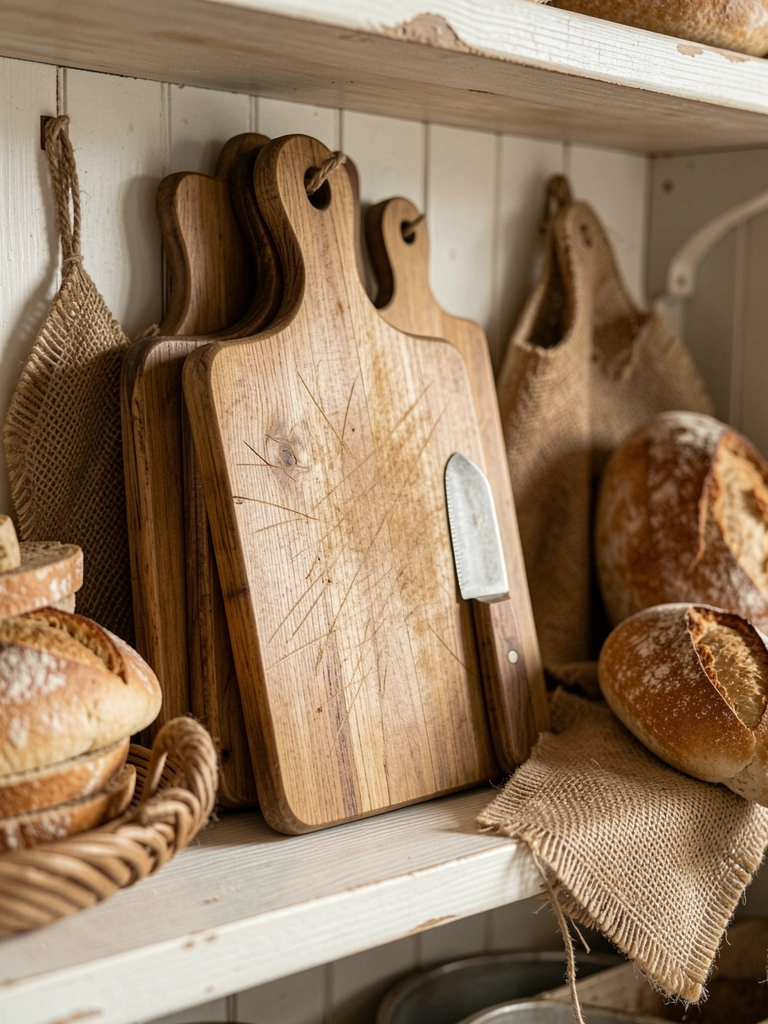
In my last rental, I leaned old cutting boards from thrift stores against the shelf, topping with a loaf under cloth. It grounded the space—wood echoing the table below. Mornings, I'd pull one down, and the kitchen smelled alive.
Visually, the layers add depth without bulk. The worn edges tell stories, not showroom shine. Emotionally, it makes baking feel like ritual.
I once bought new boards—too slick. Stick to used or matte ones; they settle in better. Space them an inch apart for breath.
What You’ll Need for This Look
- Reclaimed wood cutting boards, 12-inch, assorted sizes
- Linen bread cloth, neutral beige
- Artisan sourdough loaf wrapper
3. Galvanized Metal Buckets for Root Veggies
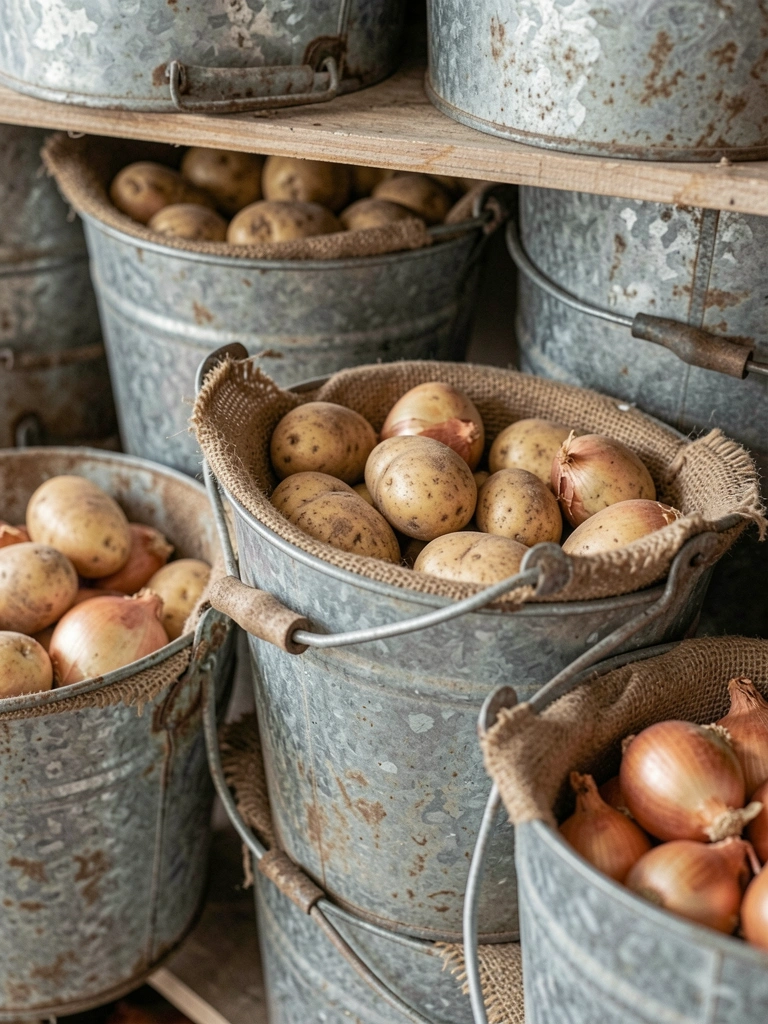
I hung two dented galvanized buckets on my shelf for potatoes and carrots—pulled straight from the garden. They swing light when full, adding quiet movement. The kitchen went from stark to farm-real overnight.
The metal's cool tone warms with produce inside. No more veggie bags cluttering counters; now it's tidy chaos.
Mistake I made: Full buckets tip. Line with newspaper first, and don't overload the bottom shelf.
What You’ll Need for This Look
- Galvanized metal buckets, 5-gallon, small dents
- Burlap sack liners, natural
- Potato onion storage bags
4. Mismatched White Ironstone Pitchers
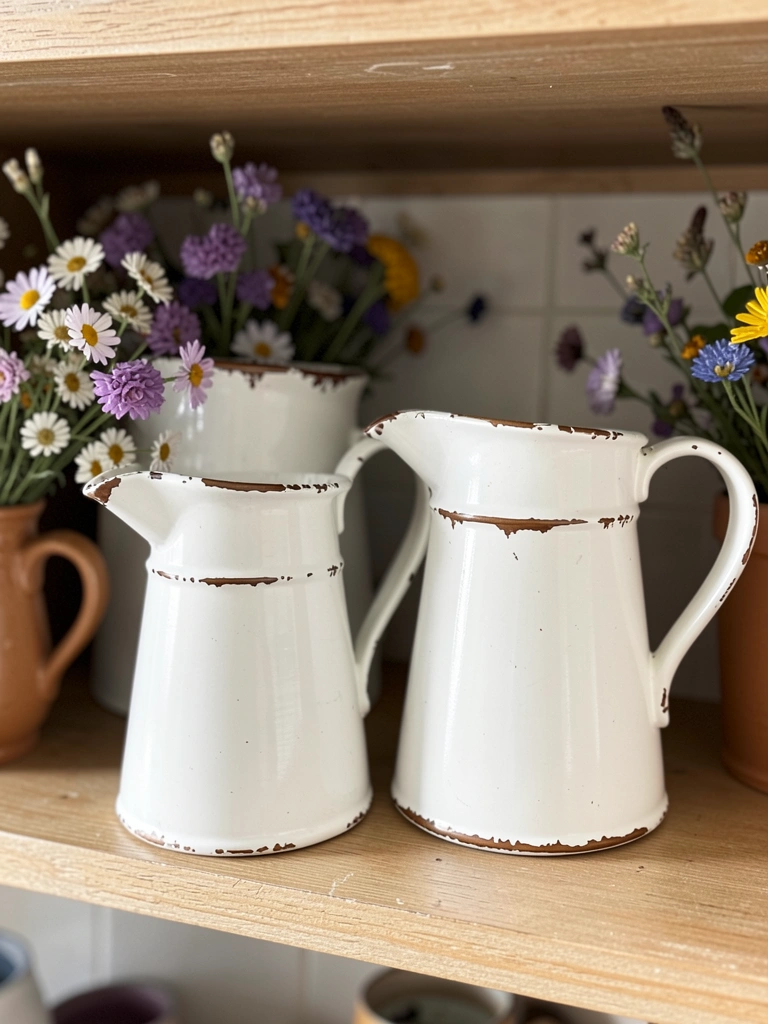
Thrifted ironstone pitchers—three different sizes—sit on my middle shelf, one with wooden spoons poking out. They catch drips from dish drying, blending right into daily mess. The white pulls light around the room.
It feels collected, not curated. Changed how I see dishes—as friends, not fillers.
Bought a glossy set once; hated it. Hunt for matte, imperfect ones. Cluster tight, odd numbers work best.
What You’ll Need for This Look
- White ironstone pitchers, medium size, matte finish
- Wooden kitchen spoons, olive wood set
- Dried wheat stems filler
5. Woven Seagrass Baskets for Linens
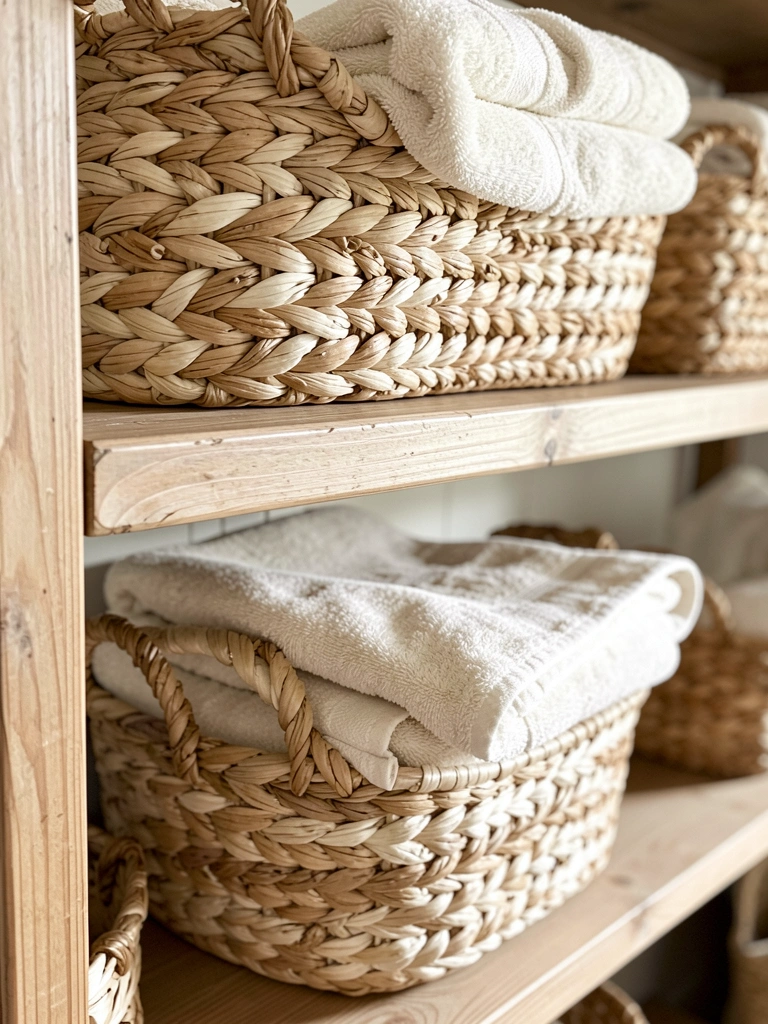
Seagrass baskets from a market hold my tea towels—folded loose inside. They soften the shelf's edge, and pulling one out mid-cook feels easy. My kitchen's noise dropped; less clatter.
Texture against wood is key—cozy without fussy. Towels stay fresh, no drawer hunts.
Overpacked mine early on. Leave room to see inside; rotate fabrics seasonally.
What You’ll Need for This Look
6. Ceramic Honey Jars with Dipper Spoons
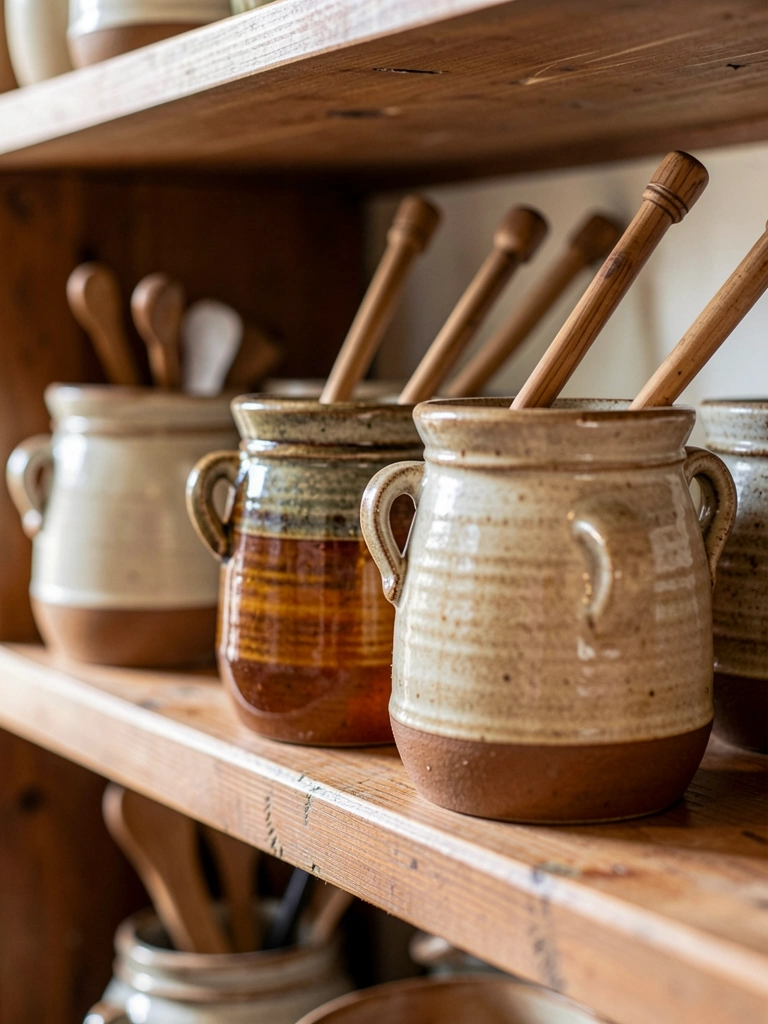
Local pottery honey jars line my top shelf, dippers tucked in. Morning tea ritual got sweeter; the weight feels right in hand. Shelf gained quiet purpose.
Amber through ceramic warms neutrals. No sticky counters anymore.
Tried glass—too see-through. Opaque stoneware hides drips better. Space evenly, labels facing out.
What You’ll Need for This Look
7. Rolled Linen Napkins in Brass Trays
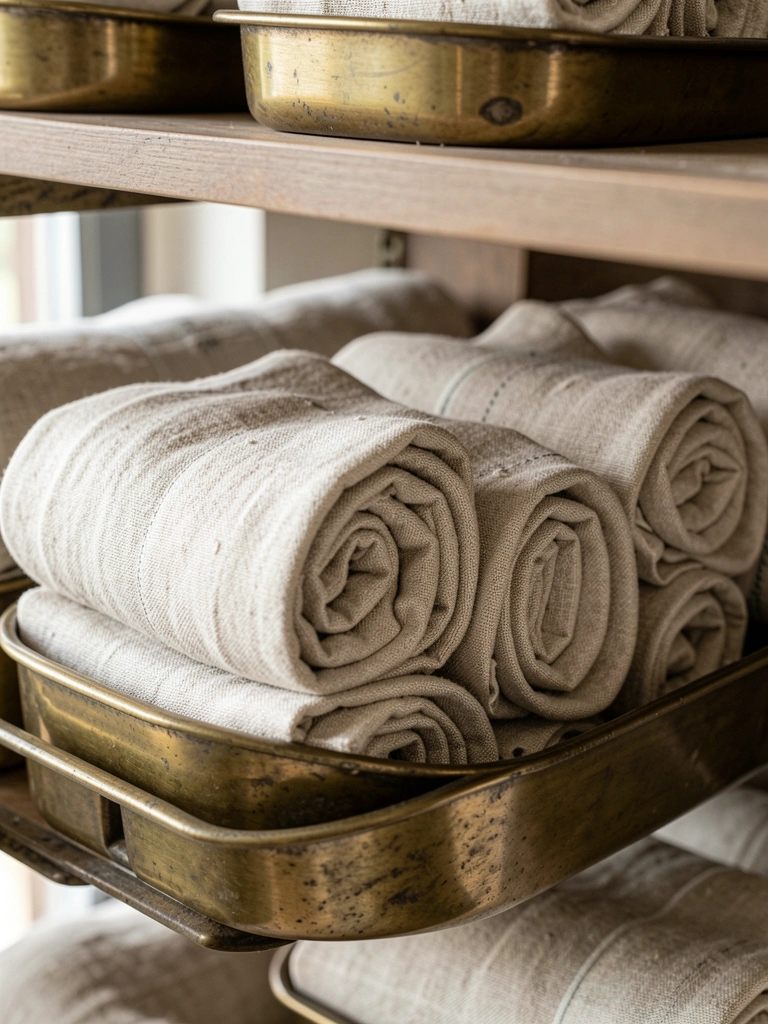
Brass trays catch rolled napkins on the lower shelf—grab-and-go for meals. The patina blends with wood over time. Dinners feel more gathered.
Soft linen against metal adds calm contrast. No wrinkled piles now.
First trays were shiny; dulled them with vinegar. Roll loosely; it stays inviting.
What You’ll Need for This Look
8. Propped Vintage Cookbooks with Bookends
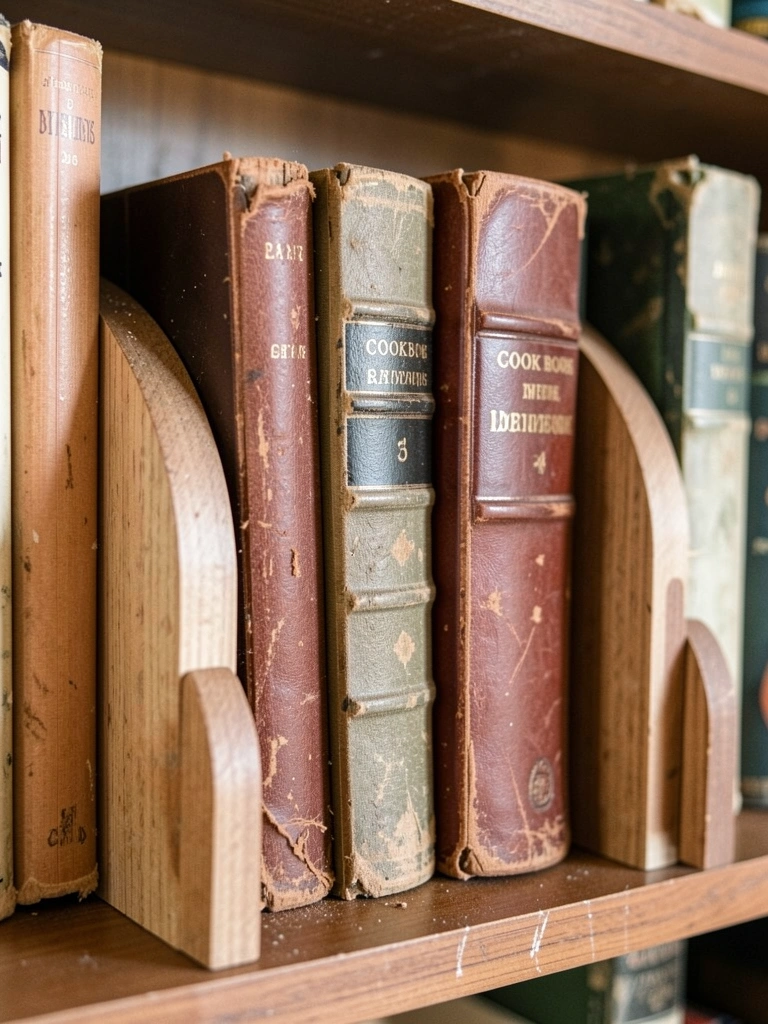
Old Fannie Farmer books lean between wood blocks—recipes we actually use. Flipping pages mid-stir roots me here. Shelf tells our story now.
Spines add color without overwhelming. Feels like company in the kitchen.
Bought new ones—too crisp. Age them open on the counter first. Simple ends prevent slips.
What You’ll Need for This Look
9. Tin Canisters for Flour and Sugar
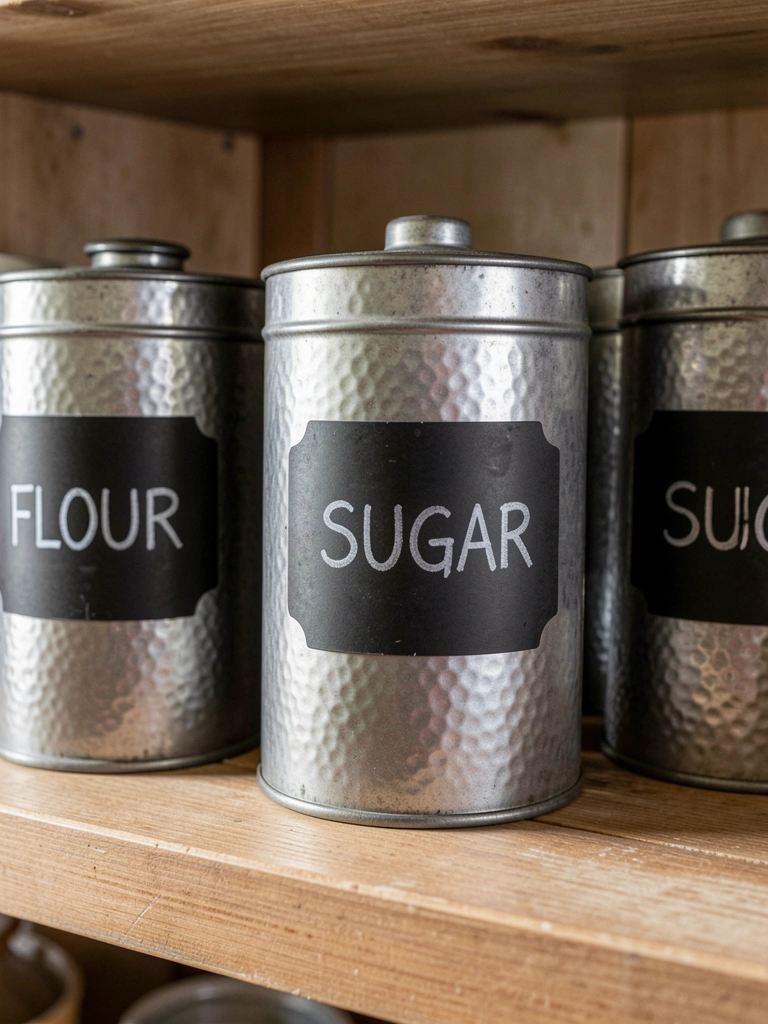
Hammered tin canisters hold flour and sugar—stacked two high. Baking's faster; no measuring cup digs. The quiet clink suits mornings.
Tin mutes light, keeps staples fresh. Uniform but not boring.
Overfilled once, lids popped. Label with chalk; wipe and redo easy.
What You’ll Need for This Look
10. Dried Lavender Bundles in Glass Vases
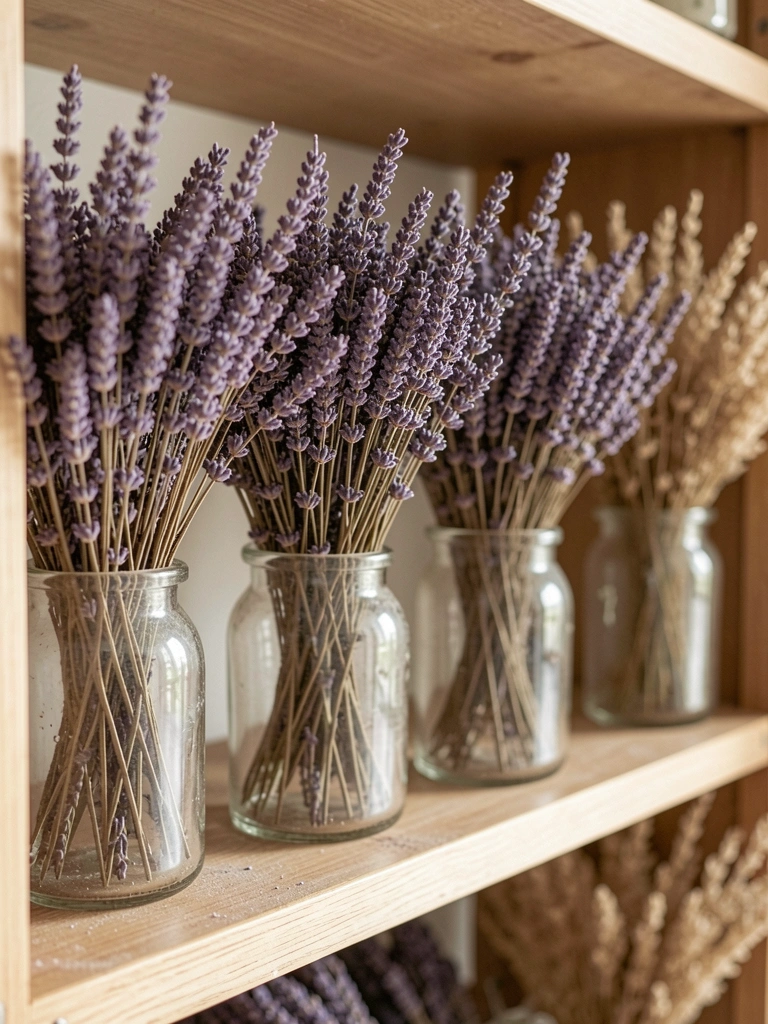
Bundles from the yard dry in short glass vases on the end shelf—scent lingers soft. It quiets the mind while chopping.
Purple pops gentle against whites. Fills gaps without effort.
Bought fake once—obvious. Grow or source real; refresh yearly.
What You’ll Need for This Look
Final Thoughts
Pick one or two ideas that fit your routine—no need for all 10. Start small; your kitchen will settle into cozy over time.
I've lived these, returned half my tries. You'll find what sticks.
You got this—shelves that feel like home are waiting.
Leave a Reply