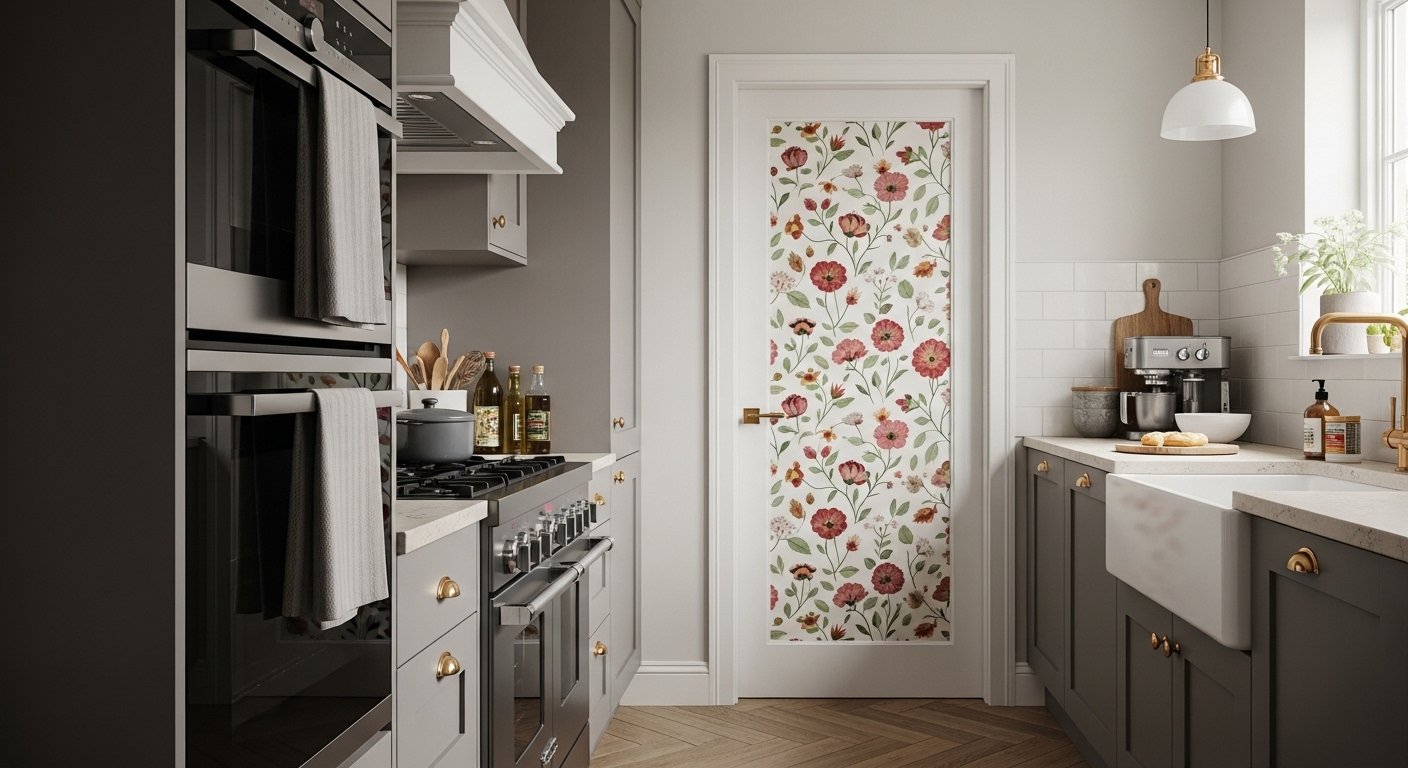
I stared at that tall, skinny kitchen door every morning. It cut the room in half, making everything feel squeezed. No matter what I hung nearby, it stuck out like a blank wall.
One day, I stepped back. The door wasn't the problem. It was how empty space pulled your eye up and down without stopping.
I've fixed this in my own kitchen. Now it blends in, lets the room breathe.
How to Decor Long Narrow Kitchen Door
This shows you how to balance a long narrow kitchen door so it stops dominating the space. You'll end up with a calm flow from hall to kitchen. It's simple changes I make myself—nothing fancy, just right.
What You’ll Need
- Slim metal wall hooks, matte black, set of 6
- Narrow floating wood shelf, 24-inch length, white oak
- Set of 3 vertical canvas prints, neutral tones, 12×36 inches
- Faux trailing ivy plant, realistic green, 30-inch length
- Woven wall basket, small tan rattan, 12-inch height
- Matte brass picture ledge, 36-inch slim profile
- Soft linen tea towel, neutral stripe, pack of 3
Step 1: Anchor the Bottom Third
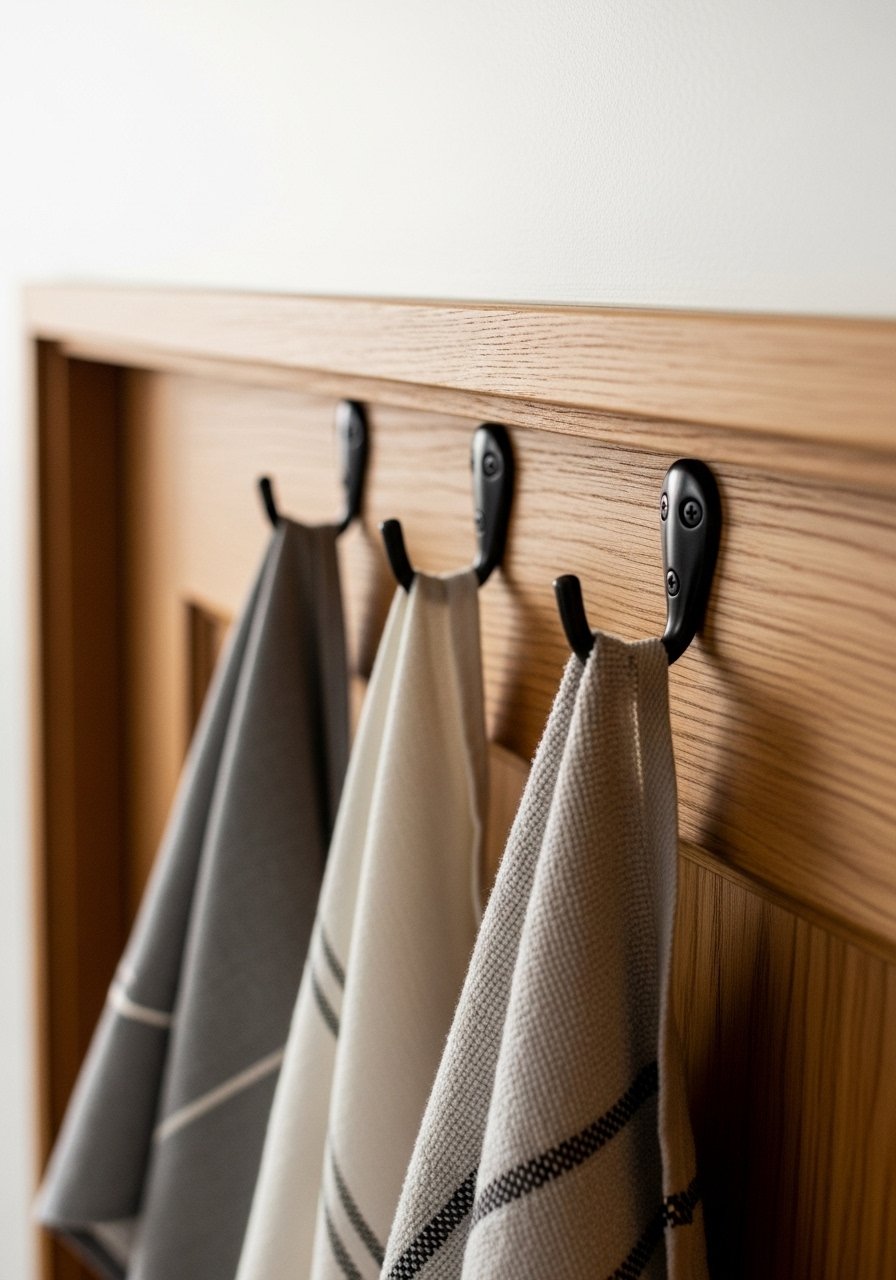
I start low, right at waist height on the door frame. Hooks go there first. Drape a couple tea towels over them. They soften the base without swinging into the path.
This pulls your eye down, stops that empty climb up the door. Suddenly, the whole thing feels grounded.
People miss how much the bottom sets the feel—skip it, and it looks top-heavy. Don't overload; two towels max, or it crowds the floor.
Step 2: Layer Mid-Height with Baskets

Next, eye level—hang one woven basket off a hook or directly on the frame. Stuff it loose with kitchen linens or dry herbs. It adds warmth right where you notice most.
The door starts to hug the wall now, not poke out. Balance creeps in.
Most overlook mid-space texture; smooth walls make narrow doors sharper. Avoid centering it dead-on—offset slightly for flow.
Step 3: Add a Narrow Shelf at Chest Height
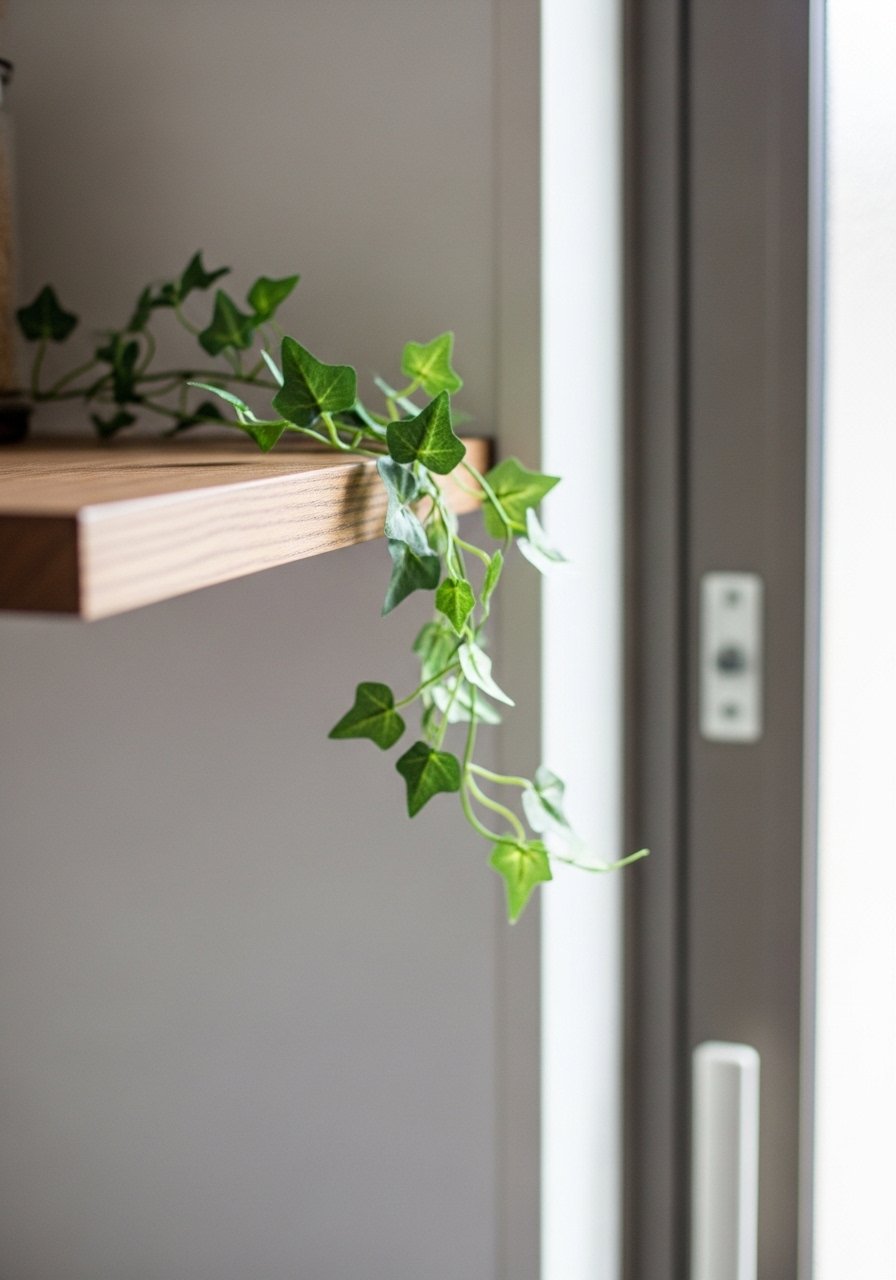
I mount the narrow shelf just above the basket, off to one side. Set the faux ivy there, letting tendrils drape down a bit.
Visually, it bridges low and high parts. The door recedes, room feels wider.
Insight: shelves break vertical lines people ignore. Mistake—don't butt it against the door edge; leave a finger's gap for air.
Step 4: Hang Vertical Art Above
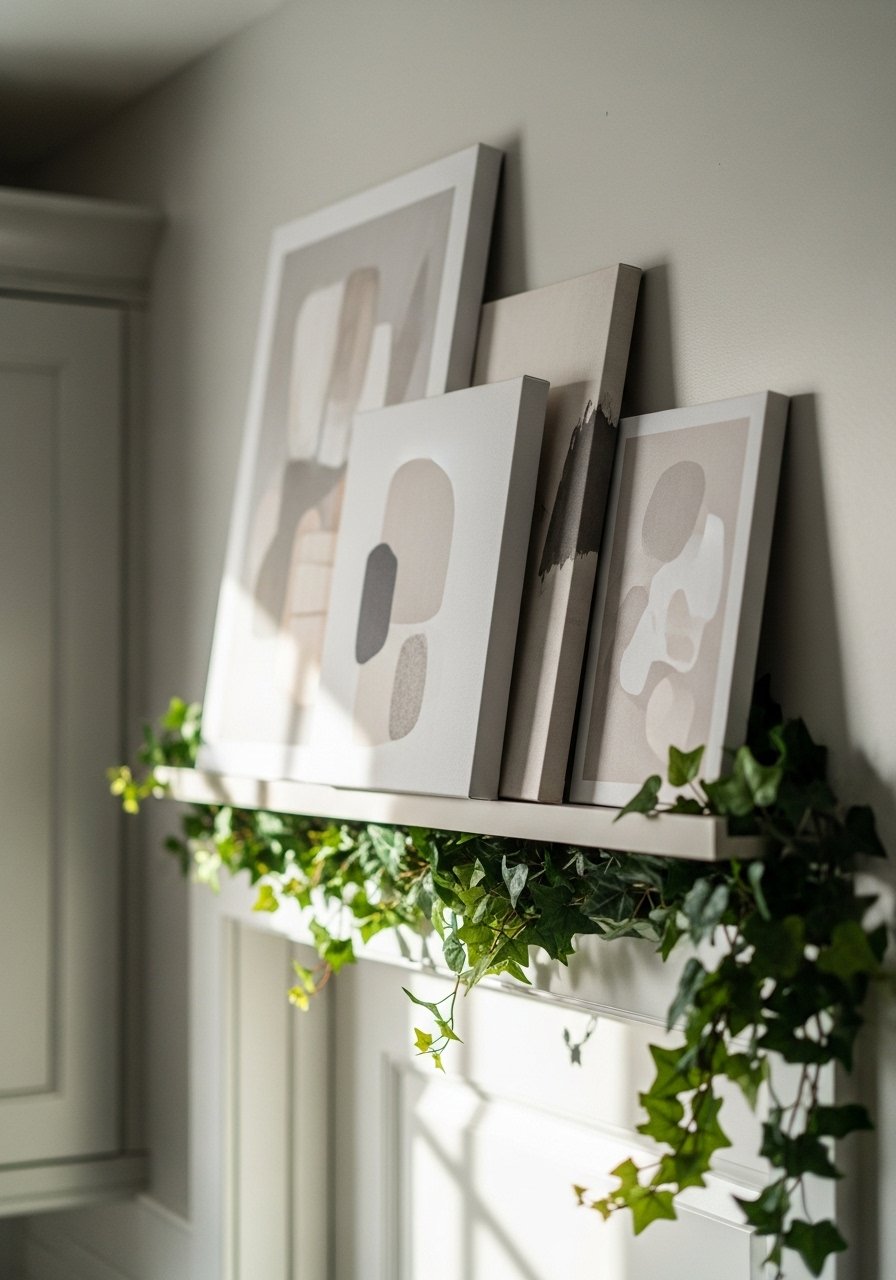
Up top, near the header, lean the vertical prints on the picture ledge. Cluster two or three, not perfectly straight.
Now the full height reads balanced, eye travels smooth across.
Folks forget tall art matches the door's pull—short pieces fight it. Don't nail them flush; leaning adds depth without commitment.
Step 5: Step Back and Adjust Layers
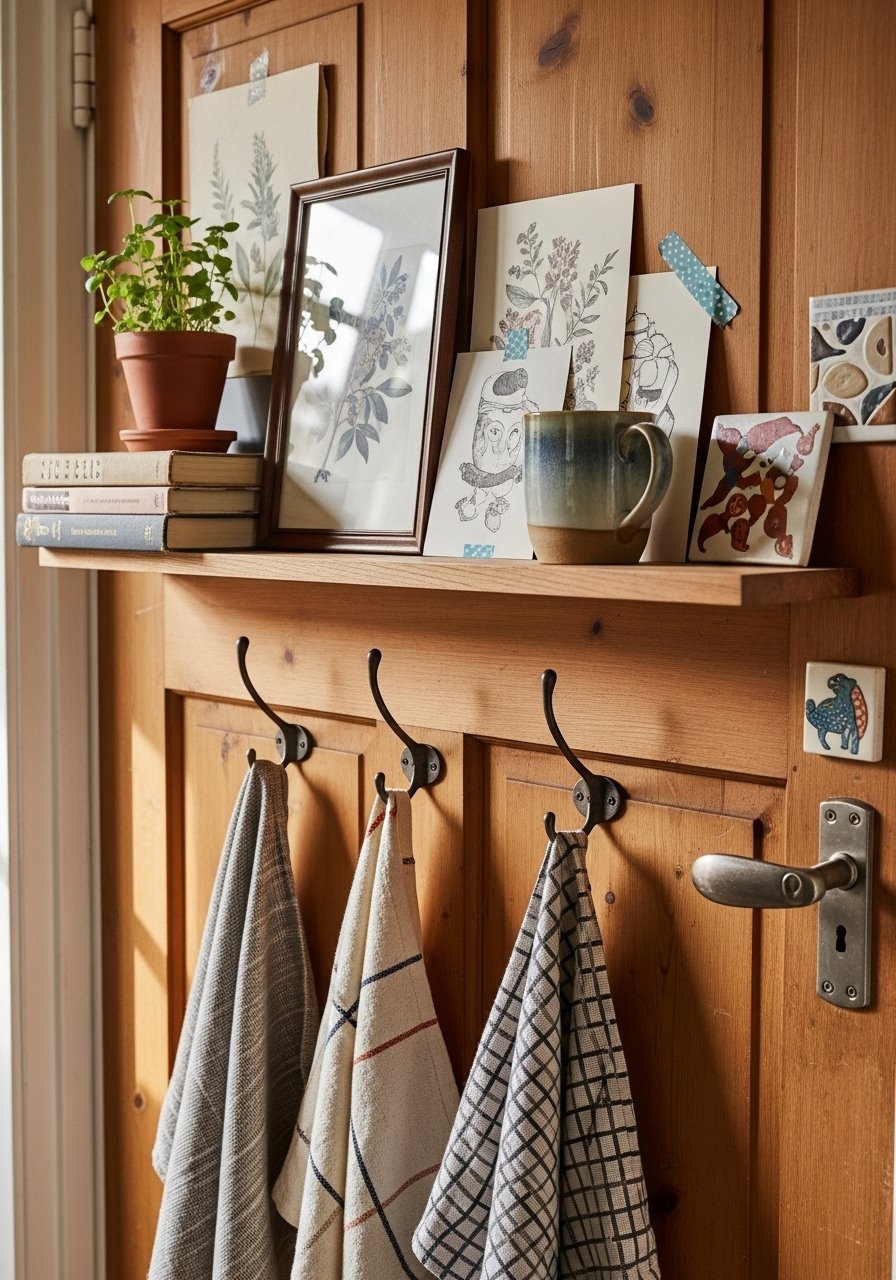
Walk back ten feet. Tug ivy looser, shift a print. Layers settle.
The space flows now—door's just part of it.
Key miss: no tweak means stiff look. Avoid even spacing; slight offsets feel lived-in.
Common Mistakes with Narrow Doors
I've bumped into these myself.
- Hanging everything centered—it echoes the door's skinny line.
- Too many colors; neutrals let the kitchen shine through.
One tweak fixed mine: mix heights first. Test with paper cutouts. Keeps it calm.
Pairing with Kitchen Flow
My kitchen door leads to counters. I match tones—oak shelf with cabinets.
Think path: nothing juts into walk space.
- Offsets for traffic.
- Low elements ground steps.
It connects hall to cooking without snag.
Quick Updates for Seasons
Twice a year, I swap.
Fall: dried wheat in basket.
Summer: fresh linen colors.
Keeps it fresh, not fussy. One swap per season max.
Final Thoughts
Start with just the hooks and towels. See how it grounds things.
You've got this—small layers build quiet balance.
My kitchen door's quiet now. Yours can be too. Just live with it a week.
Leave a Reply