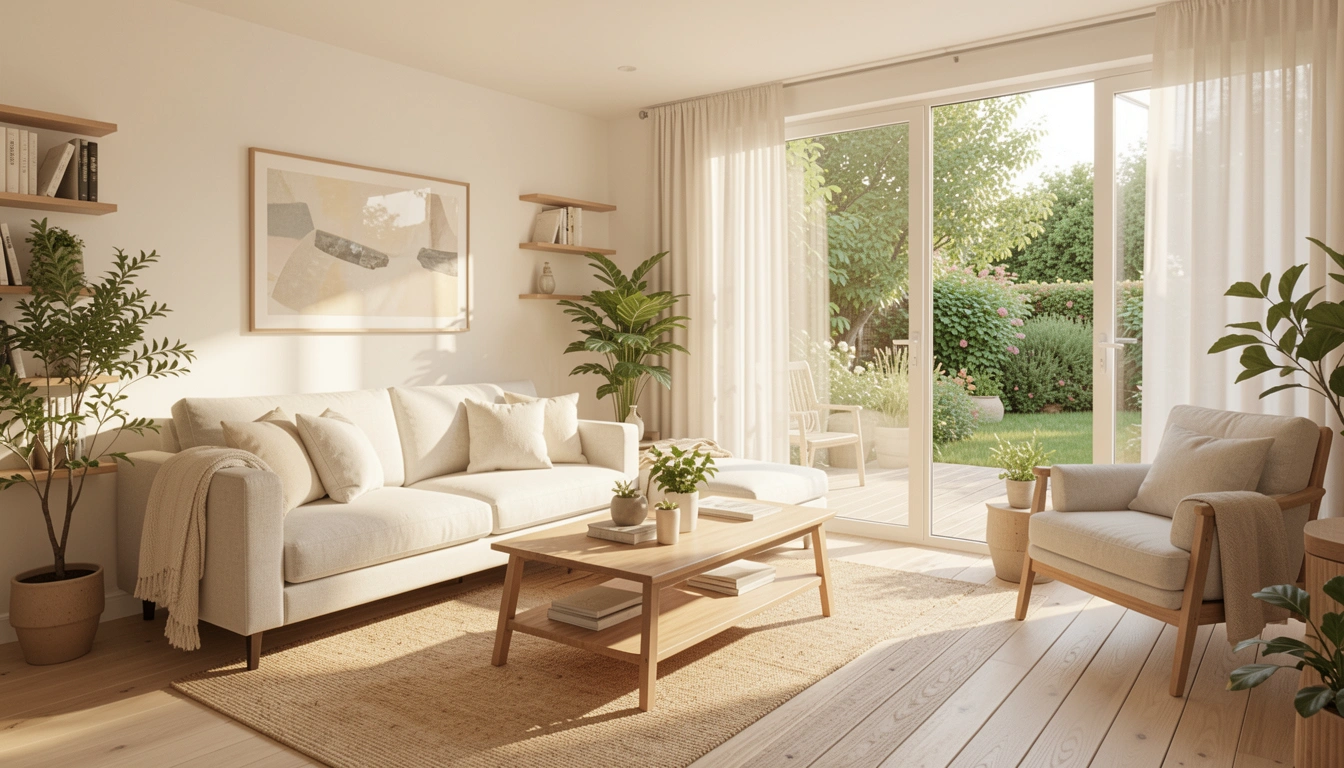
The gap between your indoor and outdoor spaces is costing you natural light, fresh air, and that coveted open, airy feeling everyone craves. Whether you’re in a small apartment with a balcony or a house with a yard, breaking down those visual and physical barriers makes your home feel bigger, brighter, and more connected to nature. The good news? You don’t need a major renovation to pull it off. These 23 ideas range from free styling tricks to strategic upgrades that blur the line between inside and out—and most work in rentals too. Let’s open things up and bring that outdoor calm directly into your living space.
1. Install Glass Sliding Doors or French Doors
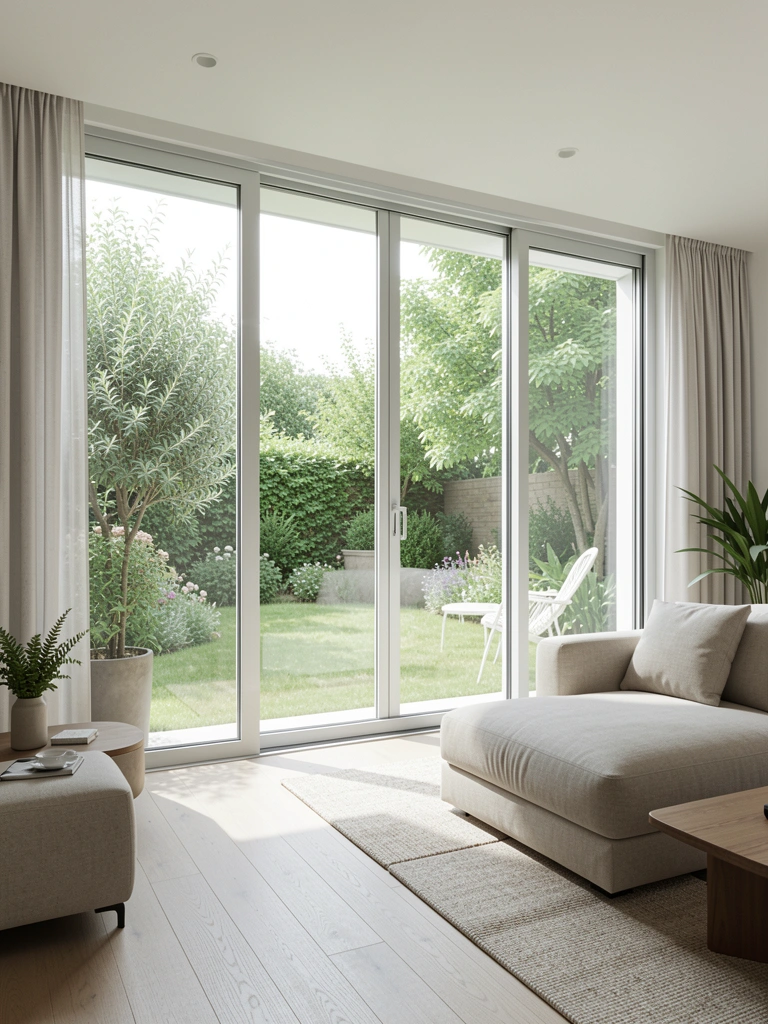
Glass doors are the single most effective way to visually connect indoor and outdoor spaces. They flood your interior with natural light while creating a psychological sense of expanded square footage. If you’re renting or can’t replace existing doors, consider removable glass panels or adhesive frosted film on existing frames for a temporary upgrade.
For homeowners: New sliding glass doors run $800–$3,000 installed, depending on size and quality. French doors are typically $1,000–$2,500. Both pay dividends in resale value and daily livability. For renters: Talk to your landlord about temporary glass panels ($100–$300) or use portable room dividers to frame the window instead. Many landlords appreciate the non-permanent approach. Installation takes a professional 4–8 hours or one weekend for a skilled DIYer.
The result? Instant visual connection. You’ll notice how much lighter and more spacious your home feels within days.
2. Paint Your Walls Light, Warm Neutrals
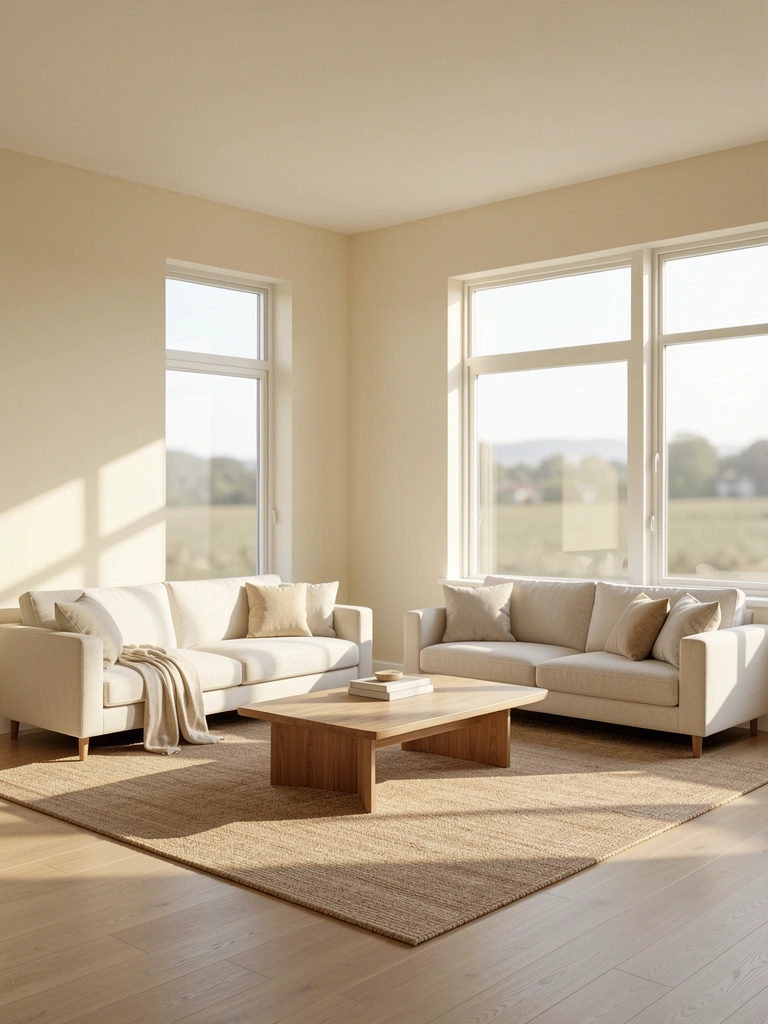
Wall color is the fastest way to amplify natural light. Warm whites, creams, and taupes bounce light around the room and create visual continuity with outdoor spaces, while also making rooms feel bigger. Skip stark white—it creates harsh contrasts and can feel cold. Instead, go for off-white with warm undertones.
Paint runs $25–$60 per gallon, and a typical room takes 1–2 gallons. Primer is included in most modern paints. A weekend DIY project for one room, or hire a painter for $300–$800 total. Test samples on your wall first—natural light changes how colors look. Pro tip: Paint your ceiling a very light color too. It opens up vertical space and makes the room feel airier.
Your space instantly becomes a brighter canvas for natural light to dance through.
3. Remove or Lighten Heavy Window Treatments
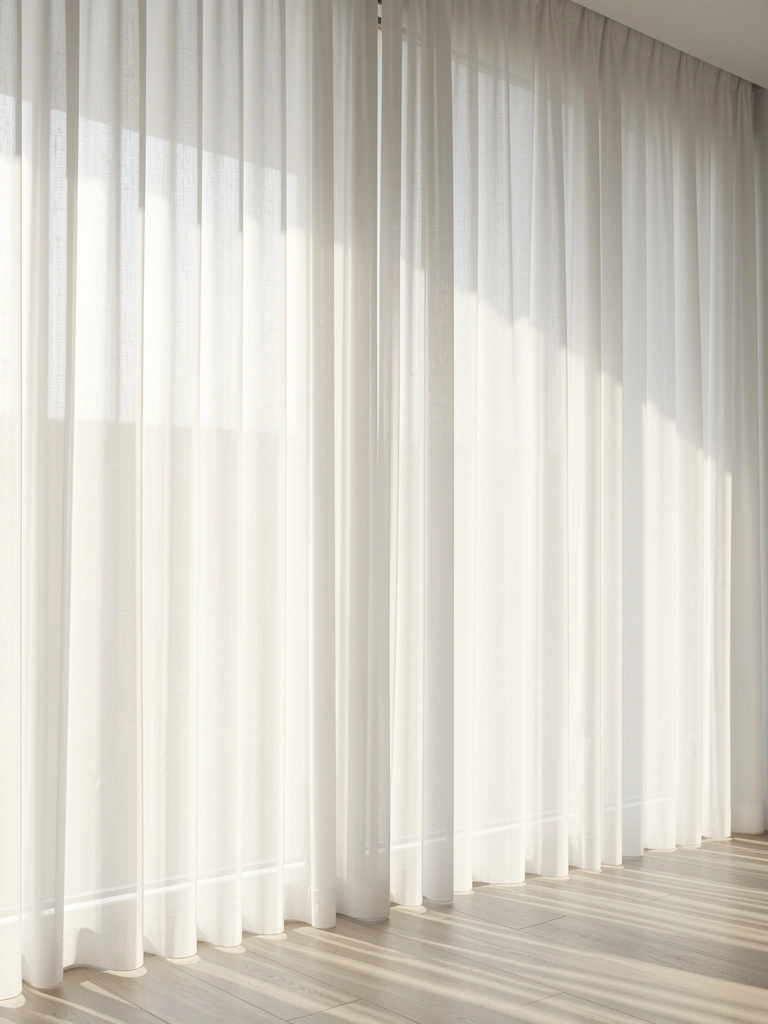
Thick curtains, dark drapes, and heavy shutters block precious natural light. Swap them for sheer curtains, roll-up blinds, or fabric panels that filter light while maintaining privacy. Sheers are your secret weapon for controlling glare while keeping views open.
Sheer curtains from IKEA or Target cost $10–$30 per panel. Motorized roller blinds run $50–$150 each and offer precise light control. If you’re renting, adhesive hooks ($5–$10) let you hang lightweight options without damaging walls. Installation is 15 minutes per window. Pro tip: Install curtain rods as high and wide as your wall allows to create the illusion of taller, larger windows.
Light pours in unobstructed, and your interior connects visually to the outdoors throughout the day.
4. Add Potted Plants Near Windows and Doors
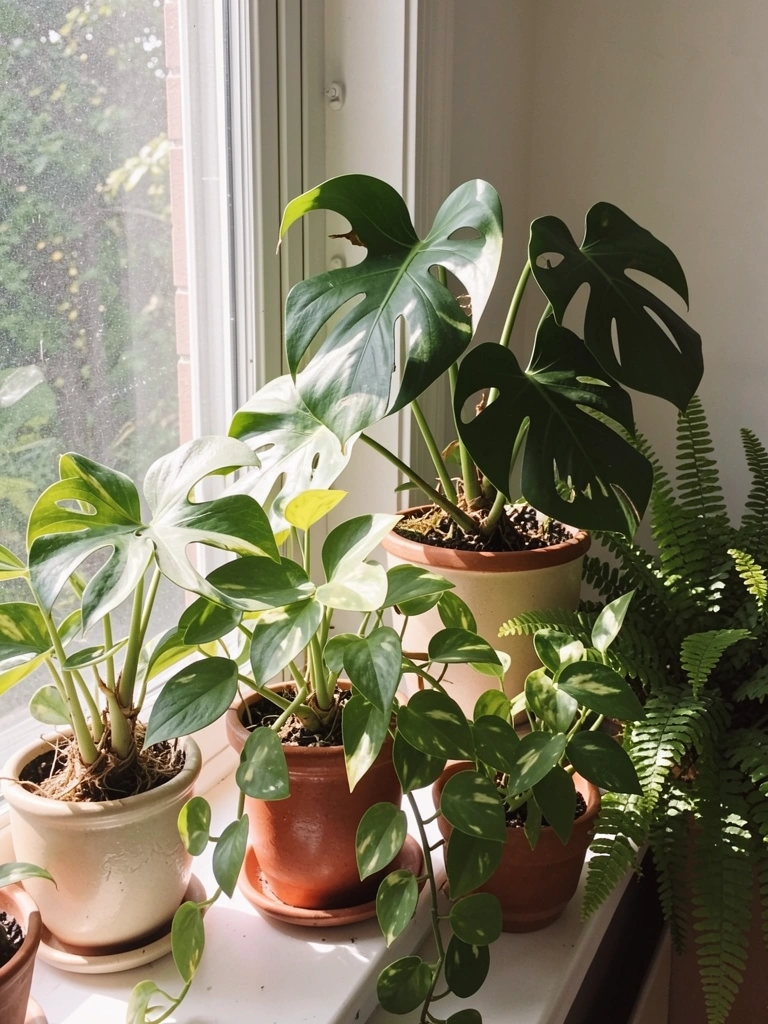
Houseplants blur the boundary between indoor and outdoor living while improving air quality and adding visual interest. Place taller plants near glass doors to frame views and shorter ones on sills to catch light. Vary pot sizes and heights for a dynamic, less sterile look.
Plants range from $5–$50 each depending on size and type. Low-light tolerant options like pothos and snake plants work almost anywhere. A beginner-friendly collection of 5–7 plants costs $30–$150 total. No installation needed—just position and water. Pro tip: Group odd numbers of plants together for better visual impact than pairs or singles.
Your space becomes a garden retreat. That shift from “interior” to “nature connection” happens psychologically the moment you see greenery.
5. Extend Flooring Across the Threshold
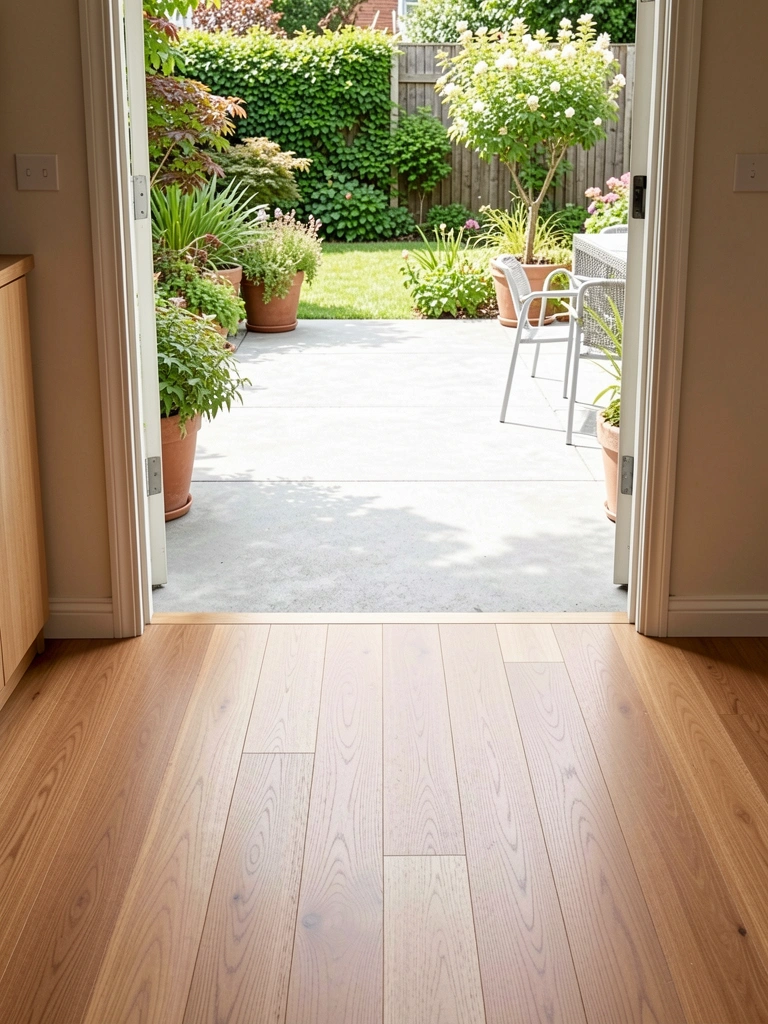
A visual and physical break at your door disrupts the flow between spaces. Using the same flooring material (or a closely matched color) inside and outside creates continuity and makes both zones feel like one cohesive area. This doesn’t require replacing floors—it’s about alignment and choice.
If you’re renovating, extend your interior flooring to the patio ($3–$15 per square foot installed, depending on material). For renters or non-renovators, paint your porch or patio the same neutral tone as your interior ($20–$50 for exterior paint). Alternatively, use outdoor rugs in matching colors to visually tie zones together. Pro tip: A threshold strip in a subtle metal finish ($10–$30) provides a clean transition without visual jarring.
The boundary dissolves. People instinctively feel like they’re in one unified, open space.
6. Create a Consistent Color Palette Indoors and Out
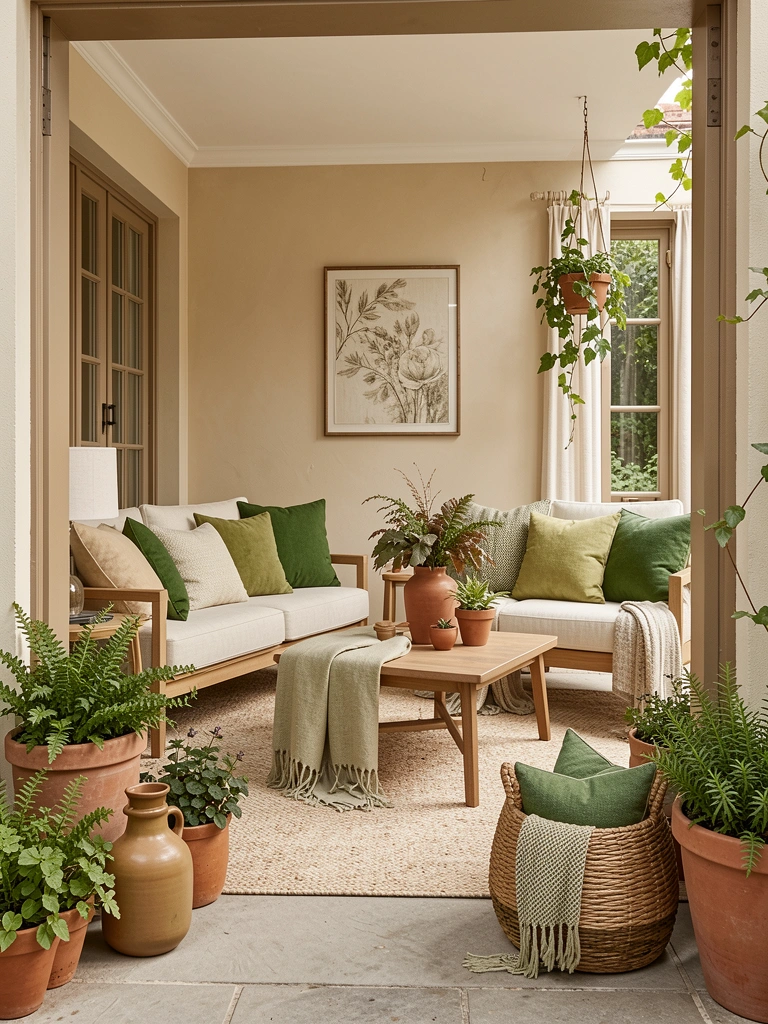
When indoor and outdoor furnishings and colors coordinate, it visually extends your space. Use the same accent colors—warm metallics, terracotta, sage green, or soft blues—in both zones. This creates a psychological sense of flow and intentional design.
Outdoor furniture ranges from $200–$1,500 depending on quality. Aim to match 2–3 key accent colors with indoor throw pillows, artwork, or decor. You don’t need matching furniture—just coordinating colors and finishes. A few outdoor throw pillows ($30–$80 each) tie rooms together affordably. Pro tip: Use the same plants, planters, or planters in both zones to reinforce the visual connection.
Your eye travels from inside to outside without jarring color shifts. Everything feels intentionally designed as one ecosystem.
7. Install Skylights or Solar Tubes for Borrowed Light
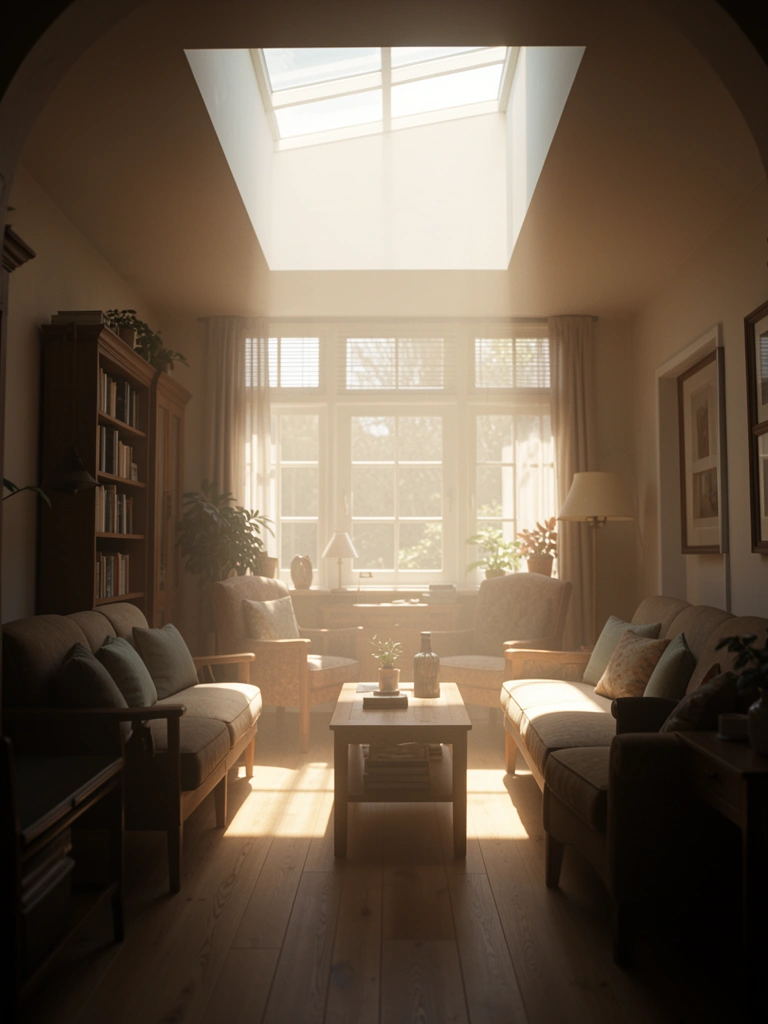
If you have limited windows or a dark interior, skylights channel natural light from your roof. Solar tubes (light pipes) are a cheaper, renter-friendly alternative that captures rooftop light and channels it down interior walls. Both create the sensation of openness even in rooms without direct outdoor views.
Skylights cost $300–$1,500 installed, with ongoing maintenance needed. Solar tubes run $150–$400 installed and are easier to maintain. For renters, this won’t work—but you can use full-spectrum LED panels ($50–$200) designed to mimic natural light, positioned to create ceiling highlights. Installation: professional job (4–8 hours) or weekend project if you’re handy. Pro tip: Pair with light-colored walls to maximize light distribution throughout the room.
Suddenly rooms that felt cave-like become bright and airy, even on cloudy days.
8. Use Mirrors to Reflect Natural Light
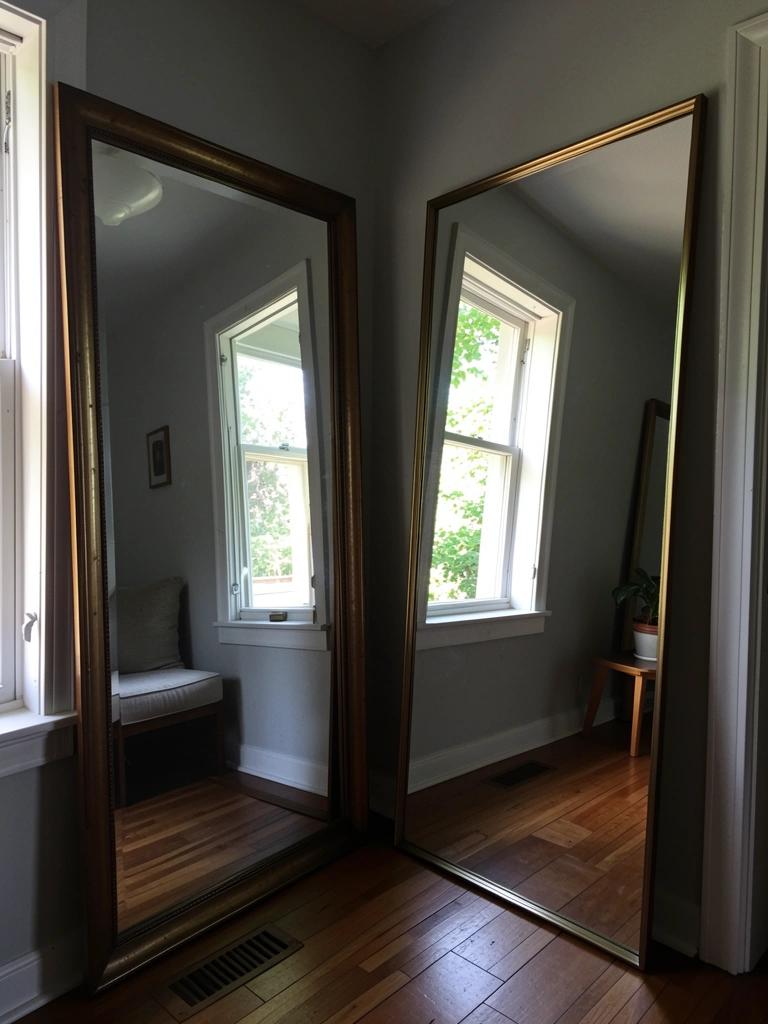
Mirrors are the cheapest way to amplify natural light and create the illusion of more space. Position a large mirror across from or adjacent to your main light source—a window or glass door—to bounce light deep into the room. This works especially well in narrow hallways or rooms without direct sunlight.
A large mirror runs $30–$150 from IKEA, Target, or Wayfair. Installation takes 10 minutes with picture hangers. For renters, lean an oversized mirror against a wall ($40–$100, no drilling). Placement is everything: opposite a bright window works best, but even beside one helps. Pro tip: Antique or black-framed mirrors add style while reflecting light. Avoid mirrors in direct sun during intense afternoon hours—they can create heat and glare.
The room feels immediately brighter and more spacious. Light bounces around corners that previously felt dark.
9. Paint Your Ceiling a Pale, Cool Tone
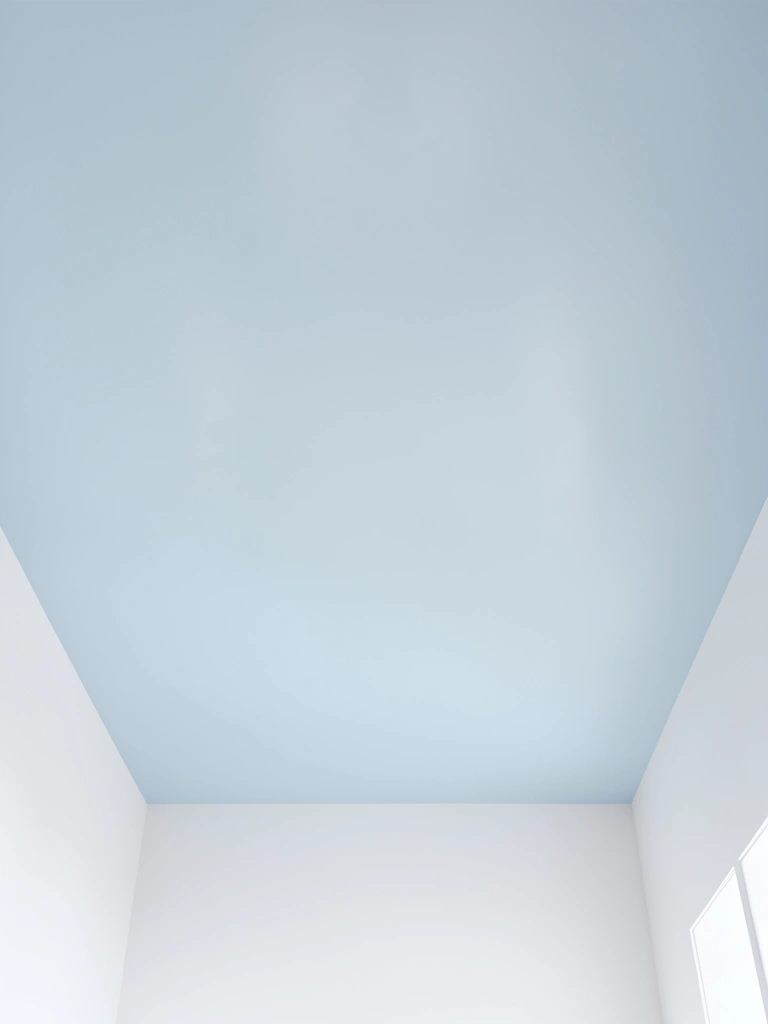
A light ceiling makes rooms feel taller and airier—especially when paired with light walls. Pale blue, soft gray, or off-white ceilings create a “sky-like” effect that connects the interior to outdoor atmosphere. Avoid painting ceilings dark; it shrinks the sense of space.
Ceiling paint is the same price as wall paint: $25–$60 per gallon. A typical room takes 1–2 gallons and a weekend to DIY, or hire a painter ($200–$500). The biggest challenge is physical strain—rent scaffolding or an extension ladder ($20–$50) to stay safe. Pro tip: Pale blue (think cloudy sky) performs better than stark white in rooms that get lots of sun.
Your eye travels upward instead of stopping at a dark plane. The entire room expands vertically and feels more open.
10. Install Pocket Doors or Barn Doors Instead of Swinging Doors
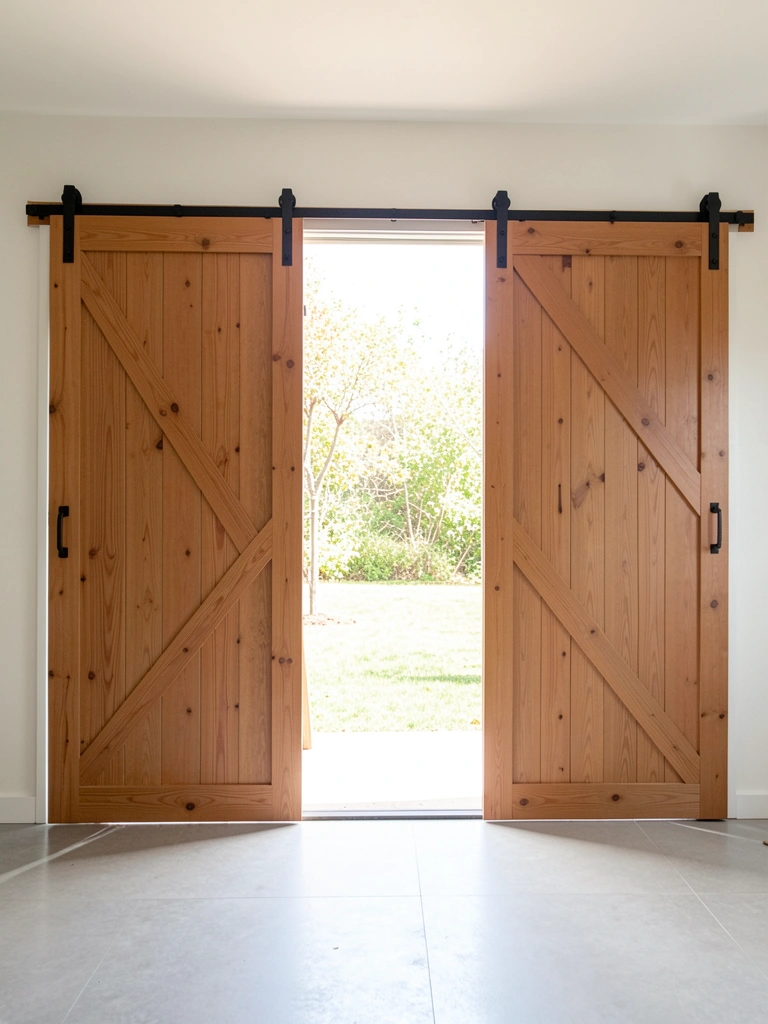
Swinging doors take up visual and physical space, blocking views and breaking up flow. Sliding pocket doors or barn doors slide flush against the wall when open, creating maximum visibility and usable floor space. This is especially valuable in small homes or apartments.
Pocket door kits run $150–$400, plus installation ($300–$800 professionally). Barn doors are slightly cheaper: $100–$300 for the door, $200–$500 for hardware and install. For renters, sliding barn door kits designed to attach to existing frames exist ($300–$600, no permanent damage). Installation is typically one weekend for a handy person or a few hours for a pro. Pro tip: Bypass doors (two doors sliding past each other) work in very tight spaces.
When open, the doorway disappears entirely. You get an unobstructed view and seamless flow that swinging doors could never deliver.
11. Choose Furniture with Legs (Not Skirted Pieces)
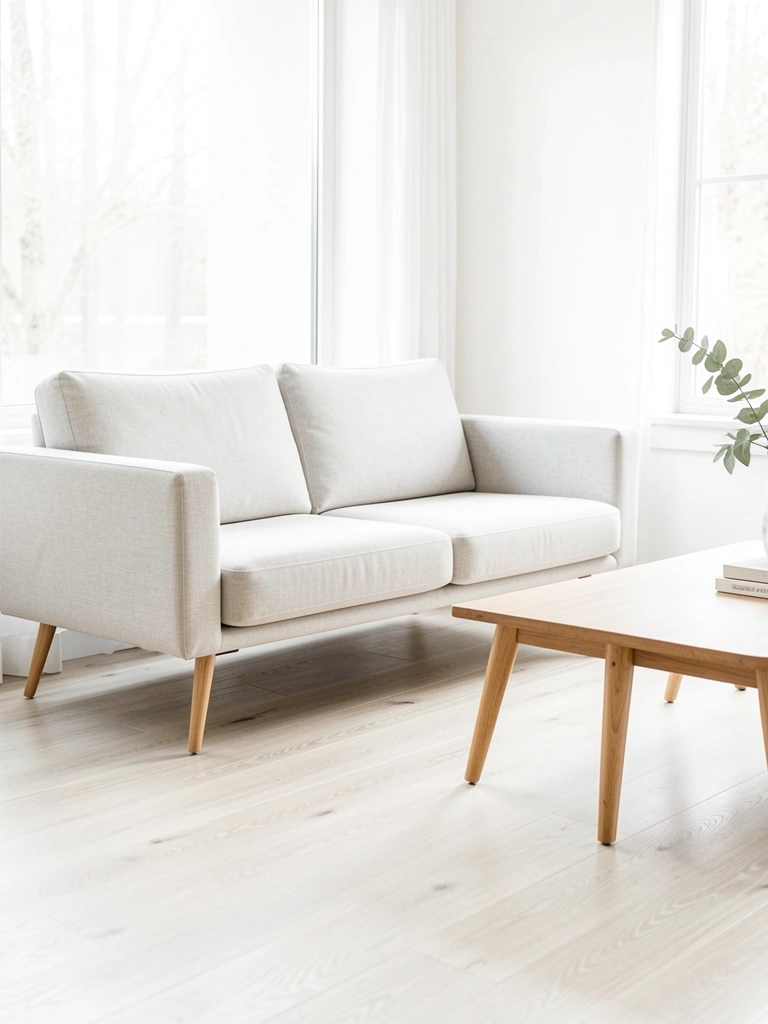
Heavy furniture with skirted bases (couches that touch the floor, solid storage pieces) visually shrinks a room and blocks sightlines. Furniture with exposed legs—even modest ones—keeps visual space open and lets light flow underneath. This is a styling choice that costs nothing if you already own pieces.
If you’re shopping, prioritize furniture with legs ($200–$1,000+ depending on style). Look for sofas, coffee tables, and entertainment centers marketed as “mid-century modern” or “contemporary”—these almost always have visible legs. For existing furniture you love, swap out panel bases for leg kits ($50–$150) available online for many IKEA pieces. Pro tip: Even 4–6 inches of clearance between furniture and floor makes a psychological difference in how spacious a room feels.
Your sightlines clear from floor to ceiling. The room immediately feels more open and less weighted down.
12. Use Glass Coffee Tables and Side Tables
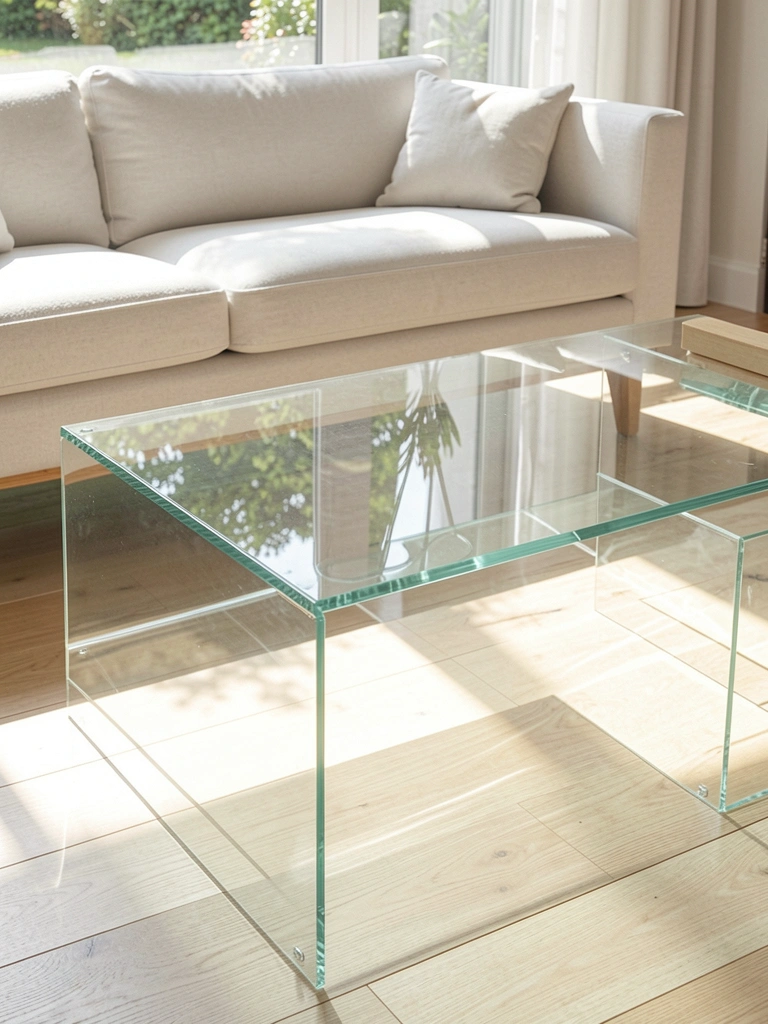
Solid tables block visual flow and light. Glass or acrylic tables let light pass through and keep sightlines open. They’re also easier to see over when you’re sitting, maintaining views to windows and outdoor spaces.
Glass tables from IKEA, Wayfair, or Target range from $50–$300. Acrylic versions are cheaper ($30–$150) and lighter to move. A quality glass coffee table lasts years and works in almost any style. Installation is unboxing and placing. Pro tip: Keep glass tables clean for maximum light transmission—a quick wipe with glass cleaner ($3–$5) takes 2 minutes weekly.
Light travels through instead of stopping. Your eye reaches beyond the table to windows and outdoor views without obstruction.
13. Paint Doors and Trim in Soft, Light Colors
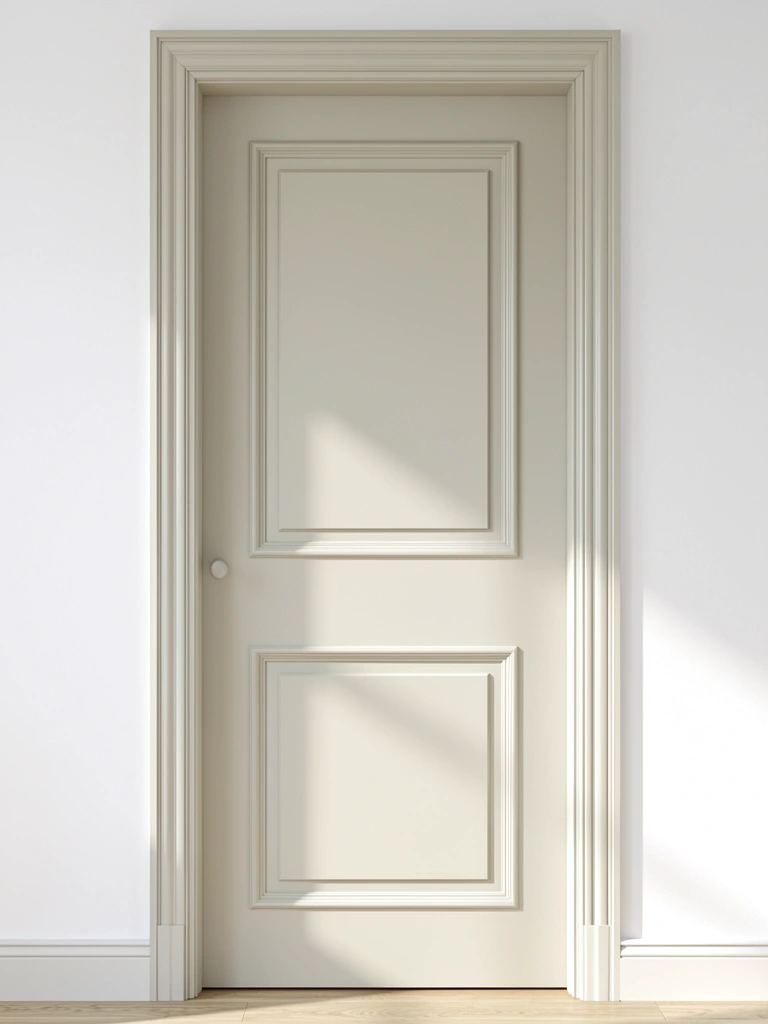
Dark wood doors and heavy trim interrupt the visual flow and make rooms feel smaller. Light-painted doors, trim, and baseboards extend the visual lightness of your walls and create continuity. This is especially impactful in open-plan spaces.
A quart of trim paint costs $8–$15. One door and trim takes $20–$40 in materials and 2–3 hours to paint yourself. Hiring out runs $150–$300 per room. Prep is more important than painting—sand lightly, prime, then paint with quality trim paint. Pro tip: Use the same color as your walls for maximum cohesion, or go one shade lighter for subtle definition.
Rooms feel seamlessly connected. No visual barriers interrupt the flow from space to space.
14. Create an Outdoor Kitchen or Bar Extension
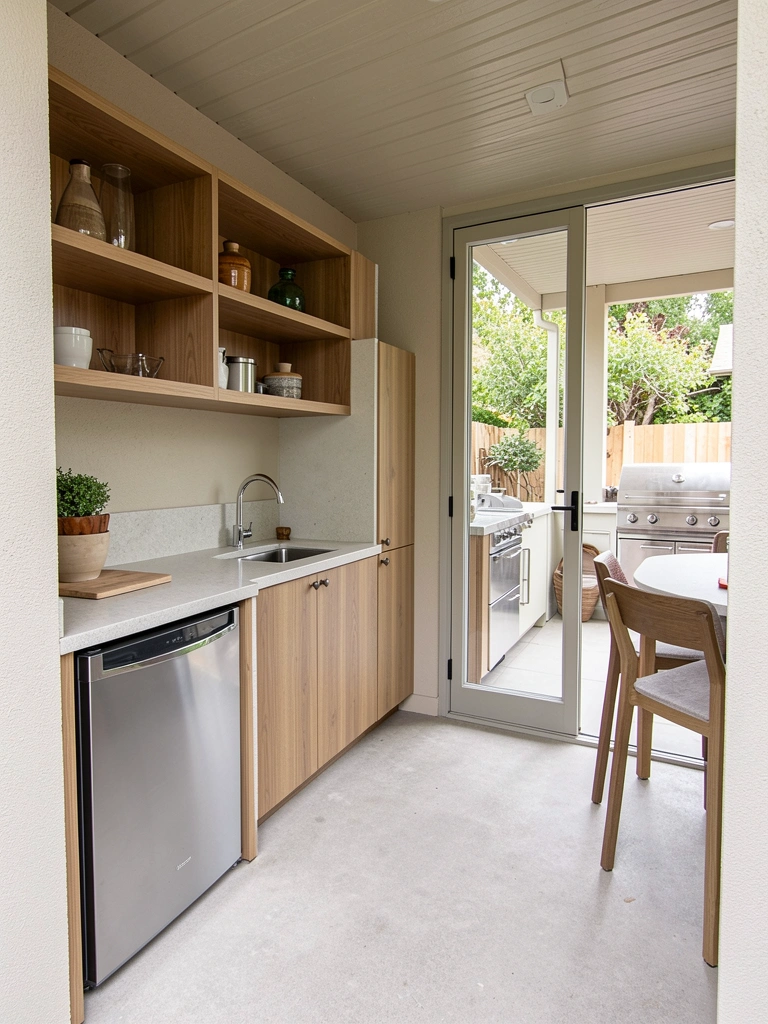
Blurring the kitchen into the outdoor space—with a small bar, grill, or serving counter—extends your living area and encourages flow between zones. Even a simple outdoor cart or shelving unit styled to match interior finishes does this.
A full outdoor kitchen island runs $1,500–$5,000+, but a basic grill cart or bar setup costs $200–$800. Outdoor cabinetry matching your interior style ranges from $300–$2,000 depending on size and material. For renters, a styled outdoor bar cart ($50–$150) and coordinating outdoor storage ($100–$300) create the same effect without permanence. Installation depends on your setup; a cart takes 10 minutes. Pro tip: Use the same hardware finishes (brass, stainless, black) as your interior kitchen to tie zones together.
Your entertaining and cooking flow seamlessly between inside and out. The boundary between zones dissolves during gatherings.
15. Add Sliding Glass Panels or Folding Walls
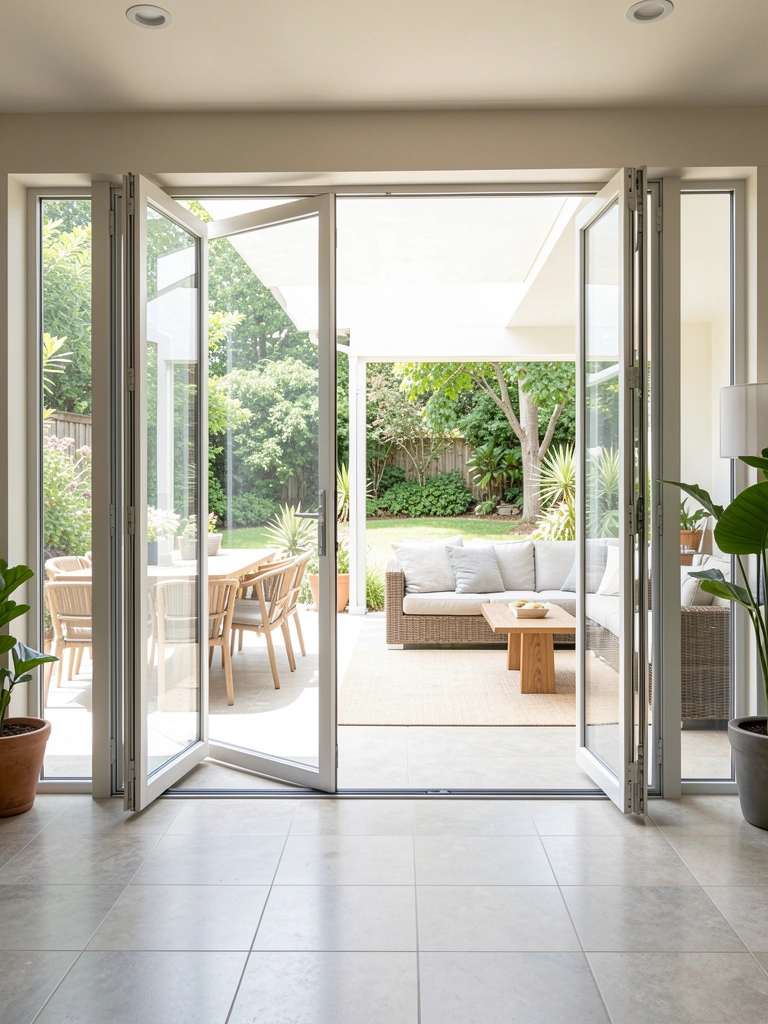
Full-height folding glass walls (also called accordion or bifold glass systems) completely open up an interior-exterior connection. They’re more expensive than standard doors but create a truly seamless transition. Available as retrofit kits or new installations.
Custom folding glass walls cost $2,000–$8,000+ installed, depending on width and customization. Retrofit kits designed for existing door frames run $1,500–$4,000. For renters, this isn’t feasible, but temporary removable glass panels ($200–$600) can approximate the effect. Installation is a professional job (one day). Pro tip: Look into thermal efficiency ratings; high-performance glass minimizes heat gain in summer.
When open, your interior and patio become one expansive zone. The sense of space doubles instantly.
16. Install Continuous Shelving from Interior to Exterior
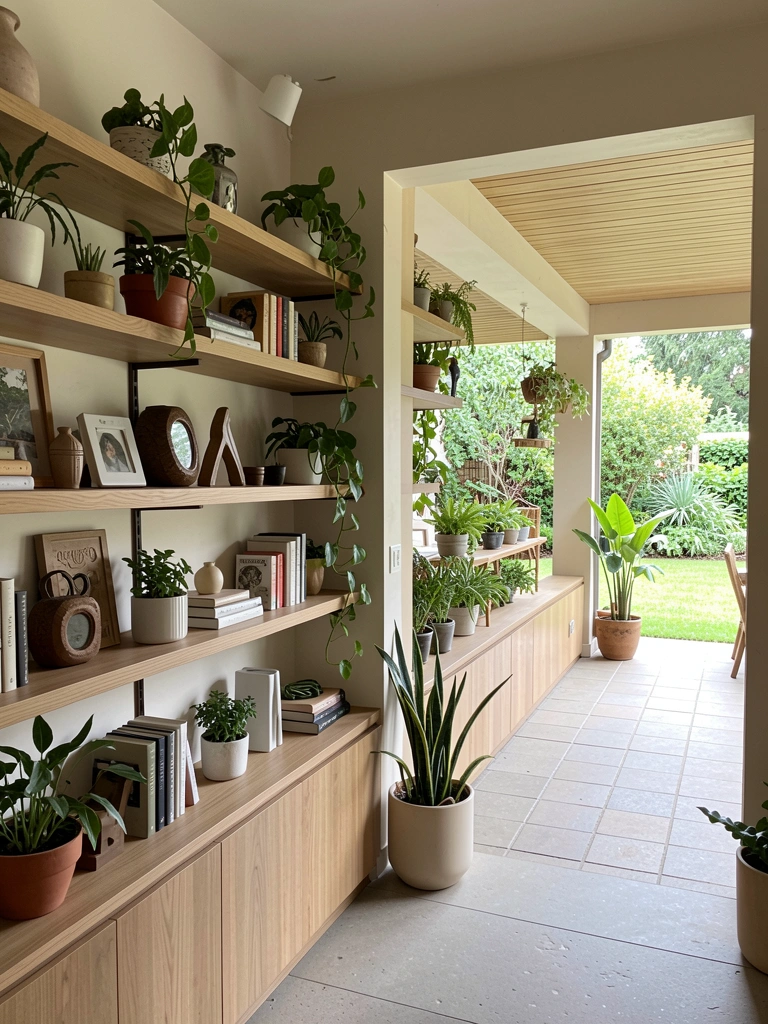
Shelving that runs continuously from inside to outside (or appears to) visually bridges the two spaces. Even if your shelves don’t literally cross the threshold, styling them with coordinating objects creates visual flow.
Floating shelves cost $20–$60 per shelf, plus installation brackets and hardware ($30–$80). A set of 5–6 shelves runs $200–$400 total with installation. For outdoor shelves, use weather-resistant materials (powder-coated steel or sealed wood). Mounting takes 1–2 hours for a handy person. Pro tip: Use the same styling objects—potted plants, books, decorative boxes—in both zones to reinforce continuity.
Your eye travels horizontally from inside through doors and onto outdoor shelving. The zones feel intentionally unified.
17. Hang Sheer Curtains on a Tension Rod for Flexible Privacy
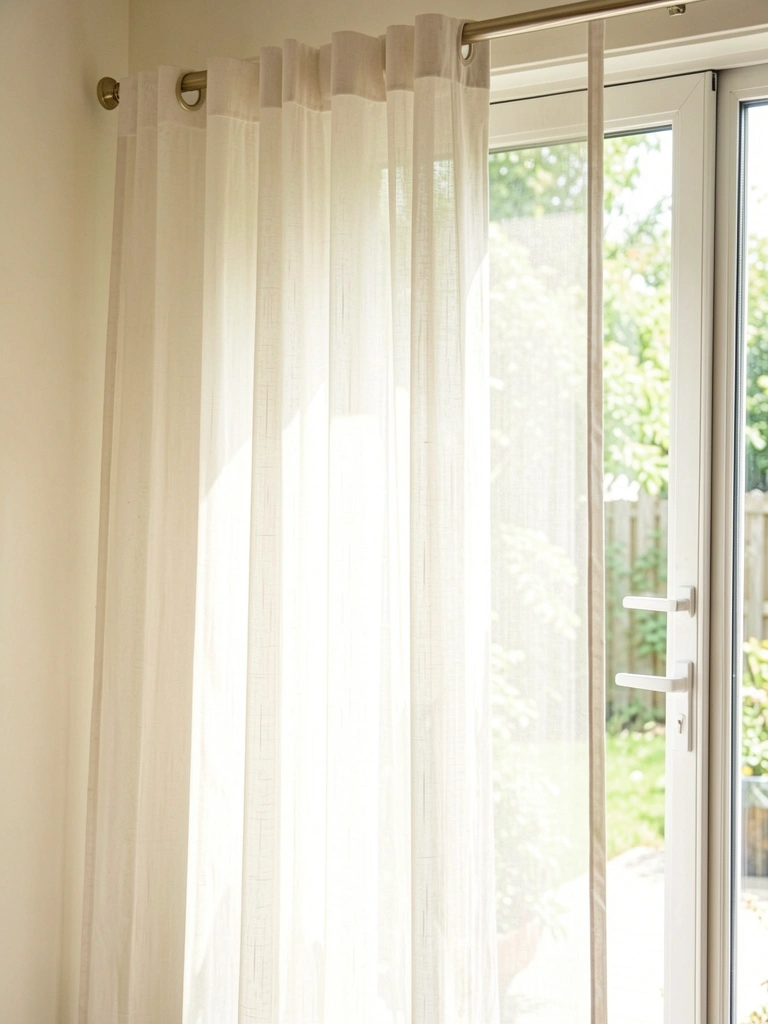
Sheer curtains on tension rods (no drilling) give you light control without the commitment or cost of permanent fixtures. Tension rods work in rentals and are adjustable as seasons change.
Sheer curtain fabric runs $5–$15 per yard, and tension rods cost $5–$20 each. A two-panel setup costs under $50 total. Installation is literally pulling the rod taut between two points—zero tools needed. Hemming panels takes 30 minutes if you sew, or a tailor does it for $15–$25 per panel. Pro tip: Hang rods at the very top of windows (even ceiling height) to create the illusion of taller, larger windows.
Light diffuses gently throughout the day. You maintain outdoor connection while controlling glare and afternoon heat.
18. Paint Your Exterior Walls a Complementary Shade
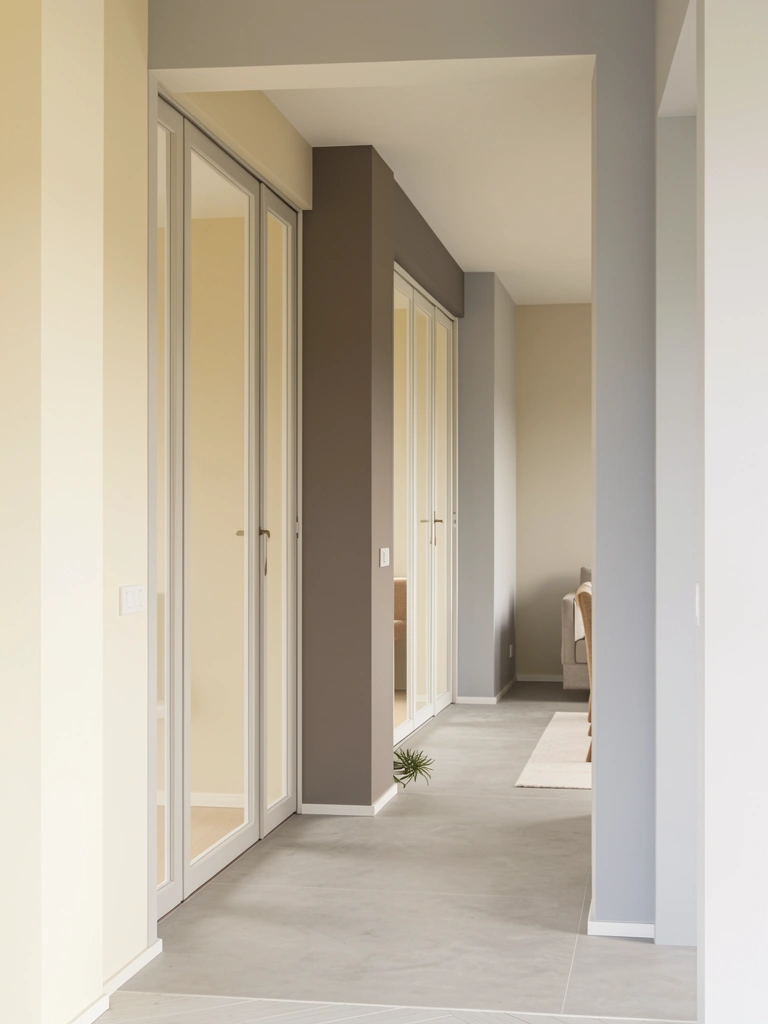
If your exterior walls are visible through glass doors or windows, paint them in a complementary—or identical—shade to your interior. This extends visual unity and makes your home feel intentionally designed, not like separate indoor and outdoor worlds.
Exterior paint costs $25–$70 per gallon, and a typical house exterior takes 3–5 gallons. DIY painting is one weekend; hiring painters runs $800–$3,000 depending on size. Test paint samples in both morning and afternoon light—outdoor paint behaves differently than indoor. Pro tip: A warm, light exterior shade (cream, tan, soft gray) photographs better and reflects heat in summer.
Standing outside looking in, your home appears unified and intentional. Inside looking out, the exterior anchors the color story.
19. Use Area Rugs to Define Zones Without Visual Barriers
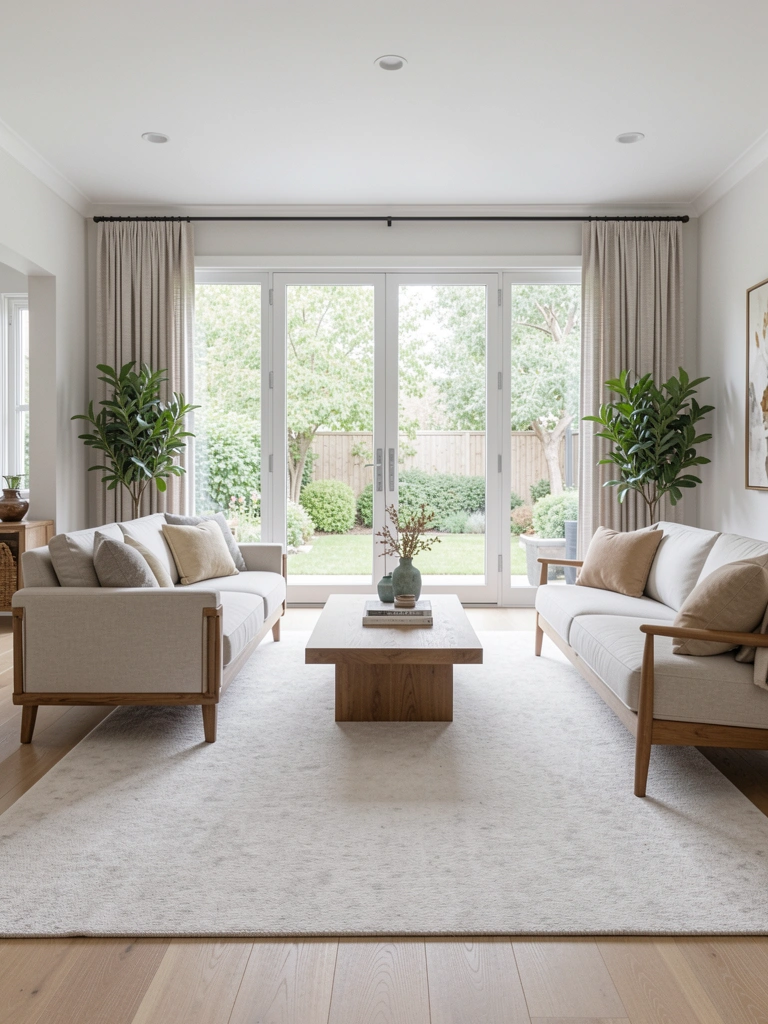
Rugs define space without blocking light or views—unlike walls or furniture placement. A rug that sits partially inside and partially outside (in a covered patio) creates functional zones while maintaining visual openness.
Indoor-outdoor rugs designed for durability run $100–$400 for a 5×8 size. Budget-friendly options from IKEA or Home Depot cost $30–$80. Placement matters more than price; a rug under a seating area facing glass doors frames the view naturally. No installation needed. Pro tip: Use light, neutral rugs to maintain that open, airy feeling.
You instinctively recognize separate zones without any physical barriers. The space feels organized and intentional, not cramped.
20. Install Smart Lighting That Mimics Natural Light Cycles
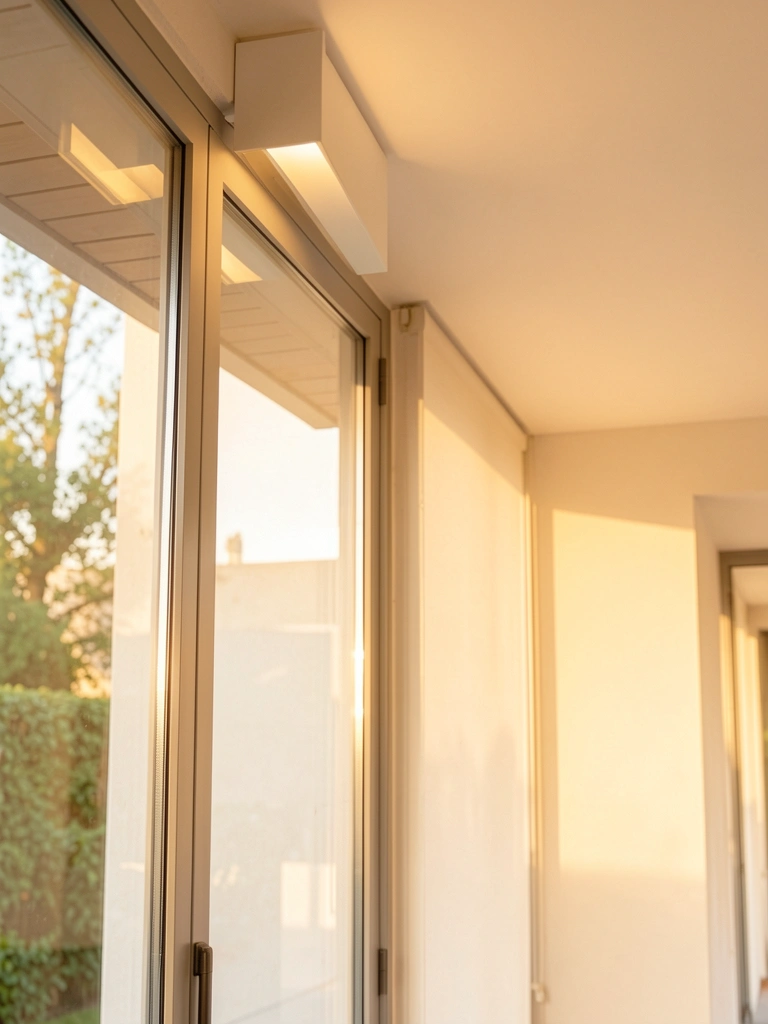
Smart lighting—especially tunable bulbs that shift from cool to warm throughout the day—keeps your indoor lighting consistent with outdoor natural light. This psychological alignment makes the interior feel like a natural extension of the outside.
Smart bulbs from Philips Hue or LIFX cost $10–$25 each. A set of 4–6 bulbs runs $50–$150 total. Smart fixtures designed to look elegant outdoors run $150–$400 each. Setup is downloading an app and customizing schedules (15 minutes). Pro tip: Warm light (2,700K or lower) feels most natural and connects psychologically to outdoor warmth.
As daylight fades, your interior transitions gracefully from bright to warm. Inside and outside feel harmonized, not disconnected.
21. Choose Low-Profile or Hidden Deck Railings
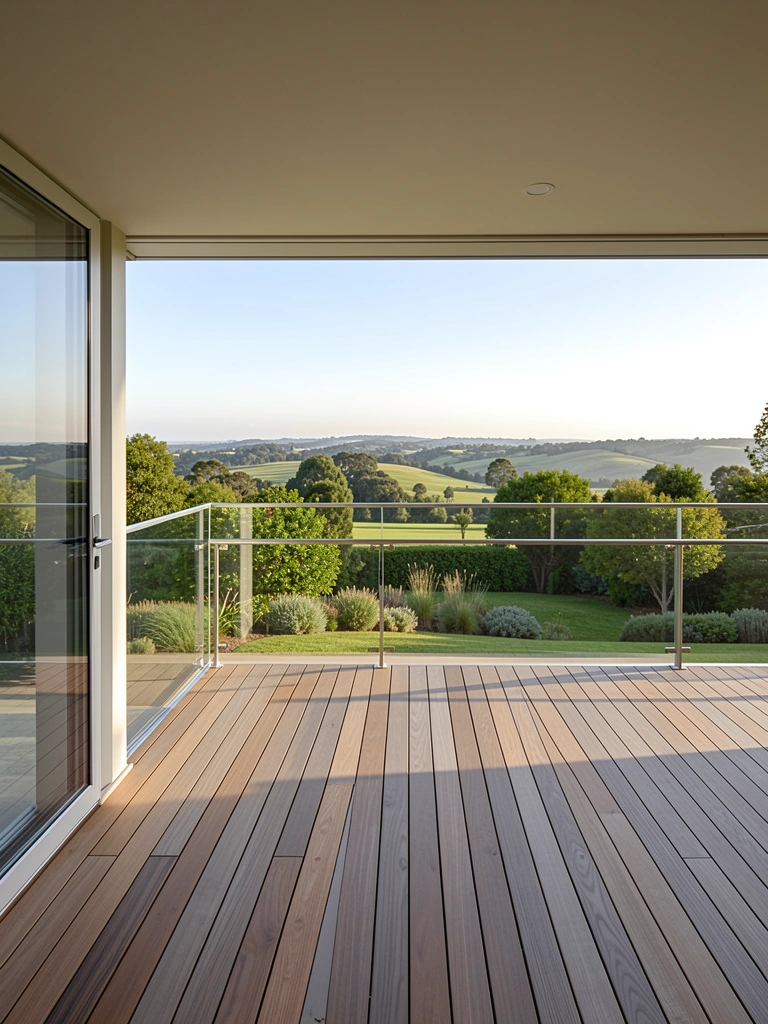
Solid railings block views and interrupt flow. Frameless glass railings or low-profile options maintain sightlines. If you have railings, keeping them transparent or minimizing their visual weight matters.
Standard deck railings run $500–$1,500 depending on materials. Glass railings cost more: $800–$2,500, but they preserve views. For renters or existing decks, this isn’t feasible—but keeping existing railings clear of clutter and paint helps. Installation is a professional job (1–2 days). Pro tip: If you can’t replace railings, ensure they’re painted a light color to recede visually.
Standing in your interior looking out, your eye travels unobstructed to the landscape. The space feels boundless.
22. Install Bi-Fold or Accordion Curtains for Flexible Coverage
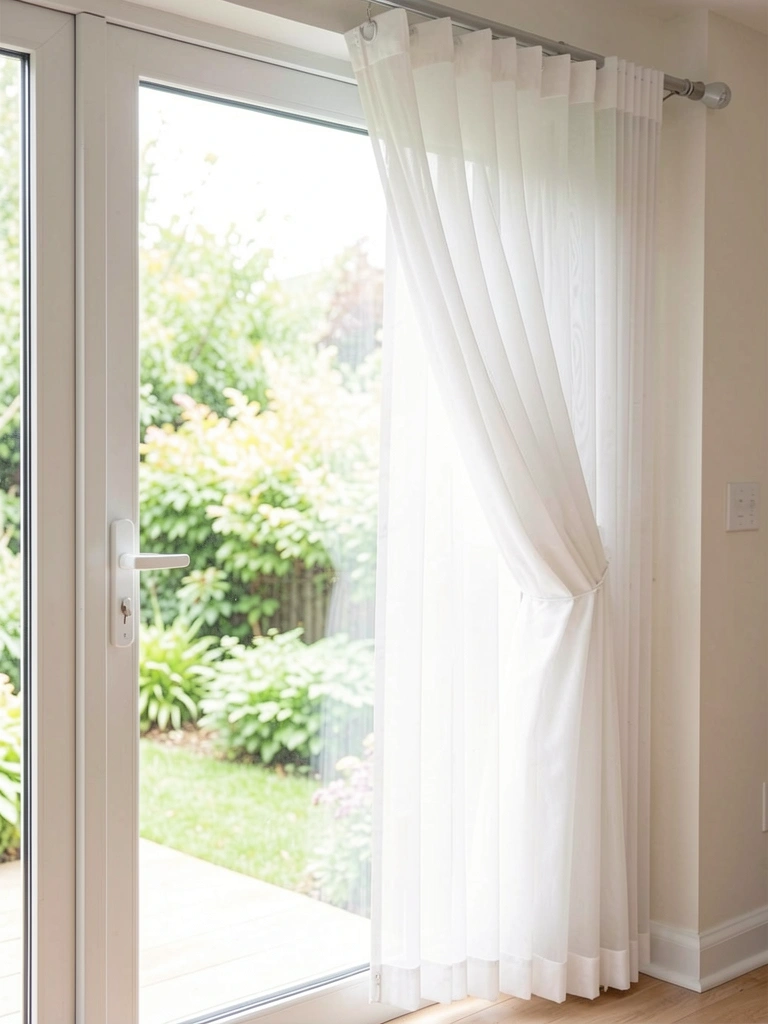
Accordion or bi-fold curtains give you light control and privacy without the permanent visual weight of hanging drapes. They fold compactly to the side when open and remain unobtrusive.
Accordion curtain kits run $50–$150 per window, with some motorized options at $200–$400. Installation takes 30–45 minutes for most systems. They’re renter-friendly if using adhesive hooks ($5–$10). Pro tip: Keep them in a color that matches your trim to minimize visual distraction when open.
You control when views are open or private, without sacrificing the open-space feeling most of the time.
23. Create a Continuous Outdoor Living Room

Furnishing your outdoor space with pieces styled and scaled like your interior living room creates a seamless outdoor living extension. Use coordinating fabrics, colors, and arrangements to make the outdoor zone feel like a natural continuation of your interior.
Quality outdoor furniture ranges from $400–$2,000+ for a seating set. Mid-range options from Wayfair, Target, or Overstock run $300–$1,000. Budget setups from discount retailers cost $150–$400. Arrangement takes 1–2 hours; no installation required. Pro tip: Use indoor-outdoor fabrics (specially treated to resist fading and moisture) in the same colors as interior throw pillows.
Walking between zones, you feel like you’re moving through one continuously designed space, not jumping from “decorated interior” to “forgotten patio.”
Save this post and pick one idea to implement this week—even something as simple as rearranging furniture with legs or swapping curtains takes 30 minutes and makes a massive difference. Which idea resonates most for your space?
Leave a Reply