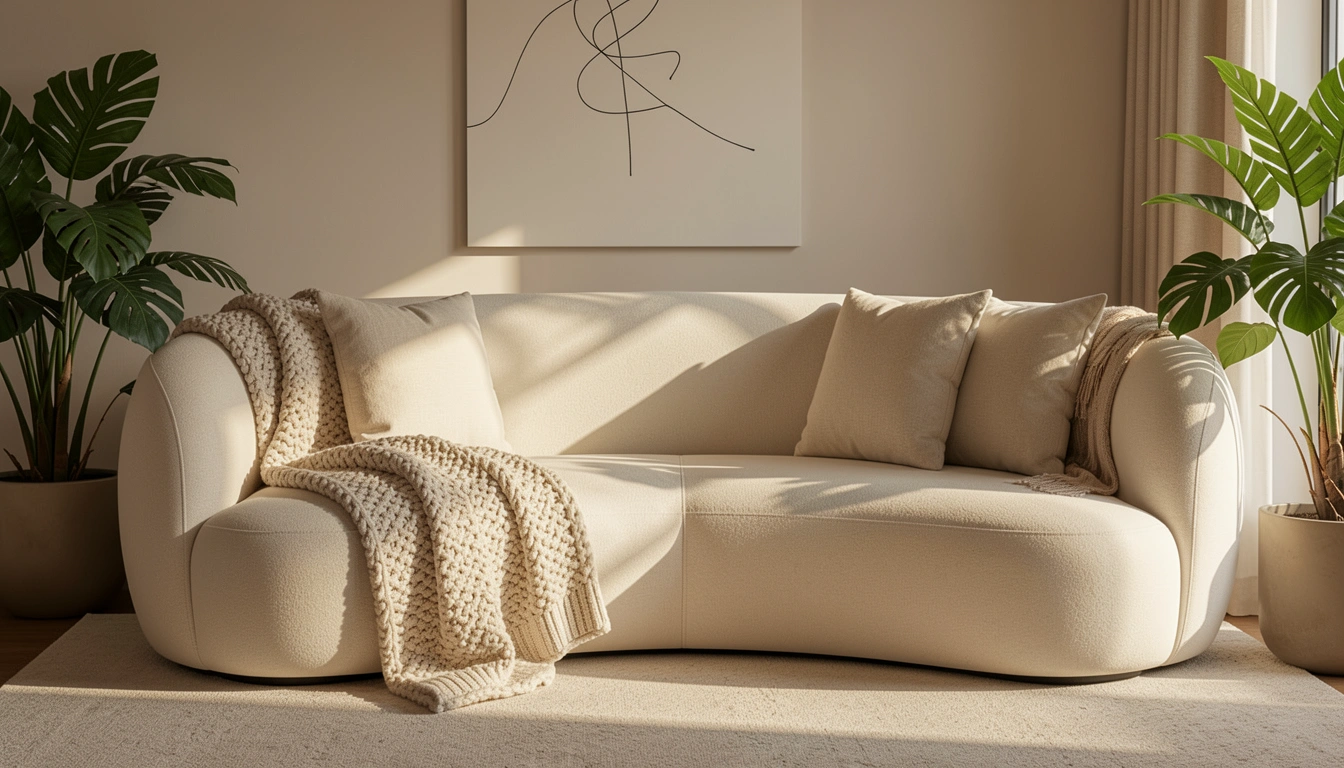
Your living room doesn’t need sharp corners and rigid lines to feel modern—in fact, soft-edged sofas are stealing the spotlight in 2025, and for good reason. Curved silhouettes create conversation-friendly layouts, soften the visual weight of large furniture, and add sculptural interest that makes your space feel intentionally designed. Whether you’re drawn to gentle curves, serpentine shapes, or rounded armrests, these 24 concepts show you exactly how to incorporate soft-edge sofas into your home. From budget-friendly styling tricks to investment pieces that anchor your entire room, you’ll find ideas for every lifestyle and budget. Let’s explore how one furniture choice can completely refresh your living space.
1. Layer Your Curved Sofa with Contrasting Textures
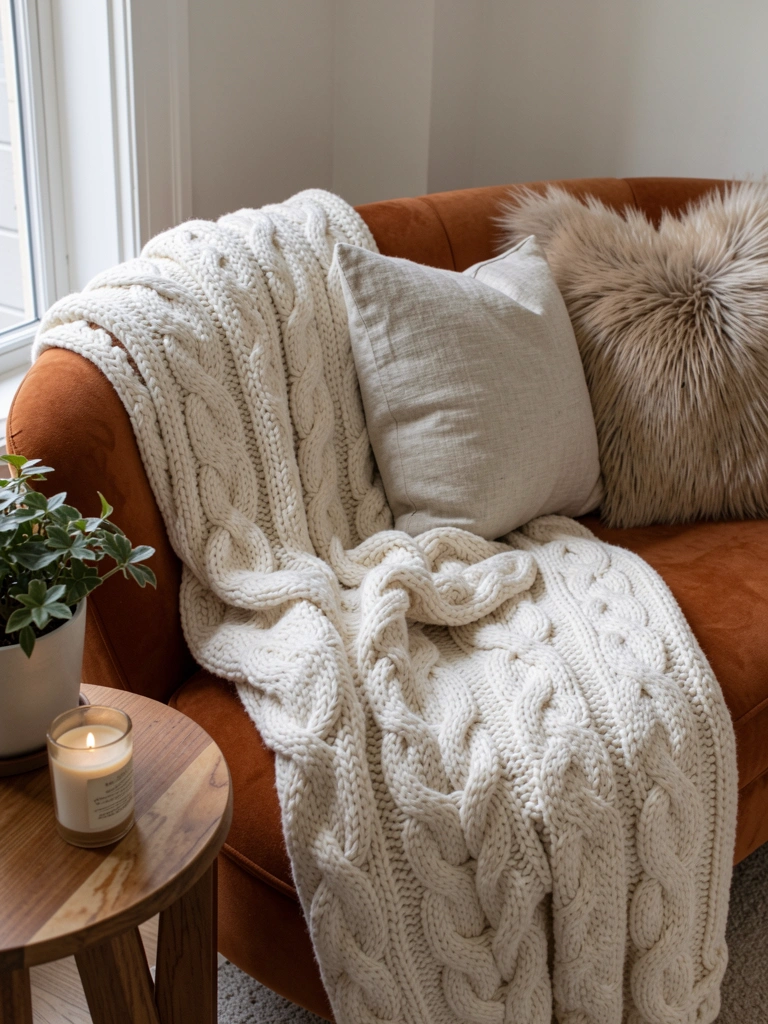
Textures are your secret weapon for making curved sofas feel even more inviting and lived-in. A curved sofa paired with mixed textiles creates depth that photographs beautifully and feels amazing to sink into.
Layer a chunky knit throw ($30–$60 from Target or Amazon) over one arm, add a smooth linen pillow ($25–$45 from West Elm), and tuck a faux fur accent pillow ($20–$35 from IKEA) into the corner. Mix matte and shine—linen next to velvet, cotton beside metallic accents. The key is variety without chaos; stick to two or three neutral base colors and let texture do the talking.
This approach works for renters too—throws and pillows are portable and easy to swap when you move.
Your sofa becomes a tactile focal point that draws people to sit down and stay awhile.
2. Pair Sage Green Curves with Warm Wood Legs
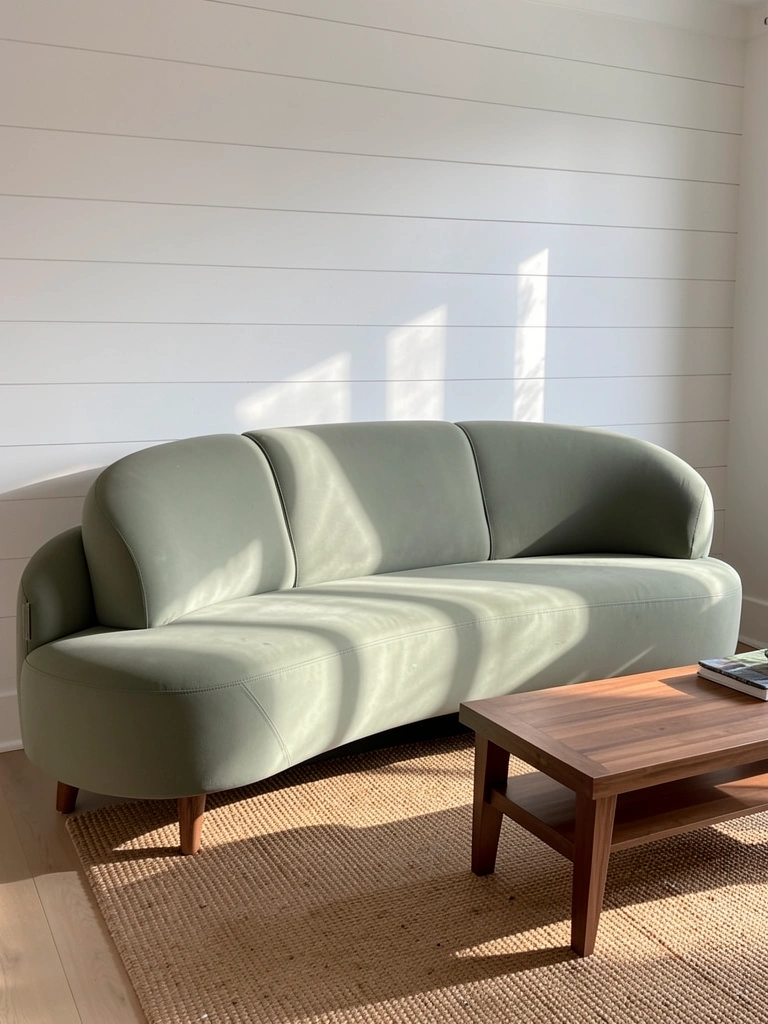
Muted greens are having a major moment, and curved sofas in sage or olive tones feel organic and calming without reading as trendy. The curved shape softens the depth of color, making a green sofa feel approachable rather than bold.
Seek out curved sofas with exposed wood legs in walnut or oak (prices range $900–$2,200 from brands like Article, Wayfair, or Living Spaces). The wood adds warmth and grounds the softness of the curves. Pair with a natural jute rug ($80–$150) to reinforce the earthy vibe. If you can’t find a curved frame with wood legs, add adjustable wooden feet ($15–$25 per set) to an upholstered base.
This combination creates a wellness-focused space that feels connected to nature while staying modern and minimal.
3. Create a Curved Corner Nook with an Ottoman Extension
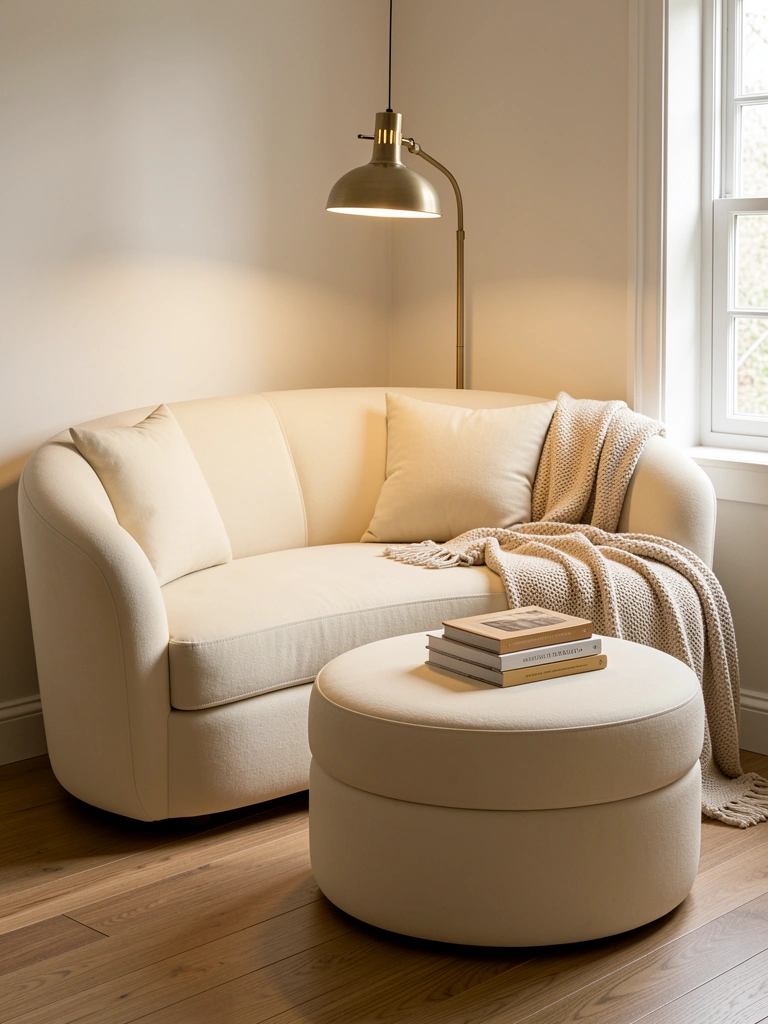
If you want maximum comfort without committing to a full sectional, add a curved ottoman to extend your sofa into a lounge-worthy nook. This setup mimics a chaise without the commitment of a traditional chaise lounge.
Purchase a curved or rounded ottoman ($200–$500 from Wayfair, Article, or living room specialty retailers) that coordinates with your sofa’s curves. Position it perpendicular to one end of the sofa to create an L-shape. Add a small side table ($50–$120) between the sofa and ottoman for drinks and books. This works beautifully in bedrooms or small living rooms where a full sectional wouldn’t fit.
You’ve created a personal retreat that invites you to relax without eating up square footage.
4. Style a Dark Charcoal Curve with Bright Patterned Pillows
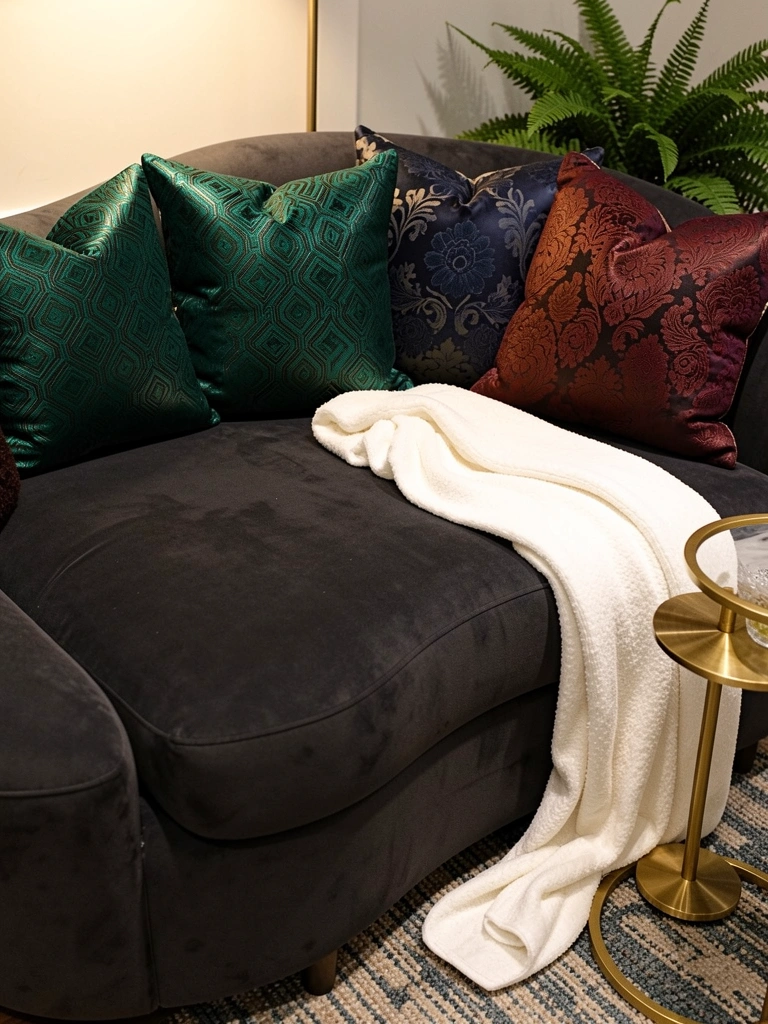
Dark sofas ground a room beautifully, but curved silhouettes keep them from feeling heavy or formal. Charcoal and navy curved sofas create moody sophistication that pairs perfectly with bold pillow patterns.
Layer in patterned pillows ($30–$80 each from Etsy, Target, or HomeGoods) in jewel tones—emerald, sapphire, burgundy—with geometric, floral, or damask prints. Pair two patterned pillows with one solid coordinating pillow to avoid visual chaos. Add a crisp white linen throw ($40–$70) to soften the darkness and break up solid color. The curves prevent the dark base from feeling oppressive; they add movement and approachability.
The combination reads high-end and intentional without requiring a professional decorator or a massive budget.
5. Use a Curved Sofa as Room Divider in Open Plans
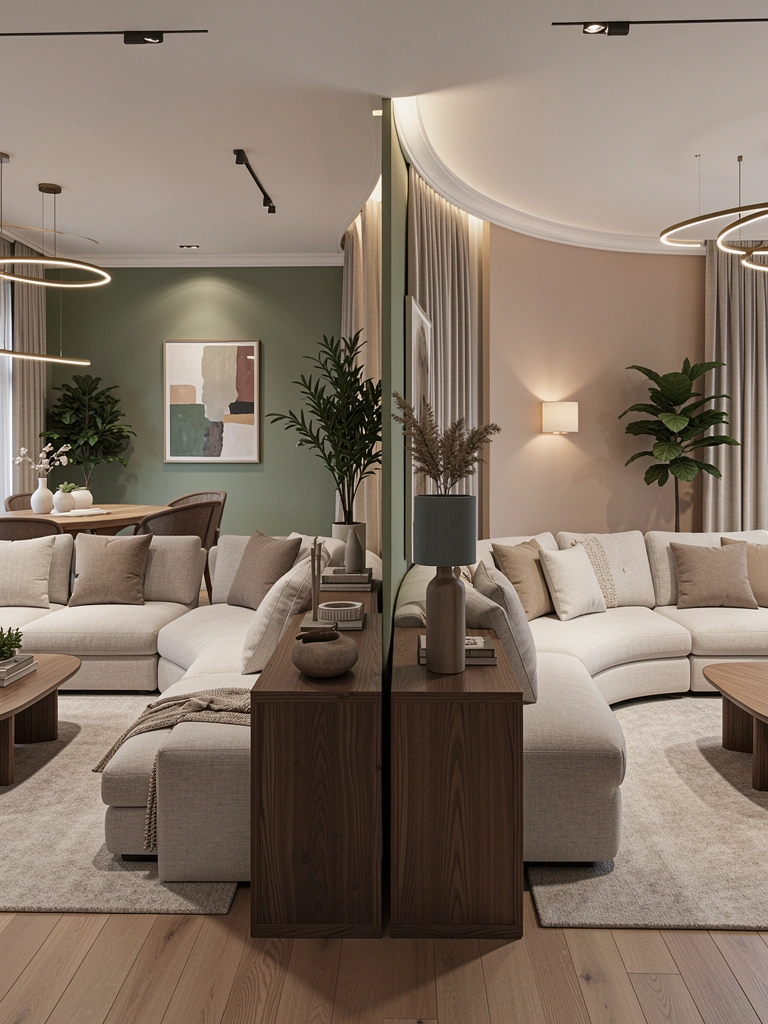
Open-plan homes benefit enormously from curved sofas because the rounded shape creates visual boundaries without walls. A curved sofa can physically separate zones while keeping sightlines open.
Position a curved sectional or sofa perpendicular to an open space ($1,000–$2,500 for modular options from Living Spaces, West Elm, or Article) to define the living area while maintaining the openness of the floor plan. Place a low console table ($150–$350) behind the sofa to anchor the dividing line. Add pendant lighting ($80–$200) above the sofa back to further define the zone. The curved back of the sofa becomes an architectural feature, not just furniture.
This approach gives you defined spaces without the claustrophobia of walls or the cost of renovation.
6. Mix Curved Sofa with Nesting Crescent Armchairs
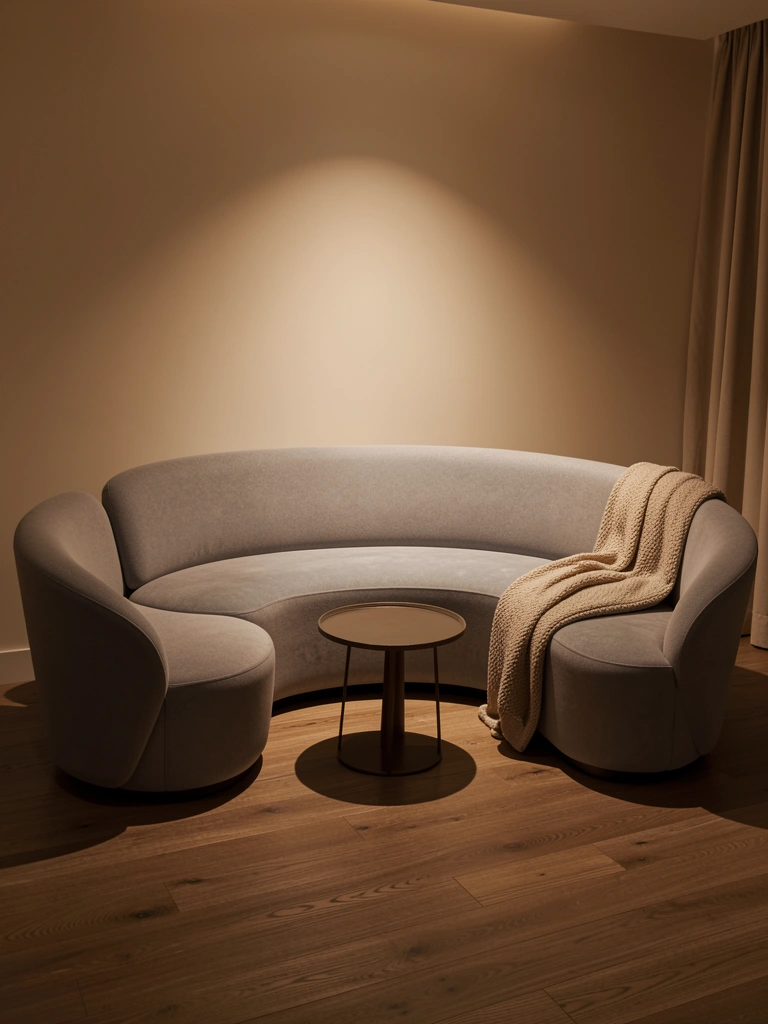
Multiply the magic of curves by adding matching or coordinating curved armchairs that nestle alongside your sofa. This creates an intentional, cohesive seating landscape that feels more curated than standard furniture pairings.
Shop for curved or crescent-shaped armchairs ($250–$600 each from Wayfair, West Elm, or Article) in the same fabric family as your sofa or in a complementary neutral. Position them at slight angles on either side of the sofa to create a conversational grouping. Add a round side table ($100–$250) between seating pieces to reinforce the organic, flowing aesthetic. The circular and curved shapes echo each other, creating visual harmony.
Your living room becomes a destination for conversation and connection instead of just a place to watch TV.
7. Choose Performance Fabric for Curves with Kids or Pets
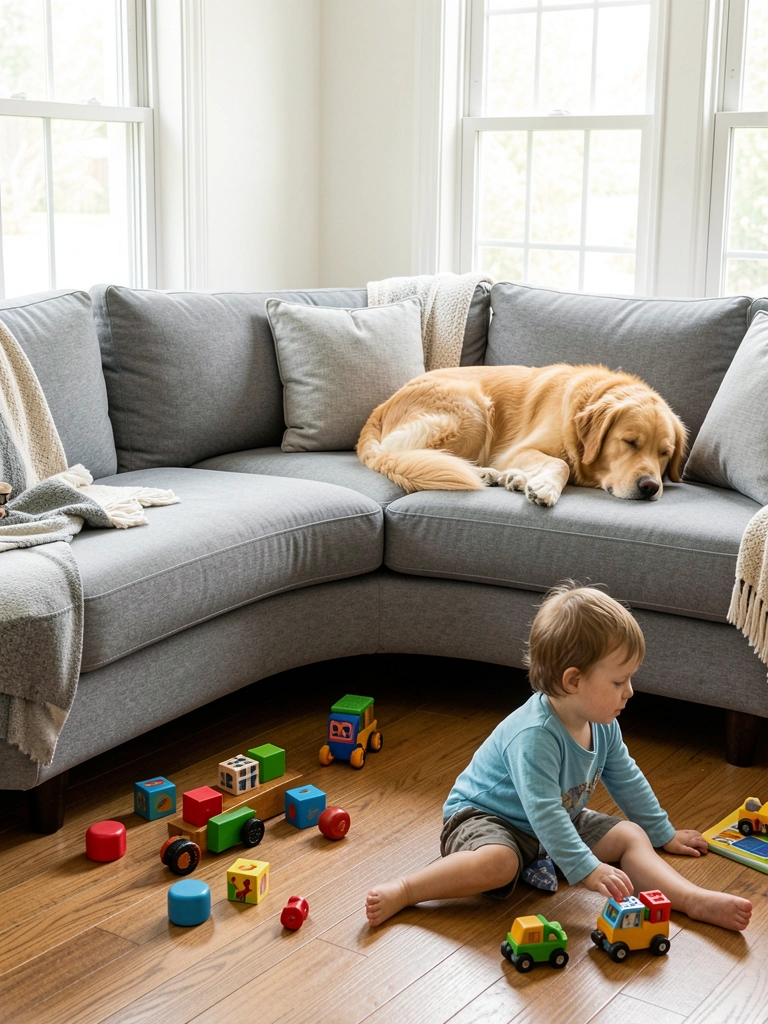
Curved sofas in homes with kids and pets need durable, stain-resistant fabrics that don’t sacrifice style. Performance fabrics have come a long way—many now feel soft and look indistinguishable from traditional upholstery.
Look for performance fabrics like Crypton, Sunbrella, or Performance by solution-dyed polyester ($1,200–$2,500 for a quality curved piece from Wayfair, Article, or specialty brands like Article). These fabrics resist stains, are easy to clean (often just soap and water), and hold color beautifully. Request fabric swatches ($5–$15) from multiple brands before committing. Performance fabrics add maybe $200–$400 to the sofa cost but save thousands in potential damage over five years.
The best part? You can relax knowing spills and accidents won’t panic you anymore—your sofa is built to handle real life.
8. Adopt a Low-Profile Curved Sofa for Modern Minimalism
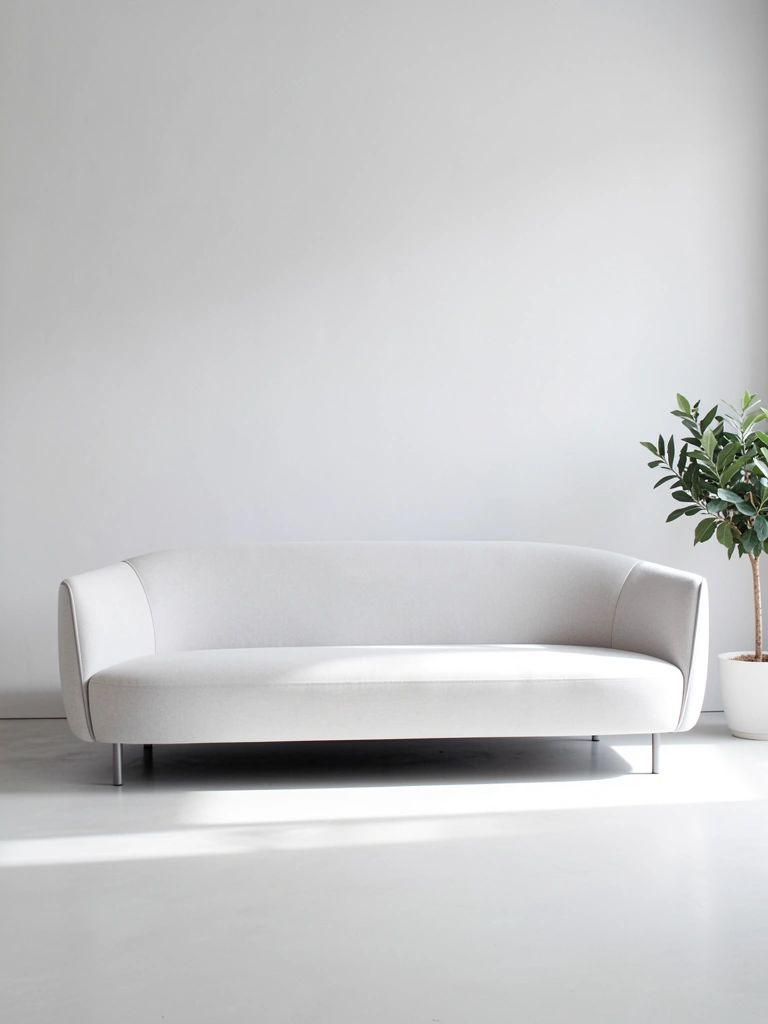
Low-profile furniture makes rooms feel larger and more open. Curved sofas with lower seat heights and streamlined arms create a modern, grounded aesthetic that floats within the space.
Search for low-profile curved sofas with seat heights around 16–18 inches and minimal arm width ($900–$2,000 from Article, Wayfair, Design Within Reach, or CB2). Look for sofas with slender metal or wood legs rather than upholstered bases so you can see floor underneath—this visually expands the room. Pair with a low coffee table ($200–$400) to keep proportions consistent. This style works beautifully in smaller spaces or modern homes where visual lightness matters.
Your room immediately feels airier, more intentional, and somehow more spacious without losing comfort.
9. Arrange Two Curved Sofas Face-to-Face for Intimate Layouts
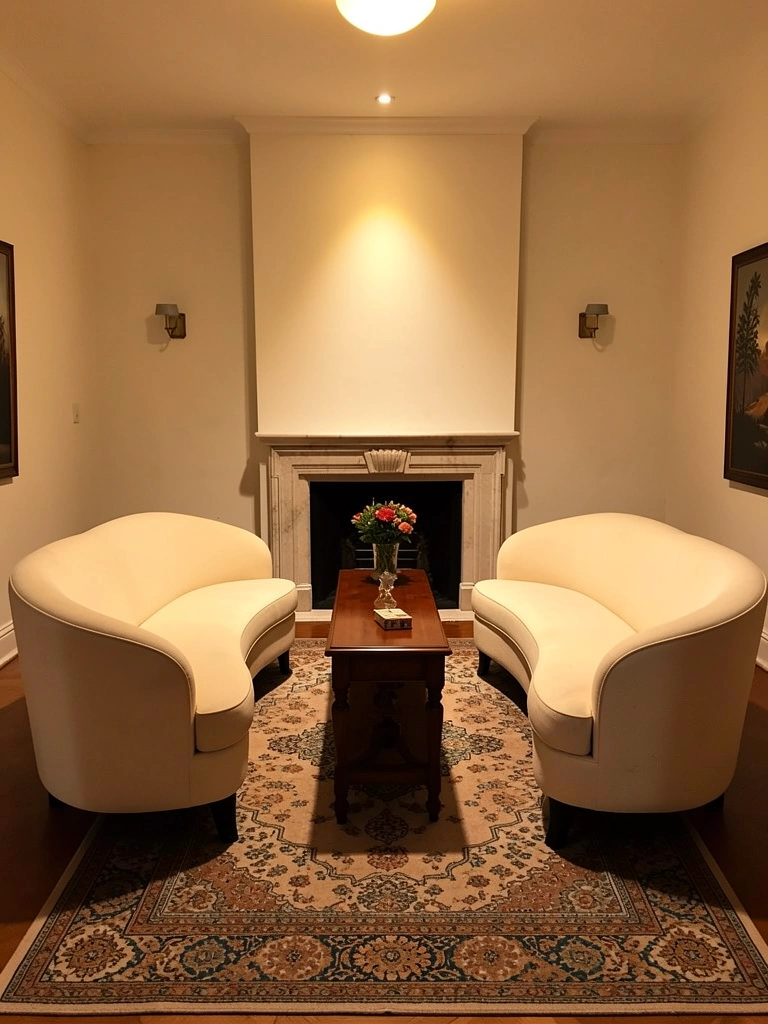
Two curved sofas facing each other create an unexpectedly intimate and formal seating arrangement that works beautifully in living rooms, dens, or master bedrooms.
Purchase two matching or complementary curved sofas (budget $1,800–$3,500 for a coordinated pair from Article, West Elm, or high-end retailers). Position them 4–6 feet apart to create a natural conversation zone. Place a narrow console table ($150–$300) or low coffee table ($200–$400) between them. Define the space with a large area rug ($300–$600) that anchors both sofas. This arrangement signals formality without stuffiness—the curves keep the vibe relaxed and organic.
You’ve created a lounge-like intimate retreat where people naturally want to linger and chat.
10. Paint Your Wall to Complement Your Curved Sofa’s Curves
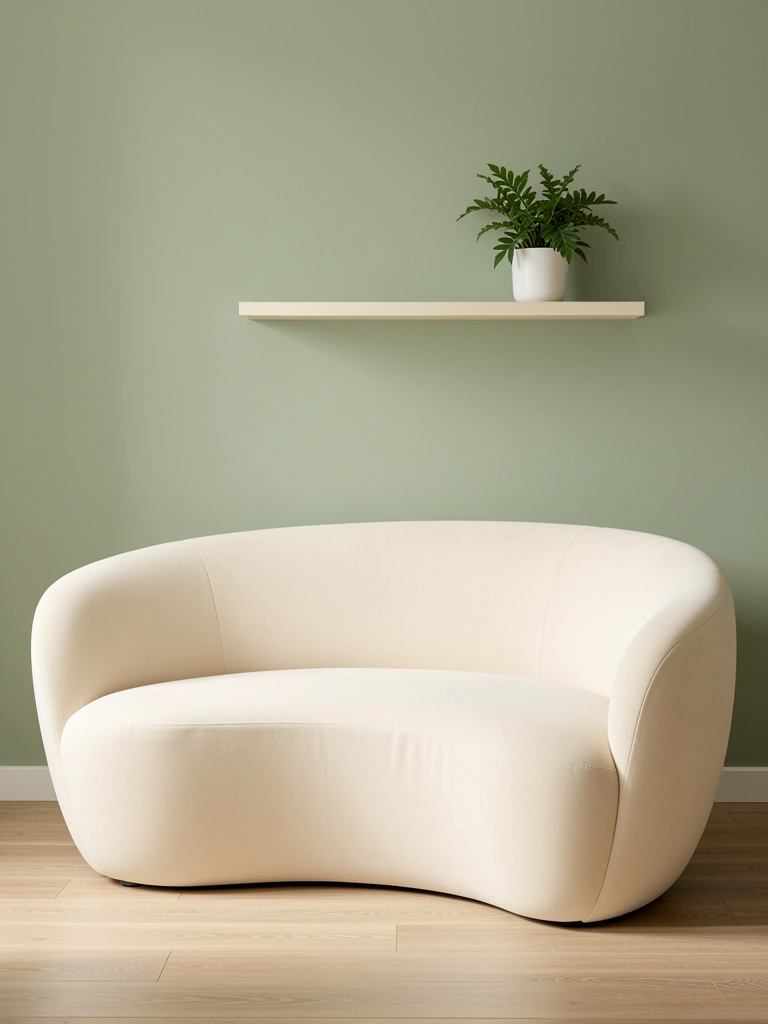
The wall behind your curved sofa doesn’t have to be boring white. A complementary wall color emphasizes the sofa’s sculptural shape and creates visual depth.
Choose a wall color ($25–$50 per gallon from Sherwin-Williams, Benjamin Moore, or local hardware stores) that’s one to two shades deeper or warmer than your sofa. If your sofa is cream, try soft sage or warm beige. If it’s charcoal, consider a dusty blue or warm gray. Paint just the wall behind the sofa rather than all four walls to keep the focus tight and the project manageable—this takes one weekend for most people. The contrast makes the sofa’s curves pop without overwhelming the space.
Your curved sofa becomes an architectural feature instead of just a piece of furniture.
11. Add Curved Sofa Legs for an Instant Update
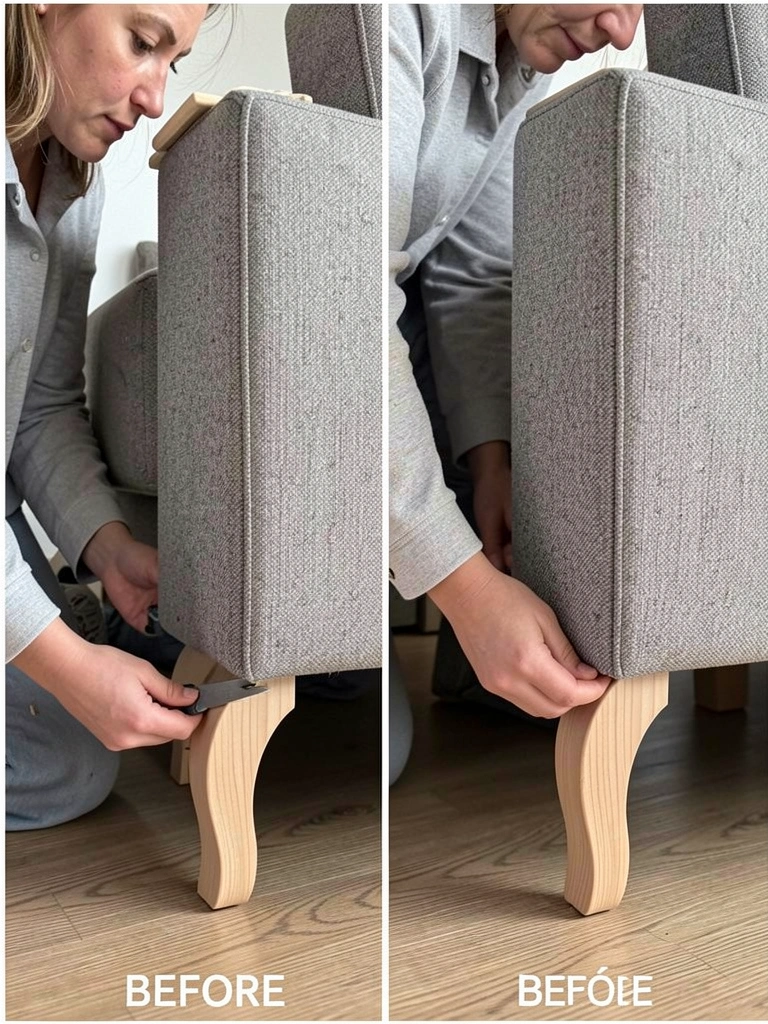
Already own a boxy sofa? Retrofit curved or angled legs to instantly refresh its proportions and create the illusion of a modern curved base.
Purchase replacement sofa legs ($40–$120 per set from Amazon, Wayfair, or specialty hardware stores) in wood, metal, or upholstered options. These attach with brackets underneath your existing sofa in minutes—no tools needed for screw-on options, or a simple screwdriver for bracket installation (15 minutes max). Curved or splayed wooden legs in walnut or brass read as much more expensive than your original sofa. This hack works on renters’ sofas too since legs aren’t permanent.
Suddenly your sofa feels designer-approved and intentionally styled without replacing the entire piece.
12. Layer Curves with a Curved Credenza Behind the Sofa
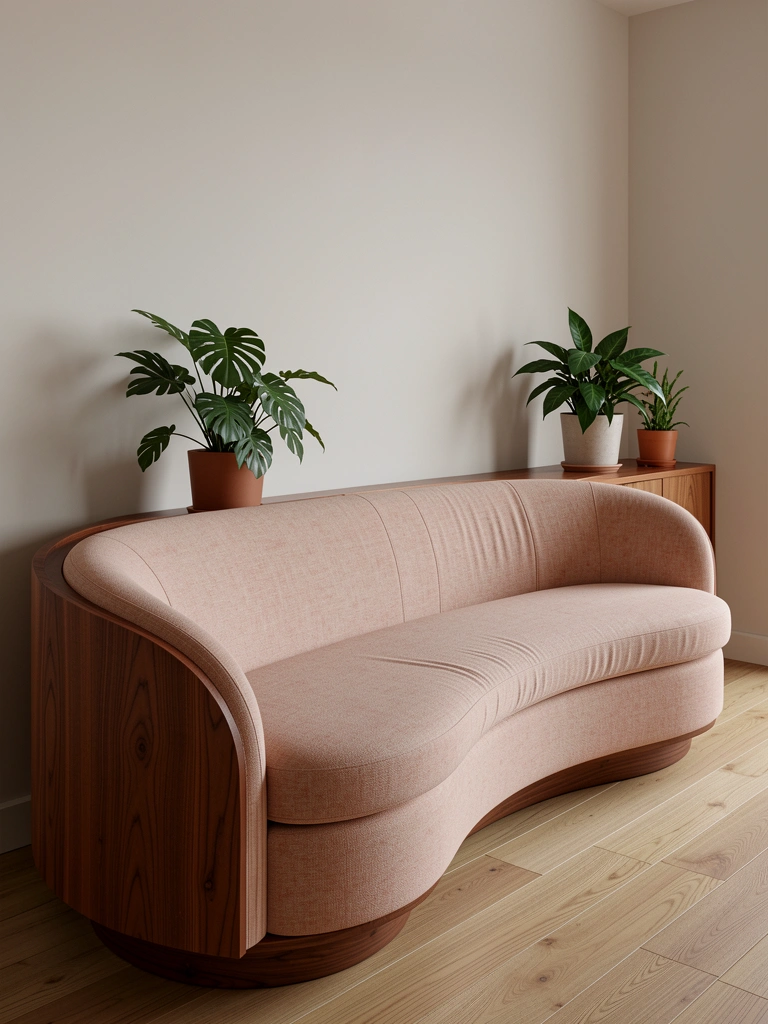
Echo your sofa’s curves throughout the room by adding a curved credenza or console behind it. Repetition of curves creates visual harmony and makes the space feel thoughtfully designed.
Find a curved credenza or console ($400–$1,200 from West Elm, Article, CB2, or vintage consignment shops) with similar arc to your sofa. Position it directly behind the sofa, floating on the wall or slightly forward. Style the top with plants, books, and a table lamp ($50–$150). The parallel curves create a flowing visual line that draws the eye and makes the entire vignette feel intentional. Curved wooden pieces read as more expensive than they usually are.
Your living room now has a curated, gallery-like quality that makes guests notice your thoughtful design choices.
13. Pair Curved Sectional with Ottomans for Flexibility
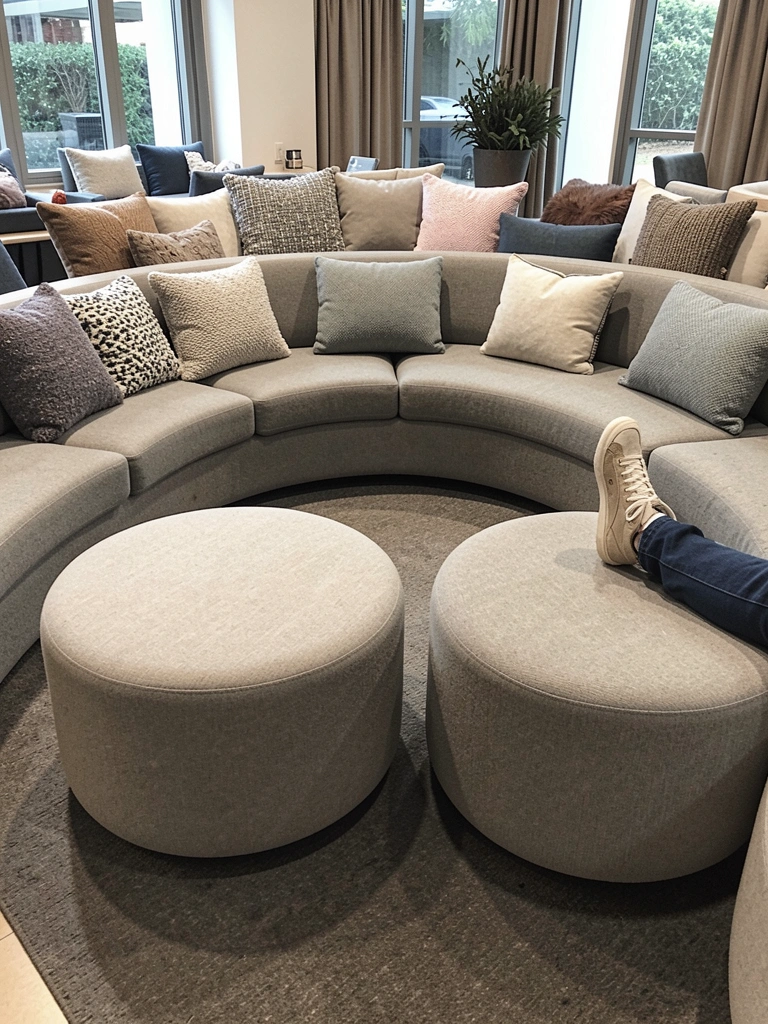
A curved sectional paired with loose ottomans gives you maximum flexibility—you can move pieces around based on how you want to use the space each day.
Choose a curved sectional ($1,500–$3,000 from Living Spaces, Wayfair, or Article) and add two to three round or curved ottomans ($200–$400 each). Ottomans can act as footrests, extra seating, or even small tables when topped with a tray. This configuration lets you expand or reconfigure instantly—perfect for households with changing needs or frequent guests. Renter tip: seek modular options where pieces can be swapped or moved independently.
You’ve created flexible seating that grows and shifts with your lifestyle, not against it.
14. Style a Curved Sofa with Oversized, Layered Pillows
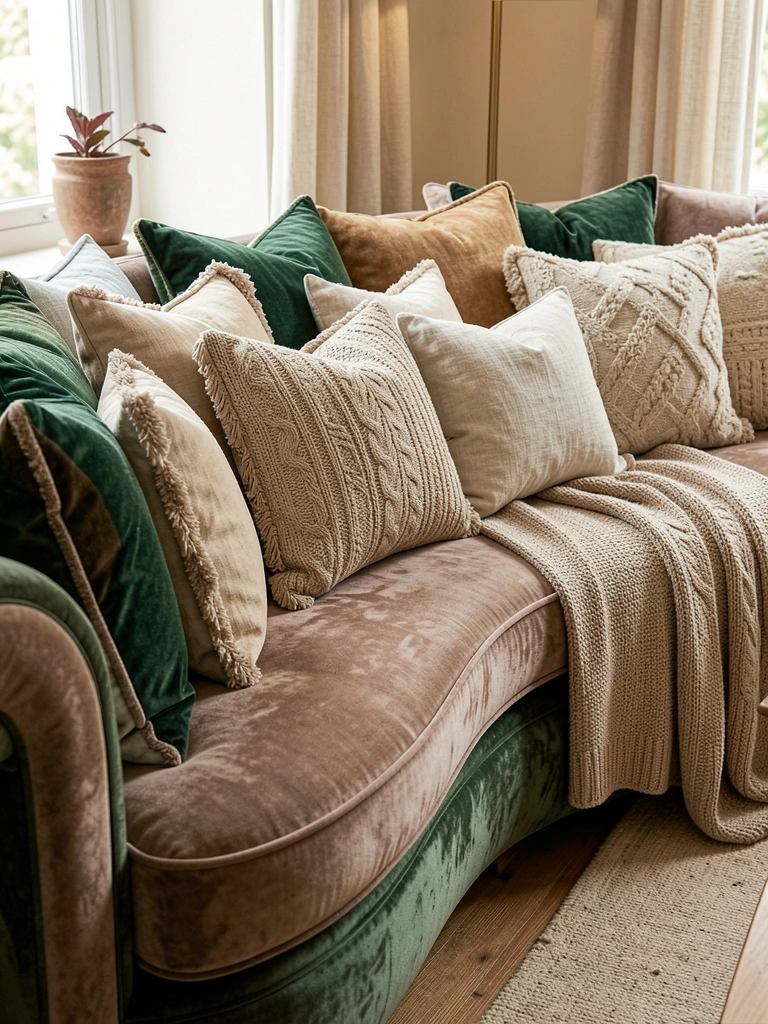
Deep-seated curved sofas deserve an abundance of pillows to enhance coziness and create that high-end hotel feel. Layer pillows in varying sizes and textures for visual richness.
Style your curved sofa with 8–12 pillows in assorted sizes ($20–$80 each from Target, West Elm, Etsy, or HomeGoods). Mix textures: velvet, linen, knits, faux leather. Vary heights by combining square pillows (18–20 inches), rectangular lumbar pillows, and smaller accent pillows (12–14 inches). Stick to a color palette of two or three tones to prevent clutter. Pillows can be rearranged seasonally or whenever you want a quick refresh without replacing furniture.
Your sofa becomes a plush haven that looks magazine-worthy and feels like the coziest place in your home.
15. Choose a Serpentine Curved Shape for Architectural Drama
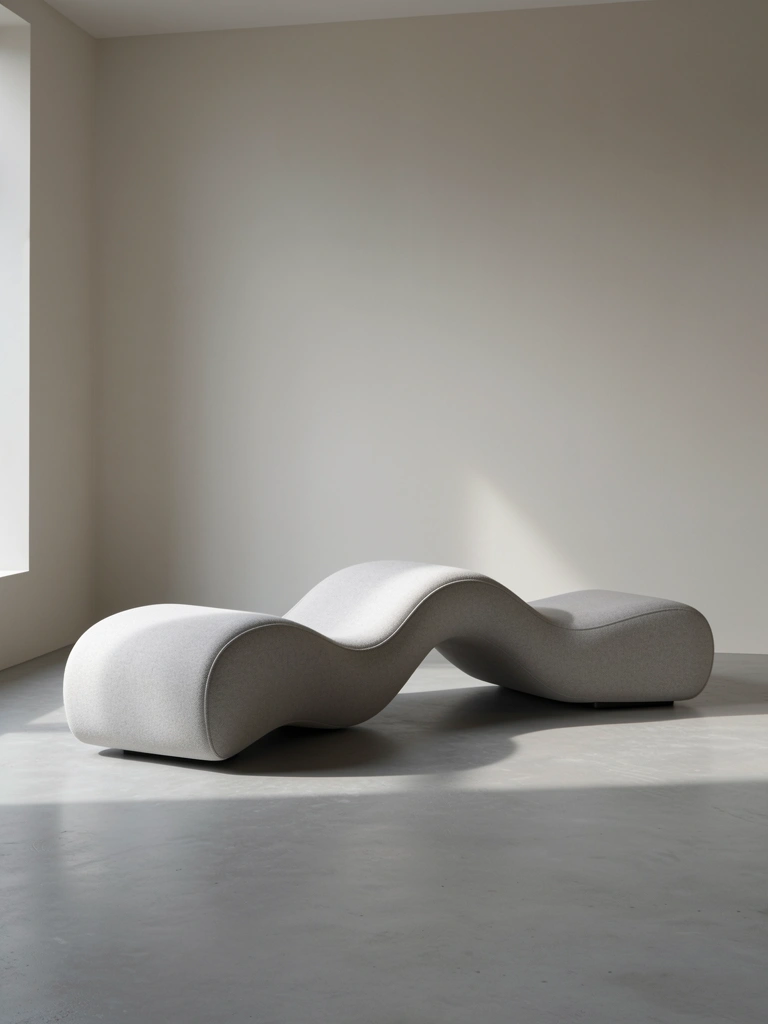
Beyond traditional curved sofas, serpentine or wave-shaped designs offer sculptural impact that transforms your living room into an art gallery.
Invest in a serpentine or S-curve sofa ($2,000–$4,500 from high-end retailers like Design Within Reach, Article’s luxury section, or custom makers like What A Room). These statement pieces are architectural in their own right—the undulating shape means the sofa itself becomes the focal point. Position in an open area where the curves can be fully appreciated from multiple angles. These sofas often come in neutral tones (cream, gray, camel) so they anchor without overwhelming. This is a significant investment but creates conversation-starting design.
You’ve positioned a sculptural piece that makes your living room feel like a curated, intentionally designed space rather than a standard decorated room.
16. Use a Curved Sofa to Soften Industrial or Masculine Spaces
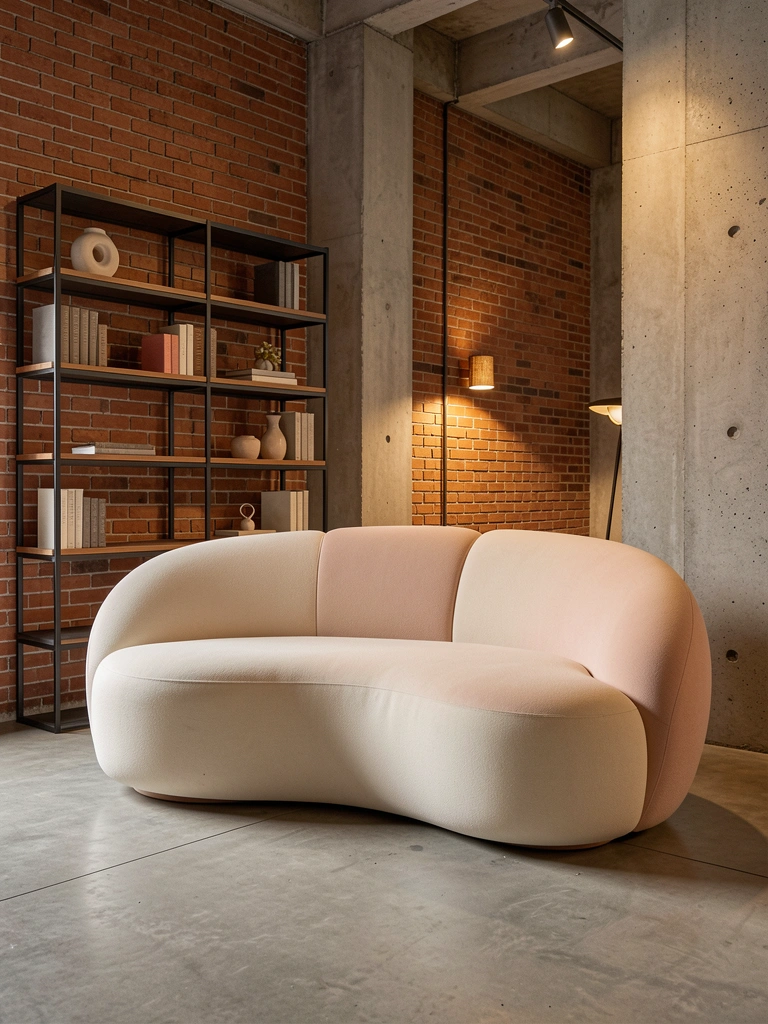
Industrial spaces with hard angles, exposed brick, and metal details need softness to feel livable. A curved sofa introduces organic, rounded forms that humanize otherwise rigid environments.
Select a curved sofa in soft neutrals like cream, blush, or warm gray ($1,000–$2,500) to contrast with industrial elements. Pair with soft textures—a chunky throw, plush rug, and layered pillows. The curves literally balance the sharp angles of exposed brick, metal, or concrete. Add warm lighting ($50–$150 for a curved arc floor lamp) to soften shadows. This contrast is what makes industrial spaces feel intentional rather than harsh.
Your industrial space becomes warm and inviting while still maintaining its cool-factor aesthetic.
17. Create a Reading Nook with a Compact Curved Sofa
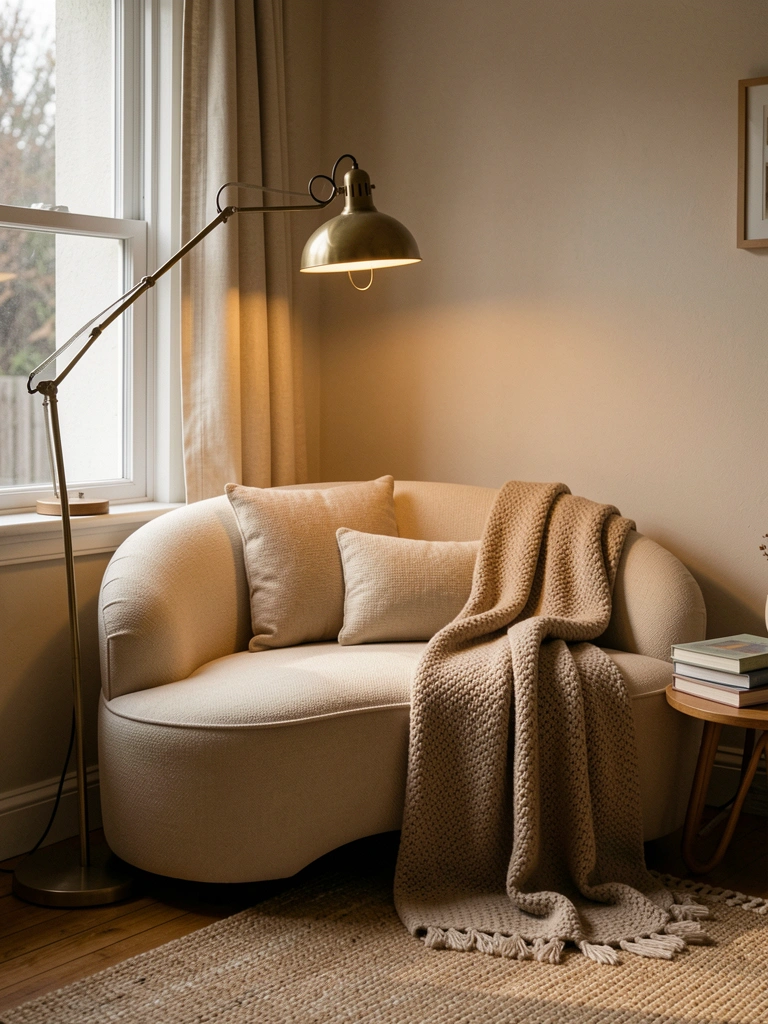
Smaller spaces need curves too. A compact curved sofa or loveseat creates a reading nook or home office seating area that feels proportionate and intentional.
Shop for curved loveseats or compact sofas ($600–$1,500 from IKEA, Target, Wayfair, or Article’s smaller collection). Seat widths typically range 60–72 inches, perfect for bedrooms, studies, or small living rooms. Pair with a narrow side table ($80–$200) and a reading lamp ($40–$120) to create a defined nook. Even in tight quarters, the curved silhouette makes the space feel thought-out and designed. Renters will especially appreciate the compact size—easy to move and fits most apartments.
Your small space now has a dedicated cozy corner that invites you to slow down and relax.
18. Mix Curved Sofa with Bold Accent Wall for Impact
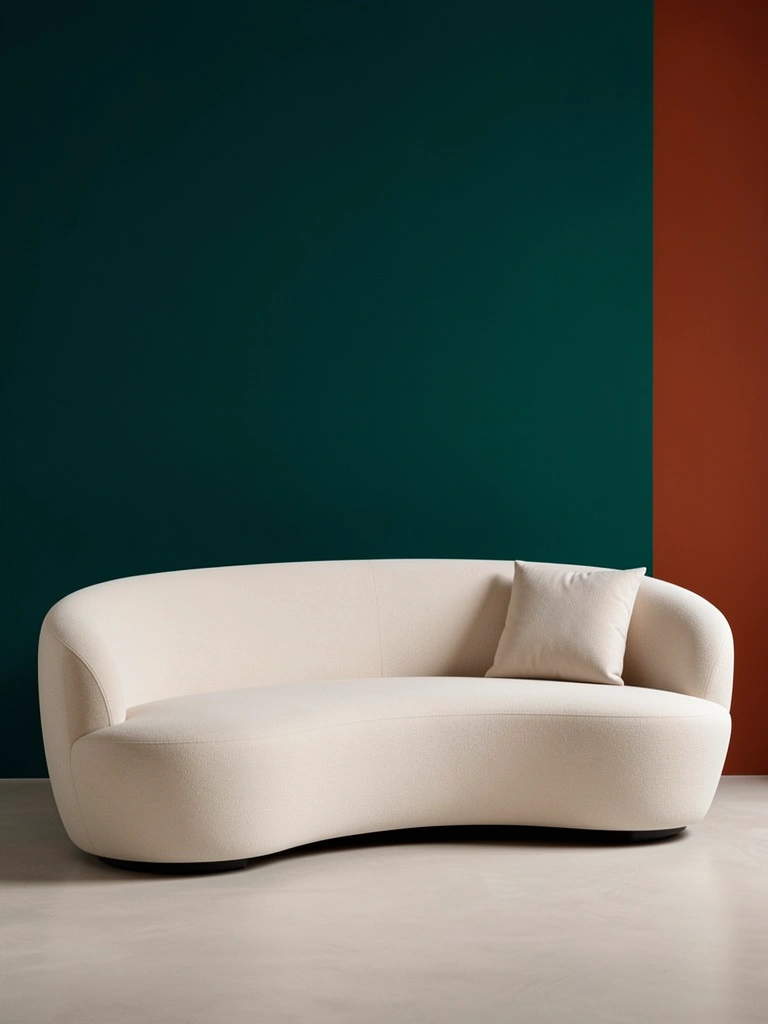
A bold accent wall needs a soft, rounded counterpoint to feel balanced. A curved sofa in neutral tones provides that organic contrast beautifully.
Paint one wall behind your sofa in a bold, saturated color ($25–$50 per gallon) like emerald green, navy blue, or terracotta—pick a tone that excites you. Style your curved sofa in a complementary neutral ($1,000–$2,500) like cream, gray, or warm beige. The rounded shape of the sofa prevents the bold wall from feeling too aggressive; curves are inherently approachable. Add minimal additional decor to let both the wall and sofa shine. This combination signals confidence and taste.
Your living room feels curated and modern, not trendy or overdone.
19. Invest in a Custom Curved Sofa Using 3D Renderings

Custom-made curved sofas with 3D visualization tools eliminate guessing about how a piece will fit and function in your space before you commit.
Work with custom sofa makers like What A Room or Etsy sellers offering customization ($1,500–$3,500 depending on complexity). Many provide free 3D renderings showing your sofa in your actual room with your chosen fabric and dimensions. Request fabric swatches ($5–$15 per swatch) to confirm colors match your vision before production. Made-to-order pieces typically take 8–12 weeks but arrive exactly as specified. This investment makes sense if you have specific measurements, color needs, or unusual room configurations.
You get a sofa designed precisely for your space, your aesthetic, and your practical needs—worth the wait.
20. Pair Caramel Curved Sofa with Warm Metallics
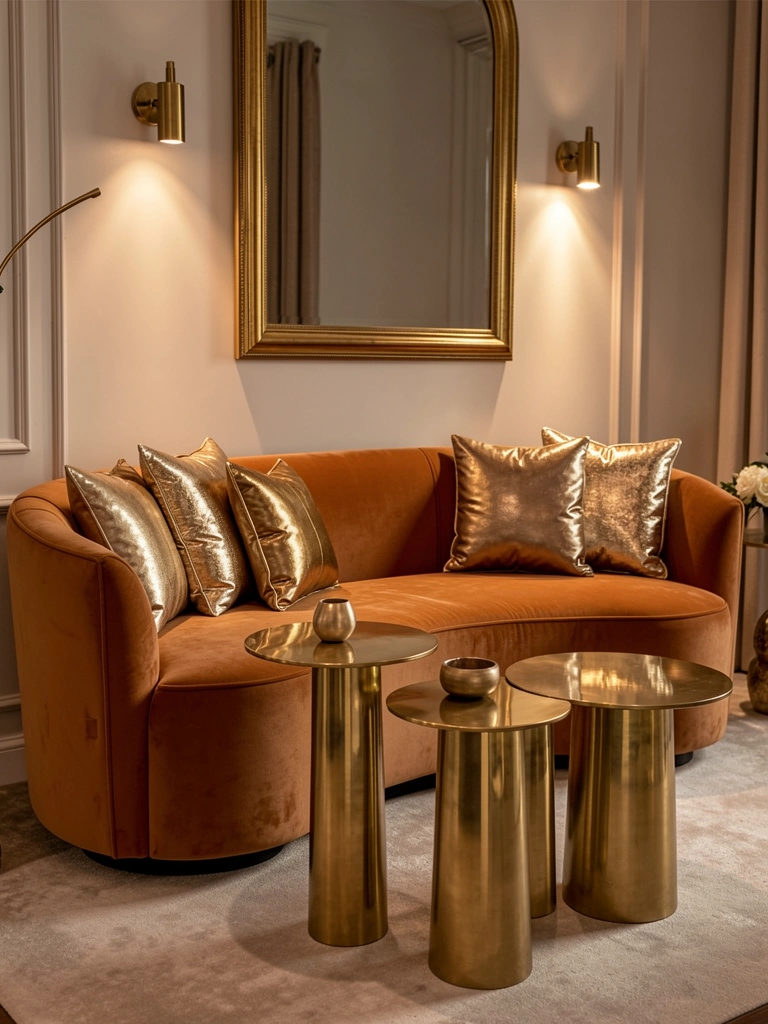
Warm-toned curved sofas in caramel, tan, and honey pair beautifully with brass, gold, and warm copper metallics. This color story reads expensive and intentional.
Style your caramel curved sofa ($1,200–$2,200) with brass side tables ($80–$250 each), a gold-framed mirror ($100–$300) on the wall behind it, and metallic throw pillows ($30–$70). Add warm-toned lighting like Edison bulb fixtures ($50–$150) to reinforce the warm palette. Avoid cool silvers and chrome, which clash with warm sofa tones. This cohesive approach feels curated and sophisticated without requiring a designer’s budget.
Every element works together to create a warm, luxe aesthetic that photographs beautifully and feels inviting.
21. Use Curved Sofa to Frame a Fireplace
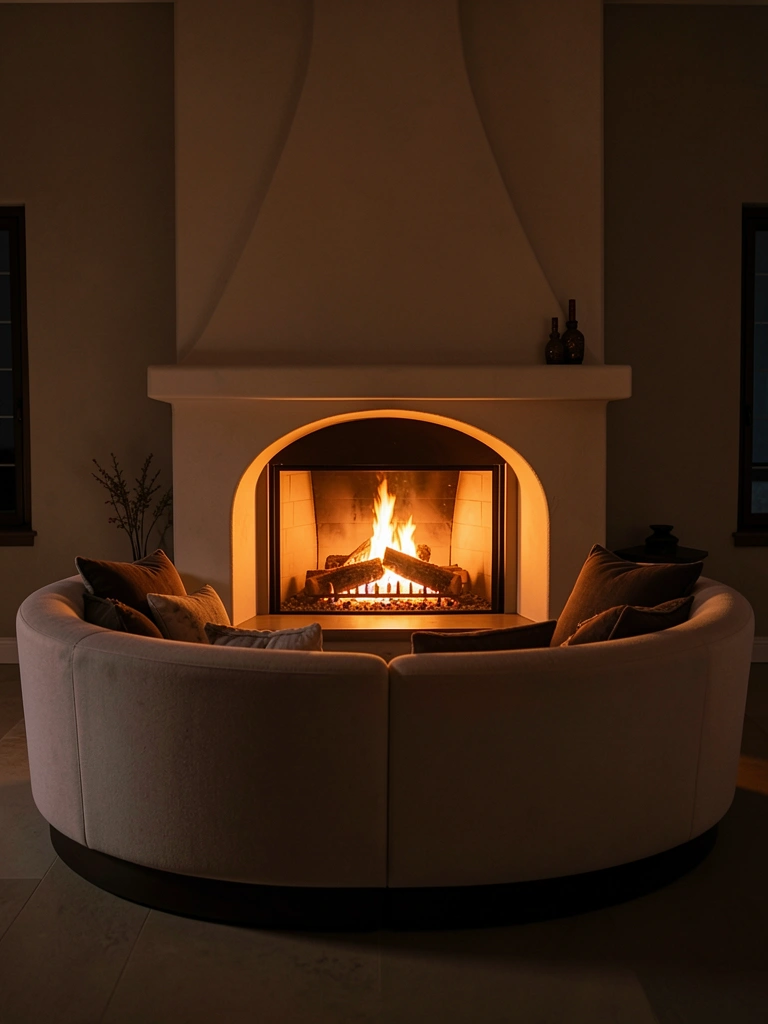
A curved sofa oriented toward a fireplace naturally echoes the fireplace’s form and creates a visually balanced, intentional focal point arrangement.
Position your curved sofa facing the fireplace ($1,000–$2,500), leaving 8–12 feet between seating and hearth for safety and sightlines. Add matching curved armchairs ($250–$600 each) on either side to extend the curved motif and reinforce symmetry. Place a simple rectangular or round coffee table ($150–$400) in front of the sofa. The curves of the sofa mirror and complement architectural fireplace elements, creating visual harmony. This arrangement is timeless and feels intentional without being overdone.
You’ve created a gathering space where people naturally gravitate, anchored by both furniture and architecture.
22. Style a Light Gray Curved Sofa for Scandinavian Calm
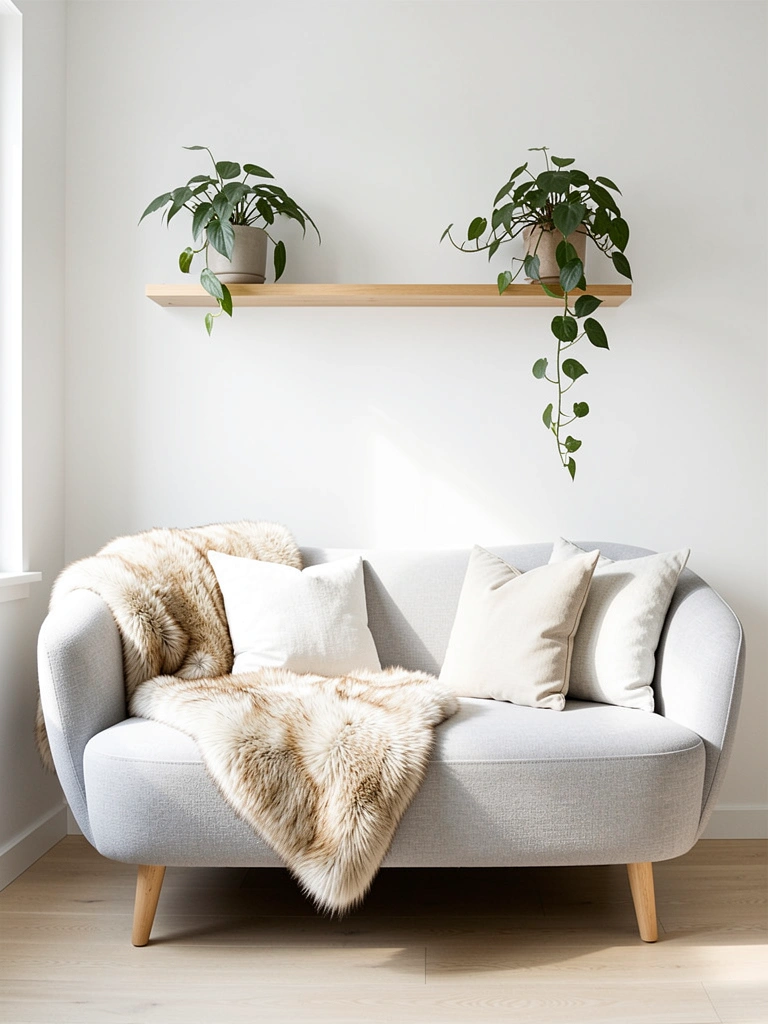
Scandinavian design embraces curves, and light gray curved sofas with minimal styling embody this philosophy perfectly. Simple, functional, beautiful.
Choose a light gray curved sofa with clean lines and wooden legs ($1,000–$2,000 from Article, Wayfair, or IKEA’s premium line). Style with a single faux fur throw ($30–$60), one to two simple pillows ($25–$50 each), and nothing else on the sofa itself. Keep walls pale and backgrounds minimal. Add simple floating shelves ($40–$100) with plants above the sofa to introduce life without clutter. Scandinavian style celebrates breathing room and functionality. Every piece earns its place.
Your space feels calm, intentional, and peaceful—a true refuge from the chaos of daily life.
23. Add a Curved Sofa to a Bedroom for High-End Hotel Feel
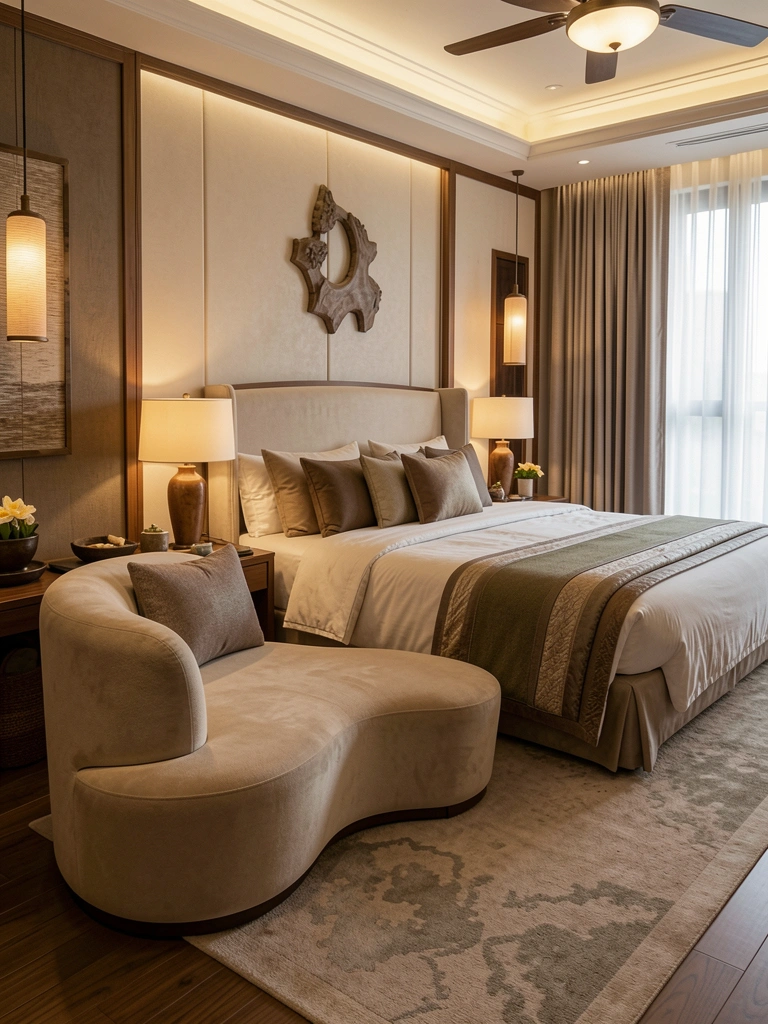
Curved sofas in bedrooms create secondary seating that feels luxurious and spa-like, elevating the entire room’s vibe without taking up floor space.
Position a curved sofa or loveseat ($800–$2,000) at the foot of your bed or along one wall. Choose neutral fabrics in cream, soft gray, or camel to complement bedding. Add a chunky throw and pillows to match your bed’s palette. This creates a seating area within the bedroom—perfect for reading, getting dressed, or just lounging. The curves soften what could feel crowded and add a design feature that reads intentional. This works beautifully in master bedrooms or guest rooms.
Suddenly your bedroom feels like a five-star hotel suite instead of just a place to sleep.
24. Combine Curved Sofa with Vintage or Thrifted Pieces
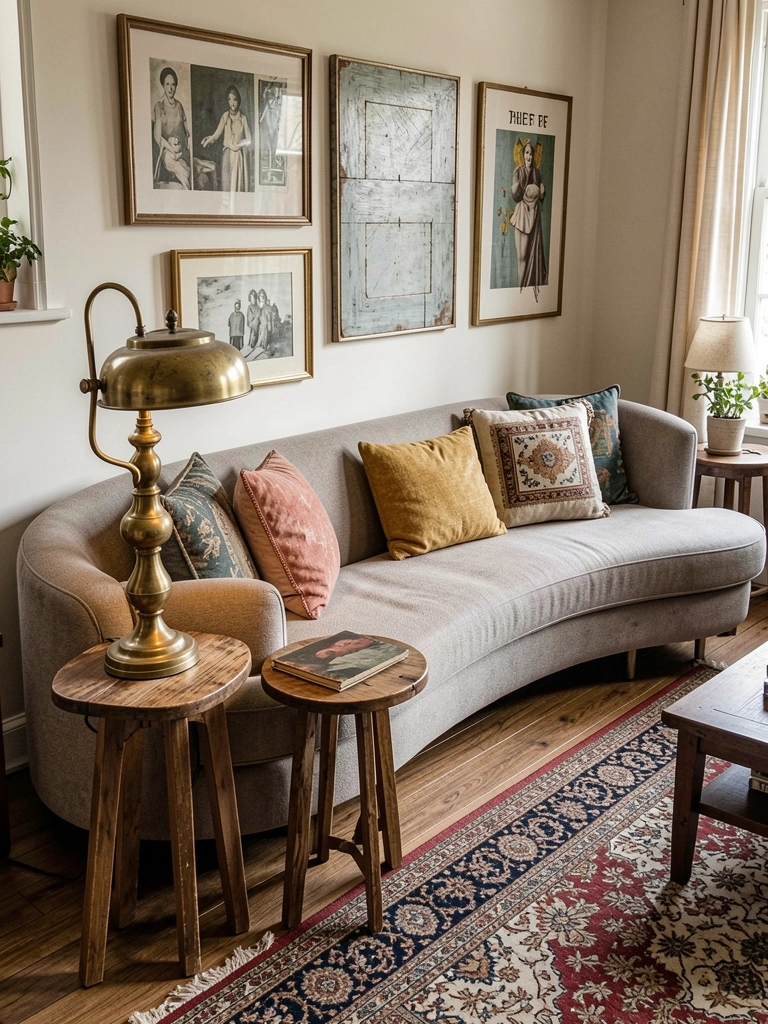
Modern curved sofas pair beautifully with vintage and thrifted pieces, creating an eclectic, collected aesthetic that feels personal and high-design.
Start with a modern curved sofa ($1,000–$2,000) in a neutral tone, then layer in vintage or thrifted pieces ($20–$200 each from thrift stores, Facebook Marketplace, or local estate sales). Search for mid-century wooden side tables, brass lamps, or unique frames. The contrast between the modern sofa and vintage accents creates visual interest and tells a story of collected pieces over time. This approach also keeps costs down while building a curated look. Mix eras intentionally rather than accidentally—this is the key to making eclectic feel designed.
Your space reads as thoughtfully designed and authentically personal instead of decorated from a catalog.
Save this post and try just one idea this weekend—whether it’s adding curved legs to a sofa you already own or layering textures into your existing piece. The beauty of soft-edge sofas is that they work with so many styles, budgets, and spaces. Your perfect sofa is out there.
Leave a Reply