Introduction
Curtains do more than block light and provide privacy—they’re one of the easiest ways to add warmth, character, and visual depth to any room. If your windows feel flat or boring, textured fabrics are your secret weapon. They catch light differently throughout the day, create shadows that add dimension, and instantly make spaces feel more intentional and layered.
Whether you’re renting or own your home, work with a tight budget or ready to invest, there’s a textured curtain idea here for you. We’ve gathered 26 ways to bring dimension and coziness to your windows—from no-cost styling tricks to premium fabric upgrades that’ll make you want to linger by the window. Ready to transform how your space feels? Let’s go.
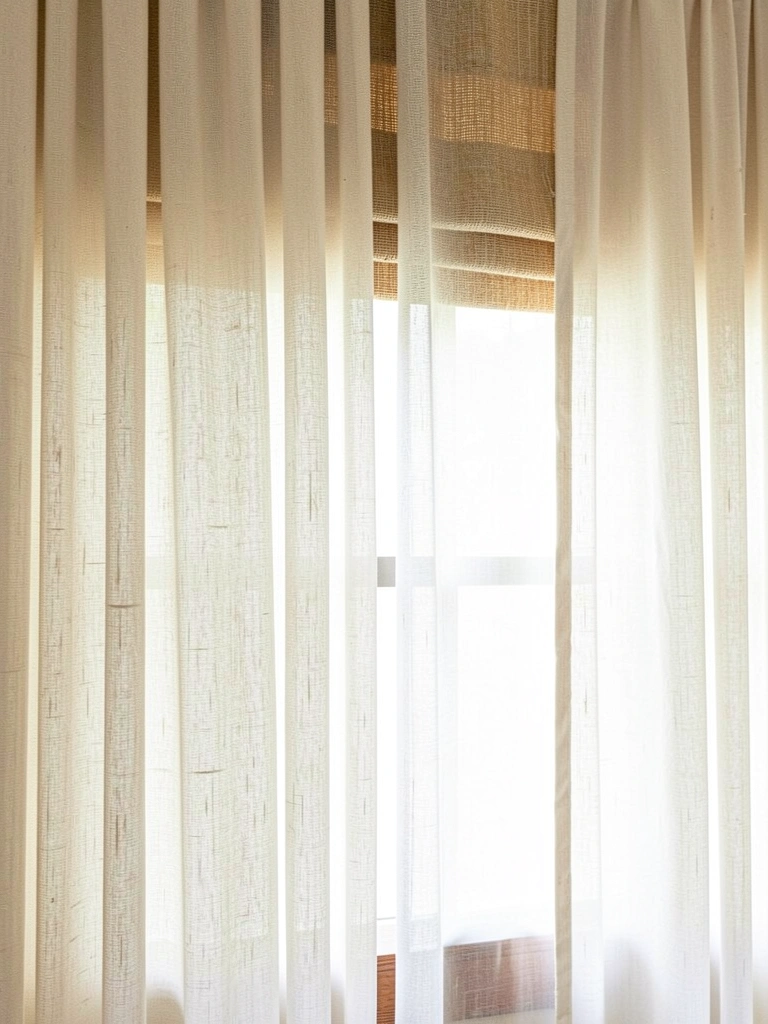
1. Layer Sheer Linen Over Blackout Panels
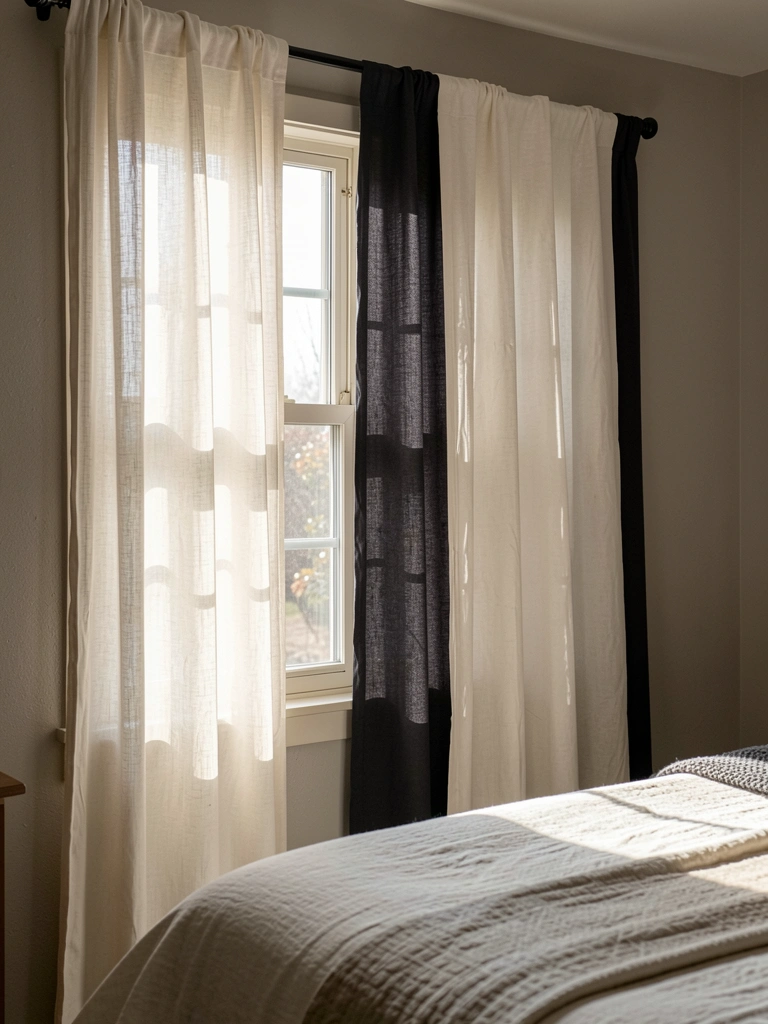
Layering isn’t just pretty—it solves the real problem of needing light control without sacrificing natural glow. Pair a breathable linen sheer with a heavier blackout layer to get flexible light management plus instant visual depth.
Hang your sheer linen on a lightweight tension rod close to the glass, then mount your blackout panel on a second rod in front. Sheer linen runs $20–$60 per panel at Target or Wayfair; blackout curtains are $40–$120. This takes about 30 minutes to install once your rods arrive. Pull the sheer back during the day for soft, diffused light, or close both for complete darkness.
The beauty? You can tie the sheer to one side and let the blackout handle privacy, or close both for a cozy cave effect. Your room suddenly has options you didn’t have before.
2. Mix Linen With Subtle Geometric Embroidery
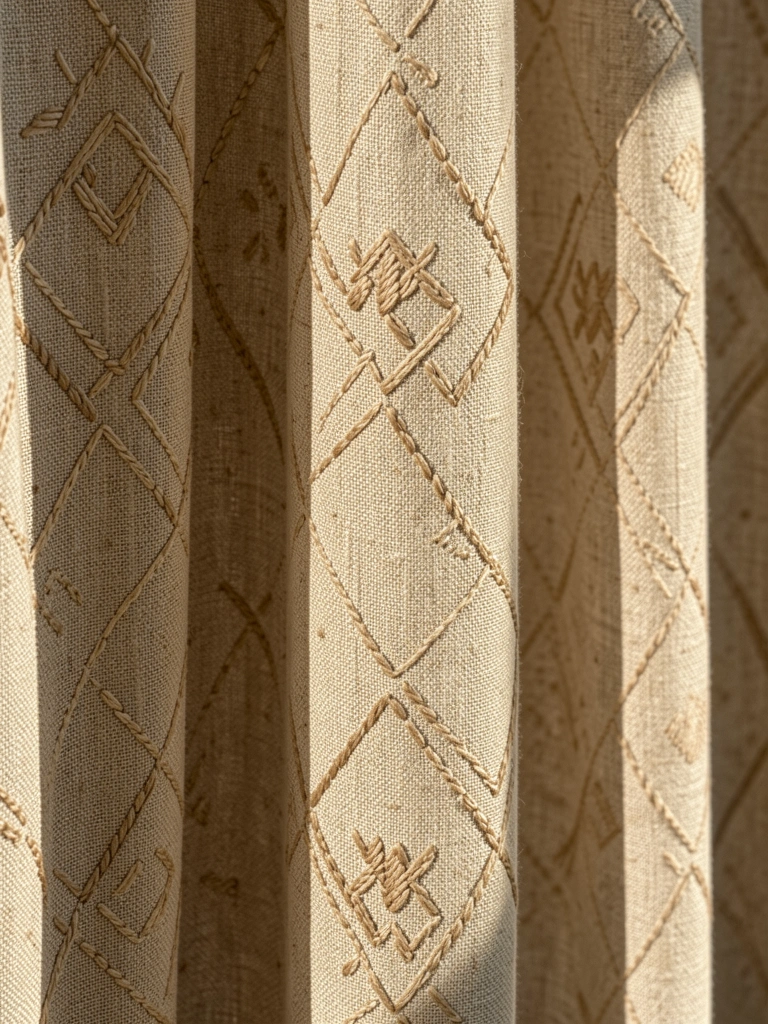
Embroidered linen walks the line between subtle and statement-making, giving you texture without overwhelming the room. The stitched patterns catch light and cast tiny shadows, making flat fabric look dimensional and handcrafted.
Look for linen curtains with tone-on-tone embroidery (like cream thread on cream fabric) for understated sophistication. Brands like Pottery Barn and West Elm offer embroidered linen panels at $80–$180 each; budget alternatives from Amazon run $35–$70. Hang these alone or layer with sheers. A 15-minute steam removes wrinkles; linen gets softer with every wash, so durability improves over time.
Pro tip: If you can’t afford embroidered panels, buy plain linen and add your own simple embroidery using a needle and contrasting thread—totally optional, but it’s a meditative weekend project. The texture you create is one-of-a-kind.
3. Hang Velvet Panels in Jewel Tones
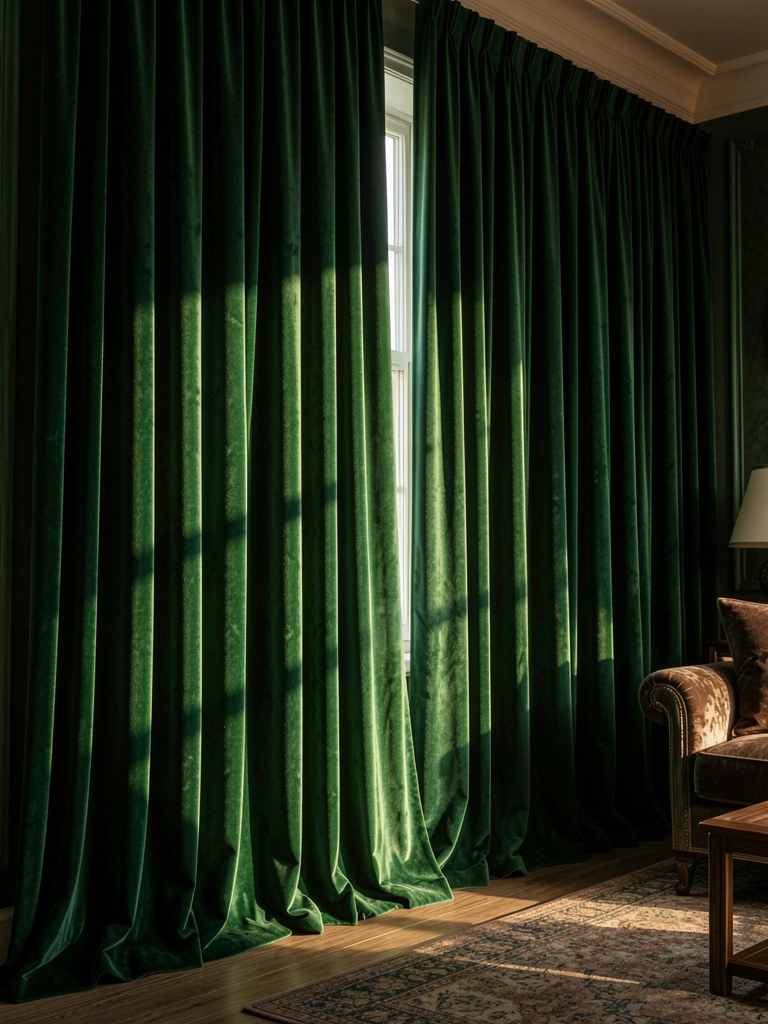
Velvet is back, and for good reason—it absorbs light beautifully, creating depth that other fabrics can’t match. A jewel-tone velvet (emerald, sapphire, burgundy) makes any room feel intentionally styled and a little bit fancy without feeling overdone.
Velvet panels cost $80–$250 per pair depending on weight and brand. Wayfair, Anthropologie, and online fabric retailers like Etsy sellers stock great options. Velvet works best floor-to-ceiling (see Idea #4), and it’s heavy enough that you’ll want a sturdy rod—don’t skip this detail. Dry clean only if you want to preserve the finish, or gently vacuum the nap with an upholstery brush to refresh between cleanings.
The payoff? Your room looks like a hotel lobby designed by someone with taste. Velvet also helps with sound dampening, so bonus: quieter, cozier space.
4. Go Floor-to-Ceiling for Instant Height
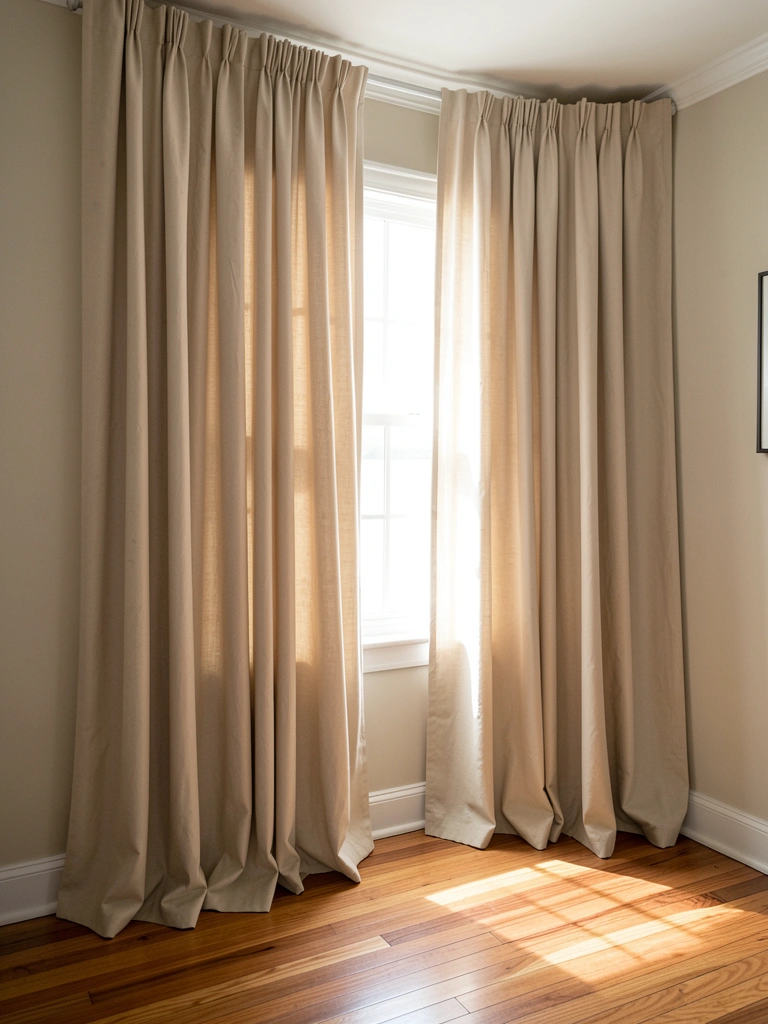
Hanging curtains floor-to-ceiling (or close to it) is the easiest optical trick to make a room feel bigger and more luxe. This works even in rentals—use removable adhesive hooks or damage-free rods if you can’t drill.
Mount your rod 4–6 inches below the ceiling (or as close as your trim allows), and let panels puddle 1–2 inches on the floor. A basic tension rod costs $15–$30; heavy-duty rods for velvet or thicker fabrics run $40–$80. Measure your window width and add 8–12 inches so panels hang beyond the frame. This takes 20 minutes to install and completely changes how the eye travels through the room.
Why it works: Your eyes follow the vertical line all the way up, which makes ceilings feel higher. Paired with a textured fabric, you’ve got dimension and an illusion of space. Win-win.
5. Pair Jute Curtains With Linen Sheers
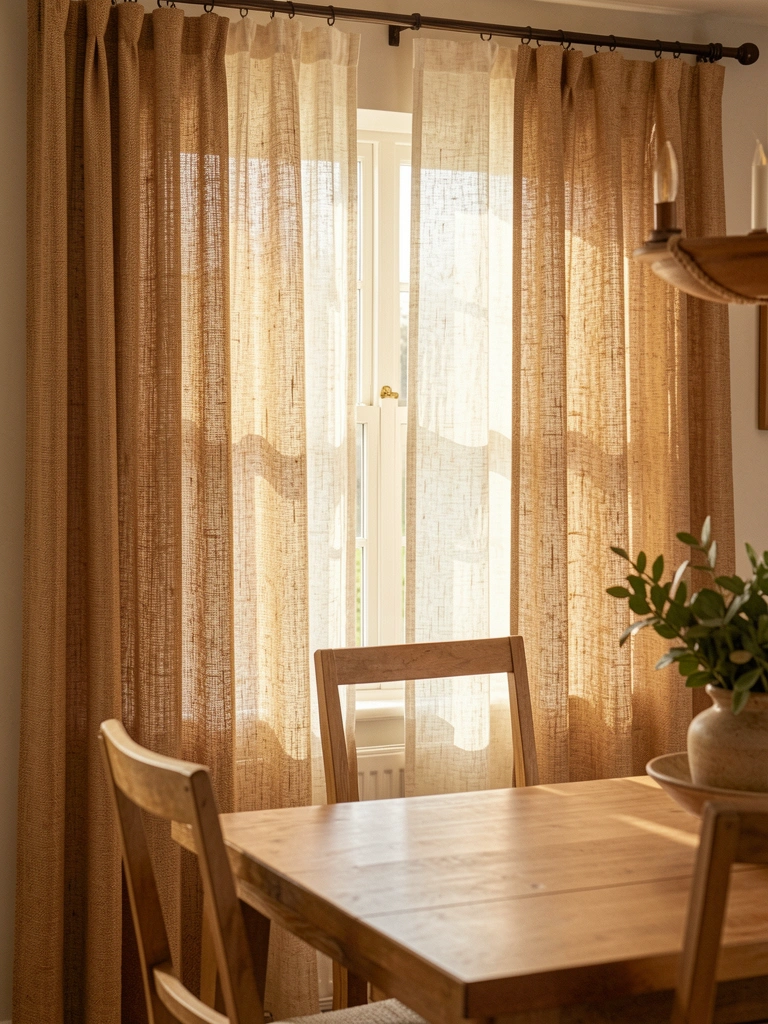
Jute brings earthy, woven texture that linen alone can’t quite achieve. When you layer it with a soft linen sheer, you get contrast in both visual texture and light flow—rough + delicate = interesting.
Jute is typically more affordable than high-end linen: $25–$60 per panel. Layer it over sheers hung on a secondary rod. Jute can feel stiff at first, so wash once in cool water to soften. It may pill slightly over time, but that actually adds to the rustic charm. A soft brush removes loose fibers.
The result: Your room looks thoughtfully styled with natural materials, and the layering creates depth that photographs beautifully. Plus, jute is durable and hides dust and pet hair better than lighter fabrics.
6. Create Custom Side Panels for Blinds

If you love the functionality of blinds but hate how bare they look, custom side panels are the solution. This renter-friendly approach adds textured fabric without covering your view.
Hang lightweight tension rods or use adhesive hooks on either side of your window. Mount panels with simple ties or rings so you can pull them open wide. Fabric for two side panels costs $15–$40 if you buy linen yardage and sew basic casing (or use no-sew adhesive tape). If sewing isn’t your thing, buy pre-made curtain panels and tie them off—$30–$70 for a pair.
This gives you all the texture and warmth of curtains plus the light control of blinds. Your window becomes a focal point instead of an afterthought.
7. Layer Sheer and Blackout Linen in Earthy Tones
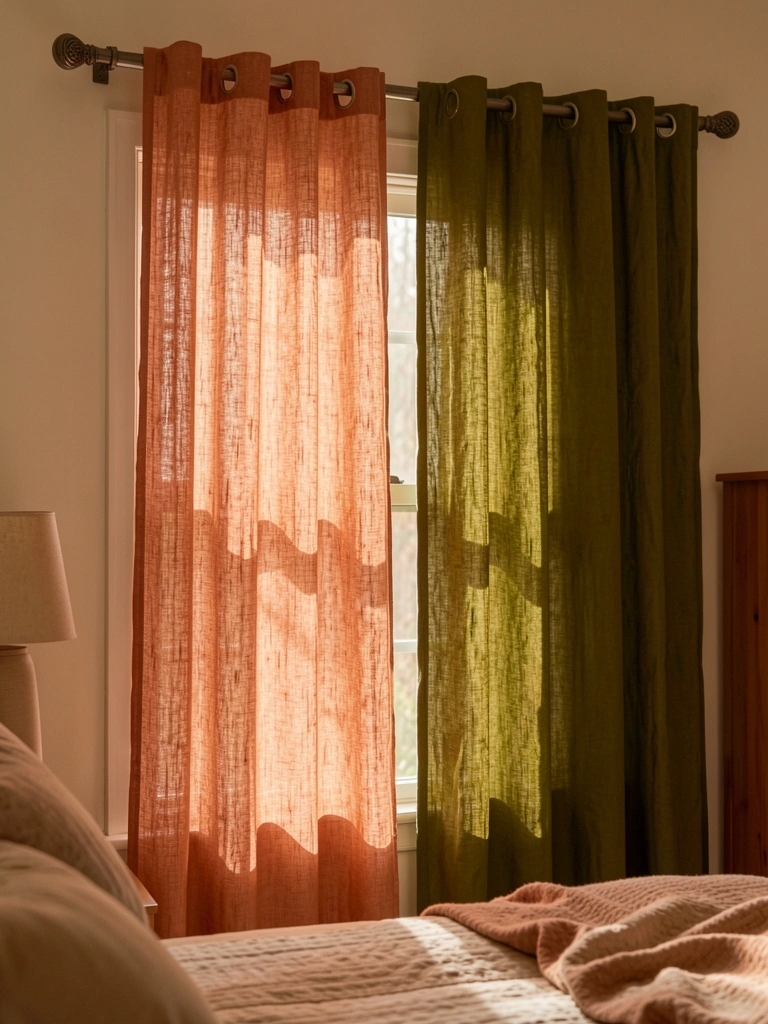
Earthy color combinations—think terracotta, olive, warm gray, and natural linen—create a grounding effect that makes rooms feel calm and intentional. Layering two earth-toned fabrics in different weights adds visual richness.
Sheer linen in warm tones runs $25–$50 per panel; earthy blackout linen is $50–$100. Hang the sheer closer to the window and the darker shade in front. This setup gives you incredible flexibility: open just the sheer for ambient light, close both for a cozy cave, or do one of each panel for balanced light and privacy.
The color combination itself becomes part of your decor, so you don’t need to match it to anything else. It just works.
8. Add Wool Curtains for Winter Weight and Warmth
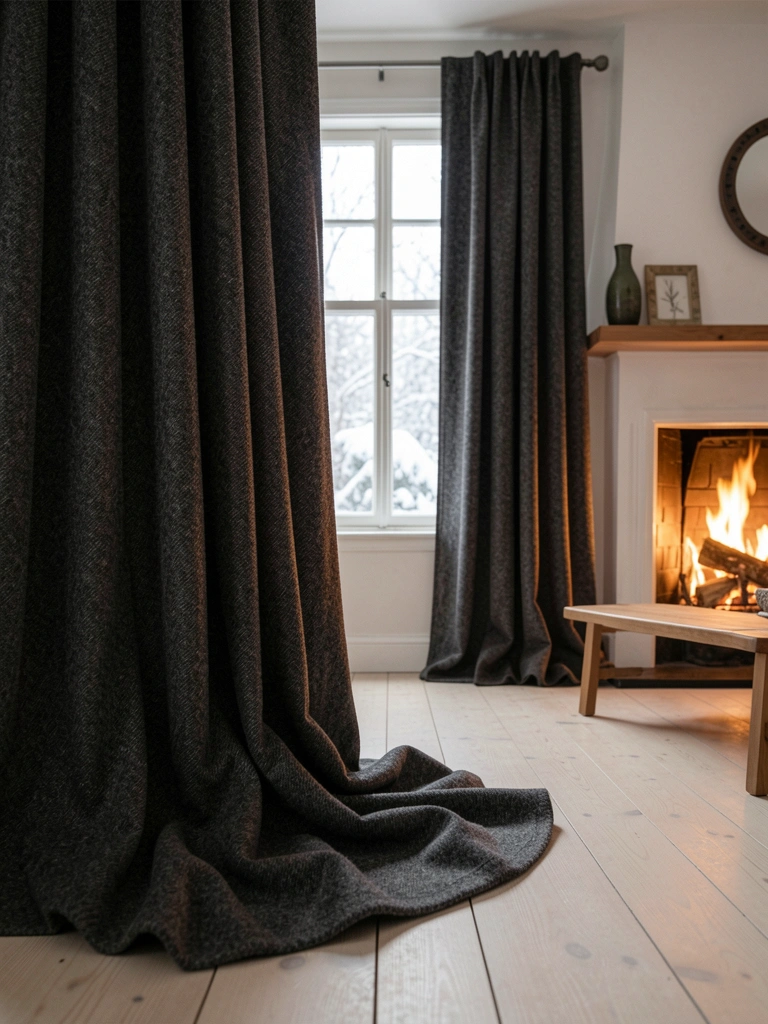
Wool is the heavy-hitter fabric that makes rooms feel wrapped in coziness. It’s naturally textured, insulating, and so tactile that you’ll want to touch it. Switch to wool in fall and winter for instant seasonal warmth.
Quality wool curtains run $100–$250 per panel and are an investment, but they last years. They’re naturally flame-retardant, sound-absorbing, and actually repel dust. Wool does need occasional dry cleaning, though airing outside works for light refreshing. Look for 100% wool or wool blends at high-end retailers or Etsy vintage sellers for discounts.
Your room becomes a retreat. The texture is visible from across the room, and the weight creates natural folds that add dimension. Plus, wool actually helps insulate windows in winter, so there’s a practical benefit hiding under all that coziness.
9. Mix Bamboo Sheer With Textured Roman Shade

Bamboo is having a major sustainability moment, and for good reason—it grows fast, looks beautiful, and adds organic texture. Pair a bamboo Roman shade with a bamboo-blend sheer for layered visual interest and environmental points.
Bamboo sheers cost $20–$50 per panel; bamboo Roman shades run $40–$120. Layer them so you can raise the shade and let the sheer handle privacy, or lower both for complete blackout. Bamboo has a natural loosely-woven texture that catches light differently than traditional linen. Both materials soften over time and develop character with use.
This combo is especially good for rentals since both can hang without damage and look sophisticated. You get sustainability credentials without sacrificing style.
10. Combine Linen With Decorative Trim or Fringe
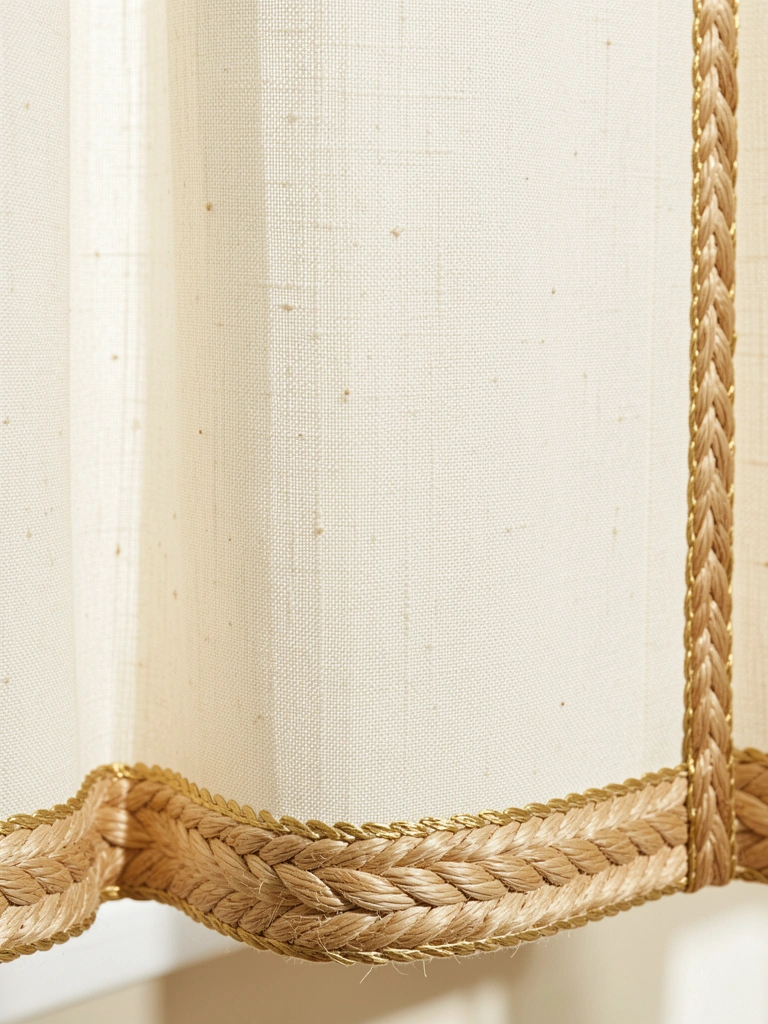
Trim transforms plain linen from basic to boutique. A simple decorative trim or fringe sewn along edges adds texture and personality without overthinking the design.
Buy plain linen panels ($20–$60) and have a tailor add trim ($15–$40 labor), or DIY with fabric glue and no-sew tape if you’re confident. Options include: gold trim, natural jute, macramé fringe, or pom-pom trim depending on your vibe. This takes a tailor about a week or a weekend DIY project for two panels.
The result is custom-looking curtains that cost way less than designer versions. Your windows suddenly look intentional and crafted, not off-the-rack.
11. Layer Sheer Gauze Over Patterned Linen
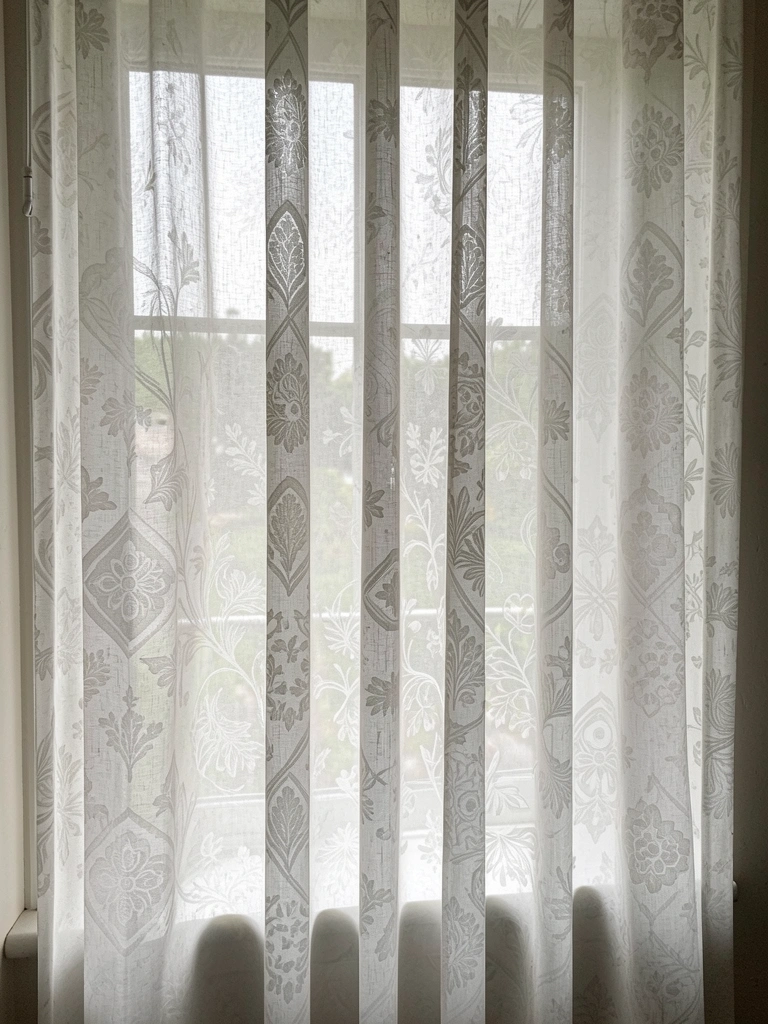
Gauze over pattern gives you the best of both worlds: visual interest without overwhelming the space. The sheer layer softens and diffuses the pattern, creating depth and movement.
Hang a lightweight tension rod with gauze close to the glass ($12–$25 for gauze), then your patterned linen on a second rod in front ($35–$80). The gauze catches light and creates a dreamy filter, while the pattern peeks through with subtle visual texture. Gauze is delicate but surprisingly durable, and it washes easily.
Your window becomes a focal point without dominating the room. The combination photographs beautifully and makes any space look thoughtfully designed.
12. Use Natural Linen for Hypoallergenic Freshness

If allergies or sensitivities are an issue, linen is a game-changer. It’s naturally hypoallergenic, dust-resistant, and breathable—meaning allergens don’t accumulate the way they do in heavy synthetics.
Quality natural linen runs $30–$70 per panel and is worth every penny if you struggle with allergies. Wash in cool water and hang dry for longevity. The fabric gets softer and more beautiful with every wash, so it’s an investment that improves over time. Undyed linen has a subtle cream or tan tone that works with almost any décor.
You’ll notice the difference immediately—your bedroom feels fresher, breathing, lighter. Plus, the natural texture of linen creates visual dimension without needing patterns or heavy embellishment.
13. Hang Velvet Alongside Cotton Sheers for Luxury Layering
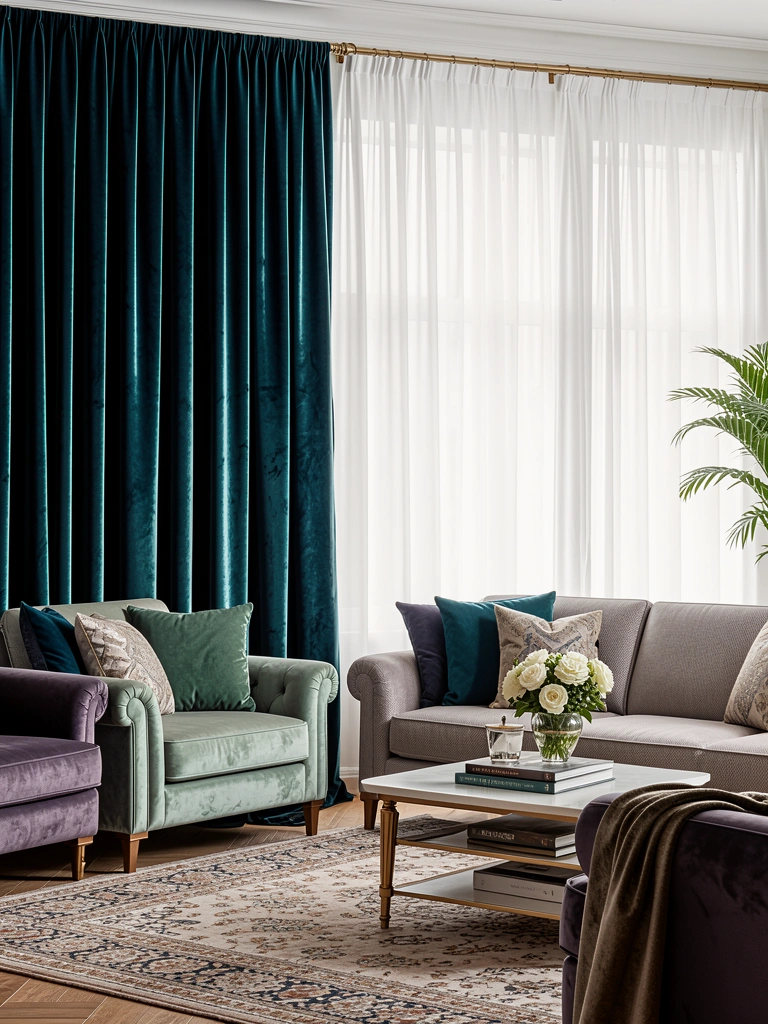
Mixing velvet with crisp sheers creates visual contrast that reads as intentional and sophisticated. The plush pile of velvet next to smooth cotton creates textural play that catches the eye.
Mount sheers on a close-to-glass rod ($15–$30) and velvet on a front rod ($40–$80). Velvet panels run $80–$200 per pair; cotton sheers are $15–$40. This setup lets you have sheer softness during the day and luxurious velvet presence in the evening. Both can be closed for privacy or opened separately for mixed light.
The combination feels effortlessly high-end—like a designer knows what they’re doing. It works in living rooms, bedrooms, or any space where you want visual interest without chaos.
14. Create Color-Drenched Curtains Matching Walls
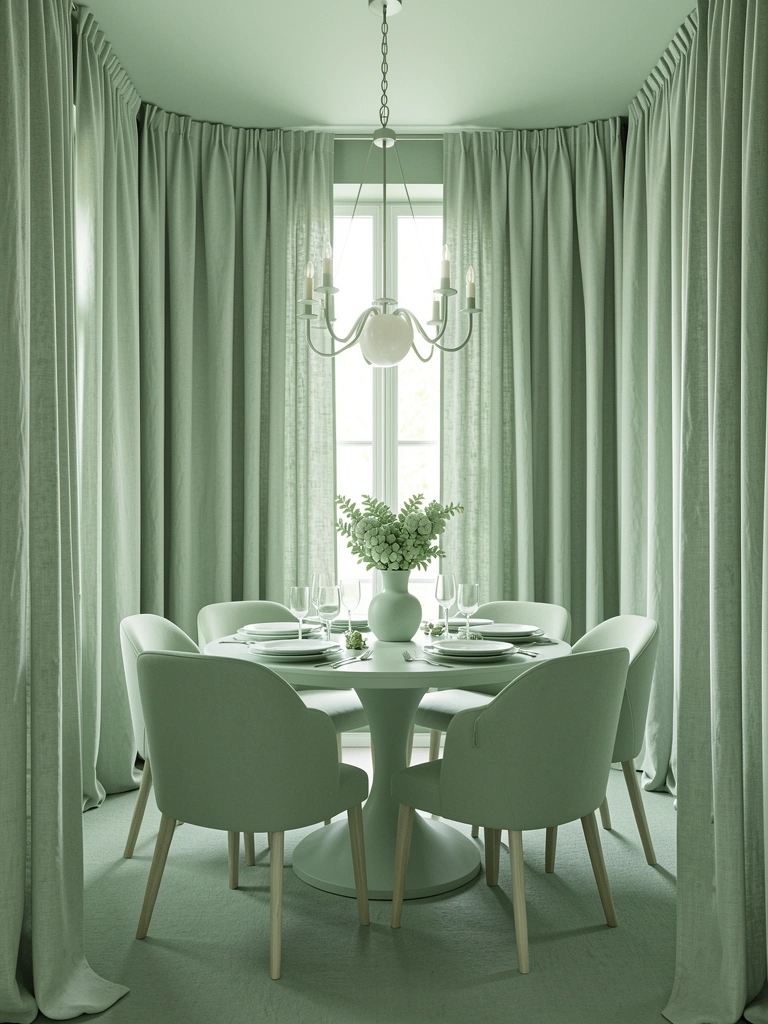
Color drenching—using the same hue on walls and curtains—creates an immersive, spa-like effect. It’s becoming a popular design move for creating rooms that feel intentional and serene.
Choose a soft, neutral shade like warm gray, sage green, or terracotta, then find curtains in the same color family. Paint costs $30–$50 per gallon; curtains matching that color run $30–$100 per panel. The key is using a texture in your curtains so they don’t disappear into the walls—linen slub texture or subtle embroidery keeps things dimensional.
Your room becomes a cohesive, enveloping space. There’s something deeply calming about stepping into a room where color wraps around you. It photographs beautifully too.
15. Layer Textured Jute Over Smooth Linen Sheers
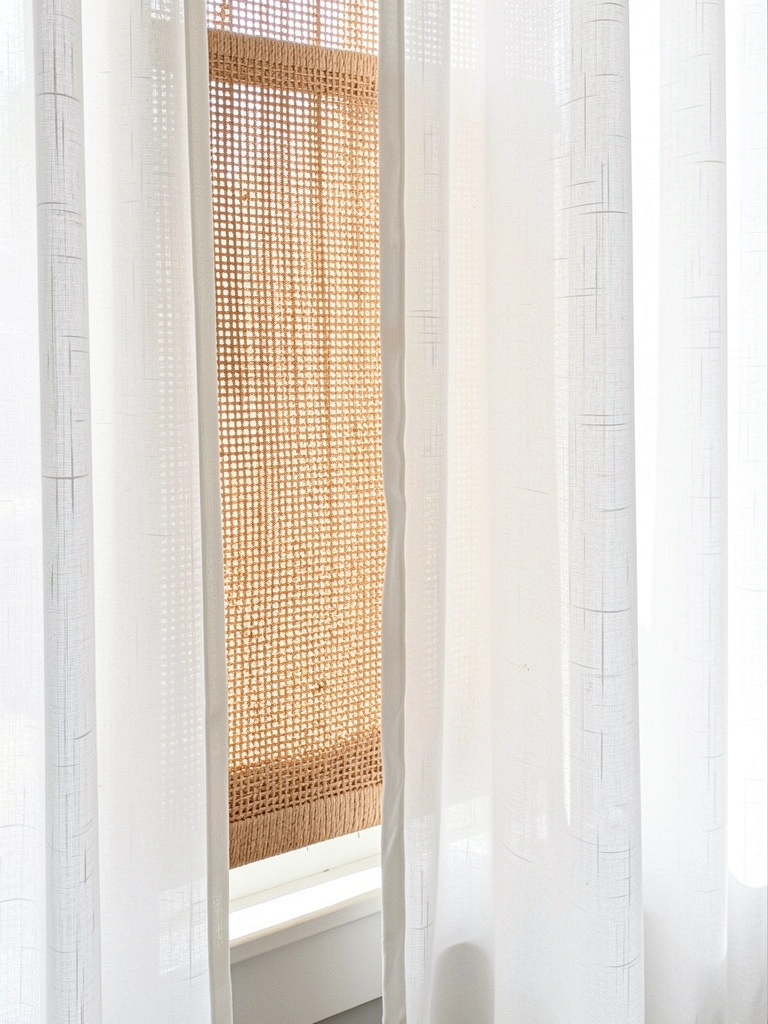
The contrast between smooth sheers and rough jute creates visual texture that’s impossible to achieve with a single fabric. Smooth + rough = interesting.
Hang linen sheers on a close rod ($20–$50) and jute on a front rod ($25–$60 per panel). The sheer diffuses light while the jute adds shadow and depth. This combination works especially well in casual spaces like kitchens or bedrooms where organic texture feels right. Jute is forgiving about wrinkles and wear, so it’s low-maintenance.
The layering trick makes your window look designed, not accidental. Guests will notice the thoughtful combination even if they can’t name why it works.
16. Add Texture With Ribbed or Waffle-Weave Linen
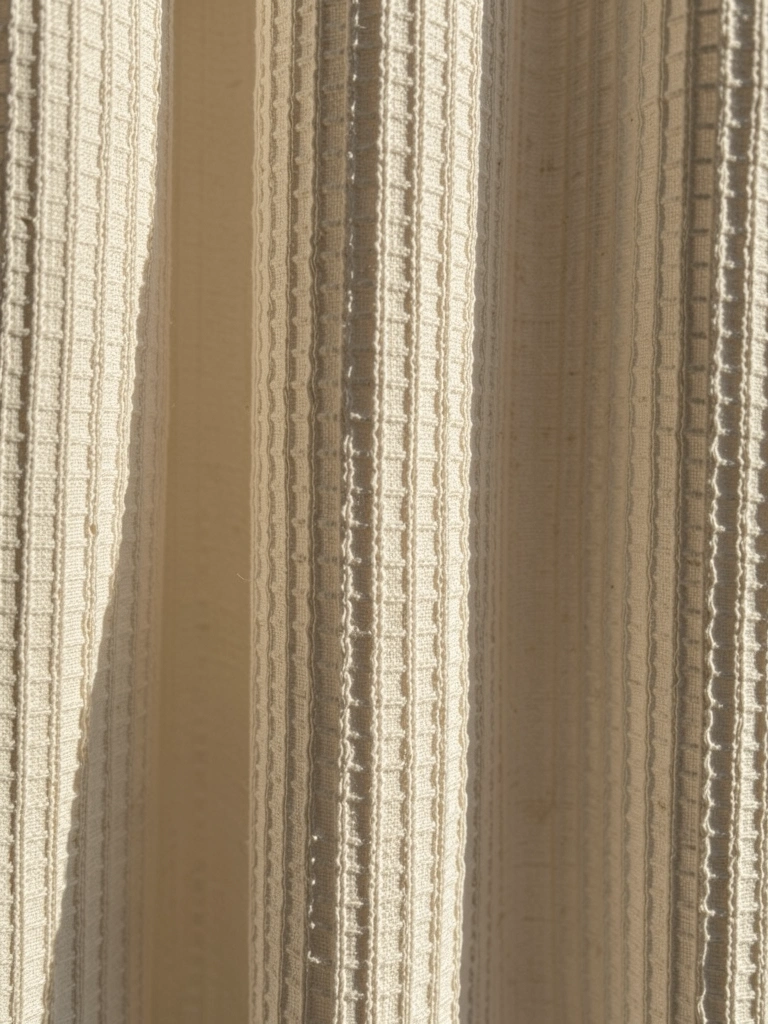
Ribbed and waffle-weave linens aren’t smooth—they’re textured at the fabric level, which means they cast shadows and create dimension even when hung flat. The weave itself is the design.
Waffle-weave or ribbed linen costs $35–$80 per panel and is widely available at IKEA, West Elm, and Wayfair. The texture is visible from a distance and looks significantly more interesting than plain linen. These fabrics hide wrinkles better than smooth linen, so they’re practical and pretty.
Hang them alone without layering and let the fabric texture do all the work. The room automatically feels more designed because the fabric itself is doing the heavy lifting.
17. Mix Metallic Trim With Natural Linen for Subtle Shine
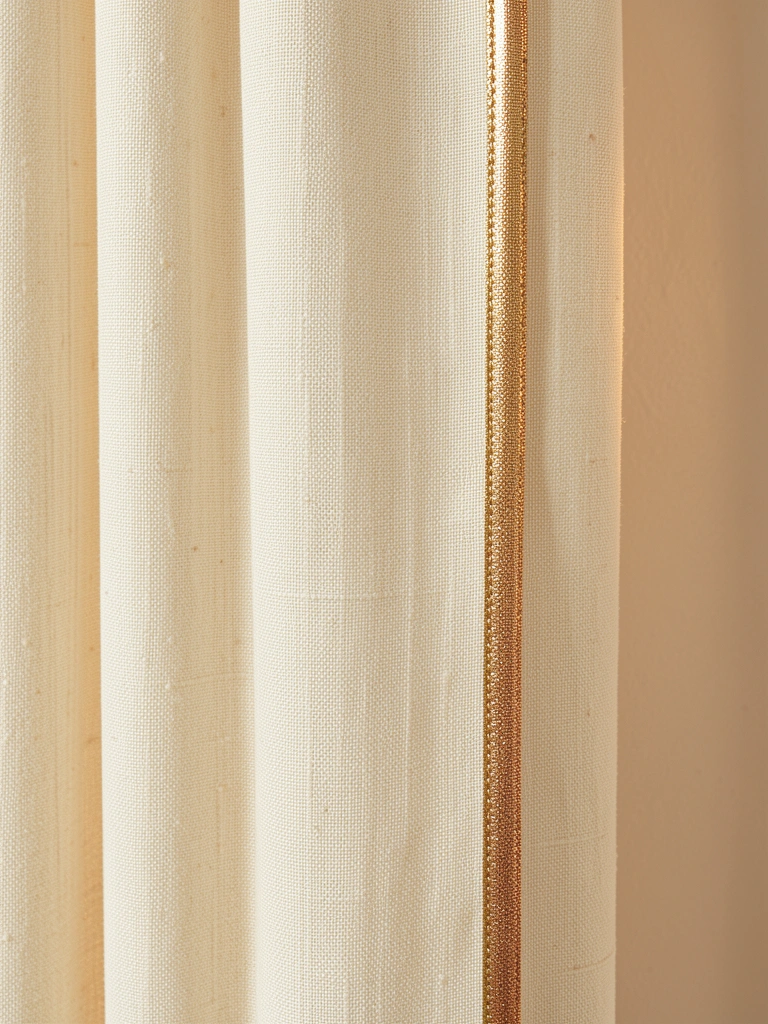
A subtle metallic accent adds shine and sophistication without reading as over-the-top. Metallic trim on natural linen is the definition of understated elegance.
Buy plain linen ($25–$50 per panel) and add a metallic trim using a tailor ($15–$30 labor) or fabric glue if you’re DIY-confident. Thin gold, copper, or silver trim works beautifully; use it along the leading edge or bottom hem. This takes an afternoon to DIY or a week with a tailor.
The result looks custom and intentional. The metallic catches morning or evening light, adding a quiet shimmer that elevates the whole space.
18. Hang Wool-Linen Blend for Weight and Softness

A wool-linen blend gets you the best of both worlds: linen’s breathability and luster plus wool’s weight and coziness. The combination creates natural texture and movement in folds.
Wool-linen blends run $50–$120 per panel, making them mid-range compared to pure wool or pure linen. They hang beautifully because the blend gives enough weight for volume without being heavy. These blend well with most interiors and feel more forgiving than pure wool (easier care, less expensive).
Hang these floor-to-ceiling and let them puddle slightly for maximum impact. The fabric itself creates architectural interest, so minimal styling is needed.
19. Layer Lightweight Linen With Heavy Linen Blackout
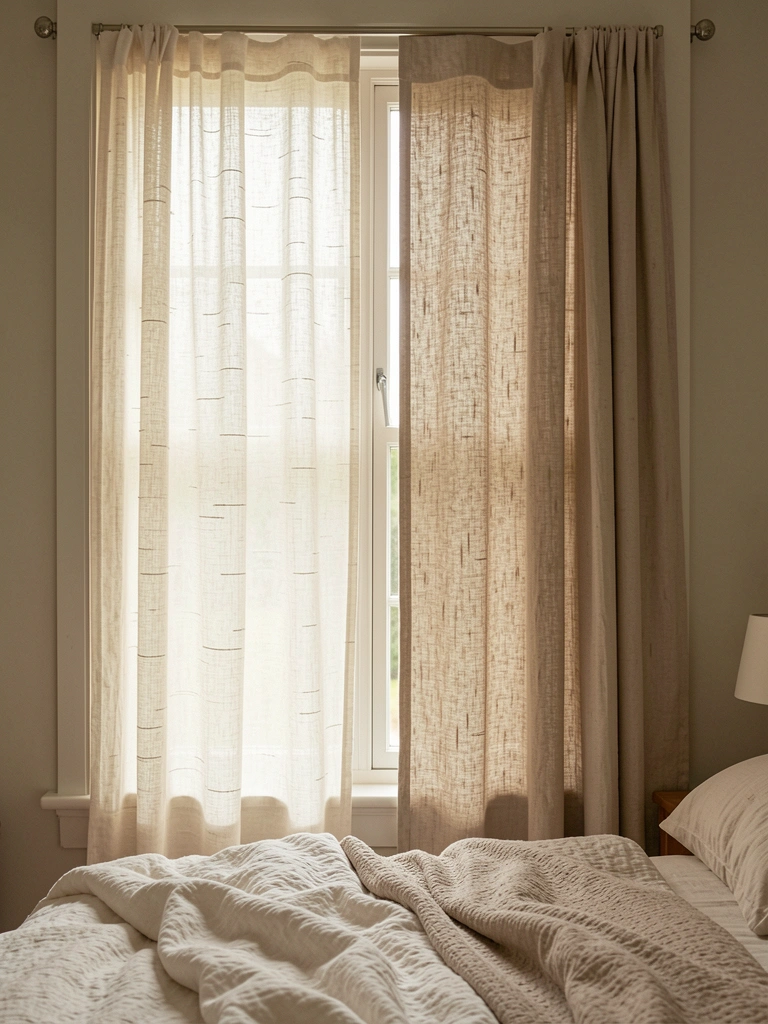
Two linens in different weights create dimension because the heavier fabric casts deeper shadows and creates bolder folds. Both are linen, so they age together beautifully.
Lightweight sheer linen runs $20–$50 per panel; heavy linen blackout is $60–$120. Hang them on two separate rods so you can operate them independently. The lightweight sheer allows filtered light and airflow; the blackout handles serious privacy and light control. Both soften and improve over time.
This is the ultimate “both/and” solution: you get style, function, and textile interest. Your window becomes a design feature, not just a functional element.
20. Use Subtle Embroidered Details on Sheer Fabric
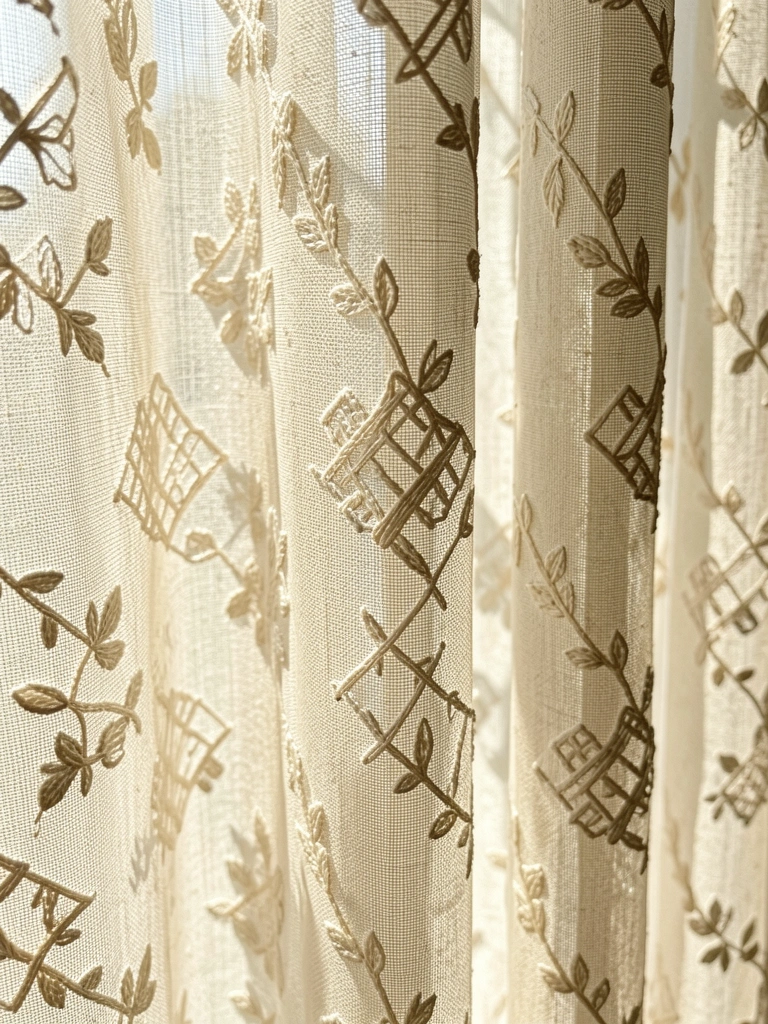
Embroidery on sheers is subtle but impactful—it adds texture and movement without blocking light. When backlit, the stitching creates shadow patterns that change throughout the day.
Look for linen or cotton sheers with hand-embroidered details: $40–$100 per panel at boutique retailers or Etsy. DIY option: buy plain sheers ($20–$40) and add simple hand embroidery using a needle and thread (takes a weekend). Embroidered sheers work beautifully alone or layered with a solid panel.
The embroidery becomes visible art when sunlight hits it. Your window changes throughout the day as light angles shift—it’s like having rotating wall art.
21. Hang Bamboo-Linen Blends for Eco-Luxe Feel
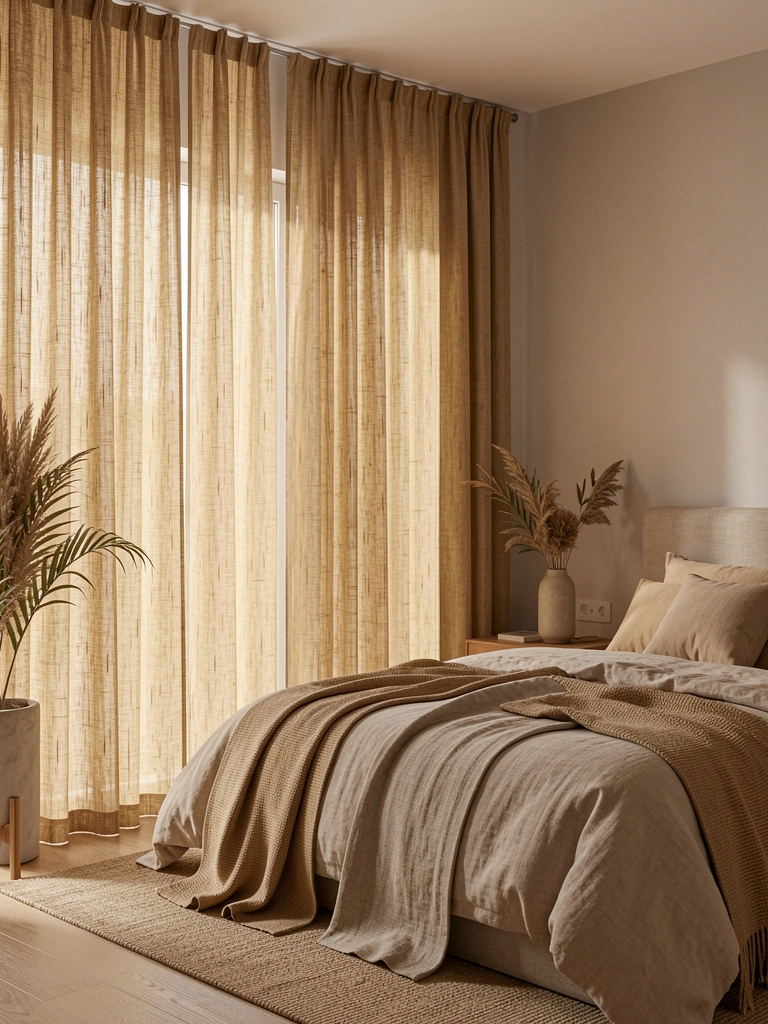
Bamboo-linen blends are having a moment because they’re eco-friendly and beautiful. Bamboo adds softness to linen while maintaining breathability and natural texture.
Bamboo-linen blends run $35–$85 per panel and offer sustainability credentials without sacrificing style. The blend is softer than pure linen but maintains visible weave texture. Wash in cool water; the blend gets softer with every wash and develops beautiful patina over time.
These work beautifully in modern or minimalist spaces and feel intentional. You’re getting luxury comfort with environmental responsibility built in.
22. Layer Gauzy Cotton Over Patterned Jute for Softness
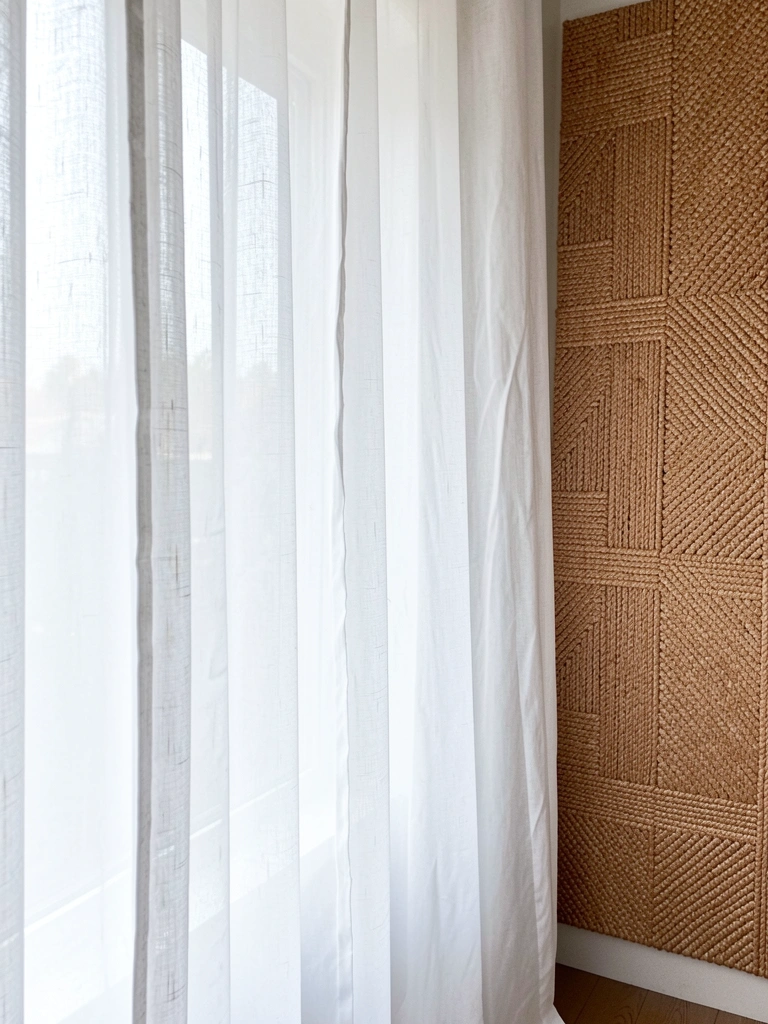
Gauze adds a romantic, soft quality to any space, and when layered over textured jute, it creates an interesting juxtaposition: delicate meeting organic.
Hang gauzy cotton on a close rod ($12–$30) and patterned jute on a front rod ($30–$70). The gauze softens the visual weight of jute while keeping it visible. Gauze feels and looks dreamy, but it’s surprisingly durable. This combo works especially well in bedrooms or spaces where you want a softer, more romantic feel.
The layering creates depth and interest without feeling busy. Your window becomes a texture study.
23. Combine Textured Linen With Decorative Wooden Rings
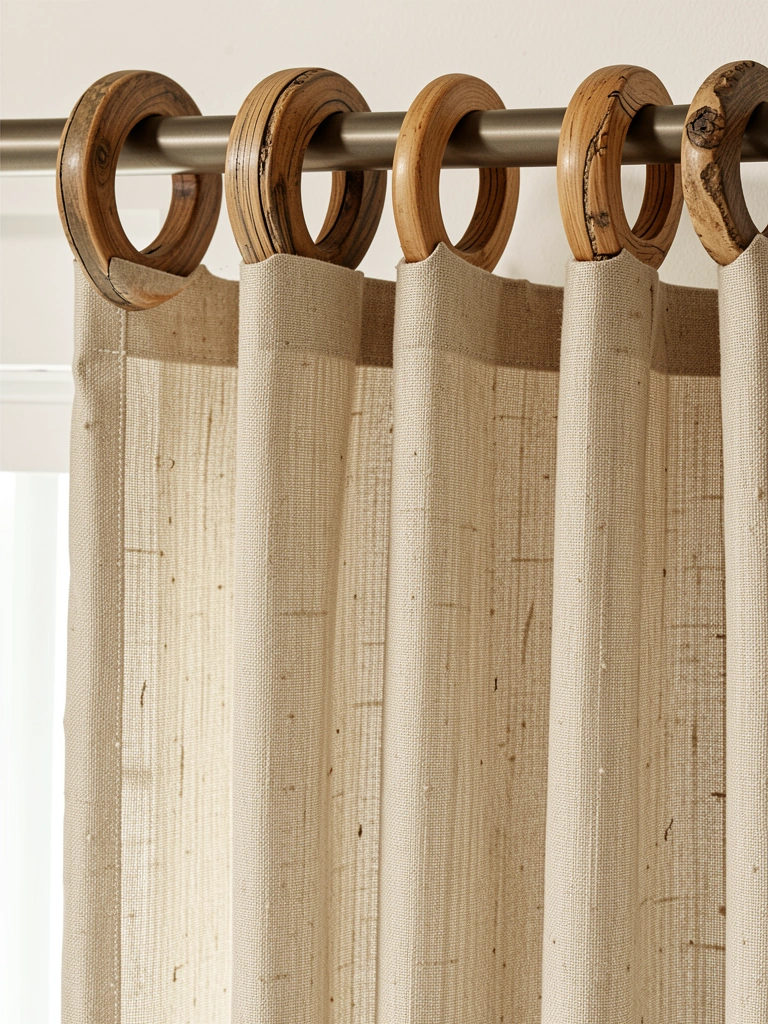
Wooden rings aren’t just functional—they’re a design element. They add texture to the header and create visual interest even when curtains are closed.
Buy textured linen ($25–$60 per panel) and pair with wooden rings ($10–$25 for a set of 10–12). The rings should be large enough that fabric gathers comfortably. This setup is easier to open and close than pinched headers, and the rings look intentional and crafted. Install takes 15 minutes once your rod is hung.
Your curtains become sculptural. The rings catch light and add a rustic element that elevates basic linen into something special.
24. Use Ombré or Gradient Linen for Subtle Color Shift
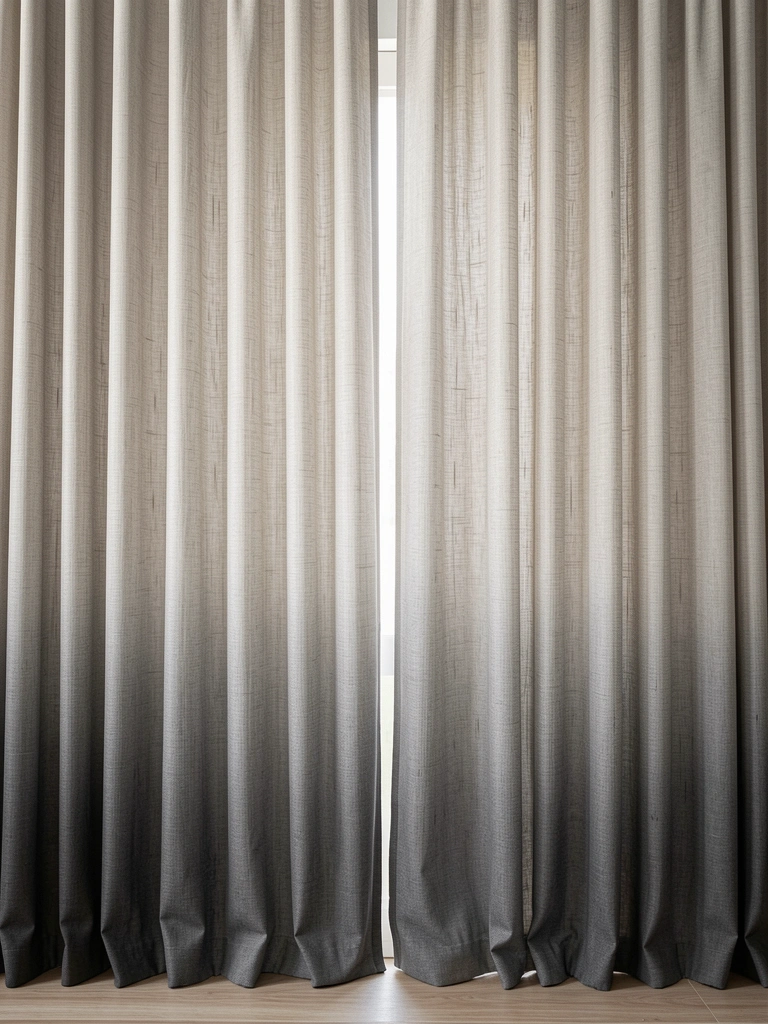
Ombré linen creates dimension through color rather than texture, giving you the best of both worlds: subtle interest without overwhelming pattern.
Ombré linen panels run $50–$120 per pair depending on the gradient intensity. Look for naturally dyed versions for eco-conscious options. The color shift creates visual flow from top to bottom, making the eye travel. Hang floor-to-ceiling to maximize the gradient effect.
This approach works beautifully in spaces where you want sophistication without boldness. The room feels designed and intentional without being trendy.
25. Layer Linen Sheers With Textured Wool For Contrast
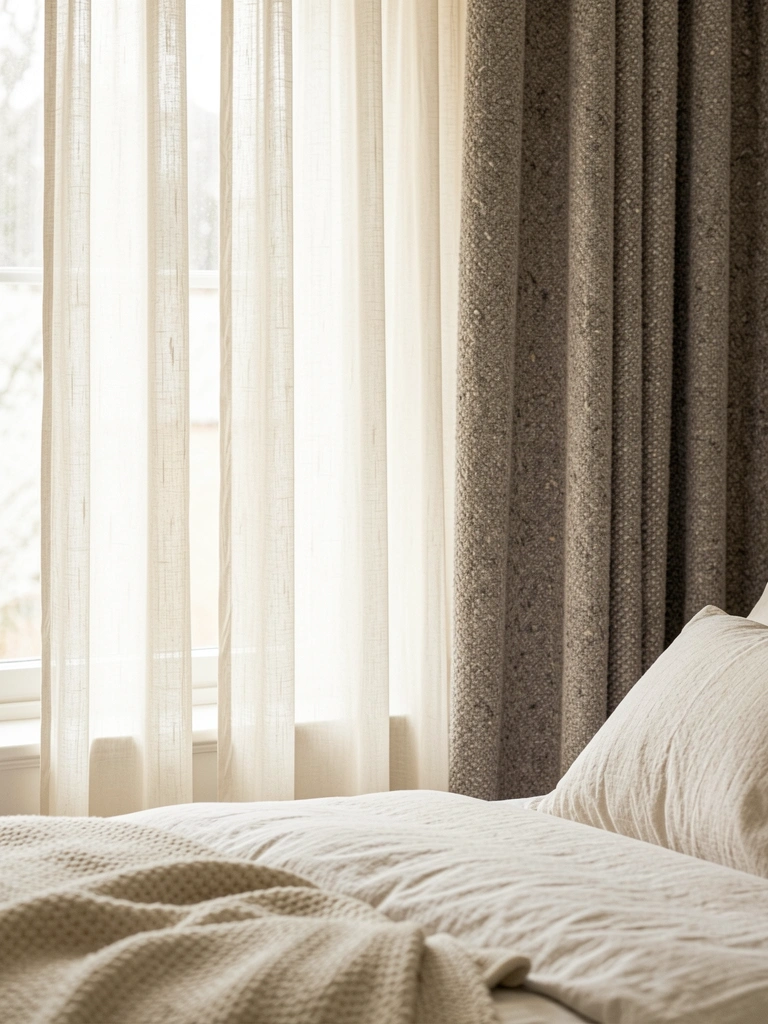
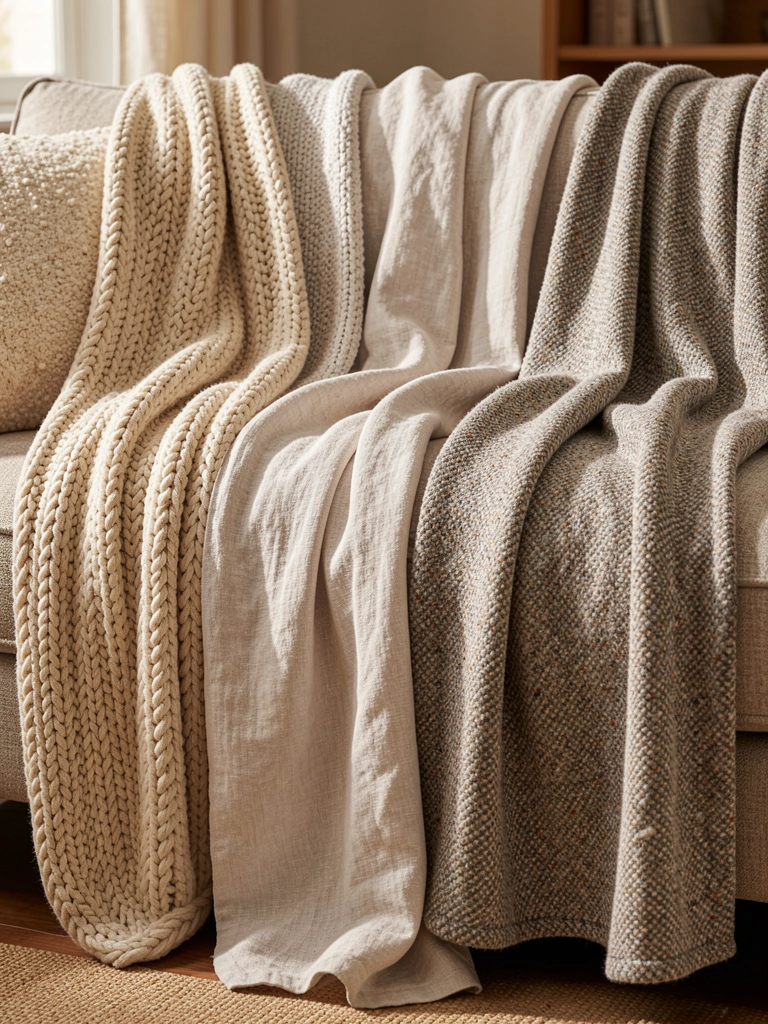
Pairing delicate with heavy creates visual interest through fabric contrast alone. Linen’s smoothness plays beautifully against wool’s nubby texture.
Hang linen sheers on a close rod ($20–$50) and wool on a front rod ($100–$180 per panel). The sheer diffuses harsh light while the wool creates shadow and depth. This is a splurge-worthy combo that lasts years and feels incredibly intentional. Both fabrics improve with age.
Your window becomes a texture study in intentional contrast. This setup works in spaces where you want luxury and sophistication to be obvious.
26. Mix Natural Linen With Subtle Hand-Dyed Accents
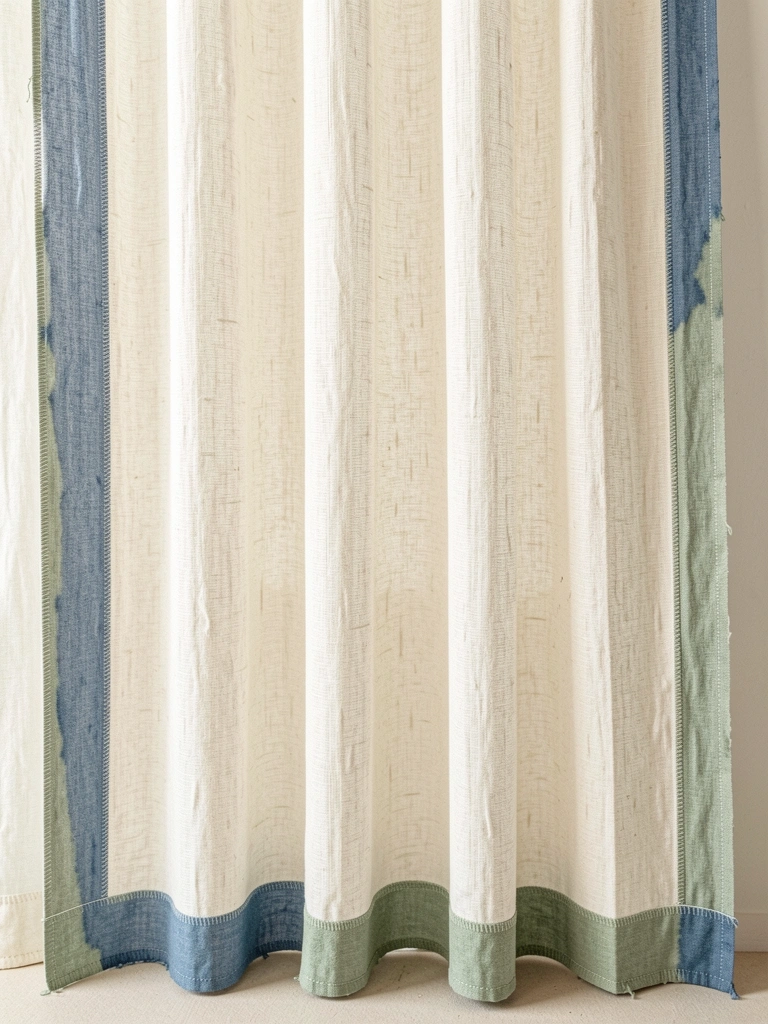
Hand-dyed accents are a creative DIY way to personalize plain linen without committing to patterned fabric. You control the color and placement, making each curtain unique.
Start with plain linen ($25–$50 per panel) and hand-dye edge panels using fiber dye ($5–$10). Sew or tape dyed fabric along edges as accent bands (takes an afternoon). This is a satisfying weekend project that results in one-of-a-kind curtains. No sewing skills? Use fabric adhesive tape instead of stitching.
Your curtains become personal art. Every time you look at them, you’ll remember making them, which adds emotional texture to the space.
Save this post and pick one idea to try this weekend—or layer a few together for next-level window drama. Which textured curtain combination speaks to you?